Most tree removal jobs in the Huntsville area follow a standard process: a climber ascends the tree, sections it from top to bottom, and each piece is either rigged down with ropes or dropped to an open area on the ground. This conventional approach works well for the majority of trees. But some trees present challenges that make standard removal methods impractical, dangerous, or impossible.
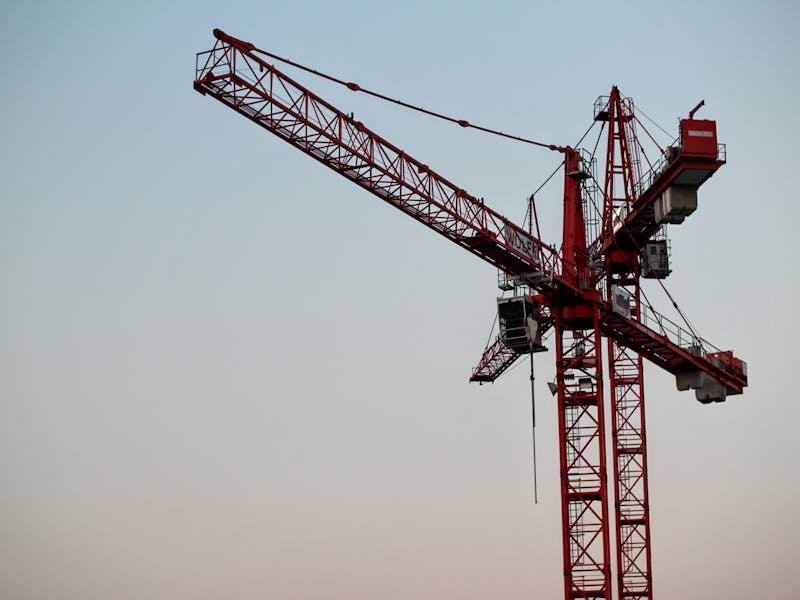
That is when a crane enters the equation. Crane-assisted tree removal uses a mobile crane to lift cut sections of the tree out and away from their location, setting them down in a designated landing zone. The crane provides control, precision, and lifting capacity that ropes and gravity simply cannot match. It is the difference between carefully placing each piece of the tree exactly where you want it versus hoping it swings, slides, or falls in the right direction.
If you have been told your tree needs a crane for removal, or if you have a tree in a difficult location and are wondering whether conventional removal is even possible, this guide explains everything you need to know about crane-assisted tree removal—how it works, when it is necessary, what it costs, and why it is often the safest option for challenging situations.
How Crane-Assisted Tree Removal Works
The process of crane-assisted tree removal involves close coordination between the crane operator and the tree service crew, particularly the climber. Here is how a typical crane removal unfolds:
Step 1: Site Assessment and Planning
Before the crane arrives, the tree service crew assesses the site to determine the crane size needed, the optimal setup location, the rigging plan, and the landing zone for cut sections. This planning phase is critical because once the crane is set up and the crew is working, every piece of the operation needs to flow smoothly. The assessment includes measuring the tree's height, estimating the weight of the largest sections that will be lifted, calculating the required crane reach, and identifying any obstacles like power lines, fences, or adjacent structures.
Step 2: Crane Setup
The crane is positioned on a firm, level surface—typically a driveway, street, or parking area—within reach of the tree. The crane extends its outriggers (stabilizing legs) and levels itself. This setup process takes approximately 30 to 60 minutes depending on the crane size and site conditions. The crane operator performs load calculations to ensure the crane can safely lift the estimated section weights at the required reach distance.
Step 3: Rigging and Cutting
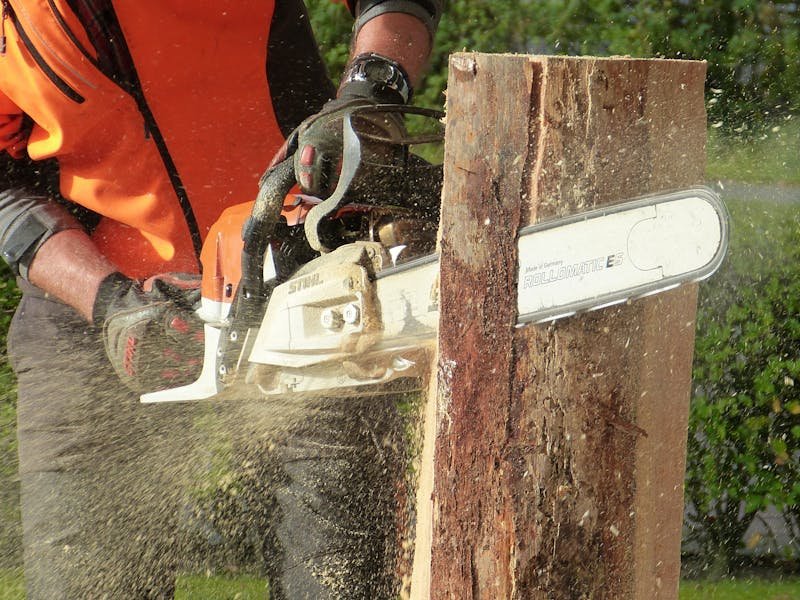
The climber ascends the tree and attaches a choker or rigging sling to the first section to be removed, typically starting at the top. The crane cable is connected to the rigging point, and the crane takes up the weight of the section. Once the crane is holding the piece, the climber makes the cut. The section separates from the tree and is immediately supported by the crane—it does not fall, swing, or bounce. The crane operator smoothly lifts the section up and away from the tree, swings it over to the landing zone, and lowers it to the ground.
Step 4: Repeat for Each Section
This process is repeated for each section of the tree, working from top to bottom. Each cut is planned to produce a section that is within the crane's lift capacity at that reach distance. For large trees, this might mean 15 to 30 or more individual lifts. The climber and crane operator communicate constantly, typically via radio headsets, to coordinate the timing of each cut with the crane's readiness to take the load.
Step 5: Trunk and Cleanup
Once the branches and upper trunk are removed, the remaining trunk sections are cut and lifted out. The final stump is typically left for stump grinding as a separate step. The cut sections in the landing zone are processed through a chipper or cut into manageable pieces for hauling. The crane is broken down and transported off site.
When Is Crane-Assisted Removal Necessary?
Crane removal is not needed for every tree. It is a specialized technique reserved for situations where conventional methods are not practical or safe. Here are the most common scenarios that call for a crane:
Trees Too Close to Structures
When a large tree is growing directly next to a house, garage, pool, or other structure, there may not be enough clearance to fell the tree in any direction or to safely lower sections with ropes without risking the structure. A crane can lift each section straight up and away from the building, eliminating the risk of impact. This is one of the most common reasons for crane removal in Huntsville's established neighborhoods, where mature oaks, pines, and hickories often grow within feet of rooflines.
Dead or Structurally Compromised Trees
A dead tree is dangerous to climb. The wood may be rotten, branches can snap without warning, and the structural integrity of the trunk may be compromised. A crane allows the climber to be supported from above while making cuts, reducing the time they need to spend in the tree and providing an escape mechanism if the tree begins to fail. For severely compromised trees, the crane can remove sections without anyone needing to climb the tree at all, using a lift bucket on the crane boom instead.

Trees in Tight or Confined Spaces
Some trees are surrounded on all sides by structures, fences, pools, landscaping, or other trees, leaving no room for cut sections to land. A crane can pick up each piece vertically and swing it to an open area, bypassing all the obstacles at ground level. This is common in older Huntsville neighborhoods where backyards are small and densely landscaped.
Trees on Steep Slopes or Difficult Terrain
This is particularly relevant in the Huntsville area. Properties on Monte Sano Mountain, Green Mountain, Wade Mountain, and other elevated terrain often have trees growing on steep slopes where conventional felling is dangerous and access for ground crews is limited. A crane set up on a level area at the top or bottom of the slope can reach over and lift sections from trees that would otherwise require extensive rope rigging in challenging terrain.
Very Large Trees
Exceptionally large trees—particularly hardwoods like oaks, hickories, and tulip poplars that are common in the Huntsville area—produce individual sections that can weigh several thousand pounds. Lowering sections of this weight on ropes creates enormous forces on the rigging points and increases risk to the climber and ground crew. A crane handles these weights with ease and places them precisely in the landing zone.
Trees Near Power Lines
Trees entangled with or adjacent to power lines require extreme caution. While utility companies handle trees directly on their lines, trees near (but not touching) power lines still pose a risk during conventional removal. A crane provides the control needed to lift sections away from the lines rather than dropping them through or near the conductors. Note that crane operations near power lines require additional safety protocols and may involve coordination with the utility company.
Crane Tree Removal Cost Factors
Crane-assisted tree removal is more expensive than conventional removal because of the added cost of the crane equipment, operator, and the logistics of getting a large machine to and from your property. Here is a breakdown of the cost factors:
Crane Rental
The crane itself typically costs $500 to $2,000 per day depending on the crane size (rated by tonnage and boom length). A small 40-ton crane suitable for most residential tree work runs $500 to $800 per day. Larger cranes (70 to 100 tons) needed for exceptionally large trees or long-reach situations can cost $1,200 to $2,000 per day. These rates typically include the crane operator.
Tree Service Crew
The tree service crew (climber, ground crew, chipper operator) charges their normal rates in addition to the crane cost. For a crew of 3 to 5 people with a climber, bucket truck, chipper, and ground equipment, expect $1,500 to $4,000 depending on the complexity and duration of the job.
Total Cost Ranges
- Small to medium tree with crane (30 to 50 feet): $2,500 – $5,000
- Large tree with crane (50 to 80 feet): $5,000 – $10,000
- Very large or complex tree: $10,000 – $15,000+
- Emergency crane removal (storm damage, after hours): Add 30% to 50% premium
While these numbers are higher than standard tree removal costs in Huntsville, the comparison is not entirely apples-to-apples. Crane removal is typically faster than conventional removal for the same tree, which reduces labor hours. The per-hour cost is higher but the total hours are lower, which partially offsets the crane expense.

Safety Advantages of Crane-Assisted Removal
For trees that require a crane, the safety advantages over conventional methods are significant:
- Controlled descent: Every section is supported by the crane from the moment the cut is made. Nothing falls uncontrolled. This eliminates the risk of sections hitting structures, vehicles, people, or other trees
- Reduced climbing exposure: The climber spends less time in the tree because sections are removed faster with crane support. Less time in the tree means less exposure to risk
- No rope rigging forces: Lowering heavy sections on ropes creates tremendous forces on tie-in points, redirects, and the rigging rope itself. Any failure in the rigging system can have catastrophic consequences. A crane eliminates this entire category of risk
- Better dead tree handling: Dead trees are the most dangerous to work in because the wood is unpredictable. A crane allows dead tree sections to be removed with minimal stress on the remaining structure, reducing the chance of unexpected failure
- Precision placement: The crane operator can place each section exactly where needed, avoiding landscaping, hardscaping, utilities, and other property features that ground-dropped sections might damage
Huntsville-Specific Considerations
Several factors specific to the Huntsville metro area make crane-assisted tree removal more common here than in many other markets:
Monte Sano and Mountain Terrain
Homes on Monte Sano Mountain, Green Mountain, and Wade Mountain are often built on steep, rocky terrain with large trees growing on slopes above and below the house. Conventional felling on slopes is extremely dangerous because trees can roll, slide, and gain momentum in unpredictable ways. Crane-assisted removal is frequently the safest option for these properties, with the crane set up on the driveway or a level area and reaching over to the tree's location on the slope.
Historic Districts
Huntsville's historic districts, particularly Twickenham and Old Town, feature large, mature trees in close proximity to historic homes with irreplaceable architectural details. The stakes of a section falling the wrong way are particularly high when the target is a 150-year-old home. Crane removal provides the precision and control needed to work safely around these structures.
Established Neighborhoods with Mature Tree Canopy
Neighborhoods throughout Huntsville—including Blossomwood, Jones Valley, Weatherly Heights, and parts of South Huntsville—have mature tree canopies with large oaks, hickories, and pines that are 60 to 100+ years old. When these trees need removal, their size and proximity to homes often make crane-assisted removal the safest and most efficient approach.
Storm Damage Response
Huntsville's location in the Tennessee Valley makes it susceptible to severe storms, tornadoes, and straight-line winds that can partially topple or split large trees, leaving them in precarious positions leaning against structures or tangled in other trees. These storm-damaged trees are among the most dangerous to remove because their structural integrity is already compromised. Crane-assisted removal is often the only safe way to handle these situations. For more about our storm response, see our emergency tree service page and our guide on what to expect during emergency tree removal.
What Happens During a Crane Tree Removal Assessment
If we determine during your estimate visit that a crane may be needed, here is what the assessment process looks like:
- Tree evaluation: We measure the tree's height, trunk diameter, lean, canopy spread, and species to estimate section weights and determine the crane size needed
- Access assessment: We evaluate the route the crane will take to reach your property and the setup location. We check for overhead obstructions (power lines, other trees), weight limits on driveways and bridges, and turning radii for the crane truck
- Reach calculation: We measure the distance from potential crane setup locations to the tree. The crane's lifting capacity decreases as the boom extends, so the reach distance directly affects the crane size required
- Landing zone planning: We identify where cut sections will be placed, where the chipper and trucks will be positioned, and how the ground crew will process material
- Permit check: Some municipalities require permits for crane operations on public streets. We handle these permits as part of our service
- Detailed quote: Based on all of the above, we provide a detailed quote that breaks out the crane cost, tree service cost, and any additional expenses so you understand exactly what you are paying for
Can Every Tree Be Removed by Crane?
Not every situation is suitable for crane-assisted removal. The primary limitation is access. The crane needs a firm, level surface to set up on, and the tree needs to be within the crane's reach from that setup point. If a tree is in the center of a large backyard with no access for the crane to get close enough, crane-assisted removal may not be possible. In these cases, we rely on advanced rigging techniques, specialized equipment, or alternative approaches to safely remove the tree.
During our assessment, we will tell you honestly whether a crane is necessary, beneficial, or not practical for your specific situation. We use crane-assisted removal when it genuinely improves safety and efficiency, not as an upselling tool. When standard removal methods work well, we use standard methods and save you the crane cost. For a complete overview of how long tree removal takes using various methods, see our detailed guide.
Get a Professional Assessment
If you have a large, dead, or difficult-to-access tree that needs removal, call Huntsville Tree Pros for a professional assessment. We will evaluate the tree, determine the best removal approach (conventional or crane-assisted), and provide a transparent quote that details exactly what the job involves and what it will cost. We serve Huntsville, Madison, Decatur, Monte Sano, Hampton Cove, and all communities throughout Madison and Limestone Counties.