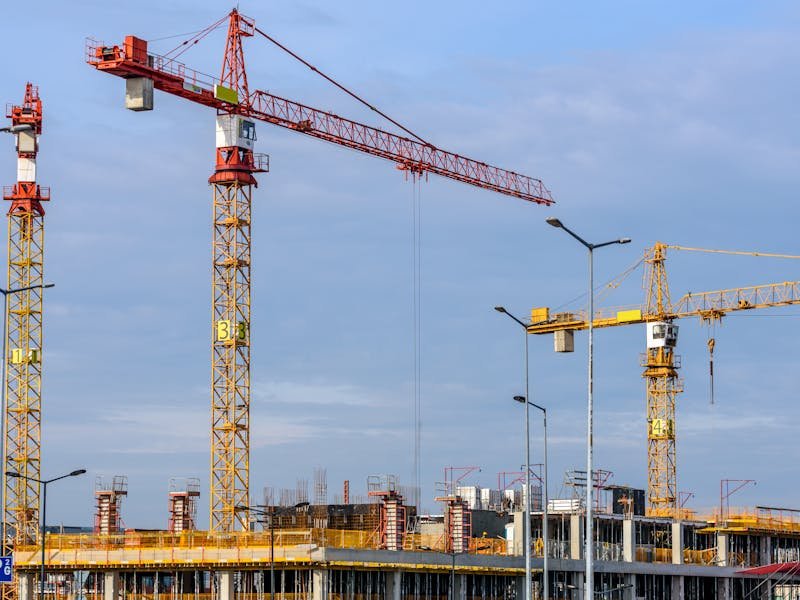
Huntsville is growing. And that is not a secret to anyone who has tried to drive down Highway 72 during rush hour or watched another subdivision go up in what used to be a cotton field. The Huntsville metro area has been one of the fastest-growing regions in Alabama for the better part of a decade, with new residential developments, commercial projects, and mixed-use communities springing up from Town Madison to Meridianville, from Clift Farm out to the growing edges of Harvest, Toney, and Hazel Green.
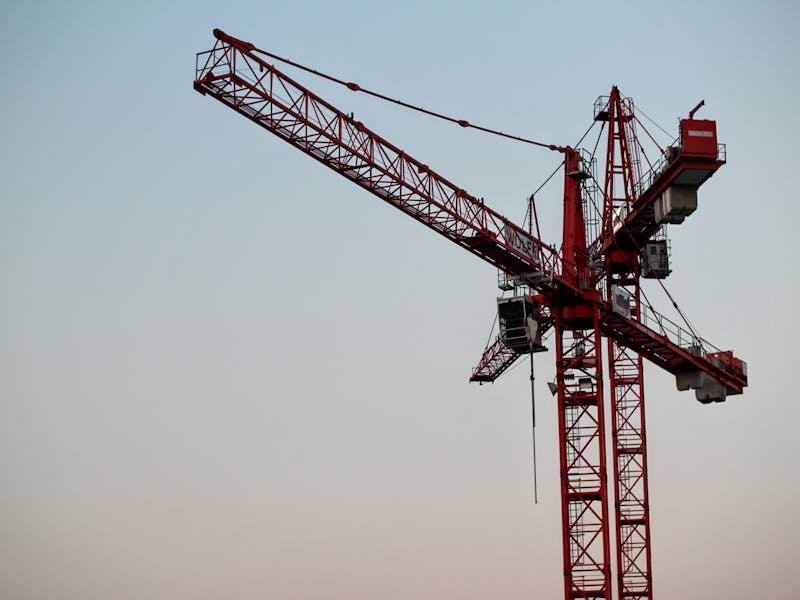
All of that growth means one thing for the tree business: land clearing. Whether it is a homeowner preparing a lot for a custom home build, a developer clearing 20 acres for a new subdivision, or a farmer opening up overgrown acreage for agricultural use, land clearing is the essential first step before anything else can happen on a piece of raw or wooded property.
If you are looking at a piece of land in the Huntsville area and wondering what it is going to cost to clear it, you have come to the right place. We are going to break down every cost factor, give you realistic price ranges based on actual Huntsville-area pricing, and walk you through the process from permits to final grading. No vague national averages that do not reflect Alabama conditions. Real numbers for real projects in this market.
Land Clearing Cost by Type of Clearing
The biggest variable in land clearing cost is the type and intensity of clearing required. A parcel covered in privet and young saplings is a fundamentally different job than one with 80-foot loblolly pines and old-growth hardwoods. Here is how the pricing breaks down in the Huntsville area in 2026.
Light Brush Clearing: $1,500 – $2,500 per Acre
Light clearing involves removing brush, undergrowth, small saplings (typically under 6 inches in diameter), and ground-level vegetation. This is what you need when a piece of land has become overgrown with privet (which is absolutely everywhere in North Alabama), honeysuckle, young sweetgums, volunteer pines, and other secondary growth, but does not have significant mature trees.
This type of clearing is common on agricultural parcels that have gone fallow for a few years, fence lines and property borders that need to be re-established, and lots in areas like New Market, Gurley, and rural Madison County that have been left unmanaged. The work is typically done with forestry mulching equipment, which grinds the vegetation and small trees in place, turning them into a layer of mulch that stays on the ground. This is faster and less expensive than traditional clearing because there is no hauling required.
Moderate Clearing: $2,500 – $4,500 per Acre
Moderate clearing involves removing a mix of brush, small to medium trees, and scattered large trees. This is the most common scenario for residential lot clearing in the Huntsville area. A typical undeveloped lot in Madison, Owens Cross Roads, or Meridianville has a mix of pine and hardwood trees ranging from small saplings to moderate-sized trees in the 12 to 24 inch diameter range, along with undergrowth and brush.
Moderate clearing typically involves forestry mulching for the smaller vegetation, cutting and removing the larger trees, stump grinding or removal, and hauling away the larger wood and debris. The cost reflects the need for multiple types of equipment and more time on site.
Heavy Clearing: $4,000 – $6,000+ per Acre
Heavy clearing is required for densely wooded parcels with large, mature trees. Think about the kind of timber you find on the hillsides of Monte Sano, the wooded tracts along the Flint River, or the old hardwood stands in rural Limestone and Morgan counties. We are talking about properties with 50 to 100+ trees per acre, many of them 18 to 36 inches or more in diameter, along with a full understory of smaller trees, brush, and ground cover.
Heavy clearing requires the most equipment, the most time, and the most expertise. Large trees have to be felled directionally, which means each one has to be planned to fall in a specific direction to avoid damaging adjacent trees you want to keep, structures, or utility lines. Stumps from large trees can be 3 to 4 feet across and require substantial grinding. The volume of wood, brush, and debris generated by an acre of heavy clearing is enormous, and hauling it away is a significant cost component.
Properties with very large, valuable hardwood timber may offset some of the clearing cost through timber sales. If you have a parcel with significant merchantable timber, particularly white oak, red oak, or walnut, a timber buyer may pay for the standing timber, reducing your net clearing cost. Your land clearing company can help you evaluate whether a timber sale is worthwhile for your specific property.
Full Site Preparation: $5,000 – $8,000+ per Acre
Full site preparation goes beyond clearing to include grading the land to the specifications needed for construction. This includes removing all vegetation and trees, grinding or extracting all stumps, removing rocks and debris from the topsoil layer, rough grading to establish drainage patterns and building pad elevations, and installing erosion control measures like silt fencing and construction entrances.
This level of work is what you need when preparing land for new home construction, and it is the most common request we handle in the actively developing areas of the Huntsville metro. Properties in developments like the Town Madison area, the Clift Farm community in Madison, and the growing neighborhoods along Jeff Road and County Line Road typically require full site preparation before a builder can start pouring a foundation.
Residential Lot Clearing: What Huntsville Homeowners Actually Pay
While per-acre pricing is useful for larger properties, most homeowners are clearing smaller lots, typically a quarter-acre to a half-acre, for a new home or to improve an existing property. Here is what those jobs look like in practice.
Quarter-Acre Lot (10,890 sq ft): $2,500 – $5,000
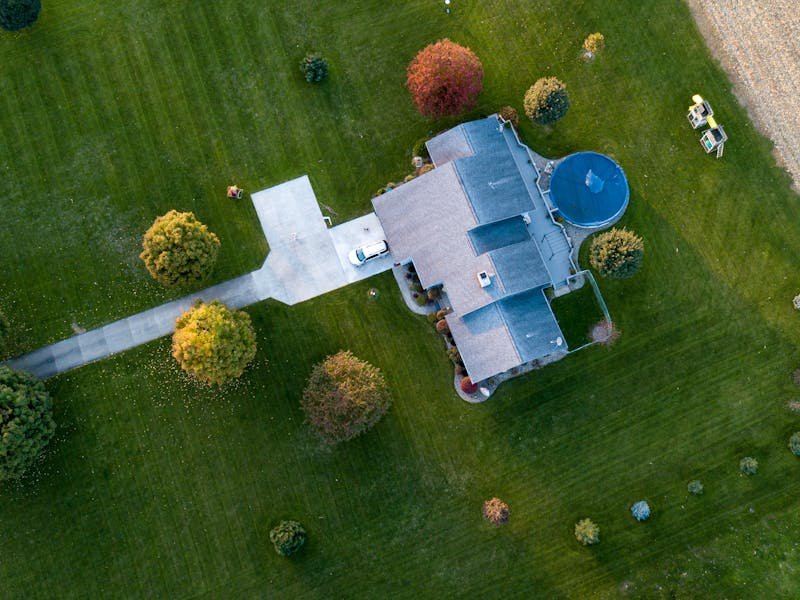
A quarter-acre lot with moderate tree coverage, which is a common scenario in developing areas of Madison County, typically runs $2,500 to $5,000 for complete clearing including tree removal, stump grinding, brush clearing, and rough grading. At the low end, you are looking at a relatively flat lot with mostly small to medium trees and no significant complications. At the high end, the lot has larger trees, slopes, poor access, or proximity to existing structures that complicate the work.
Half-Acre Lot (21,780 sq ft): $4,000 – $8,000
Half-acre lots are common in the semi-rural developments spreading out from Huntsville into areas like Harvest, Monrovia, Toney, and Capshaw. A heavily wooded half-acre lot with large pines and hardwoods, full understory, stump removal, and grading can easily hit $6,000 to $8,000. A moderately wooded lot in the same size range typically falls between $4,000 and $6,000.
One-Acre Lot: $3,500 – $10,000+
Acre-plus lots are common in rural areas around New Market, Gurley, and Brownsboro, as well as in the more spacious developments in south Madison County. The wide pricing range reflects the huge variability in what "one acre" looks like, from a lightly wooded parcel that can be forestry-mulched in a day to a dense hardwood stand that takes a week to clear.

Factors That Drive Land Clearing Costs
Every land clearing project is unique, and several factors beyond simple acreage determine your final cost. Understanding these helps you evaluate quotes and plan your budget.
Tree Density and Size
This is the most significant cost driver. A parcel with 20 small pines per acre is a fraction of the work compared to one with 50 mature hardwoods per acre. Large trees take longer to fell, generate more debris, produce larger stumps that cost more to grind, and require heavier equipment. In the Huntsville area, parcels with mature loblolly pines, Southern red oaks, white oaks, hickories, and tulip poplars command the highest clearing costs because of the sheer volume of wood these species produce.
Terrain and Slope
Flat land is easier and cheaper to clear than slopes. The Huntsville area has significant topographic variation, from the flat Tennessee River bottomlands in Decatur and Athens to the steep hillsides of Monte Sano, Green Mountain, and Wade Mountain. Clearing wooded land on a slope adds complexity because trees have to be felled uphill or across the slope to prevent them from rolling, equipment access is limited, and erosion control becomes more critical.
Properties in The Ledges, McMullen Cove, and other hillside communities in southeast Huntsville often involve steep terrain that increases clearing costs by 20 to 40 percent compared to equivalent flat-ground work.
Huntsville's Red Clay Soil
The red clay soil that underlies most of Madison County is both a blessing and a curse for land clearing. On the positive side, it provides a stable base once compacted. On the negative side, it becomes a slippery, sticky mess when wet, making equipment operation difficult and causing severe rutting. Clearing work on saturated clay soil not only takes longer but can damage the site itself, creating ruts and compaction that have to be addressed during grading.
The best time for land clearing in our area, from a soil perspective, is during dry periods when the clay is firm enough to support heavy equipment. Extended rainy periods in spring and fall can delay land clearing projects by days or even weeks as crews wait for the ground to dry out enough to work safely and effectively.
Stump Removal Requirements
Stump removal is a significant cost component that is often underestimated. A 24-inch diameter hardwood stump can take 30 to 45 minutes to grind below grade with commercial equipment. Multiply that by 30 or 50 stumps across a lot and you are adding a full day or more of stump grinding to the project.
For new construction sites, stumps must be removed or ground below the surface level, typically 6 to 12 inches below grade, to prevent settling and to avoid interference with foundations, driveways, and utilities. For agricultural clearing or non-construction purposes, leaving stumps at grade or slightly below may be acceptable, which can save significant money.
Debris Disposal
What happens to all that wood, brush, and debris after clearing? Disposal methods significantly affect cost. The most common options in the Huntsville area include:
Forestry mulching: The most cost-effective method for brush and small trees. A forestry mulcher grinds vegetation in place, leaving a layer of organic mulch on the ground. No hauling required, and the mulch helps with erosion control. This is the preferred method for light to moderate clearing.
Chipping on site: Branches and brush are run through a chipper, and the chips are spread on site or hauled away. Chips can be used as mulch, sold to landscaping companies, or taken to composting facilities.
Log hauling: Large tree trunks are cut into manageable lengths and hauled off site. Merchantable timber goes to a sawmill. Non-merchantable wood goes to a disposal site or is cut for firewood. Hauling costs increase with distance to the disposal site.
Burning: In some situations and locations, burning brush piles is permitted. Open burning requires a permit from the Alabama Forestry Commission and must comply with air quality regulations. Burning is most practical for rural properties away from residential areas. It is generally not permitted within Huntsville city limits.
Selective Clearing and Tree Preservation
If you want to keep certain trees on the property, the clearing process is more complex and time-consuming. Each preserved tree requires a protection zone where equipment cannot operate, and surrounding trees must be felled away from the preserved ones. Selective clearing typically costs 15 to 25 percent more than full clearing because of the additional planning, care, and time required.
However, preserving mature trees can significantly increase your property's value and reduce long-term landscaping costs. A mature shade tree can add $5,000 to $15,000 to a home's appraised value, and it takes 20 to 30 years to grow a replacement to the same size. If your lot has healthy, well-positioned oaks or hickories, keeping them is often well worth the extra cost during clearing.
Permits and Regulations in Madison County
Land clearing in the Huntsville area involves several regulatory requirements that you need to be aware of before work begins. Ignoring these can result in fines, work stoppages, and expensive remediation.
Land Disturbance Permits
If your clearing project disturbs one acre or more of land, you are required to obtain a land disturbance permit under Alabama's Erosion and Sediment Control regulations, which implement the federal Clean Water Act. This applies within the City of Huntsville, the City of Madison, and unincorporated Madison County. The permit requires a stormwater pollution prevention plan (SWPPP) that outlines how erosion and sediment will be controlled during and after the clearing operation.
Even for projects under one acre, best management practices for erosion control are strongly recommended, especially on slopes and near waterways. Huntsville's clay soil is highly erodible, and uncontrolled runoff from a cleared site can deposit sediment in storm drains, creeks, and neighboring properties, potentially resulting in enforcement action and liability.
Grading Permits
If your project involves significant changes to the existing grade of the land, a grading permit may be required from the City of Huntsville or Madison County. This is separate from the land disturbance permit and applies specifically to cut-and-fill operations where the elevation of the land is being altered.
Tree Preservation Ordinances
The City of Huntsville has a tree preservation ordinance that may apply to certain clearing projects, particularly those in commercial development. Some HOA-governed communities also have covenants restricting tree removal or requiring replacement plantings. If your property is in a subdivision with an HOA, check the covenants before beginning any clearing work.
Wetland and Stream Buffer Regulations
Properties with streams, creeks, or wetlands are subject to buffer requirements that restrict clearing within a certain distance of the waterway. In Madison County, typical buffer zones range from 25 to 50 feet from the ordinary high-water mark of streams. The Army Corps of Engineers regulates work in wetlands under Section 404 of the Clean Water Act. If your property has any water features, a wetland delineation may be required before clearing can proceed.
We Handle the Permitting
If all of this sounds complicated, do not worry. A professional land clearing company that works regularly in Madison County should be familiar with all of these requirements and can handle the permitting process as part of the project. This is another reason to hire a local company with experience in the Huntsville area rather than an out-of-area operator who may not be familiar with local regulations.
The Land Clearing Process: What to Expect Step by Step
Understanding the process helps you plan your timeline and know what to expect at each phase of the project.
Phase 1: Site Assessment and Estimate (1 – 3 Days)
We walk the property with you to understand your goals, identify any trees to be preserved, note terrain challenges and access issues, and assess the density and type of vegetation. We also check for utility lines (calling 811 for underground utility location is mandatory), identify any regulatory requirements, and evaluate soil conditions. From this assessment, we provide a detailed written estimate with a clear scope of work.
Phase 2: Permitting and Preparation (3 – 10 Days)
If permits are required, we handle the application process, which typically takes 5 to 10 business days in Madison County. During this time, we also schedule the project, arrange for utility locates, and set up erosion control measures like silt fencing along the property boundaries and any adjacent waterways.
Phase 3: Tree Removal (1 – 5 Days)
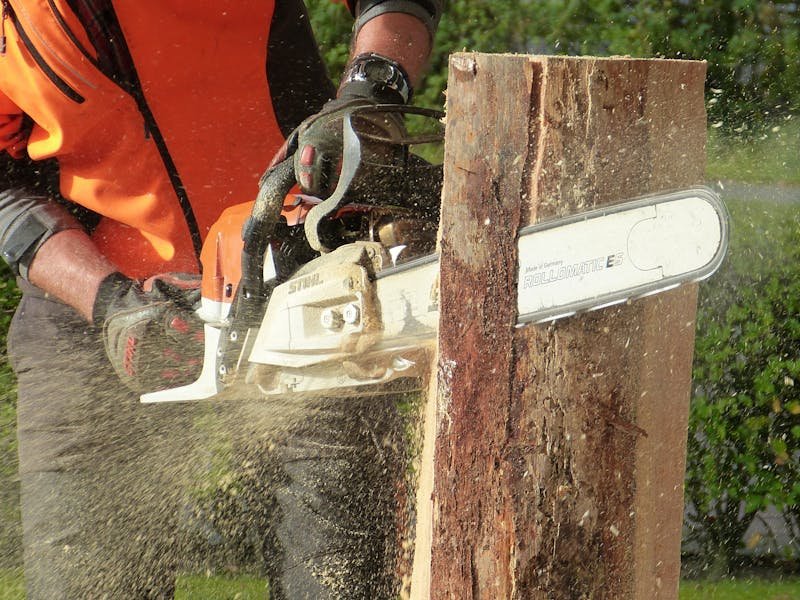
Large trees are felled first, using directional felling techniques to lay them down in the desired direction. For selective clearing projects where specific trees are being preserved, each felling direction is carefully planned to avoid damage to the keepers. Trees are limbed and bucked (cut into sections) on site, and the material is either chipped, stacked for hauling, or set aside for timber sale.
Phase 4: Brush Clearing and Mulching (1 – 3 Days)
Once the large trees are down and processed, the understory brush, small trees, and ground vegetation are cleared. Forestry mulching is the most efficient method for this phase, grinding the material in place and leaving a layer of mulch that helps stabilize the soil and suppress regrowth.
Phase 5: Stump Grinding (1 – 2 Days)
Stumps are ground below grade using commercial stump grinding equipment. For construction sites, stumps are typically ground 8 to 12 inches below the planned finish grade. The grindings are either mixed into the soil on site or hauled away, depending on the project requirements.
Phase 6: Rough Grading and Cleanup (1 – 3 Days)
The cleared site is rough-graded to establish proper drainage patterns and approximate the final elevations needed for construction. This involves pushing soil to fill low spots, smoothing the surface, and ensuring water will drain away from the planned building area. Erosion control measures are inspected and maintained or updated as needed.
Land Clearing for New Construction in Huntsville's Growth Areas
The Huntsville metro area is experiencing unprecedented growth, and certain areas are seeing the most development activity. Here is what you need to know about land clearing in these high-growth zones.
Town Madison and the I-565 Corridor
The Town Madison development along I-565 has transformed this area from farmland and wooded tracts into one of the most active commercial and residential zones in North Alabama. Land clearing in this area tends to be on the more affordable end because much of the land is relatively flat former agricultural ground with limited tree cover. Clearing costs for typical lots in this area run $2,000 to $4,000 for the residential portions.
Clift Farm and Western Madison
The Clift Farm community in western Madison has become one of the most sought-after new development areas. Much of this land is being cleared from moderately wooded parcels with a mix of pines and hardwoods on gently rolling terrain. Typical lot clearing costs in this area run $3,000 to $6,000 depending on tree density and lot size.
Meridianville and Harvest
The northward growth of Huntsville into Meridianville and Harvest continues at a rapid pace. Many properties in these areas are former farmland with fence rows of mature trees or partially wooded tracts with a mix of open ground and tree cover. Clearing costs vary widely depending on the specific property but typically fall in the $2,500 to $5,500 per acre range.
Southeast Huntsville: Monte Sano, Hampton Cove, Owens Cross Roads
The hillside and mountain properties in southeast Huntsville command the highest clearing costs in the metro area. Steep terrain, large mature hardwood forests, rocky soil, and limited equipment access all contribute to higher per-acre costs, typically $5,000 to $8,000 or more. However, these properties also tend to have the highest home values, so the clearing cost is proportional to the investment.
How to Save Money on Land Clearing
Land clearing is not cheap, but there are several strategies to keep your costs reasonable without compromising the quality of the work.
Sell Merchantable Timber
If your property has significant standing timber, particularly hardwoods like white oak, red oak, or walnut in commercial quantities, selling the timber can offset a meaningful portion of your clearing cost. Timber values fluctuate with market conditions, but a property with several dozen large, straight hardwood trees can generate enough timber sale revenue to reduce the net clearing cost by 20 to 40 percent. We can coordinate the timber sale as part of the clearing project or refer you to a reputable timber buyer.
Choose Forestry Mulching Where Appropriate
Forestry mulching is significantly less expensive than traditional clearing for brush and small trees because it eliminates the hauling step. The vegetation is ground in place, and the resulting mulch stays on the ground as a natural erosion barrier and soil amendment. For properties that are being cleared for pasture, food plots, trails, or other non-construction uses, forestry mulching may be all you need.
Schedule During the Slow Season
Winter is the slower season for land clearing, and many companies offer more competitive pricing to keep their crews and equipment working. Dry winter periods are also ideal for clearing work because the firmer soil conditions allow heavy equipment to operate more efficiently with less site damage.
Clear the Entire Lot at Once
Phased clearing, where you clear a portion now and come back to do more later, is almost always more expensive in total than clearing everything at once. The mobilization cost for heavy equipment is significant, and having to bring equipment to the site multiple times doubles or triples that cost component. If you know you will eventually need the entire lot cleared, doing it all in one phase is more cost-effective.
Get Multiple Quotes
As with any significant project, getting two to three quotes from reputable local companies ensures you are getting fair market pricing. Make sure each quote covers the same scope of work, including whether stump grinding, debris hauling, and grading are included. Our guide to choosing a tree service company applies to land clearing contractors as well. Look for insurance, local references, and a written scope of work.
Common Mistakes to Avoid
We have seen homeowners and even developers make costly mistakes during the land clearing process. Here are the ones to watch out for.
Clearing Before Getting a Survey
Do not clear land until you have a current property survey showing your exact boundaries. Clearing beyond your property line onto a neighbor's land is a serious legal liability and can result in damages for destroyed trees. Property surveys in Madison County cost $300 to $600 and are money well spent.
Ignoring Erosion Control
Bare clay soil on a slope will erode rapidly in Huntsville's rainfall. We get over 55 inches of rain per year, and a single heavy thunderstorm can wash significant amounts of topsoil off a freshly cleared site. Erosion control measures, including silt fencing, construction entrances, and temporary seeding of areas that will not be disturbed immediately, are not optional. They are required by regulation and essential for protecting your property and your neighbors'.
Damaging Trees You Planned to Keep
If you are selectively clearing and want to preserve certain trees, communicate this clearly before work begins and insist on tree protection measures. Equipment running over the root zone of a tree you want to keep can compact the soil and damage roots, leading to the tree's decline over the following years. A tree protection fence installed at the drip line keeps equipment out of the critical root zone.
Not Planning for Drainage
Clearing trees from a property changes the drainage patterns. Trees that were intercepting and absorbing rainfall are gone, and the water that used to be taken up by those trees now runs off the surface. If your clearing and grading plan does not account for this increased runoff, you can end up with drainage problems that affect both your property and your neighbors'. A good clearing plan includes rough grading that directs water away from the planned building area and toward appropriate drainage channels.
Frequently Asked Questions
How much does land clearing cost per acre in Huntsville, AL?
Land clearing costs in the Huntsville area in 2026 range from $1,500 to $6,000 or more per acre depending on the density of vegetation and the type of clearing needed. Light brush clearing without large trees runs $1,500 to $2,500 per acre. Moderate clearing with a mix of trees and brush costs $2,500 to $4,500 per acre. Heavy clearing of densely wooded land with large trees, stump grinding, and debris removal runs $4,000 to $6,000 or more per acre. Full site preparation including grading runs $5,000 to $8,000 or more per acre. Smaller residential lots are often quoted as a flat project price rather than per-acre.
Do I need a permit to clear land in Madison County, Alabama?
If your project disturbs one acre or more of land, you need a land disturbance permit under Alabama's Erosion and Sediment Control regulations. This applies whether you are in the City of Huntsville, the City of Madison, or unincorporated Madison County. The permit requires an erosion control plan. Some projects may also require a separate grading permit if significant grade changes are involved. Properties within certain HOA communities may have additional restrictions on tree removal and land clearing. A knowledgeable local land clearing company will be familiar with these requirements and can guide you through the permitting process.
How long does it take to clear a residential lot in Huntsville?
A typical residential lot clearing in the Huntsville area takes 2 to 5 working days, depending on the lot size, density of vegetation, terrain, and scope of work. A quarter-acre lot with moderate tree coverage can often be cleared in 2 to 3 days. A heavily wooded half-acre lot requiring tree removal, stump grinding, and finish grading may take 4 to 5 days. These timelines assume dry weather conditions. Wet periods can delay work significantly because heavy equipment on saturated clay soil causes excessive rutting and compaction problems.
What is included in professional land clearing?
Comprehensive professional land clearing includes removal of all trees, brush, undergrowth, and vegetation from the designated clearing area. It includes stump grinding to below-grade depth, hauling away or processing all debris and wood material, rough grading to establish proper drainage and approximate finish elevations, and installation of required erosion control measures. Some companies include finish grading, topsoil placement, and seeding in their scope, while others offer these as add-on services. Always get a detailed written scope of work specifying what is and is not included before the project begins.
Is it cheaper to clear land in winter in Alabama?
Winter can offer cost advantages because demand for clearing services is lower and scheduling is easier. Some companies offer discounted rates during the slower season. Additionally, dry winter conditions provide firmer soil that is better for heavy equipment operation. However, wet winter weather can offset these advantages. The most important factor for cost-effective land clearing is dry soil conditions, regardless of season. If you have flexibility in your timeline, scheduling your project during a forecasted dry period will generally result in the most efficient and cost-effective job.
Should I keep any trees when clearing my lot for a new home?
In most cases, yes. Selectively preserving healthy, well-positioned mature trees offers significant benefits. Mature shade trees add $5,000 to $15,000 to property values and take decades to replace. They provide immediate shade that reduces cooling costs in Alabama's hot summers. The key is working with an arborist to identify which trees are good candidates for preservation based on their species, health, structural condition, and position relative to your planned home, driveway, and utilities. Trees selected for preservation need root protection during construction to survive the process. The extra cost of selective clearing is typically 15 to 25 percent more than full clearing, but the long-term value of preserved mature trees usually justifies the investment.