
If you have lived in Huntsville long enough, you already know the feeling. The sky turns that sickly green-gray color, the air goes dead still, and your phone starts screaming with weather alerts. For most of us in North Alabama, severe storm season is not some abstract risk on a chart. It is a yearly reality that can turn a perfectly healthy-looking tree into a wrecking ball aimed at your roof.
After three decades of working on trees across Madison County, I have seen firsthand what happens when homeowners wait until the storm is in the forecast to start worrying about the 80-foot Water Oak leaning toward their bedroom. I have also seen what a difference it makes when people take the time to prepare. The families who invest a few hours and a few hundred dollars in proactive tree care before March almost always come through storm season in better shape than the ones who roll the dice.
This guide covers everything you need to know about preparing your trees for severe weather in the Huntsville area, what to do when a storm leaves a mess in your yard, and how to handle the insurance process that follows.
Why Huntsville Is Ground Zero for Severe Storm Damage
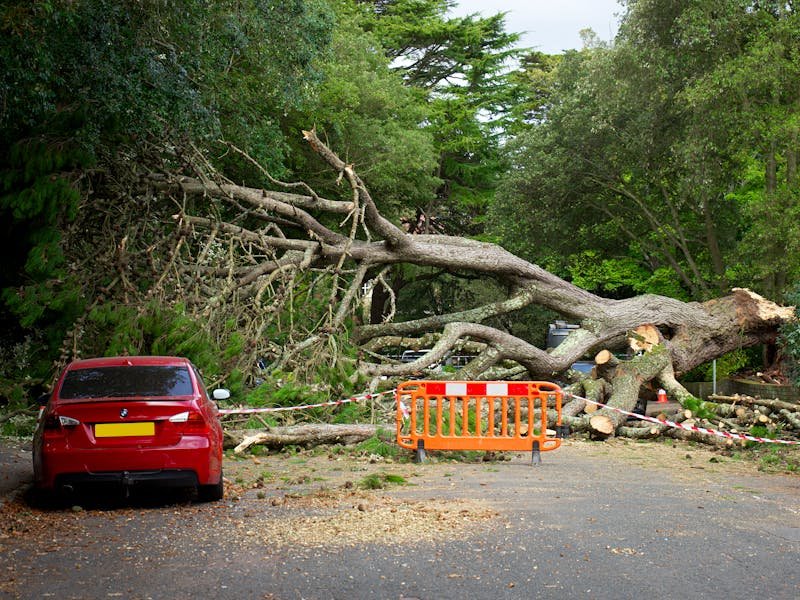
Huntsville sits right in the middle of what meteorologists call "Dixie Alley," the stretch of the southeastern United States that rivals the Great Plains for tornado activity. But unlike traditional Tornado Alley in Oklahoma and Kansas, our storms in North Alabama come with a few extra complications that make them especially dangerous for trees.
First, our storms tend to move fast. A supercell that forms over west Mississippi can be ripping through Decatur and into Madison County within a couple of hours. That speed means less lead time for preparation and more kinetic energy when the wind hits your trees.
Second, our storms are often rain-wrapped. Visibility drops to almost nothing, and the massive rainfall saturates the ground before the strongest winds arrive. This is critical for tree safety because saturated soil dramatically reduces the holding power of root systems. A Loblolly Pine that would stand firm in dry ground can topple over like a popsicle stick when the soil is waterlogged and a 70 mph gust catches its crown.
Third, and this is something a lot of people do not realize, the Tennessee Valley geography actually funnels certain storm systems right through our area. The valley between the Cumberland Plateau to the east and the Highland Rim to the west can channel winds in ways that concentrate their force. Neighborhoods along the bluffs of Monte Sano, the ridgelines in southeast Huntsville, and the open flats around Madison and Harvest are particularly exposed.
Understanding Huntsville's Storm Season Timeline
Storm season in our area is not a single event. It follows a pattern that any long-time North Alabama resident will recognize.
March Through June: The Primary Threat Window
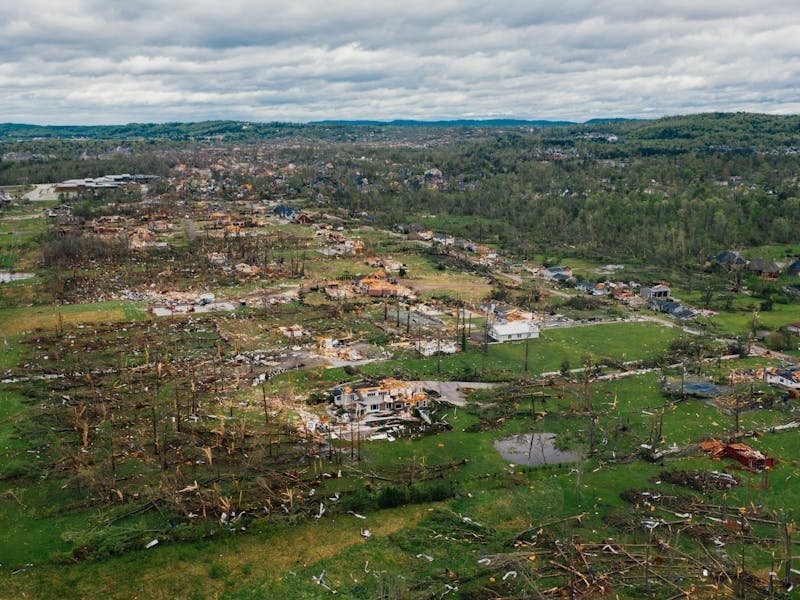
This is when the big, organized severe weather systems roll through. March and April bring the classic springtime supercells that can produce EF2 and EF3 tornadoes. May and June shift more toward straight-line wind events and large hail, though tornadoes remain possible. April is historically the most active month for significant tornadoes in Alabama, and anyone who lived through April 27, 2011 does not need a reminder of what that means for our area.
During this window, you can expect multiple rounds of severe weather per month. Each one is a stress test for every tree on your property.
July Through September: The Summer Storms
Summer brings intense afternoon thunderstorms, often popping up with very little warning. These storms usually do not have the organization of spring supercells, but they can produce microbursts, which are localized downdrafts with wind speeds that exceed 80 mph. Microbursts are sneaky. You might get one that flattens trees on one block while the neighborhood two streets over barely gets wet. If you live near the Research Park area, the Hampton Cove flats, or the wide-open areas around Redstone Arsenal, summer microbursts are a real concern.
November and December: The Overlooked Season
Most people let their guard down after summer, but North Alabama has a well-documented secondary tornado season in late fall. The November and December storms are often nocturnal, which means they strike when people are sleeping and less likely to receive warnings. These storms are responsible for some of the worst tree damage we see each year because homeowners have stopped thinking about storm preparedness and because the leaf-off condition of deciduous trees changes their wind profile in unpredictable ways.
Pre-Storm Tree Preparation: Your Complete Checklist
The best time to prepare is during the dormant season, roughly January and February, before the first spring storms arrive. But honestly, any time you start is better than not starting at all. Here is the checklist we walk through with every property we assess in the Huntsville metro area.
1. Get a Professional Tree Inspection
I am going to be upfront: this is something you cannot do adequately yourself. A trained arborist can spot structural defects that are completely invisible from the ground. We look for things like included bark in branch unions (where two branches grow together and trap bark between them, creating a weak joint), internal decay that shows up as subtle swelling or discoloration on the trunk, root plate lifting that might be hidden under mulch or ground cover, and canopy imbalance that makes a tree likely to twist in high winds.
During a storm readiness assessment, we typically examine every tree within striking distance of your home, your neighbor's home, your driveway, your vehicles, and any power lines on the property. One dead Pine falling across your driveway after a storm can trap you at home for days if you are waiting in line with everyone else for emergency tree service.
2. Prioritize Crown Cleaning and Structural Pruning
This is where professional tree trimming pays for itself many times over. Crown cleaning means removing dead, dying, diseased, and crossing branches throughout the canopy. Every dead branch in your tree is a potential missile during a storm, and crossing branches that rub together create wounds that invite decay.
Structural pruning goes a step further. We reduce the weight on overextended limbs, remove competing leaders that create weak forks, and thin the canopy just enough to let wind pass through rather than catching the crown like a sail. The goal is not to strip the tree bare. Over-thinning actually makes trees more vulnerable because it triggers a flush of weak, whippy interior sprouts. A proper structural prune done by a qualified arborist reduces wind load by about 20 to 30 percent while preserving the tree's natural form and health.
3. Consider Cabling and Bracing for High-Value Trees
Some trees have structural flaws that cannot be corrected by pruning alone, but the tree is otherwise healthy and worth preserving. A large Red Oak with a codominant stem, for example, or a mature Pecan with a heavy lateral limb extending over your patio. In these cases, we install steel cables high in the canopy to limit the movement of weak unions during storms. Modern cabling systems use dynamic cables that allow some natural movement while preventing catastrophic failure.
Cabling is not a permanent fix for a dying tree, but for structurally compromised trees that are otherwise vigorous, it can buy decades of additional safe life. We install cabling systems on trees throughout Meridianville, Madison, and the older neighborhoods in downtown Huntsville where mature canopy trees are a defining feature of the streetscape.
4. Address Root Zone Issues
Root problems are the number one cause of whole-tree failure during storms. Compacted soil from construction or heavy foot traffic, severed roots from utility trenching, and grade changes that bury the root flare all compromise a tree's anchorage. If your tree's trunk goes straight into the ground with no visible flare at the base, it probably has buried roots that may be circling and girdling the trunk underground.
Before storm season, pull back mulch and soil to expose the root flare. Check for circling roots, fungal fruiting bodies (mushrooms), and any signs of decay at the base. If you see mushrooms growing at the base of a large tree, call a professional immediately. That visible fruiting body means the internal decay is already advanced.
5. Remove Obvious Hazard Trees
Some trees are simply beyond help, and no amount of pruning or cabling is going to make them safe in a 70 mph wind event. If you have a large dead tree on your property, a tree with extensive trunk decay, or a tree that has already begun leaning after a previous storm, pre-storm tree removal is the responsible choice. The cost of planned removal during the dormant season is typically 30 to 50 percent less than emergency removal after the tree has fallen, and you get to choose where the tree goes down instead of letting the wind decide for you.
Species-Specific Advice for Common Huntsville Trees
Not all trees behave the same way in a storm. After decades of post-storm cleanup across North Alabama, I have developed a very clear picture of which species hold up and which ones do not. Here is what you need to know about the most common trees in our area.
Water Oaks: The Ticking Time Bombs
Water Oaks are everywhere in Huntsville. They grow fast, they provide great shade, and homeowners love them. But in the tree care industry, we have a saying about Water Oaks: they are the tree most likely to be on your house after a storm. The reasons are straightforward. Water Oaks have relatively shallow root systems compared to other oak species. Their wood is softer and more brittle than White Oaks or Red Oaks. They are highly susceptible to internal decay from heart rot fungi, and that decay is often invisible from the outside. A Water Oak that looks perfectly healthy can be hollowed out to the point where the trunk wall is only two or three inches thick.
If you have mature Water Oaks on your property, especially any over 50 years old, get them inspected annually. We perform resistograph testing on suspect trees, which involves drilling a thin needle into the trunk to map the internal density. This tells us exactly how much solid wood is left and whether the tree can handle storm-force winds.
Loblolly Pines: Top-Heavy and Vulnerable
Loblolly Pines are the most common pine species in the Huntsville area, and they are also one of the most storm-vulnerable. Mature Loblollys are tall, sometimes reaching 80 to 100 feet, with most of their crown weight concentrated at the very top. Their root systems are wide but shallow, spreading out in a flat plate rather than driving deep anchoring roots into the ground.
When a strong storm dumps several inches of rain before the heavy winds arrive, the saturated clay soil that is so common in Madison County loses its ability to grip those shallow roots. The result is what we call "windthrow" or "blowdown," where the entire tree topples over with its root plate intact, often taking a massive disk of soil with it. If you have a stand of Loblolly Pines and one goes over, the root disturbance can destabilize the adjacent trees, leading to a domino effect.
The best preparation for Loblolly Pines is to keep them healthy and avoid soil compaction in the root zone. Thin dense stands so that remaining trees can develop stronger trunks and wider root plates. Remove any Pines that are growing within 15 feet of your house, because there is simply no way to guarantee a tall Pine will stay upright in an EF1 or higher event.
Bradford Pears: Beautiful Until They Aren't
If I had a dollar for every split Bradford Pear we have cleaned up after a storm, I could have retired ten years ago. Bradford Pears were planted by the thousands across Huntsville subdivisions in the 1980s and 1990s. They look gorgeous in the spring with their white blossoms, but their branch structure is an engineering disaster. The branches attach to the trunk at extremely tight angles, creating included bark unions at virtually every major branch junction. Included bark acts like a wedge, preventing the branch from forming a strong attachment to the trunk.
The typical failure mode for a Bradford Pear is a split down the middle. One side peels off and falls, and the rest of the tree follows shortly after. This can happen in winds as low as 40 to 50 mph, which is barely a severe thunderstorm by Alabama standards. Our recommendation is straightforward: if your Bradford Pear is over 15 years old, plan for its removal and replacement with a structurally superior species. If removal is not in the budget yet, aggressive structural pruning to reduce the weight on major limbs can buy some time, but it is not a permanent solution.
Trees That Hold Up Well
Not every species is a liability. White Oaks, Hickories, Bald Cypress, and Southern Magnolias tend to perform exceptionally well in storms. These species develop strong branch attachments, deep root systems, and dense wood that resists breakage. If you are planting new trees on your Huntsville property, consider these species for long-term storm resilience. Live Oaks are another outstanding choice, though they are at the northern edge of their range here in North Alabama and need the right microclimate to thrive.

What to Do Immediately After Storm Damage
The storm has passed, the power is out, and you can hear chainsaws starting up across the neighborhood. Here is the step-by-step process we recommend to every homeowner.
Step 1: Stay Away from Downed Trees and Limbs
This sounds obvious, but every storm season we see people taking dangerous risks around damaged trees. A tree that is partially uprooted but still standing, what we call a "leaner" or a "hanger," can come down at any moment without warning. Broken branches lodged in the canopy above you can drop without provocation. And downed power lines can energize trees and the ground around them. Do not approach any tree that is in contact with or near power lines. Call Huntsville Utilities and wait for them to disconnect and clear the line before anyone goes near that tree.
Step 2: Document Everything Before You Touch Anything
Before you move a single branch, walk around your property with your phone and take photos and video of every piece of damage from multiple angles. Photograph the whole tree, the point of failure, any structural damage to your home, fence, vehicles, or outbuildings, and any damage to your neighbor's property caused by your tree. This documentation is critical for your insurance claim, and once you start cutting and cleaning, you lose the ability to show the adjuster what actually happened.
Step 3: Assess the Urgency
Not every storm-damaged tree is an emergency. Here is how to triage the situation:
- Call for emergency tree service immediately if a tree is on your house, blocking your only exit, resting on power lines, or actively splitting and could fall on a structure at any moment.
- Call within 24 to 48 hours if a tree has fallen in your yard but is not threatening structures, large limbs are hanging in the canopy but are currently stable, or a tree is leaning but has not yet contacted anything.
- Can wait a week or more for cosmetic canopy damage, small broken branches scattered in the yard, or bark damage from hail.
Understanding this triage saves you money. Emergency tree work during an active storm event typically costs two to three times more than scheduled work a few days later. If your situation is truly urgent, do not hesitate to call. But if it can safely wait 48 hours, you will get better pricing and faster service once the initial rush of true emergencies has been handled.
Step 4: Avoid DIY Chainsaw Work on Large Trees
I cannot stress this enough. After every major storm, emergency rooms across Madison County fill up with chainsaw injuries. Trees under tension, hung up in other trees, or leaning against structures store enormous amounts of energy. When you cut into them incorrectly, they can spring, roll, or drop with lethal force. Cutting storm-damaged trees is the single most dangerous task in the tree care industry, and it should be left to professionals with the training and equipment to do it safely.
Small branches on the ground that you can move by hand? Absolutely, clean those up. Anything that requires a chainsaw, a ladder, or more than one person to move? Call a professional tree removal crew.
When to Call Emergency Tree Service vs. When It Can Wait
After a major storm event, every tree service in Huntsville and Madison County is flooded with calls. Understanding what constitutes a true emergency helps both you and us respond more effectively.
True Emergencies That Cannot Wait
- A tree on or through the roof of an occupied building
- A tree blocking the only access to a property where someone needs medical attention
- A tree in contact with downed power lines (call Huntsville Utilities first at 256-535-1200)
- A tree that has struck a gas line (call 911 and evacuate)
- A partially failed tree that is actively moving and could strike an occupied structure
Urgent but Not Emergency Situations
- A tree fallen across the driveway when other exits are available
- Large hanging limbs that are currently stable but could fall in the next storm
- A tree leaning heavily but not in contact with any structure
- A tree that has fallen in the yard, away from all structures
For true emergencies, we dispatch crews around the clock. For urgent situations, we typically schedule service within 24 to 48 hours once we have addressed all life-safety calls. If someone knocks on your door after a storm offering tree work for cash, be very careful. Legitimate tree services carry liability insurance and workers' compensation. Storm-chaser crews that follow severe weather events often do not, and if someone is injured on your property while working without insurance, you could be liable.
Insurance Tips Every Alabama Homeowner Should Know
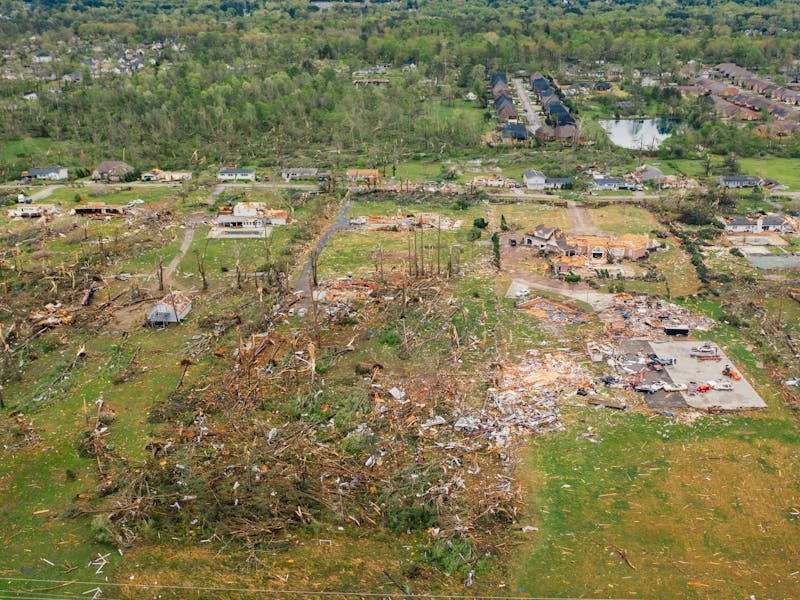
Filing an insurance claim after storm damage can be confusing, especially when trees are involved. Here is what we have learned from helping hundreds of homeowners navigate this process across Huntsville, Decatur, and Athens.
What Is Typically Covered
- Removal of a tree that has fallen on an insured structure (house, garage, fence, shed, driveway)
- Damage to the structure itself caused by the fallen tree
- Most policies provide $500 to $1,000 per tree for removal from structures
- Additional living expenses if your home is uninhabitable
What Is Usually Not Covered
- Removal of a tree that fell in your yard but did not hit any structure
- Damage to landscaping from a fallen tree
- Preventive tree removal or trimming before a storm
- Damage from trees you knew were hazardous and failed to address (this is becoming more common in claim denials)
Pro Tips for Maximizing Your Claim
- Document before cleanup. Photos, video, measurements. The more evidence you provide, the smoother the process.
- File your claim within 24 hours. Early filers get assigned adjusters faster.
- Get itemized estimates. Have your tree removal company provide a detailed breakdown of costs: removal, debris hauling, stump grinding, and any structural work needed.
- Ask about your policy's tree removal sublimit. Some policies have higher coverage than the standard $500 per tree. You might have more coverage than you think.
- Do not sign anything from a contractor who showed up uninvited. Legitimate companies will not pressure you into signing a contract on the spot.
- Keep receipts for everything, including temporary tarps, hotel stays, and any emergency mitigation work you had to pay for out of pocket.
One more thing worth mentioning: if your insurer determines that a tree that caused damage was dead or obviously hazardous before the storm, they may deny part or all of your claim on the basis of homeowner negligence. This is another reason why proactive tree care and annual inspections are not just about preventing damage. They also protect your ability to collect on a claim if damage does occur.
Building a Long-Term Storm Resilience Plan
Storm preparation is not a one-time event. The most protected properties in Huntsville are the ones where homeowners take a long-term approach to managing their trees. Here is what that looks like in practice.
- Annual professional inspection of all trees within striking distance of structures, ideally in January or February
- Routine pruning on a 3-year cycle to maintain crown structure, remove deadwood, and manage growth
- Strategic removal of species with poor storm performance (Bradford Pears, mature Water Oaks with decay, leaning Loblolly Pines) and replacement with storm-resilient species
- Soil management to prevent compaction in root zones, including proper mulching and avoiding parking vehicles under tree canopies
- Lightning protection for landmark trees, especially tall hardwoods on ridgelines in the Monte Sano and southeast Huntsville areas where lightning strike frequency is highest
The investment in proactive tree care is modest compared to the cost of storm damage. A thorough pruning of a mature Hardwood runs $300 to $800. A complete removal of a storm-damaged tree on a house can easily exceed $3,000, and that does not even include the structural repairs to your roof. The math is simple.
Frequently Asked Questions
When is storm season in Huntsville, Alabama?
Huntsville's primary severe storm season runs from March through June, with April being the single most dangerous month historically. There is also a secondary storm season in November and December that catches many homeowners off guard. Because our area sits in Dixie Alley, severe thunderstorms and tornadoes can technically occur any month of the year. The ideal time to prepare your trees is during late winter, in January or February, before the spring season ramps up.
Which trees in Huntsville are most likely to fail during a storm?
Water Oaks are the single most failure-prone species in the Huntsville area due to shallow roots, brittle wood, and hidden internal decay. Loblolly Pines are extremely vulnerable to uprooting when soil is saturated. Bradford Pears split apart in winds as low as 40 mph because of their inherently weak branch structure. Sweetgums with included bark unions and Silver Maples are also high-risk. On the other hand, White Oaks, Hickories, and Southern Magnolias tend to hold up very well in severe weather.
How much does emergency storm damage tree removal cost in Huntsville?
Emergency storm damage tree removal in Huntsville typically runs $500 to $3,500 depending on tree size, location, and whether it has struck a structure. Standard storm cleanup for fallen limbs usually costs $200 to $800. Large trees on houses or across driveways requiring crane work often range from $1,500 to $3,500 or more. If your homeowners insurance covers the damage, most of these costs can be reimbursed.
Does homeowners insurance cover tree removal after a storm in Alabama?
In most cases, yes, if the tree fell on an insured structure like your house, garage, fence, or driveway. Standard policies typically include $500 to $1,000 per tree for removal costs. However, if a tree falls in your yard and does not damage any structure, most policies will not cover the removal. Document all damage with photos and video before any cleanup, and contact your insurance company within 24 hours.
Should I remove dead branches myself before storm season?
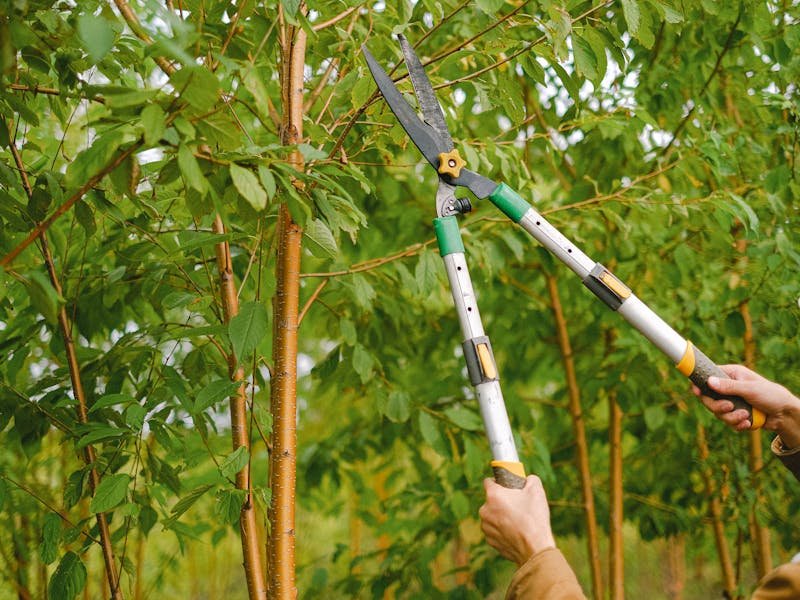
Small dead branches that you can reach from the ground with a pole pruner or hand saw are generally safe to remove yourself. However, any branch thicker than 4 inches, any branch above 15 feet, or any branch near power lines should be handled by a professional tree trimming crew. Improper pruning cuts can actually make trees more vulnerable by creating entry points for decay or causing unbalanced regrowth. A professional arborist can also identify hidden structural problems that are not visible from ground level.
How far in advance should I have my trees inspected before storm season?
We recommend scheduling your inspection in January or February, giving us enough time to perform any recommended pruning, cabling, or removal before severe weather arrives in March. If you have missed the winter window, it is still worth calling. A mid-season assessment can identify immediate hazards that need attention. For properties with large, mature trees, especially Water Oaks, Loblolly Pines, and Bradford Pears, we recommend annual inspections as part of an ongoing storm readiness plan.