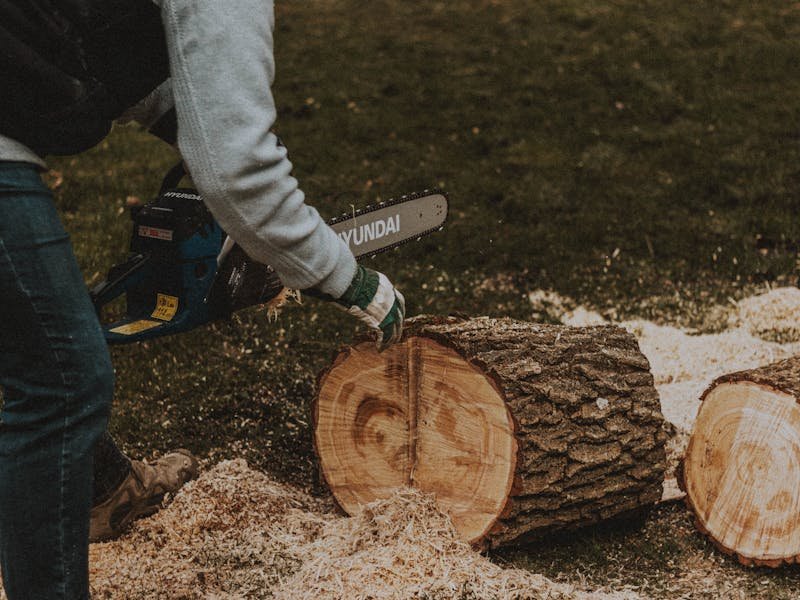
The tree came down two weeks ago. The crew did a great job, hauled away the logs, swept the driveway, and left you with a clean yard. Except for one thing. There is a stump sitting there in the middle of your grass, about 14 inches across, and you are starting to realize you have no idea what to do with it.
Mowing around it is annoying. The kids tripped on it twice last weekend. You thought maybe it would just rot away on its own, but a healthy oak stump can take 10 to 15 years to fully decompose. That is not a plan. That is a problem you have decided to ignore.
This is the situation we get called out for almost every day at Huntsville Tree Pros. Sometimes it is a fresh stump from a recent removal. Sometimes it has been there since the previous owner lived in the house. Either way, the question is the same: how does this work, and what am I going to be left with?
I want to walk through the whole process. The actual mechanics of what we do, what the day of the grind looks like, and what your yard is going to look like when we are done. If you are thinking about stump grinding in Huntsville, this is what to expect.
Stump grinding vs stump removal (the actual difference)
People use these terms interchangeably and they should not. They are two different jobs with two very different price tags.
Stump grinding is what most homeowners actually want. We bring in a machine with a spinning cutter wheel and chew the stump down into wood chips. We grind 6 to 12 inches below the surface of your yard. The visible stump disappears. You can plant grass over it, lay sod, run a mower over it. The lateral roots that spread out underneath your yard? Those are still there. They will rot away over the next 5 to 10 years, but they are not coming out today.
Stump removal is a different animal. That means physically extracting the stump and the root ball with an excavator or a backhoe. The roots come up. The stump comes up. You are left with a hole roughly the size of a hot tub that has to be backfilled with dirt. It is messy and it costs significantly more.
Most residential customers do not need full removal. Grinding handles 95% of the situations we see. The exception is when you want to build something where the stump used to be, or plant a new tree in the exact same location. We have a separate post comparing stump grinding vs removal if you want to dig into that decision.
What a stump grinder actually is
A stump grinder is built around one core component: a heavy steel cutting wheel, usually 12 to 24 inches across, covered in dozens of carbide-tipped teeth. That wheel spins at high speed. The operator lowers it onto the stump and sweeps it side to side. The teeth chew off small bites of wood with each pass, working through the stump a fraction of an inch at a time.
It is loud, but it works on wood that would take you all day to chip away with an axe.
There are four main types you will see in the field.
Small handheld grinders look like an oversized weed eater with a cutting wheel on the end. They are useful for tiny stumps, surface roots, or stumps in tight spots where nothing bigger fits. Slow, but they get into corners.
Walk-behind grinders are the workhorse for residential jobs. They look like a beefed up lawnmower with a hydraulic boom and a cutting wheel out front. These fit through a standard 36-inch gate, which matters in older Huntsville neighborhoods where backyards are fenced in.
Ride-on grinders are the next size up. The operator sits on the machine, similar to a small skid steer. More horsepower, bigger wheel, faster on large stumps. Harder to maneuver in tight yards.
Tow-behind grinders are the heavy duty option for big commercial jobs or massive old-growth stumps that the smaller machines would chew on for hours.
For most yards in Huntsville, we are bringing a walk-behind. It fits through gates and leaves the smallest footprint on your turf.
The stump grinding process step by step
Here is what an actual job looks like from start to finish.
Day 1: site assessment and 811
Before any grinding happens, we walk the property and look at the stump. We are checking a few things. How big is the stump. What species (some woods grind faster than others). What is the access like (can we fit a walk-behind through the gate). And what is around the stump that could get damaged.
Then we mark utilities. Alabama 811 is the call-before-you-dig service, and it is required by state law. We submit a locate request, and within a few business days, the utility companies come out and mark their lines with colored paint or flags. Yellow for gas, blue for water, red for electric, orange for communications. Hitting a gas line with a stump grinder is the kind of thing that makes the news.
If the stump is sitting on top of marked lines, we adjust the approach. Sometimes that means grinding shallower than usual. Sometimes it means hand-digging around the stump first to expose the lines.
The grinding itself
The operator positions the machine, drops the cutter wheel onto the top of the stump, and starts working. The wheel chews down a few inches at a time, sweeping back and forth.
A typical residential stump takes 15 to 90 minutes. A small 8-inch crepe myrtle stump might be done in 15 minutes. A 24-inch oak stump usually runs 45 to 60 minutes. A massive 40-inch water oak that has been sitting since the 1990s can take 90 minutes or more.
The noise is significant. Plan to have the dogs inside. The machine is roughly as loud as a riding mower, sometimes louder.
Depth
Standard grinding goes 6 to 12 inches below grade. Six inches is enough for grass. Twelve inches lets you plant most flowers and shrubs without hitting old wood. For a new tree, you typically need 18 inches or more.
We confirm depth before we start. There is no extra charge for going deeper, but it adds time and generates a lot more wood chips.
Cleanup
Grinding produces a surprising volume of wood chips. A medium stump can fill a wheelbarrow two or three times over. Big stumps produce a small mountain.
By default we pile the chips back into the hole, smooth them out, and call it good. If you want a more finished look, we can haul the chips away for a small extra fee and leave you with just the depression.
What you are left with afterward
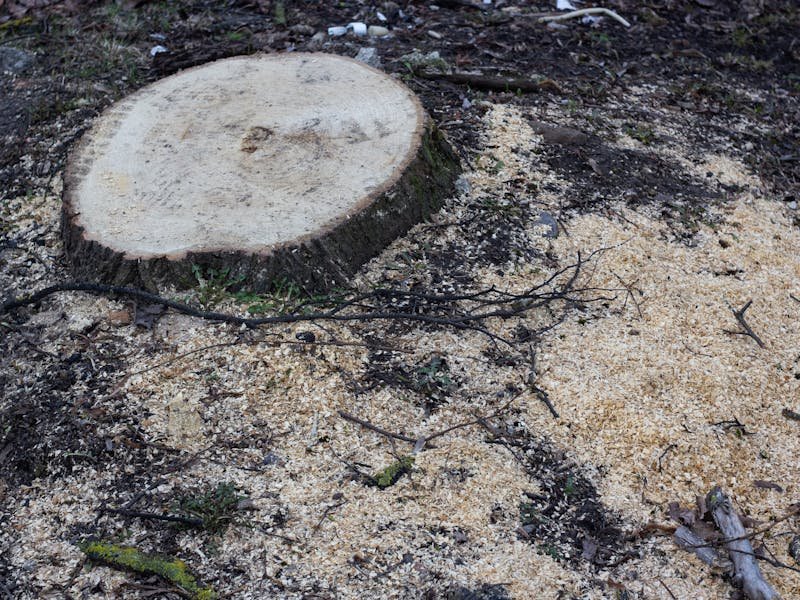
Here is the part homeowners are not always prepared for. After we grind a stump, you are not left with flat ground. You are left with a depression where the stump used to be.
For an average 18-inch oak stump ground 8 inches deep, the resulting hole is roughly 24 inches across and 8 to 10 inches deep, often filled with wood chips. If you walk over it without paying attention, you will probably stumble.
You have a few options for filling that hole. Leave the chips in place and let them settle for 6 to 12 months. They will compact down and the depression will gradually shrink, but the area looks scruffy and you cannot grow grass over wood chips.
Or haul the chips away and fill the hole with topsoil. This is what most homeowners want. Pack the soil in firmly, mound it slightly above grade because it will settle, and seed or sod over the top.
Or leave the wood chips on top and use them as mulch for a flower bed. If the stump was in a spot where you want a planting area anyway, the chips work as a natural mulch base.
The wood chip question
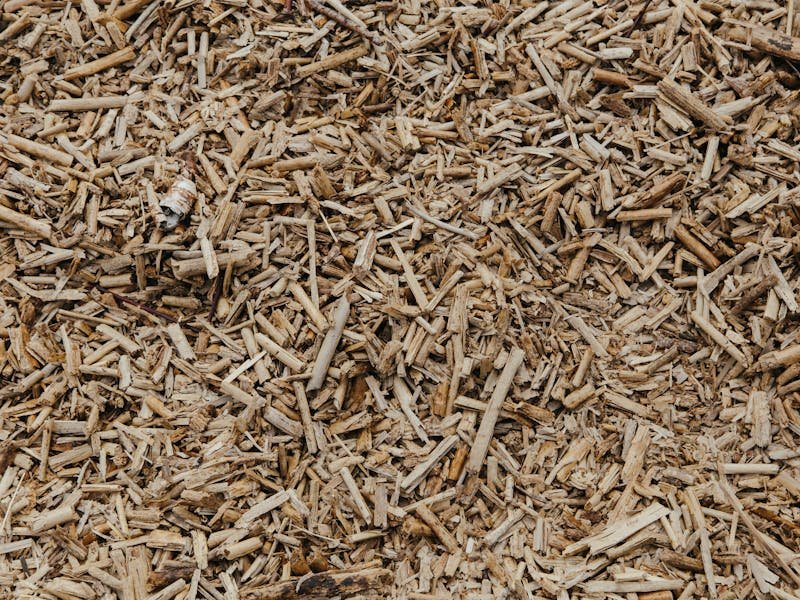
People always ask what happens to the chips. The chips make decent mulch, especially for non-edible landscape beds. They suppress weeds, retain moisture, and break down into the soil over a couple of years. Free mulch is one of the small perks of stump grinding.
If the stump was in a high-visibility area like a front yard, we can haul the chips off for a small fee. Some folks spread the chips on garden paths, in chicken runs, in dog yards, or as a temporary base for outdoor projects. We have a separate guide on what to do with wood after tree removal that covers more uses.
One thing to know: do not put fresh stump chips directly into your vegetable garden as soil. Fresh chips tie up nitrogen as they decompose, which can stunt your tomatoes and peppers. Composting them for a year first solves that problem.
Underground utilities (the part that scares me the most)
This is the single biggest risk in stump grinding. Underground utilities run through more residential yards in Huntsville than people realize. Newer subdivisions have buried gas lines feeding every house. Cable and fiber are buried just a few inches deep in many cases. Sprinkler lines are everywhere in established neighborhoods.
A stump grinder cuts through buried lines like they are not even there. Hitting a fiber line costs a few hundred dollars to repair and ruins your internet for a few days. Hitting a water line floods your yard. Hitting a gas line is a serious incident that can mean evacuation, fire department, and damage in the thousands.
The Alabama 811 system is free and required. We file the locate request, the utility companies mark their lines, and we work around them. If you are thinking about grinding a stump yourself with a rental machine, please call 811 first. The DIY savings are not worth the risk.
Note that 811 only marks public utilities up to your meter. Private lines (sprinklers, low voltage landscape lighting, gas lines from your meter to your grill, electric lines to a detached garage) are not marked. You should mark those yourself before we arrive if you know their location.
Driveway, fence, and sprinkler considerations
Driveways and walkways. If the stump is within 5 to 10 feet of a concrete driveway or sidewalk, surface roots may have lifted or cracked the concrete. Grinding those roots can worsen the cracking, and grinding too close to the concrete edge can chip it. We will discuss this on site.
Fences. Stumps along property lines are common. We will protect the fence with plywood or take a section down temporarily if needed. If the stump is up against a fence post, the post sometimes has to come out.
Sprinkler systems. Mark the heads near the stump before we arrive. Sprinkler line damage from stump grinding is one of the more common small claims I deal with, and it is almost always preventable with a little advance flagging.
How long until you can plant grass or a new tree
For grass, the answer is fairly quick. Fill the depression with topsoil, tamp it down, and you can seed or sod within a few weeks. Wait long enough for the soil to settle (a few good rains help), top off any sinking, and then go ahead. Within a single growing season, the spot blends back into your lawn.
For a new tree, you have to wait longer, and even then I would push back on the idea. The soil is full of decomposing wood, leftover roots, and potentially root pathogens. New tree roots get nitrogen tied up by the decomposing chips, they encounter old root channels that can carry disease, and they often fail to establish.
If you absolutely have to plant a tree in the same spot, wait at least 2 to 3 years, dig a hole significantly larger than the root ball, remove as many old wood chips as you can, and amend with fresh topsoil and compost. Or just plant the new tree 8 or 10 feet away.
Why you might not want to plant another tree there at all
If the original tree died from disease, planting in the same spot is asking for trouble. Several common Alabama tree diseases live in the soil and infect new hosts. Armillaria root rot is a fungal infection that can kill oaks, maples, and many other species. It persists in old root systems for years and infects anything new you plant nearby. If the original tree died from oak wilt, the soil pathogens can transmit to a new oak.
Even if disease was not the cause, the leftover root system is going to compete with new roots, and the decomposing wood is going to mess with soil nutrition. The smarter play is almost always to plant your new tree somewhere else in the yard.
The unexpected stuff
A few things that surprise homeowners after a grind.
Old roots dying for years. The lateral roots stay in the ground. For 5 to 10 years, those roots are slowly decaying. You may notice spots in your lawn that grow differently than the rest, mushroom growth in damp weather, or occasional sinking where a root rotted out.
Mushrooms. Decomposing wood and fungi go together. Expect mushrooms popping up over the old stump area, especially in spring and fall. They are usually harmless saprophytic fungi feeding on the dying wood. Knock them down with a rake.
Sinkholes. Small ones. As old roots decompose underground, the soil above them sometimes settles. Top it off with soil, reseed, and move on. Plan to do this once or twice in the first few years after a grind on a large stump.
Common scenarios in Huntsville
I have seen every kind of stump situation this part of Alabama can throw at us. A few patterns come up over and over.
Front yard stump in a newer subdivision
Hampton Cove, parts of Madison, Jones Valley newer sections. The houses are 10 to 25 years old, the trees were planted by the developer, and one of them died or got hit by a storm. The stump is in a small front yard with sprinklers, fiber lines, gas lines, and decorative concrete edging. These jobs require careful planning. We file 811, mark sprinklers, and use a smaller walk-behind to keep the footprint contained.
Old stump in Five Points or Twickenham
A different beast. The original tree may have been a 100-year-old oak that came down 30 years ago. The previous owners cut it flush to the ground, and the stump has been slowly rotting under a pile of leaves ever since. The visible stump is small, but the lateral root system is enormous. These take longer to grind, and surprises are common. Hidden cinder blocks, old buried fencing, abandoned utility lines from the 1950s.
Stump near the foundation
The trickiest scenario. A tree was planted too close to the house decades ago and now the stump is 3 feet from the foundation. Grinding here means thinking about the foundation wall, French drains, downspout drains, the gas service line entering the house, and possibly the main electric service. We grind shallow, hand expose any visible utilities first, and sometimes recommend stopping short of full depth to protect the foundation.
Wrapping it up
Stump grinding is one of those services that looks simple from the outside and gets more complicated the closer you look. The machine work is straightforward. The planning around utilities, access, and aftermath is what separates a clean job from a mess.
If you have got a stump in your yard and you are tired of mowing around it, we can help. We service all of Madison County, from Huntsville proper out to Madison, Hampton Cove, Meridianville, and everywhere in between. We file 811, we bring the right size machine for your yard, and we leave the site clean. If you want to know what something costs, our post on stump grinding cost in Huntsville breaks down the pricing in detail.
Call us when you are ready, or send some photos through our contact form and we will get you a free estimate.