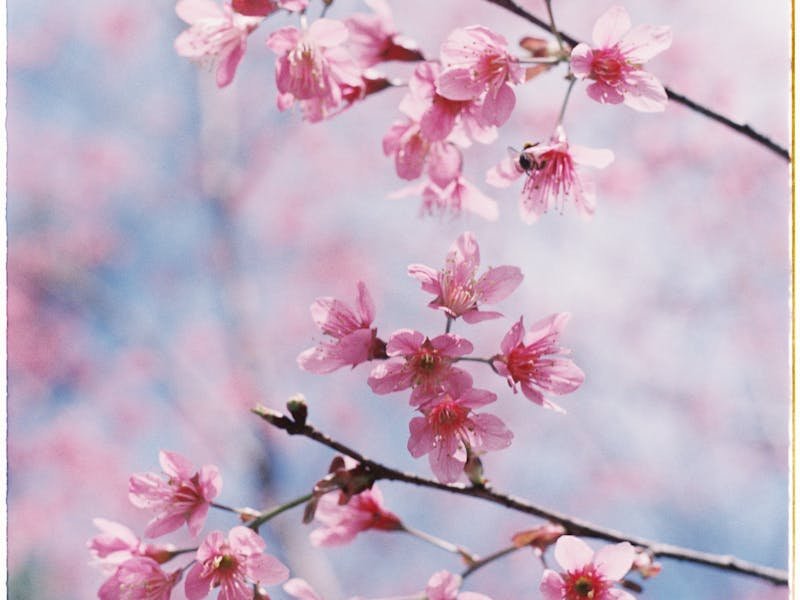
If you bought a house in Huntsville anytime between the early 1980s and the mid-2000s, there is a very good chance you have a Bradford Pear tree in your yard. Maybe two. Maybe a whole row of them along your property line or framing your driveway. They were everywhere. Builders loved them. Landscapers planted them by the truckload. Homeowners liked the white spring flowers and the symmetrical shape, and for a few years, everything seemed great.
Then the trees grew up. And everything that could go wrong with them did.
Drive through any established neighborhood in Madison, South Huntsville, Jones Valley, or Bailey Cove in the spring, and you will see what we mean. Bradford Pears split apart. They crack right down the middle during spring thunderstorms, dropping massive sections onto roofs, cars, fences, and power lines. The ones that have not split yet are blooming with those white flowers that smell, frankly, like a combination of rotting fish and dirty gym socks. And in the fields and forest edges all around Huntsville? Invasive Callery Pear seedlings, the offspring of those ornamental Bradford Pears, are taking over native habitat at an alarming rate.
We have removed more Bradford Pear trees than we can count. Whole ones, half ones, split ones, ones that have dropped limbs through windshields, and ones that have peeled apart like bananas in ice storms. And our message to every Huntsville homeowner with a Bradford Pear in their yard is the same: it is time to get rid of it before it gets rid of itself, on its own terms, probably during the worst possible moment.
This article covers everything you need to know: why Bradford Pears are such a disaster, what the removal process looks like, what it costs, and what you should plant instead. Because here is the good news in all of this: there are much, much better trees for Huntsville yards, and getting rid of a Bradford Pear is an opportunity to plant something that will actually serve your property well for generations.
The Rise and Fall of the Bradford Pear: How a "Perfect" Tree Turned Out to Be a Nightmare
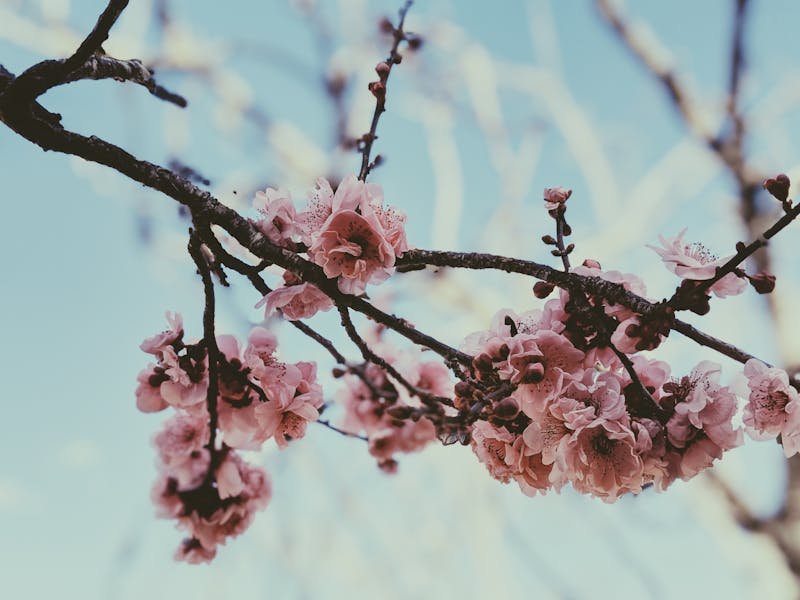
Understanding how we got into this mess helps explain why the Bradford Pear is such a uniquely terrible tree. It is a case study in good intentions going spectacularly wrong.
The Bradford Pear (Pyrus calleryana 'Bradford') was introduced in the 1960s by the U.S. Department of Agriculture as an ornamental street tree. On paper, it seemed like the perfect urban tree. It grew fast, usually 3 to 5 feet per year. It had a dense, symmetrical, oval canopy that required virtually no pruning to look good. It produced showy white flowers in early spring. It tolerated poor soil, drought, and pollution. It was resistant to fire blight, a disease that plagued other pear varieties. And most importantly, it was supposed to be sterile, meaning it would not produce fruit and create a mess.
Landscapers, developers, and municipal planners across the South jumped on it. Throughout the 1980s and 1990s, Bradford Pears became the default landscaping tree for new construction across Alabama and the rest of the southeastern United States. Builders in Huntsville planted them in every new subdivision from Research Park to Hampton Cove to the developments along Jeff Road. They were cheap, fast-growing, and made new construction look established within a few years. What was not to love?
Well, quite a lot, as it turned out.
The Structural Flaw Nobody Talked About
The Bradford Pear's beautiful symmetrical shape is actually its fatal flaw. All of those branches grow from a very narrow attachment point on the trunk, at tight, upward angles. In the tree care industry, we call this "co-dominant branching with included bark." What it means in plain English is that the branches are not strongly attached to the trunk.
In a properly structured tree, like a white oak or a hickory, the branch union forms a wide U-shape with a ridge of raised bark at the joint, indicating that wood fibers from the trunk and branch are interweaving and creating a strong connection. In a Bradford Pear, the branch unions form tight V-shapes where bark gets trapped between the branch and trunk instead of wood. This included bark acts like a wedge, pushing the pieces apart as the tree grows, and providing almost no structural strength.
The result is predictable and devastating. As the tree matures, typically when it reaches 15 to 25 years old and the branches get heavy, the weak unions start failing. It does not take a tornado. A moderately strong thunderstorm, the kind we get in the Tennessee Valley every other week from March through June, can split a Bradford Pear wide open. Ice loading during a winter storm? They shatter like glass. We have seen Bradford Pears split apart on calm, clear days simply because the branches got heavy enough to exceed the strength of the bark-filled unions.
We get more emergency calls for split Bradford Pears than for any other single species. After a spring storm rolls through, our phone lights up with calls from neighborhoods across Huntsville, Decatur, and Athens. Half a Bradford Pear on a roof here, a Bradford Pear section across a driveway there. It is the most predictable pattern in our business.
The Invasive Offspring Nobody Predicted
Remember how the Bradford Pear was supposed to be sterile? That was based on the fact that a Bradford Pear cannot pollinate itself to produce viable seeds. And that was true. But nobody accounted for what would happen when other Callery Pear cultivars were introduced into the market.
After the Bradford became popular, nurseries developed additional Callery Pear cultivars, Cleveland Select, Chanticleer, Aristocrat, Autumn Blaze, and others, trying to fix the Bradford's structural problems. These cultivars were genetically different enough from the Bradford to cross-pollinate with it. Suddenly, every Bradford Pear within bee range of another Callery Pear cultivar was producing viable seeds. Birds ate the small fruits and spread the seeds everywhere.
The result has been an ecological catastrophe. Invasive Callery Pear seedlings are now established across virtually every county in Alabama. They grow in abandoned fields, along roadsides, at forest edges, in fence rows, and in any disturbed soil. Unlike the ornamental Bradford, these wild seedlings develop vicious thorns, some 3 to 4 inches long, sharp enough to puncture tractor tires. They form dense, impenetrable thickets that crowd out native species and destroy native habitat.
Drive along I-565 between Huntsville and Decatur in late March, when the Callery Pears bloom. You will see solid walls of white flowers along the roadside and in every open field. Those are not native trees. Those are invasive Callery Pear offspring from decades of Bradford Pear planting. Every Bradford Pear in your yard is potentially contributing to this invasion.
And Then There Is the Smell
We have to talk about it. Everyone in Huntsville knows the smell. When Bradford Pears bloom in late March and early April, they fill the air with an odor that most people diplomatically describe as "unpleasant" and that the less diplomatic among us describe as something involving dead fish and old socks. The chemical compounds responsible for the smell, trimethylamine and dimethylamine, are the same ones found in rotting fish tissue.
This was less of an issue when there were a few Bradford Pears scattered around town. But when entire neighborhoods were planted with them, and when the invasive offspring started blooming along every highway and in every field, spring in Huntsville developed a distinctly funky edge. Neighborhoods in Five Points, Blossomwood, and across Madison become particularly aromatic when the Bradfords are in full bloom and the wind is right.
Alabama's Growing Awareness of the Callery Pear Problem
The tide has turned decisively against the Bradford Pear in Alabama and across the Southeast. Several states have taken action. South Carolina implemented a ban on the sale and planting of Callery Pear cultivars. Ohio and Pennsylvania have established Bradford Pear bounty programs offering free native trees to homeowners who remove their Bradford Pears. More states are considering similar measures.
In Alabama, the Cooperative Extension System and the Alabama Invasive Plant Council have classified Callery Pear as an invasive species and are actively educating the public about the problems it causes. While Alabama has not yet enacted a statewide ban on Bradford Pear sales, the conversation is moving in that direction, and nurseries across the state are voluntarily phasing them out.
Local organizations in the Huntsville area, including Master Gardener groups and conservation organizations, have begun hosting tree swap events where homeowners can exchange their Bradford Pears for free native trees. These events have been well-received, which tells you something about how the public perception of the Bradford Pear has shifted. A tree that was once considered essential for a landscaped yard is now seen as a liability.
The Bradford Pear Removal Process
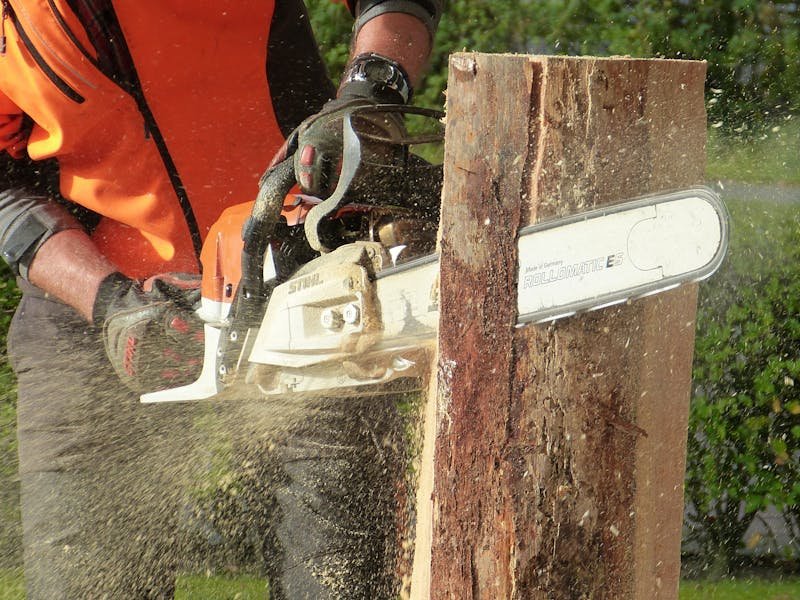
If you have decided it is time for your Bradford Pear to go, and we strongly encourage that decision, here is what the removal process typically looks like.
Most mature Bradford Pears in the Huntsville area are in the 25 to 40 foot height range with a canopy spread of 20 to 35 feet. They are not the tallest trees we deal with, but they present some specific challenges that make professional removal strongly recommended.
The branch structure makes rigging unpredictable. Because of those weak, included bark unions we discussed, you cannot load-test a Bradford Pear's branches the way you can with a structurally sound species. What looks like a solid limb can fail under the weight of a climber or the stress of a rigging load. Our crew approaches Bradford Pears with extra caution because of this unpredictability.
The wood is surprisingly hard and dense. Despite its structural weakness at the branch unions, Bradford Pear wood between the unions is quite hard and dense. This means more wear on chainsaw chains and slower cutting than you might expect for a tree of this size.
They tend to be planted close to structures. Builders planted them as foundation plantings, driveway framing trees, and along property lines, meaning they are almost always within falling distance of something you do not want damaged. This requires directional felling or sectional removal rather than just dropping the whole tree.
A typical Bradford Pear removal by our crew takes two to four hours depending on location and access. We fell or section the tree, chip the brush, cut the trunk wood into manageable sections for removal, and clean the site. The stump is then ground below grade and the area is filled and raked smooth.
Removal Cost
Bradford Pear removal costs in the Huntsville area typically range from $400 to $1,200 depending on the tree's size, location, and condition. The average mature Bradford Pear removal runs $500 to $900, which includes felling, limbing, chipping, and cleanup. Stump grinding adds $100 to $250 depending on stump diameter.
If the tree has already partially split and is in a hazardous state, the complexity and cost may increase because of the unpredictable nature of working with a partially failed structure. But in any case, the cost of planned removal is always less than emergency removal after a storm has dropped half the tree on your car.
10 Better Trees to Plant Instead of Bradford Pear in Huntsville
Here is the fun part. Getting rid of a Bradford Pear opens up a spot in your yard for a tree that is actually worth having. Here are ten species that thrive in Huntsville's Zone 7b climate, handle our clay soil, look great, and will not split apart and crash through your roof in 15 years.
1. Eastern Redbud (Cercis canadensis)
If you loved the spring flowers of your Bradford Pear, the Eastern Redbud gives you an even better show without any of the problems. Clusters of magenta-pink flowers cover the branches in early spring before the leaves emerge. It is a native understory tree that typically reaches 20 to 30 feet tall, making it perfect for yards where a smaller tree is appropriate. It tolerates our clay soil beautifully and has none of the structural issues of the Bradford Pear. Grows in full sun to partial shade and has heart-shaped leaves that add texture to the landscape.
2. Serviceberry (Amelanchier arborea)
White spring flowers that actually smell good, followed by edible berries in early summer that the birds go crazy for, gorgeous fall color, and attractive smooth gray bark in winter. The Serviceberry is a native multi-season winner that reaches 15 to 25 feet. It is tough, disease-resistant, and perfectly adapted to North Alabama conditions. An excellent choice for smaller yards and near patios where you want a tree at human scale.
3. Flowering Dogwood (Cornus florida)
The state tree of Virginia and one of the most beloved trees in the South, the dogwood is a classic understory tree that thrives throughout the Huntsville area. White or pink bracts in spring, red berries in fall, and excellent fall color make it a four-season ornamental. It prefers partial shade and well-drained soil, making it ideal for planting under the canopy of larger trees. Matures at 15 to 30 feet.
4. Shumard Oak (Quercus shumardii)
If you want a shade tree that will be here for your grandchildren, the Shumard Oak is your tree. It grows relatively fast for an oak, reaching 40 to 60 feet at maturity with a broad, rounded canopy. Spectacular red fall color rivals any maple. Strong, wind-resistant wood that handles Dixie Alley storms without flinching. Thrives in Huntsville's clay soil and tolerates both wet and dry conditions. This is the tree you plant when you are thinking long-term.
5. Tulip Poplar (Liriodendron tulipifera)
Alabama's state tree, and for good reason. The tulip poplar is a fast-growing native that can reach 70 to 90 feet tall with a straight, impressive trunk. Tulip-shaped flowers in late spring are unique and beautiful. Yellow fall color is bright and cheerful. It grows fast, 2 to 3 feet per year in good conditions, which helps fill the gap left by a removed Bradford Pear. Needs full sun and some room to grow, so best for larger properties. Common throughout Monte Sano, Wade Mountain, and the Big Cove area.
6. Blackgum / Black Tupelo (Nyssa sylvatica)
If fall color is what you are after, the blackgum delivers some of the most spectacular red, orange, and purple foliage of any tree in North America. It is a native that reaches 30 to 50 feet, has strong wood resistant to storm damage, and produces small berries that wildlife love. It tolerates wet soil and drought once established, making it incredibly versatile in our unpredictable Alabama climate. An outstanding choice that is underused in Huntsville landscapes.
7. River Birch (Betula nigra)
Fast-growing native with peeling, cinnamon-colored bark that provides year-round visual interest. River birch thrives in wet conditions, making it perfect for low-lying areas of your yard where other trees struggle. Grows 40 to 70 feet tall and handles heat and humidity better than other birch species. Plant it where you can enjoy the bark up close, perhaps near a patio or walkway.
8. Bald Cypress (Taxodium distichum)
Do not let the name fool you. Bald cypress grows beautifully in regular yard conditions, not just swamps. It is a deciduous conifer with soft, feathery foliage that turns russet-orange in fall before dropping. Grows 50 to 70 feet tall with a narrow, pyramidal form. Extremely long-lived (some specimens are over 1,000 years old), disease-resistant, and virtually maintenance-free. Handles both wet and dry conditions once established.
9. American Fringe Tree (Chionanthus virginicus)
A native small tree or large shrub that reaches 12 to 20 feet. In late spring, it is covered with clouds of white, fragrant, fringe-like flowers that are nothing short of spectacular. It is one of the last trees to leaf out in spring and one of the first to turn golden-yellow in fall. Extremely disease-resistant and adapted to Alabama's growing conditions. Perfect for small yards, foundation plantings, and anywhere you want a focal point tree.
10. Native Crepe Myrtle Varieties
Crepe myrtles are already one of the most popular landscape trees in Huntsville, and for good reason. Modern varieties bred for disease resistance, like the National Arboretum introductions (Natchez, Muskogee, Tuscarora, Sioux), provide months of summer flowers, attractive bark, and good fall color. They come in sizes from 6-foot dwarfs to 30-foot trees, so there is a variety for every situation. Just remember: do not top them. Proper pruning techniques preserve the natural beauty that makes crepe myrtles so popular in the first place.
Bradford Pear Removal and Replacement Incentives
While Alabama does not currently have a statewide Bradford Pear bounty program like South Carolina's, there are resources available to Huntsville area homeowners who want to make the switch.
The Alabama Cooperative Extension System, based at Auburn University with offices in Madison County, provides educational materials about invasive species management and can connect homeowners with information about native tree alternatives. The Madison County Master Gardeners often participate in community events that include tree education and sometimes tree giveaways.
Several national conservation organizations run tree planting programs that provide free or discounted native trees to homeowners. The Arbor Day Foundation, for example, offers affordable native tree bundles for Alabama's growing zone. State forestry agencies also periodically offer native seedlings at low cost.
If you are removing a Bradford Pear and replanting with a native species, the overall investment is modest. The removal cost of $500 to $900 plus a replacement native tree of $50 to $200 from a local nursery means you are looking at roughly $600 to $1,100 total to swap out a problem tree for one that will serve your property well for decades. Given that a split Bradford Pear on your roof can easily cost $5,000 to $15,000 in damage, not to mention the ongoing ecological harm of letting it continue spreading invasive seeds, the math strongly favors removal.
When It Is Too Late to Save a Bradford Pear (And It Usually Is)
Some homeowners ask us whether their Bradford Pear can be saved through pruning or cabling. We understand the attachment. You have watched this tree grow for 20 years, it provides shade, and you are not excited about having a bare spot in your yard while a replacement tree gets established.
Here is our honest assessment: by the time a Bradford Pear is old enough to be showing structural problems, it is generally too far gone to fix. The included bark at the branch unions is not something that pruning can correct. You can reduce the weight on the branches, which buys some time, but you cannot change the fundamental architecture of the tree. The weak points are built in.
Cabling, where steel cables are installed between co-dominant stems to prevent them from splitting apart, can extend the life of a Bradford Pear for a few years. But it is a band-aid on a structural problem that will only get worse. The cables need periodic inspection and adjustment, and they add to the lifetime cost of a tree that was never going to be long-lived anyway. Most Bradford Pears have a useful life of 15 to 25 years before structural failure becomes inevitable. That is short for a tree.
If your Bradford Pear has already begun to show signs of failure, cracks at branch unions, sections that have broken off in previous storms, a general leaning or asymmetry that indicates stress, our strong recommendation is removal rather than repair. Get it out on your terms, before it decides to come apart during the next thunderstorm that rips through the Tennessee Valley.
We remove Bradford Pear trees throughout Huntsville, Madison, Decatur, Athens, and all of Madison and Limestone County. We are happy to come out, take a look at your tree, give you our honest opinion, and provide a free estimate for removal and stump grinding. If you want recommendations on what to plant in its place, we can help with that too, though we always suggest visiting a quality local nursery for the actual tree purchase and planting.
Give us a call at (256) 555-0123 or request a free estimate online. Your yard, your neighborhood, and the native forests of Alabama will all be better off without that Bradford Pear.
Frequently Asked Questions
Why are Bradford Pear trees bad?
Bradford Pears have three major problems. First, their branch structure creates tight V-shaped crotches with included bark, making them structurally weak and prone to splitting apart during storms, ice events, or even under their own weight as they mature. Second, they cross-pollinate with other Callery Pear cultivars to produce invasive offspring with vicious thorns that are taking over native habitat across Alabama. Third, their spring flowers produce an extremely unpleasant smell. They also provide minimal ecological value compared to native tree species, as their berries are nutritionally poor for wildlife.
How much does it cost to remove a Bradford Pear in Huntsville?
Bradford Pear removal in the Huntsville area typically costs $400 to $1,200 depending on the tree's size, location, and condition. Most mature specimens fall in the $500 to $900 range. Stump grinding adds $100 to $250. Emergency removal of a tree that has already split and is in a hazardous state may cost more due to the complexity involved. In all cases, planned removal costs significantly less than emergency removal after storm damage, and it is a fraction of the cost of repairing damage to your home if the tree fails on its own.
What should I plant instead of a Bradford Pear in Alabama?
There are many excellent alternatives for Huntsville's Zone 7b climate. For spring flowers similar to the Bradford, try Eastern Redbud (pink) or Serviceberry (white). For shade, Shumard Oak and Tulip Poplar are outstanding native choices. For smaller spaces, Flowering Dogwood and American Fringe Tree are beautiful, well-adapted options. For long summer color, native Crepe Myrtle varieties are hard to beat. All of these species handle our clay soil, tolerate our weather, and will not split apart or produce invasive offspring.
Are Bradford Pear trees invasive in Alabama?
Yes. While a single Bradford Pear cannot self-pollinate, it readily crosses with other Callery Pear cultivars (Cleveland Select, Chanticleer, Aristocrat, and others) to produce viable seeds. Birds eat the small fruits and spread the seeds widely. The resulting seedlings grow into thorny, invasive trees that form dense thickets in fields, roadsides, and forest edges. These invasive Callery Pears are now established across virtually every county in Alabama, outcompeting native species and damaging equipment with their large thorns. Every Bradford Pear in your yard is a potential seed source for this ongoing invasion.
Why do Bradford Pear trees split apart?
Bradford Pears have a genetic architectural flaw. Their branches grow at very tight, upward angles from the trunk, creating narrow V-shaped crotches where bark gets trapped between the branch and trunk instead of forming a strong wood-to-wood connection. As the tree matures and branches get heavier, these included bark unions become increasingly weak. A thunderstorm, ice event, or even just the accumulated weight of the canopy can cause the tree to split apart at these weak points. This typically happens when the tree reaches 15 to 25 years of age.
Does Alabama have a Bradford Pear bounty or removal incentive?
Alabama does not currently have a statewide Bradford Pear bounty program, though some other states like South Carolina have implemented bans on the sale and planting of Callery Pear cultivars. Locally, organizations including the Madison County Master Gardeners and conservation groups have periodically hosted tree swap events. The Alabama Cooperative Extension System provides education about the invasive Callery Pear problem. Check with local organizations and your county extension office for current programs in the Huntsville area. Even without formal incentives, the long-term cost savings and risk reduction of removing a Bradford Pear make it a smart investment.