Fall in Huntsville is one of the best times of the year. The brutal summer heat finally breaks, Monte Sano puts on that incredible show of red and gold, and you can actually enjoy being outside without feeling like you are standing in a steam room. It is also, hands down, the most important season for tree care in North Alabama, even though most folks do not realize it.
Here is the thing: what you do for your trees between October and December determines how they handle the winter, how they come out of dormancy in the spring, and how well they weather the tornado season that kicks off just a few months after the last frost. Trees that go into winter stressed, damaged, or poorly maintained are trees that are more likely to fail during an ice storm, develop disease during the wet spring, or come out of dormancy weak and vulnerable to insects.
Our crew stays busy all fall with preventive maintenance calls across Huntsville, Madison, Decatur, and the rest of the Tennessee Valley. It is our favorite time of year to work because we know that every tree we prune, every deadwood limb we remove, and every inspection we do is preventing a problem down the road. And honestly, the weather is just nicer for climbing trees when it is 65 degrees instead of 95.
This checklist covers everything Huntsville homeowners should be thinking about for their trees this fall. Some of these items you can handle yourself. Others are best left to a professional. We will be straight with you about which is which.
Inspect Your Trees for Dead and Weak Branches
This is the single most important thing on this list, and fall is the perfect time to do it. As the leaves drop from your hardwoods, the branch structure is fully revealed for the first time since spring. You can see dead branches, crossing limbs, cracks, cavities, and structural problems that were invisible when the tree was in full leaf.
Walk your property and look up into every tree. Take your time. Bring binoculars if you have them. What you are looking for includes:
Dead branches. These are the ones that did not have leaves on them this past growing season. The bark is often faded, loose, or falling off, and the wood underneath is gray and brittle. Dead branches are structural liabilities that will come down eventually, and you have zero control over when or where. A dead oak limb that has been hanging up there for two years can decide to let go during an ice storm at 3 AM and land on your car, your roof, or your kid's bedroom.
Crossing and rubbing branches. Branches that cross each other and rub together during wind create wounds in the bark that invite disease and decay. Over time, one or both branches weaken at the contact point and become more likely to break. This is especially common in water oaks and sweetgums, which tend to develop dense, tangled canopies as they mature.
Co-dominant stems with included bark. This is where two main trunks or large limbs grow from the same point with a tight V-shaped crotch and bark trapped between them. These unions are structurally weak and are one of the most common failure points we see, particularly on the Bradford pears, red maples, and water oaks that are ubiquitous throughout South Huntsville, Bailey Cove, and the Madison neighborhoods.
Signs of disease or decay. Look for mushrooms or fungal brackets on the trunk or major branches, areas where the bark has cankers (sunken, dead areas), and any oozing or staining on the bark. Fall is when many fungi produce their fruiting bodies, so you may spot problems now that were not visible during the growing season.
If your inspection reveals any of these issues on large trees or high branches, schedule a professional assessment before winter. Our crew can get up into the canopy, evaluate the severity, and take care of problems while the weather is still cooperative and before winter storms put those weak points to the test.
Fall Pruning: What to Do and What to Wait On
Pruning is probably the most misunderstood aspect of fall tree care, and the timing matters more than most people realize. Here is the breakdown for Huntsville's USDA Zone 7b climate.
What You Can Prune Now (October through November)
Dead wood: Dead branches can and should be removed at any time of year. There is no wrong time to take out deadwood. If you spotted dead branches during your inspection, getting them out now, before winter weather, is the smart move.
Damaged or broken branches: Any branch that was damaged during a summer storm and is hanging, cracked, or partially attached should be removed promptly. These are immediate hazards that should not wait.
Branches that are creating safety issues: Limbs blocking visibility at driveways, scraping your roof, or hanging over walkways can be pruned for safety reasons regardless of the season.
What to Wait on Until Full Dormancy (Late November through February)
Major structural pruning: If a tree needs significant canopy reduction, crown raising, or structural correction, wait until the tree is fully dormant. In the Huntsville area, most deciduous trees are not truly dormant until late November or December, after they have fully dropped their leaves and the first hard frosts have passed. Pruning during dormancy minimizes stress on the tree, reduces the risk of disease transmission, and gives you a clearer view of the branch architecture.
Oak pruning: If you have oaks, and if you live anywhere from Blossomwood to Monte Sano to Twickenham you almost certainly do, timing is especially important. Oak wilt, while not as prevalent in Alabama as it is in Texas, is present in the Southeast, and the beetle vectors that spread the disease are most active from April through June. Pruning oaks during the dormant season, December through February, minimizes the risk of infection. Avoid pruning oaks during the growing season if at all possible.
What You Should Never Do in Fall
Heavy pruning in early fall (September through mid-October): Cutting back a lot of growth while the tree is still actively growing and warm weather persists can stimulate a flush of new growth. This tender new growth will not have time to harden off before the first frost, and the frost will kill it. You have just wasted the tree's energy and created dead wood that will need to be removed anyway.
Topping trees: Never, at any time of year, but especially not in fall. Topping creates a massive amount of wound surface that the tree has to seal, and fall is when the tree is winding down its metabolic activity. It cannot efficiently respond to that kind of injury. We see topped crepe myrtles and Bradford pears all over Huntsville every year, and every single one of those trees would be healthier and more attractive if it had just been properly pruned by a professional.
Leaf Cleanup: More Important Than You Think
When the oaks, sweetgums, hickories, and maples across Huntsville start dropping their leaves, the volume can be overwhelming. A single mature white oak can drop 200,000 or more leaves in a season. Multiply that by the number of mature trees on a typical lot in neighborhoods like Weatherly Heights, Jones Valley, or Five Points, and you are dealing with a serious amount of organic material.
Here is why leaf management matters for tree health:
Thick leaf mats smother your lawn. A heavy, wet layer of leaves blocks sunlight and air from reaching your grass, which can kill it in patches. While the grass itself is not the tree's concern, a healthy lawn around your trees contributes to a healthy soil ecosystem that benefits root systems.
Wet leaves promote fungal disease. In Huntsville's humid fall weather, thick layers of decomposing leaves create the perfect environment for fungal pathogens. Some of these, like anthracnose and leaf spot diseases, can overwinter in leaf litter and reinfect the tree the following spring. Removing heavily infected leaves from under a tree that had disease issues during the growing season reduces the source of inoculum for the next year.
Leaves against tree trunks promote rot. This is the one that matters most for the tree itself. Wet leaves piled up against a tree trunk hold moisture against the bark for extended periods, creating conditions for bark rot and providing cover for rodents that may gnaw on the bark during winter. Always pull leaves, mulch, and any other organic material back from direct contact with tree trunks.
The best approach? Mulch your leaves. Run a mower over them a couple of times to chop them into small pieces, and let the shredded material remain on the lawn. Shredded leaves break down quickly, return nutrients to the soil, and do not form the suffocating mats that whole leaves create. Any excess can be raked onto garden beds as mulch or added to a compost pile. This is one of the easiest and most beneficial things you can do for your yard's soil health.
Mulching Before Cold Weather
If your trees do not already have a ring of mulch around their base, fall is the ideal time to add one. A 3 to 4 inch layer of organic mulch over the root zone provides several critical benefits heading into winter.
Insulates the root zone. While Huntsville's winters are generally mild compared to the northern states, we do get occasional cold snaps that drop temperatures into the teens or even single digits. Mulch acts as a blanket over the soil, moderating temperature swings and protecting fine feeder roots from freeze damage. This is especially important for young trees and species that are on the edge of their cold hardiness in Zone 7b.
Retains soil moisture. Even in winter, trees lose moisture through their bark and, for evergreens like pines and cedars, through their needles. Mulch slows evaporation from the soil surface and helps maintain consistent moisture levels in the root zone.
Prevents soil compaction. A mulch layer absorbs the impact of rain and foot traffic, protecting the soil structure underneath. Our clay soil is especially prone to compaction when wet, and compacted soil suffocates roots and impedes water penetration.
Use wood chips, shredded hardwood bark, or composted leaves. Avoid dyed mulch (it is purely cosmetic and the dye adds nothing beneficial) and rubber mulch (it does not decompose and can leach chemicals). Keep the mulch 4 to 6 inches away from the trunk to prevent moisture buildup against the bark. And remember: flat donut, not volcano. We cannot say this enough.
Watering Before Dormancy: Alabama Falls Can Be Deceptively Dry
Most Huntsville homeowners put the garden hose away after summer and do not think about watering again until spring. That is a mistake, and here is why.
North Alabama's fall weather is unpredictable when it comes to rainfall. Some years, October and November are wet and pleasant. Other years, we get extended dry spells that leave the soil parched heading into winter. In 2016, parts of North Alabama experienced one of the worst fall droughts on record, and we saw the effects on the tree population for years afterward. Trees that went into that winter drought-stressed came out in worse shape the following spring, with reduced canopy density, increased dieback, and greater vulnerability to the boring insects and diseases that hit hard in 2017.
Trees need adequate moisture going into dormancy because their root systems remain active well into December, even after the leaves have dropped. Roots continue to grow and absorb water as long as soil temperatures remain above about 40 degrees Fahrenheit. In Huntsville, soil temps typically do not drop below that threshold until late December or January, giving roots an extra one to two months of activity after the canopy goes dormant.
If you have not had significant rainfall (an inch or more) in two to three weeks during October or November, give your trees a deep watering. This is especially important for:
Young trees planted within the last three years. Their root systems are not yet extensive enough to tap into deeper soil moisture reserves.
Evergreens. Loblolly pines, eastern red cedars, magnolias, and hollies continue to transpire moisture through their foliage all winter. If the soil goes dry, they can suffer winter desiccation, the browning and death of needles or leaves caused by the tree losing more water than its roots can replace from frozen or dry soil.
Trees on slopes or in sandy soil. Water drains quickly from these sites, and trees here are more vulnerable to drought stress. Some parts of Monte Sano and Wade Mountain have thinner, rockier soils that dry out faster than the clay in the valley.
Trees that were stressed during the growing season. If a tree showed signs of drought stress over the summer (wilting, premature leaf drop, leaf scorch), it needs extra care going into winter. A good deep watering in late fall can help it rebuild some of its depleted resources.
Fall Is the Best Time to Plant Trees in Zone 7b
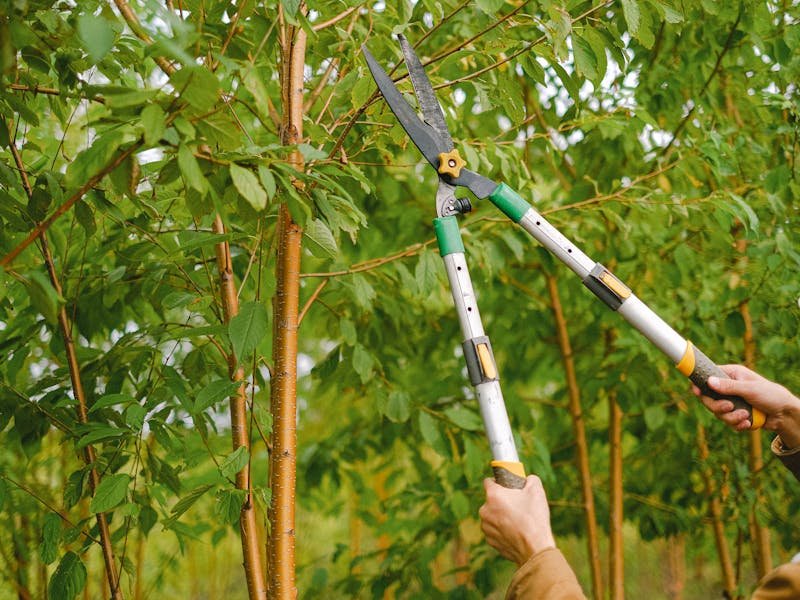
If you have been thinking about adding trees to your property, and you should, because mature trees add significant value to Huntsville real estate, fall is the single best time to plant in our climate. We tell every homeowner who asks: mid-October through late November is the sweet spot for tree planting in Zone 7b.
Here is why fall planting works so well in North Alabama:
The soil is still warm. Even as air temperatures cool, the soil retains heat from summer and stays warm enough for active root growth well into December. A tree planted in October immediately starts sending out new roots into the surrounding soil, establishing itself before the top of the tree goes dormant.
Rainfall increases. After the often-dry summer, fall typically brings more consistent rainfall to the Tennessee Valley. This means less supplemental watering for you and more natural moisture for the new tree.
Reduced transplant stress. A dormant or semi-dormant tree is not trying to support leaves and photosynthesis at the same time it is establishing a new root system. All of the tree's energy goes into root development, which is exactly what you want.
A head start on spring. A tree planted in fall has several months to develop roots before the demands of spring growth kick in. When spring arrives, a fall-planted tree has an established root network ready to support new leaf and shoot growth. A spring-planted tree, by contrast, has to grow roots and support canopy development simultaneously, which is much more stressful.
What to Plant
Choose species that are well-adapted to Huntsville's climate, soil, and conditions. Our native species are always a strong bet because they have evolved to handle our clay soil, summer heat, humidity, and storm events. Here are some of our favorites:
For shade: White Oak (slow-growing but incredibly long-lived), Shumard Oak (faster-growing, great fall color), Tulip Poplar (fast growth, beautiful flowers), Bald Cypress (tolerates wet or dry, unique texture), and River Birch (fast growth, attractive peeling bark).
For smaller spaces: Eastern Redbud (stunning spring flowers), Dogwood (classic understory tree), Serviceberry (multi-season interest), American Fringe Tree (fragrant white flowers), and native Crepe Myrtle varieties (summer flowers, bark interest).
For screening and privacy: Eastern Red Cedar (native, tough as nails), American Holly (evergreen, berry production), and Southern Magnolia (if you have the space for it to mature).
What NOT to plant: Bradford Pears (invasive, weak structure, they split apart in storms), silver maples (weak wood, aggressive surface roots), and mimosa trees (invasive, messy, short-lived). We have removed thousands of these species across the Huntsville metro and every one of them could have been avoided by planting something better in the first place.
Preparing for Ice Storms and Winter Weather
Huntsville does not get hammered by winter weather every year, but when it comes, it can be devastating to trees. The ice storms of 2015 and the winter weather events we see every few years remind us that Dixie Alley is not immune to serious cold weather. Ice loading on trees, particularly when combined with wind, causes more tree damage in our area than any single weather event short of a tornado.
Here is how to prepare your trees for the worst winter can throw at them:
Get deadwood out now. Dead branches loaded with ice are guaranteed failures. They do not bend under the weight. They snap. And they come down in unpredictable directions. Every dead branch you remove now is one less projectile during an ice storm.
Reduce extended limbs. Long, horizontal branches act as levers for ice weight. The farther a branch extends from the trunk, the more leverage ice loading creates at the branch union. Professional crown reduction pruning shortens these extended limbs and reduces the total surface area that catches ice, significantly lowering the risk of branch failure.
Address structural weaknesses. Co-dominant stems, included bark unions, and cracks in branch crotches are the points most likely to fail under ice loading. If your tree has any of these issues, fall is the time to address them, either through pruning, cabling (installing flexible cables between co-dominant stems to reduce the strain on the union), or removal if the defect is too severe.
Know your vulnerable species. Some tree species handle ice much better than others. The ones we worry about most in Huntsville are Bradford pears (their branch structure is a recipe for splitting), water oaks (brittle wood, dense canopy that catches a lot of ice), sweetgums (long, flexible branches that bend under ice until they snap), and loblolly pines (the heavy, long limbs act as ice catchers and the wood is relatively weak for the limb diameter). If you have these species near your home, give them extra attention going into winter.
Have an emergency tree service number on hand. When ice storms hit, every tree service in the Tennessee Valley is swamped within hours. Having an existing relationship with a professional tree care company, someone who already knows your property and your trees, means you are more likely to get help quickly when you need it. We prioritize existing customers and properties we have already assessed.
Schedule a Professional Fall Inspection
We have said it throughout this article, and we are going to say it one more time: a professional fall inspection is the best investment you can make in your trees and your property's safety.
Here is what our crew looks for during a fall assessment that most homeowners would miss: early signs of root decay that are not yet visible to the untrained eye. Subtle structural defects in branch unions that are ticking time bombs under ice loading. Canopy asymmetry that indicates the tree is compensating for root problems on one side. Insect damage that has weakened wood internally. Species-specific issues like bacterial leaf scorch on oaks or hypoxylon canker on stressed trees.
We assess the tree as a whole system, roots, trunk, scaffold branches, canopy, considering how each component relates to the others and to the structures and targets around the tree. This holistic assessment is something that comes from years of training and thousands of trees evaluated, and it is what separates a professional inspection from a homeowner's walk-around.
We offer free tree assessments throughout Huntsville, Madison, Decatur, Athens, and all of Madison and Limestone County. Fall is our busiest time for inspections, so we recommend scheduling early in the season, September or October, before the rush hits. Call us at (256) 555-0123 or request an assessment online.
Frequently Asked Questions
When should I prune my trees in fall in Alabama?
In Huntsville's Zone 7b climate, the ideal time for major structural pruning of deciduous trees is after they have fully dropped their leaves and entered dormancy, typically late November through February. Light maintenance pruning to remove dead, damaged, or hazardous branches can be done at any time, including early fall. Avoid heavy pruning in September and October when trees are still actively growing, as it can stimulate new growth that will not harden off before the first frost and will be killed by cold weather.
Is fall a good time to plant trees in Huntsville?
Fall is actually the best time to plant trees in Huntsville and throughout USDA Zone 7b. The window from mid-October through late November is ideal. Soil is still warm enough for root growth, rainfall typically increases from summer's dry spell, the tree is not stressed by heat, and it has several months to establish roots before the demands of spring growth. Trees planted in fall consistently establish faster and more successfully than those planted in spring, giving them a significant head start.
Should I water my trees in fall in Alabama?
Yes, and this is a step most homeowners skip. North Alabama falls can be deceptively dry, and trees need adequate soil moisture going into winter dormancy. Even after leaves drop, root systems remain active well into December. If you have not had an inch or more of rain in two to three weeks during October or November, give your trees a deep watering. This is especially critical for young trees, evergreens like pines and cedars that transpire moisture all winter, and any trees that showed drought stress during the summer.
How do I prepare my trees for ice storms?
The most effective ice storm preparation is professional pruning done before winter arrives. Focus on removing all dead branches, reducing long extended limbs that act as levers for ice weight, and addressing structural weaknesses like co-dominant stems and included bark unions. Species most vulnerable to ice damage in North Alabama include Bradford pears, water oaks, sweetgums, and pines with long limbs. Proper pruning reduces the catch area for ice and strengthens the overall structure of the tree.
Should I remove leaves from around my trees?
A thin layer of leaves is actually beneficial around trees, acting as natural mulch. However, thick mats of wet leaves should be managed because they can smother grass, promote fungal disease, and create hiding places for pests. The best approach is to mulch leaves with a mower and let the shredded material remain on the lawn and around tree bases. Any leaves piled directly against tree trunks should always be pulled back, as they trap moisture against bark and promote rot and pest problems.
What trees should I plant in fall in Huntsville?
Focus on native species adapted to our Zone 7b climate and clay soils. For shade, consider White Oak, Shumard Oak, Tulip Poplar, Bald Cypress, or River Birch. For smaller spaces, Eastern Redbud, Dogwood, Serviceberry, and American Fringe Tree are excellent choices. For screening, look at Eastern Red Cedar, American Holly, or Southern Magnolia. Avoid Bradford Pears (invasive and structurally weak), silver maples (aggressive roots, weak wood), and mimosa trees (invasive and short-lived).