You have a large tree on your property in Huntsville, and you want it removed. Maybe it is too close to the house, dropping endless leaves into your gutters, or its roots are pushing up the driveway. Before you call a tree service and schedule the job, there is an important question you need to answer first: is the tree protected?
Removing a protected tree without proper authorization can result in fines ranging from a few hundred dollars to tens of thousands, plus the cost of replacing the tree. And ignorance is not a defense—if the tree was protected and you had it removed, you are responsible regardless of whether you knew about the protection.
Alabama's tree protection landscape is not as straightforward as some states where a single statewide law covers everything. Instead, protections come from a patchwork of federal regulations, state programs, municipal ordinances, and private deed restrictions. This guide breaks down every layer of protection that could apply to trees on your Huntsville-area property so you know exactly where you stand before making any decisions.
Alabama Champion Trees: The State's Living Landmarks
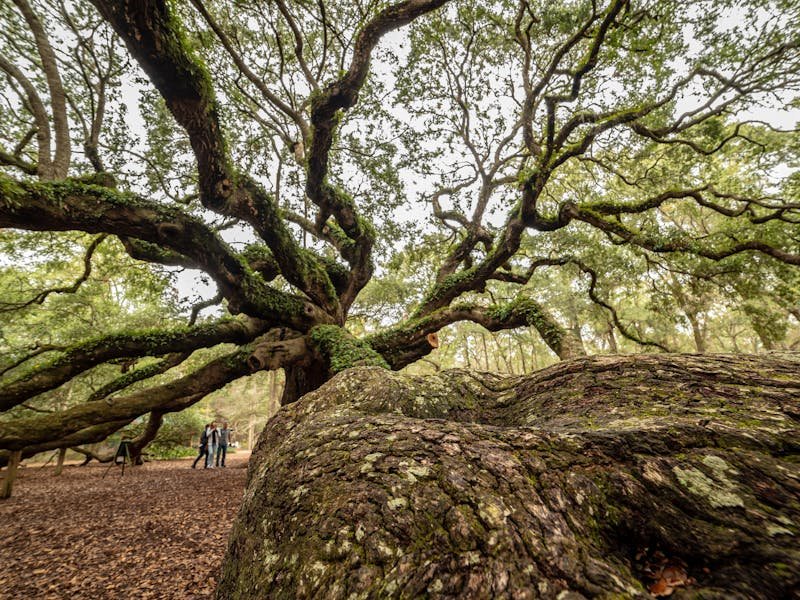
The Alabama Forestry Commission maintains the Alabama Champion Tree Program, which identifies and registers the largest known specimen of each tree species in the state. Champion Trees are measured using a point system that considers trunk circumference, tree height, and crown spread.
Several Champion Trees are located in the North Alabama region, including specimens in Madison County and surrounding areas. While Champion Tree registration does not create a legal prohibition on removal (the program is primarily honorary and educational), removing a registered Champion Tree without cause would attract significant public attention and potential political consequences.
The more practical concern for homeowners is that Champion Tree status indicates a tree of exceptional age and size. Trees of this caliber often have significant ecological value—they support wildlife, contribute to the urban canopy, and cannot be replaced within a human lifetime. If you have a tree that might qualify as a Champion (extremely large, clearly very old), it is worth having it assessed by a certified arborist before making removal plans.
Federal Protections: Endangered Species and Habitat Trees
The most legally consequential tree protections in Alabama come from federal law, specifically the Endangered Species Act (ESA). Under the ESA, it is illegal to destroy, modify, or curtail the habitat of a listed endangered or threatened species. Trees that serve as critical habitat for protected wildlife cannot be removed without federal authorization, even on private property.
In North Alabama, the species most likely to trigger ESA protections for trees include:
Indiana Bat (Myotis sodalis)
Indiana bats are federally endangered and are known to roost under the bark of mature hardwood trees during summer months. Large shagbark hickories, white oaks, and other trees with exfoliating bark in wooded areas near caves are potential habitat. Northern Madison County and the Monte Sano area have documented bat populations. If your property is near known bat habitat and you have large, mature hardwoods, a habitat assessment may be required before removal.
Gray Bat (Myotis grisescens)
Gray bats are also federally endangered and are present in the cave systems of North Alabama. While they roost in caves rather than trees, the forested areas along streams and rivers that they use as foraging corridors can be subject to development restrictions that include tree preservation.
Red-cockaded Woodpecker (Picoides borealis)
While more common in southern Alabama, Red-cockaded Woodpeckers are a federally endangered species that depends on mature longleaf pine forests. If your property contains old-growth longleaf pines and is within the known range of this species, the trees may be protected.
Federal penalties for ESA violations are severe: civil fines up to $25,000 per violation and potential criminal penalties including imprisonment for knowing violations. If there is any possibility that your trees provide habitat for protected species, consult with the U.S. Fish and Wildlife Service before proceeding with removal.
Huntsville Municipal Tree Protections
The City of Huntsville has several mechanisms that protect or regulate trees within city limits:
Public Right-of-Way Trees
Trees located in the public right-of-way—the strip of land between the sidewalk and the street curb—are city property, even though they sit adjacent to your yard. Removing, pruning, or damaging a right-of-way tree without city authorization is a violation of Huntsville's municipal code. If you want a right-of-way tree removed or significantly trimmed, you must submit a request to the City of Huntsville's Urban Forestry Division.
For a full breakdown of the permit process and city tree regulations, see our detailed guide on Huntsville tree ordinances and permits.
Historic District Overlay Zones
Huntsville's historic districts, including Twickenham (one of the largest antebellum historic districts in the South) and parts of Five Points, have overlay zoning that can include tree preservation requirements. The Huntsville Historic Preservation Commission reviews changes to properties in these districts, and significant tree removal may require commission approval.
If your property is in a designated historic district, check with the Huntsville Planning Department before removing any large trees. Even if the tree itself is not specifically protected, removing it without approval can result in violations and fines from the historic preservation commission.
Land Disturbance and Development Requirements
When land is being developed or redeveloped, the City of Huntsville's land disturbance permit process includes provisions for tree preservation. Developers are typically required to identify significant trees on the site, minimize unnecessary removal during construction, and in some cases replace trees that are removed during development. These requirements apply primarily to commercial and subdivision development rather than single-family residential maintenance, but they are worth knowing about if you are building or significantly modifying your property.
Private Deed Restrictions and HOA Rules
Even when no government regulation protects a tree, your own deed restrictions or homeowners association rules might. Many Huntsville subdivisions and planned developments include tree preservation covenants that restrict or prohibit the removal of trees above a certain size without approval.
Common private tree restrictions in Huntsville-area subdivisions include:
- Minimum tree canopy requirements: Your lot must maintain a certain percentage of tree canopy coverage.
- Size-based removal restrictions: Trees above a specific diameter (often 6 inches or more DBH, or diameter at breast height) require written approval from the HOA architectural review committee before removal.
- Replacement requirements: If you remove a tree, you may be required to plant one or more replacement trees of approved species and minimum size.
- Buffer zone restrictions: Trees in designated buffer areas between lots or along common boundaries may not be removed at all.
Violating HOA tree restrictions can result in fines, mandatory replanting at your expense, and legal action from the HOA. For more on this topic, see our complete guide on HOA tree removal rules in Huntsville.
Common Protected and Notable Tree Species in North Alabama
While protection status depends more on location and circumstance than species alone, certain tree types found in the Huntsville area are more likely to receive protection or generate concern when removal is proposed:
| Tree Species | Why It May Be Protected | Common in Huntsville? |
|---|---|---|
| Southern Red Oak | Large specimens often qualify for heritage status; wildlife habitat | Very common |
| White Oak | Slow-growing, long-lived; potential bat habitat; historic significance | Common |
| Longleaf Pine | Potential Red-cockaded Woodpecker habitat; conservation priority | Less common, present in some areas |
| Tulip Poplar | State tree of Tennessee (nearby); grows to enormous size; canopy value | Common |
| American Beech | Slow-growing, irreplaceable in a human lifetime; wildlife value | Present on Monte Sano and wooded areas |
| Eastern Hemlock | Increasingly rare due to hemlock woolly adelgid; conservation concern | Rare, found in sheltered mountain coves |
How to Determine If Your Tree Is Protected
Before scheduling any tree removal on your Huntsville property, follow this step-by-step process:
- Check your property deed and plat. Look for conservation easements, buffer zone designations, or tree preservation covenants. These are recorded with the Madison County Probate Court and are legally binding regardless of how long ago they were established.
- Review your HOA documents. If your property is in a subdivision with a homeowners association, review the CC&Rs (covenants, conditions, and restrictions) and architectural guidelines for tree-related rules.
- Determine if the tree is in the right-of-way. If the tree is between the sidewalk and the street, it is likely on city property. Contact the Huntsville Urban Forestry Division before taking any action.
- Check for historic district status. Verify whether your property is in a designated historic district or overlay zone by contacting the Huntsville Planning Department or checking the city's zoning maps online.
- Assess for endangered species habitat. If your property is in a heavily wooded area near caves, streams, or known wildlife corridors, consider whether the tree could be habitat for protected species. This is particularly relevant for properties near Monte Sano, Wade Mountain, and Green Mountain.
- Consult a professional. A reputable tree service company or certified arborist can help you identify the tree species, assess its condition, and advise on any potential protection issues.
What Happens If You Remove a Protected Tree?
The consequences of removing a protected tree without authorization depend on the type of protection violated:
- City right-of-way trees: Fines from the city plus the assessed replacement value of the tree, which is calculated using the Council of Tree and Landscape Appraisers trunk formula method. A large, mature tree can be valued at $10,000 to $50,000 or more.
- Historic district violations: Fines from the Historic Preservation Commission, potential requirement to plant replacement trees, and possible implications for future permit approvals on your property.
- HOA violations: Fines per your association's fee schedule (often $100 to $1,000 per violation, potentially daily until resolved), mandatory replanting, and possible legal action.
- Federal ESA violations: Civil penalties up to $25,000 per violation, potential criminal prosecution, and mandatory habitat restoration at your expense.
- Neighbor disputes: If you remove a tree that crosses property lines or a tree whose removal damages a neighbor's property, you may face civil liability for property damage and loss of property value.
When Protected Trees Can Still Be Removed
Protection does not mean a tree can never be removed under any circumstances. Even protected trees can typically be removed when they are:
- Dead or dying: A dead tree poses a safety hazard, and most protection frameworks allow for removal of dead or structurally compromised trees.
- An imminent safety hazard: If a tree is in danger of falling on a structure or into a public area, emergency removal is generally permitted even if the tree is otherwise protected.
- Diseased and threatening other trees: Trees infected with communicable diseases that could spread to neighboring trees may be approved for removal to protect the broader tree population.
- Damaging infrastructure: Trees whose roots are actively damaging foundations, sewer lines, or other critical infrastructure may qualify for removal with proper documentation.
In all of these situations, proper documentation is key. Take photographs, get a written assessment from a certified arborist, and obtain the necessary permits or approvals before proceeding. Having a paper trail protects you if anyone questions the removal later.
How Huntsville Tree Pros Handles Protected Trees
At Huntsville Tree Pros, we navigate tree protection issues for our customers every week. When you call us about a tree removal, our process includes identifying the tree species and assessing its size and condition, checking for obvious protection issues (right-of-way location, historic district status, visible wildlife habitat), advising you on any permits or approvals that may be needed, and coordinating with city departments and HOAs on your behalf when necessary.
We have worked with the Huntsville Urban Forestry Division, neighborhood HOAs across Madison, Hampton Cove, Bailey Cove, and other communities, and we understand the local regulatory landscape inside and out. We will never remove a tree that we know to be protected without proper authorization, and we will guide you through the process of obtaining that authorization when removal is justified.
Understanding tree removal costs in Huntsville is also important, as protected tree situations sometimes involve additional steps that can affect pricing and timelines.