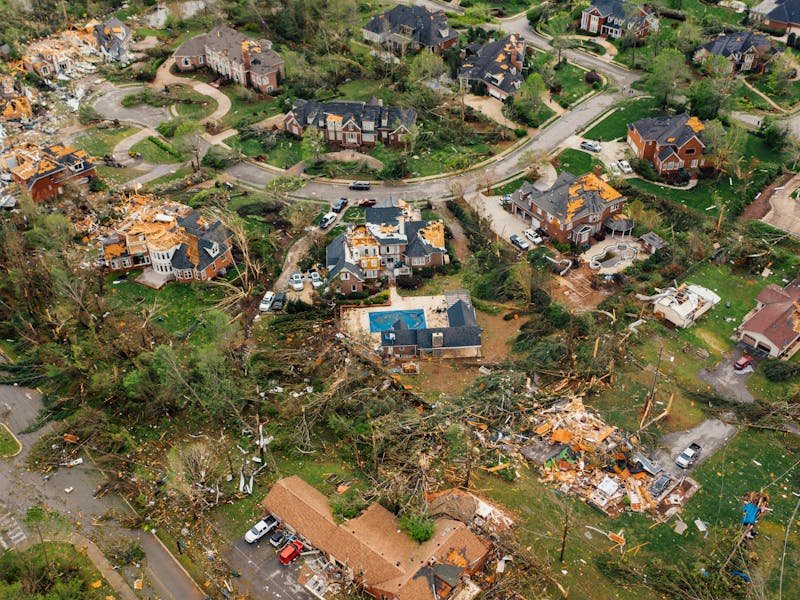
If you're reading this, there's a decent chance you've just lived through something terrifying. A tornado touching down anywhere near your home is one of those experiences that rewires your perspective on what matters. And once the immediate shock wears off, once you've checked on your family and your neighbors and confirmed that everyone is safe, you step outside and see the aftermath. Trees down everywhere. Limbs piled in the road. Trunks snapped like toothpicks. Maybe one of your own trees is lying across your driveway, or worse, leaning against your house.
Take a breath. We're going to walk you through this step by step.
Our crew at Huntsville Tree Pros has worked the aftermath of every significant tornado and severe weather event in the Tennessee Valley for years. We were out working after the devastating April 2011 tornado outbreak that changed this community forever, and we've responded to every major storm event since. We know what the days and weeks after a tornado look like, and more importantly, we know the mistakes homeowners make during the chaos of cleanup that end up costing them thousands of dollars or putting them in danger.
This guide is the advice we'd give our own family members. It covers everything from the first hour after the tornado passes to the months of recovery that follow. Whether you're in Huntsville, Madison, Decatur, or anywhere in North Alabama, this information applies to you.
Huntsville's Tornado History: Why We Take This Seriously
Before we get into the recovery steps, it's worth understanding why tornado preparedness and recovery are such critical topics for our community specifically. Huntsville sits squarely in what meteorologists call "Dixie Alley," a corridor through the Southeast that rivals the traditional Tornado Alley of the Great Plains for severe weather activity. And unlike the flat plains of Oklahoma and Kansas, our tornadoes often hit at night, move through hilly, wooded terrain, and strike areas with dense populations of mature trees.
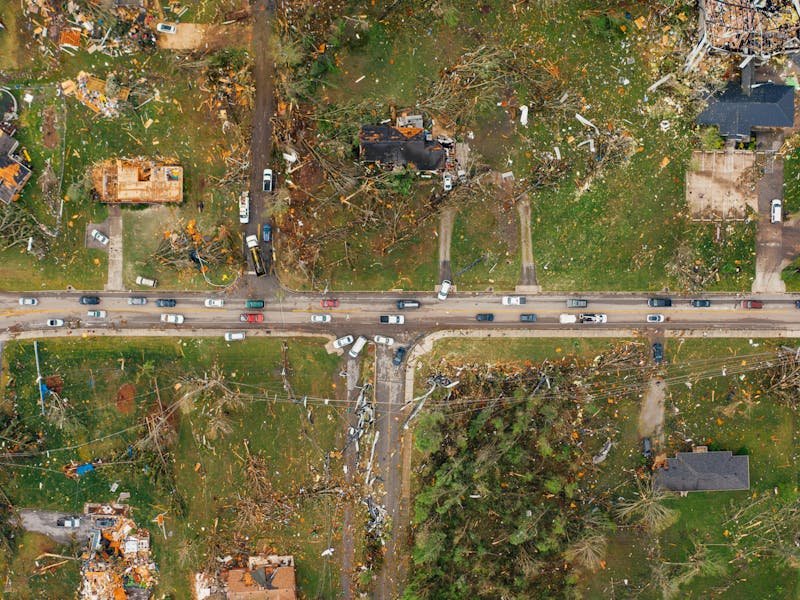
The November 15, 1989 tornado is seared into the memory of anyone who was living here at the time. An F4 tornado cut a path through the heart of Huntsville, killing 21 people, injuring hundreds, and causing over $100 million in damage. The Airport Road corridor and neighborhoods near Jones Valley were devastated. Thousands of trees were destroyed, and the landscape of entire neighborhoods was permanently altered.
Then came April 27, 2011. If you lived through that day, you don't need us to describe it. The super outbreak produced multiple violent tornadoes across North Alabama, including an EF5 that devastated communities from Phil Campbell to Hackleburg and other tornadoes that impacted areas throughout Madison County. Trees that had stood for a hundred years were ripped out of the ground. Neighborhoods in Harvest, Meridianville, and areas south of Huntsville looked like a bomb had gone off. The tree damage was staggering, and cleanup took months.
We bring this up not to scare you but to emphasize that tornado recovery isn't a theoretical exercise for Huntsville. It's something our community has been through multiple times, and it's something we'll go through again. The mature hardwoods and towering pines that make neighborhoods like Monte Sano, Blossomwood, Twickenham, and Five Points so beautiful are also the trees that cause the most damage when a tornado comes through. Being prepared with a plan for the aftermath isn't pessimism, it's just good sense.
Step 1: Immediate Safety — The First 24 Hours
The first priority after a tornado is human safety. Full stop. Trees are property, and property can be dealt with. But the dangers that damaged trees create in the immediate aftermath of a tornado are serious and can be fatal if you're not careful.
Stay away from all downed trees and branches. This seems obvious, but in the adrenaline-fueled aftermath of a tornado, people do things they wouldn't normally do. They climb over debris, try to clear their driveway, grab a chainsaw and start cutting. Do not do any of this. Downed trees are unpredictable. A tree lying on the ground may still be under tension, with branches acting like loaded springs that can snap loose with lethal force when disturbed. Trunks that appear stable may be balanced on a fulcrum point and can roll or shift without warning.
Assume every downed line is a live power line. After a tornado, downed power lines are often tangled in tree debris. You cannot tell by looking at a wire whether it's carrying electricity. A power line lying on a fallen tree can energize the entire tree and the ground around it. Stay at least 35 feet away from any downed wire, and keep your kids and pets away too. Call Huntsville Utilities at their emergency number to report downed lines. Do not try to move them yourself under any circumstances.
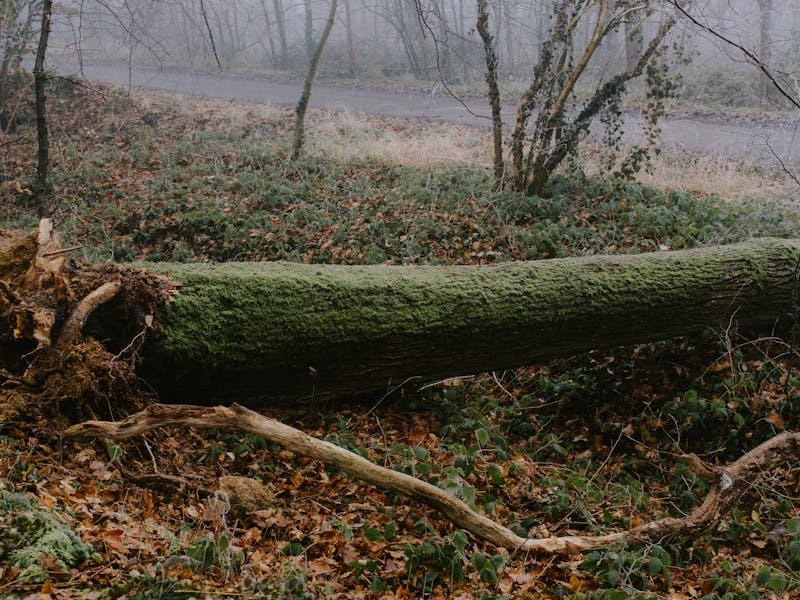
Watch for "hangers" and "leaners." After a tornado, look up before you walk anywhere on your property. Broken branches lodged in the canopy of standing trees, known as hangers, are extremely dangerous. They can fall at any moment, and some of them weigh hundreds of pounds. Similarly, trees or large limbs leaning against other trees or structures can shift and fall without any warning. If you see hangers or leaners on your property, stay well clear and call a professional to deal with them.
Do not go near partially uprooted trees. A tree that's been partially lifted out of the ground by tornado winds is in an unstable state. The root plate may have cracked and the tree could complete its fall at any time, especially if there's any additional wind. We've seen trees that survived the tornado itself come crashing down two or three days later when a gentle breeze caught their damaged canopy. In our North Alabama clay soil, which becomes slippery and unstable when wet, a partially uprooted tree on saturated ground is particularly dangerous.
Secure your property as best you can. If a tree has opened a hole in your roof, cover it with a tarp to prevent water damage from rain that often follows severe weather. But only do this if you can do it safely from the exterior. Do not enter a structure that has been struck by a tree until it's been assessed and confirmed stable.
Step 2: Documenting the Damage for Insurance
This is the step that most homeowners skip in the chaos of the aftermath, and it's the one they regret most later when they're fighting with their insurance company. Before you move a single branch, before you let anyone start cleanup work, you need to document everything.
Take photos and video from every angle. Use your phone to capture comprehensive documentation of all tree damage on your property. Photograph each damaged tree from multiple angles. Photograph where trees or branches have struck structures, vehicles, fences, landscaping, or utilities. Take wide shots that show the full scene and close-ups that show specific damage. If it's safe to do so, take photos from inside your home showing any damage where a tree has come through the roof or walls.
Document the location and species of each affected tree. Your insurance adjuster will want to know specifics. Note which trees are down, their approximate size, and their species if you know it. If you had a mature Southern Red Oak in your front yard that was 60 feet tall and it went through your garage, that's different from a 20-foot Bradford Pear that fell on your fence. The documentation helps establish the scope and cost of the damage.
Photograph neighboring properties. If your tree fell on a neighbor's property, or a neighbor's tree fell on yours, document that too. Alabama follows the "Act of God" doctrine for storm damage, meaning that if a healthy tree falls due to a tornado, the property owner where the tree lands is generally responsible for cleanup and repairs on their own property. However, if a tree was dead or visibly hazardous before the storm and the owner had been notified, there may be liability. Having photos from before the storm (if you have any) and immediately after helps establish these facts.
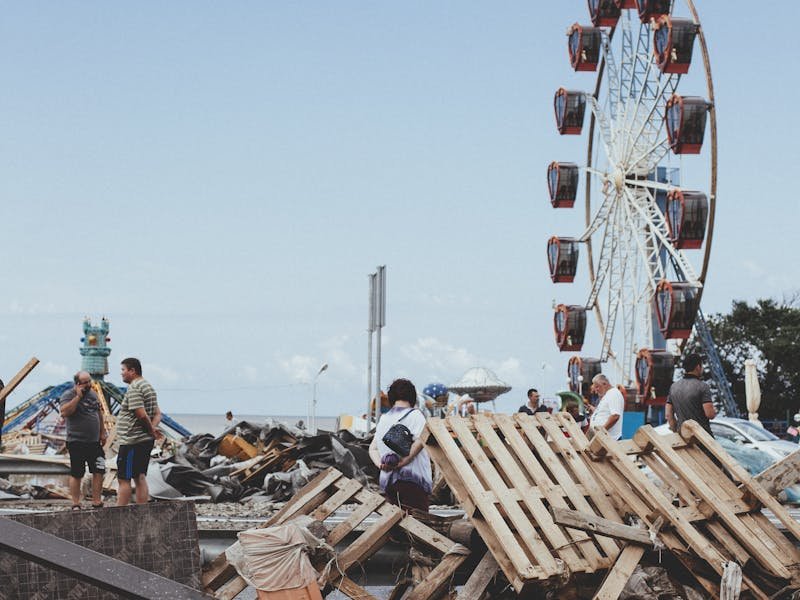
Keep receipts for everything. From the moment the tornado hits, start saving receipts. Tarps, emergency repairs, hotel stays if your home is uninhabitable, tree removal services, everything. Your insurance policy may reimburse many of these expenses, but only if you have documentation.
Contact your insurance company as soon as possible. Most insurers have 24-hour storm damage hotlines that get activated after major weather events. File your claim early. After a major tornado, thousands of claims come in simultaneously, and adjusters are assigned on a first-come basis. The sooner you file, the sooner you'll get an adjuster assigned to your property.
Here's something most folks in Hampton Cove, Madison, and other Huntsville-area neighborhoods don't realize about their homeowners insurance: most policies cover tree removal only when a tree falls on an insured structure. If a tree falls in your yard and doesn't hit anything, your insurance probably won't pay to remove it. Coverage for tree removal typically ranges from $500 to $1,000 per tree, with overall limits. Understanding your specific policy before a storm hits is ideal, but even after the fact, read through your coverage carefully before accepting the first offer from your adjuster.
Step 3: Assessing the Damage — Which Trees Can Be Saved
Once the immediate danger has been addressed and you've documented everything for insurance, the next step is triage. Not every storm-damaged tree needs to come down. Some can be saved with proper care, and saving a mature tree is almost always preferable to removing it, both for your property value and the environment. But you need a realistic assessment, and that's where a professional arborist comes in.
Here's a general framework we use when evaluating tornado-damaged trees on properties across the Huntsville metro area:
Trees that can likely be saved:
- Trees that have lost less than 50 percent of their canopy but still have their main trunk and major scaffold branches intact
- Trees with broken branches that can be properly pruned back to the branch collar without leaving large stubs
- Trees that are still firmly rooted in the ground with no soil heaving or root plate movement
- Young, vigorous trees that have been bent or partially broken but still have significant living tissue
- Trees that sustained bark damage on less than about 25 percent of the trunk circumference
Trees that probably need to come down:
- Trees that have been completely uprooted, with the root ball pulled out of the ground
- Trees with split trunks where the main stem has fractured
- Trees that have lost more than 50 to 60 percent of their canopy
- Trees that are leaning significantly and have visible root plate failure
- Trees with large sections of bark stripped away, especially if it goes around most of the circumference
- Pines that have had their tops broken off, since pines don't regenerate new tops the way hardwoods can
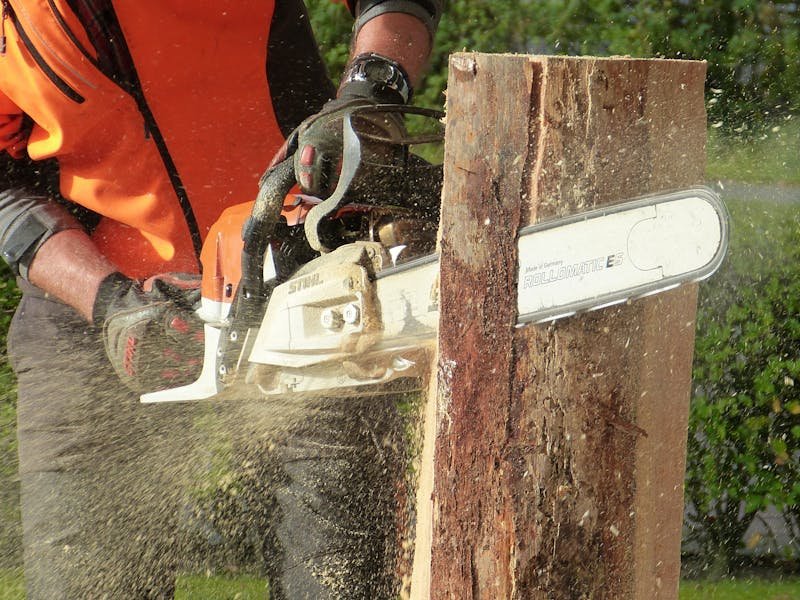
One thing we see a lot after tornadoes in neighborhoods like Jones Valley, Weatherly Heights, and South Huntsville is homeowners trying to save trees that really can't be saved. We understand the attachment. A big Water Oak or White Oak that's been shading your home for 50 years feels like part of the family. But a tree that's lost its structural integrity is a hazard going forward. It may leaf out the next spring and look like it's recovering, only to fail catastrophically in the next big storm because the damage weakened it beyond its ability to handle wind load.
The flip side is also true. We've seen homeowners rush to remove trees that could have been saved with proper pruning. After the 2011 storms, we watched crews come through Harvest and Meridianville and cut down trees that had maybe 30 percent canopy loss, trees that absolutely could have recovered with corrective pruning. Those trees would be fully mature and healthy today. That's why getting a qualified assessment matters. A good arborist will give you an honest evaluation, not just push for the most expensive option.
Species matters in this assessment. Hardwoods like oaks, hickories, and Tulip Poplars have a much better ability to recover from canopy loss than pines do. A Southern Red Oak that loses 40 percent of its canopy to a tornado has a good chance of filling back in over two to three growing seasons. A Loblolly Pine that loses its top third? That pine is never going to look right again, and the broken top becomes an entry point for pine bark beetles and disease. In general, damaged pines are candidates for removal more often than damaged hardwoods.
Step 4: Hiring Reputable Help — Avoiding Storm Chasers
Here's where we need to have a frank conversation. After every major tornado or severe weather event in the Huntsville area, an army of out-of-town "tree service" operators descends on the community. They show up in unmarked trucks, go door to door offering cut-rate prices, and promise to have your property cleaned up in no time. We in the industry call them storm chasers, and they are bad news.
We're not saying this just because they're competition. We're saying this because we've been called to clean up after storm chasers more times than we can count, and the results are consistently terrible. Trees butchered with improper cuts that invite disease and decay. Damage to homes, fences, and utilities from trees dropped carelessly. Stump cuts left three feet off the ground. Debris shoved into a pile in the corner of the yard and left there. And in the worst cases, homeowners who paid thousands of dollars upfront to crews who then vanished without finishing the job.
Here's how to identify and avoid storm chasers:
Check for a verifiable local address. A legitimate tree service has an office or at least a verifiable local address. If someone hands you a business card with just a phone number and no address, or if they can't tell you where they're based, that's a red flag. Our operation is based right here in Huntsville, and we've been serving this community for years. We're not going anywhere after the cleanup is done.
Verify insurance. This is non-negotiable. Any tree service working on your property should carry both general liability insurance and workers' compensation. Ask to see certificates of insurance, and call the insurance company to verify they're current. If an uninsured worker gets hurt on your property, you could be liable. If an uninsured crew drops a tree on your neighbor's house, you could be on the hook for that too. Storm chasers almost never carry proper insurance.
Be wary of door-to-door solicitation. Reputable tree services in Huntsville are already busy after a major storm. They're working through their existing customer list and responding to calls from new customers. They don't have time to go knocking on doors. If someone shows up unsolicited offering to take care of your trees, proceed with extreme caution.
Never pay the full amount upfront. A reasonable deposit for a large job is understandable. Paying the full price before the work is completed is not. We've heard too many stories from homeowners in Athens, Decatur, and throughout Madison County who handed over cash or a check to a crew that promised to come back the next day to finish the job and never showed up again.
Get multiple estimates. We know this is hard when you're stressed and want the mess cleaned up immediately. But taking a day or two to get two or three estimates from local companies is worth it. It protects you from overpaying and gives you a chance to evaluate who you're most comfortable working with. After a major storm, be patient. Good companies are booked up, and waiting a week for a reputable crew is better than hiring a hack who does more damage than the tornado did.
Look for reviews that predate the storm. Check Google reviews, Facebook, and the Better Business Bureau. A legitimate company will have a history of reviews going back months or years. A storm chaser might have a brand-new Google listing with no reviews, or a handful of reviews all posted within the last week from other disaster-hit areas.
Step 5: The Cleanup Process — What to Expect
Once you've hired a reputable tree removal service, here's what the actual cleanup process typically looks like for tornado-damaged properties.
Priority 1: Remove hazards. The first order of business is taking care of anything that poses an immediate danger. Trees on structures, trees on vehicles, trees on power lines (coordinated with the utility company), and hangers and leaners that could fall on people or property. This is the emergency phase, and it's what emergency tree services like ours focus on first.
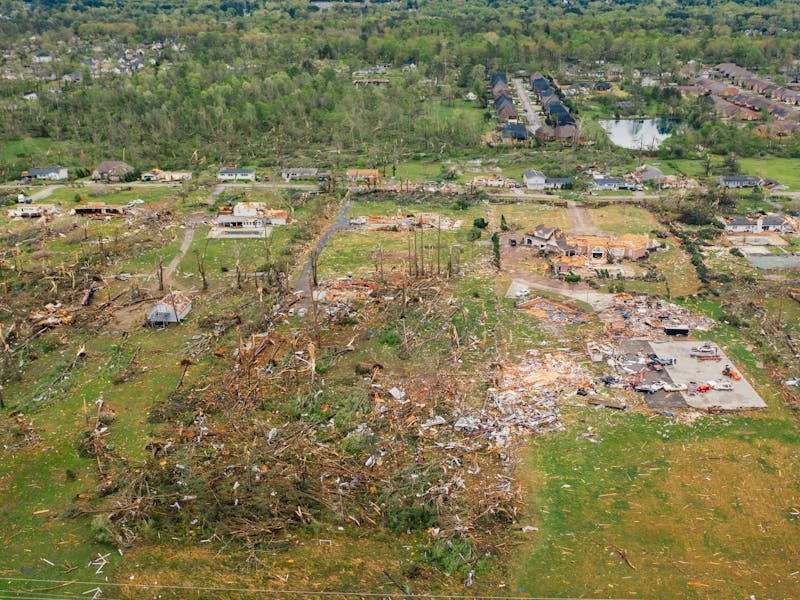
Priority 2: Remove fatally damaged trees. Trees that have been assessed and determined to be unsaveable are removed next. This includes completely uprooted trees, trees with split or fractured trunks, and heavily damaged trees that pose ongoing risk. Depending on the tree's location, this might involve technical rigging and crane work, especially for large trees near structures.
Priority 3: Prune and treat salvageable trees. Trees that can be saved get corrective pruning to remove broken branches, clean up ragged wounds, and restore as much balance to the canopy as possible. Proper pruning cuts, made just outside the branch collar, give the tree the best chance of compartmentalizing the wound and recovering. This is one of the areas where storm chasers really do damage, because improper pruning cuts create pathways for disease and decay that compromise the tree long-term.
Priority 4: Debris removal and stump grinding. After the trees and branches are down and cut up, the debris needs to go somewhere. After a major tornado, many municipalities set up temporary debris staging areas. The City of Huntsville typically activates curbside debris pickup after significant storm events, though it can take weeks to work through all the neighborhoods. For trees that were removed, stump grinding eliminates the remaining stump and allows you to replant or restore your yard.
Timeline expectations: For an individual property with moderate tornado damage, say two or three damaged trees needing removal and several more needing pruning, the actual work typically takes one to three days. But here's the reality check: after a major tornado event, demand for tree services overwhelms supply. Every reputable company in the Huntsville metro is booked solid. Wait times of one to four weeks are normal after a significant event. During the weeks following the April 2011 outbreak, some homeowners waited six weeks or more for a qualified crew. That's frustrating, but it's the reality. Use that waiting time to complete your insurance documentation and get your estimates in order.
Step 6: FEMA Assistance and Community Resources
After a significant tornado, particularly one that results in a Presidential disaster declaration, federal assistance becomes available through FEMA. Here's what Huntsville homeowners need to know about this process.
Presidential disaster declaration. FEMA assistance requires a federal disaster declaration for your county. After the April 2011 tornado outbreak, Madison County was included in the disaster declaration, making residents eligible for assistance. Not every tornado triggers a federal declaration, though. Smaller, localized events may not qualify, even if the damage on your specific property is severe. Your county's Emergency Management Agency (EMA) coordinates with the state and federal government on disaster declarations.
FEMA debris removal. For declared disasters, FEMA can provide assistance with debris removal. The Army Corps of Engineers often manages the large-scale debris removal operation, clearing public rights-of-way and in some cases assisting with debris on private property when it poses a public health or safety hazard. After 2011, it took months to clear all the tornado debris from the Huntsville area, and much of that work was coordinated through FEMA and the Corps of Engineers.
Individual Assistance (IA). FEMA's Individual Assistance program can help with costs not covered by insurance, including temporary housing, home repairs, and in some cases, hazard mitigation related to trees. Register at DisasterAssistance.gov or call 1-800-621-3362 as soon as a declaration is made. Don't wait. Registration is what starts the process, and the sooner you register, the sooner you'll be assigned a case.
SBA disaster loans. The Small Business Administration offers low-interest disaster loans to homeowners (not just businesses) for repair and replacement of damaged property. These loans can cover costs that insurance doesn't, including tree removal and landscape restoration. Interest rates for disaster loans are typically much lower than commercial rates.
Community resources. After major storm events, community organizations in the Huntsville area mobilize to help. Churches, civic groups, and volunteer organizations often organize cleanup crews for elderly or disabled residents. The United Way of Madison County typically sets up a storm recovery coordination effort. Local organizations like the Huntsville-Madison County EMA provide updates on debris pickup schedules, available assistance, and recovery resources.
Step 7: Long-Term Recovery — Weeks and Months After the Tornado
The immediate cleanup is just the beginning. Tree recovery after a tornado is a process that plays out over months and even years. Here's what to expect in the longer term.
The first growing season after the tornado. Trees that survived but were damaged will do one of two things in the first spring after the storm: they'll put out a flush of new growth as they try to replace lost canopy, or they'll fail to leaf out at all. Watch your damaged trees carefully that first spring. If a tree puts out leaves on most of its remaining branches, that's a good sign. If it fails to leaf out or puts out only sparse, undersized leaves, the damage may have been more severe than it appeared, and a reassessment is warranted.
Epicormic sprouting. You'll probably notice small shoots sprouting from the trunks and major limbs of your damaged trees. These are called epicormic sprouts, sometimes called water sprouts, and they're the tree's emergency response to canopy loss. The tree is trying to quickly replace leaf area so it can produce the energy it needs to survive. Don't remove these sprouts in the first year. Let them grow. They're keeping the tree alive. After a year or two, a professional arborist can selectively thin them and begin reshaping the canopy.
Monitor for secondary problems. Tornado-damaged trees are stressed, and stressed trees are vulnerable. In the months following a tornado, watch for signs of disease and insect infestation. Bark beetles, particularly the Southern Pine Beetle, are attracted to stressed and damaged pines. Fungal pathogens move into wounds and broken branches. A tree that survived the tornado might succumb to these secondary threats months later if they're not caught early.
Soil and root recovery. If the ground around your trees was saturated during the storm, and our Alabama clay soil holds water like a sponge, the root system may have been compromised even if the above-ground portion of the tree looks fine. Compacted or waterlogged soil after storm cleanup, especially from heavy equipment being driven over root zones, can damage feeder roots and lead to decline over the following years. Mulching over the root zone and avoiding further compaction helps give roots the best chance to recover.
Replanting. Once the cleanup is complete, think about replacing lost trees. A neighborhood that loses its tree canopy to a tornado takes decades to recover, and the sooner new trees are planted, the sooner that recovery begins. This is an opportunity to plant species that are better suited to your site, more wind-resistant, or more appropriately sized for their location. We've helped homeowners across Bailey Cove, The Ledges, McMullen Cove, and Wade Mountain develop replanting plans after storm damage, selecting species and locations that will provide beauty and shade without the risks the previous trees posed.
Choose wind-resistant species for your replacements. Live Oak, Bald Cypress, and Hickory are among the most wind-resistant trees that grow well in our USDA Zone 7b climate. Avoid brittle species like Bradford Pear, Water Oak, and Silver Maple, which are the trees most likely to fail in the next big storm.
Being Prepared Before the Next Tornado
We'll close with this: the best time to prepare for tornado damage is before the tornado happens. Here are the proactive steps every Huntsville homeowner should take.
Have your trees assessed regularly. A professional evaluation every two to three years can identify hazardous trees before a storm turns them into emergencies. Dead branches, weak crotch angles, root problems, and disease can all be addressed proactively at a fraction of the cost of emergency removal after a tornado.
Maintain your trees. Regular pruning and trimming reduces the "sail effect" of a dense canopy, making trees less vulnerable to wind damage. Removing dead wood, thinning the canopy, and correcting structural problems like included bark and co-dominant stems all make your trees more wind-resistant.
Know your insurance coverage. Read your homeowners policy now, not after the storm. Understand what's covered, what the limits are, and whether you have adequate coverage for your property's trees. Consider whether an umbrella policy or additional endorsements might be appropriate, especially if you have high-value trees near your home.
Have a plan for cleanup. Know who you're going to call before you need to call them. Having an established relationship with a local tree service means you'll be a priority when disaster strikes. Our regular customers are the first people we reach out to after a major storm event.
We live here. We raise our families here. We know what Huntsville's severe weather can do because we've seen it firsthand, from the 1989 tornado to the 2011 outbreak to every derecho, thunderstorm, and weather event in between. If a tornado has just impacted your property, know that your community has been through this before and come through it stronger. Take it one step at a time, stay safe, and don't hesitate to call professionals when you need help.
Huntsville Tree Pros is here for you, before, during, and after the storm. Call us at (256) 555-0123 or reach out online for emergency service or to schedule a proactive assessment of your trees.
Frequently Asked Questions
What should I do immediately after a tornado damages trees on my property?
Stay away from all downed trees and branches, especially any near power lines. Do not attempt to cut or move any debris yourself. Call your utility company to report downed lines, document damage with photos from a safe distance for insurance purposes, and contact a licensed, insured tree service company for professional assessment and removal. Your safety is the top priority in the first 24 hours.
Can a tornado-damaged tree be saved?
It depends on the extent of damage. Trees that have lost less than 50 percent of their canopy, still have a solid trunk and root system, and have intact major scaffold branches can often be saved with professional pruning and care. Hardwoods like oaks and hickories recover better than pines. Trees that are uprooted, have split trunks, or have lost most of their canopy generally need to be removed.
Does homeowners insurance cover tornado tree damage in Alabama?
Most homeowners insurance policies in Alabama cover tree removal when a tree falls on an insured structure like your home, garage, fence, or driveway. Coverage typically ranges from $500 to $1,000 per tree. However, removing a damaged tree that has not fallen on a structure is usually not covered. Review your specific policy and document all damage thoroughly with photos before cleanup begins.
How do I avoid storm chaser tree services after a tornado?
Look for companies with a verifiable local address, Alabama business license, proper liability insurance and workers' compensation, and positive reviews that predate the storm. Be wary of door-to-door solicitations, unusually low bids, requests for full payment upfront, and out-of-state license plates. Always get multiple estimates and never pay the full amount for work before it is completed.
How long does tornado tree cleanup take in Huntsville?
Individual property cleanup typically takes one to three days depending on the number and size of damaged trees. However, after a major tornado event, demand for tree services far exceeds supply, so there can be a waiting period of one to four weeks before a reputable crew can get to your property. Community-wide debris cleanup after a significant tornado in the Huntsville area can take several months.
Is FEMA assistance available for tornado tree damage in Alabama?
FEMA assistance may be available if the President declares a federal disaster for your area. FEMA can help with debris removal from public rights-of-way and in some cases from private property if the debris poses a health or safety threat. Individual assistance programs may also help with costs not covered by insurance. Register at DisasterAssistance.gov or call 1-800-621-3362 as soon as a disaster declaration is made for your county.