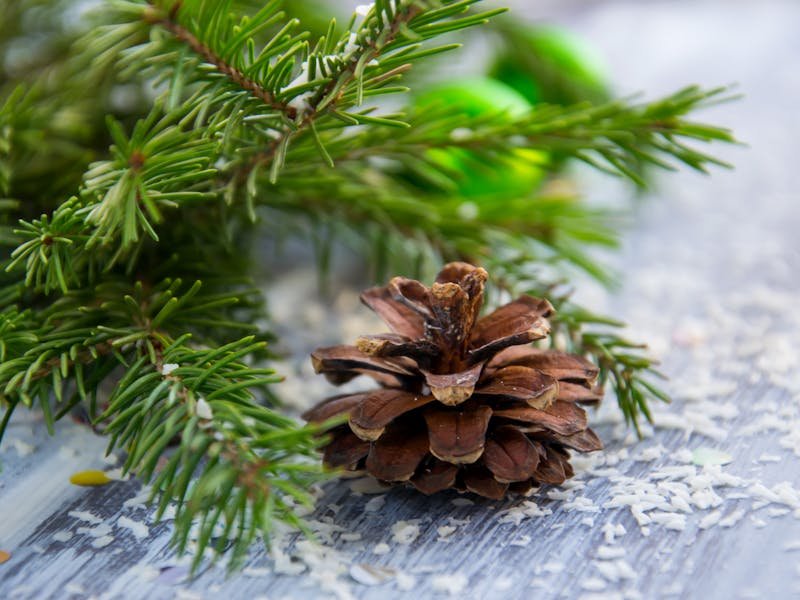
You walk out to your car in March or early April, and there it is. That uniform layer of yellow film coating the hood, the windshield, the door handles. You wipe a finger across it and it leaves a streak. By the time you get to work, a fresh coat is already settling. That is tree pollen season in Huntsville, and if you live here long enough, you stop being surprised by it. You just plan around it.
I have been removing trees in north Alabama for years, and the pollen question comes up every spring. Homeowners call me with stuffed-up sinuses, eyes swollen half shut, asking if I can cut down the oak in the front yard because they cannot take it anymore. Sometimes that is the right call. Sometimes it is not. What I want to do in this post is walk through what is happening every spring in Huntsville, why our region is among the worst pollen zones in the country, and what you can plant if you want a yard that does not try to kill you every April. This is going to be opinionated.
Why Huntsville is so bad for tree pollen
People who move here from Phoenix or Denver get a brutal welcome the first spring. Some of them did not even know they had allergies until they got here. The reasons north Alabama hits harder than most places come down to geography and ecology.
The Tennessee Valley traps pollen
Huntsville sits in a valley between the Cumberland Plateau to the north and the foothills of the Appalachians to the south. That bowl shape matters. Pollen released into the air does not get blown out to sea or scoured off by mountain winds. It settles. On still mornings, you can see haze sitting in the valley like fog, and a chunk of that haze is plant material.
If you live up on Monte Sano or out on Green Mountain, you sometimes get a small reprieve when winds shift, but down in the basin where most of Huntsville actually is, the pollen sits on top of you.
Our native forest is a pollen factory
The dominant native forest type in this part of Alabama is what foresters call oak-pine-hickory. That is the worst possible combination from an allergy standpoint. Oak is one of the most allergenic wind-pollinated trees in North America. Pine produces tons of visible pollen. Hickory and its cousin pecan are also major wind-pollinated species with allergenic pollen.
Drive around any older neighborhood in Huntsville (Twickenham, Blossomwood, Five Points) and what you see is a canopy of mature oaks and hickories with pines scattered through.
Long warm season, early start
Cedar pollen starts flying here in January some years. Compare that to Minnesota or Massachusetts where the tree season does not really begin until April, and you can see why north Alabama gets a longer and more intense run of pollen exposure than most of the country.
Wet springs make everything worse
Counterintuitive but true. Rain temporarily knocks pollen out of the air. But moisture in the soil and warm temperatures combine to encourage trees to flower more heavily. A wet, mild spring is a high-pollen spring.
The Huntsville tree pollen calendar
If you want to know what is hitting you on any given week, here is the rough schedule. This is based on National Allergy Bureau pollen counts from north Alabama stations and what I see in the field.
January and February: cedar and juniper
The early sneezers. Eastern red cedar (which is technically a juniper, not a true cedar) starts releasing pollen as early as mid-January in mild years. If you start sneezing in February and think you are getting a cold, you might just be reacting to cedar.
March: maple, elm, alder, birch
The first big wave. Red maple and silver maple bloom early, and the male trees throw out clouds of pollen before the leaves even appear. Elm and birch are less common in Huntsville than in some regions, but they contribute. By mid-March, allergy counts are usually moderate to high every day.
April: oak takes over
If you are going to be miserable one month a year, it is April. Oak pollen counts in north Alabama routinely hit "very high" or "extreme" by mid-April. The catkins (those long droopy flowers hanging off the branches) drop billions of pollen grains, and oaks are everywhere here. The yellow stuff in the air during April is mostly oak.
April and May: pine and the yellow car
The visible film. Pine pollen grains are unusually large and heavy, which is why you can actually see them coating cars and porches. Ironically, pine is one of the less allergenic of the major Huntsville pollens. The grains are too big to deeply penetrate the human respiratory tract for most people. Pine gets blamed for symptoms that oak is actually causing.
May: pecan, hickory, walnut
The late season. By May, oak is mostly done, but pecan and hickory are just hitting their peak. Pecan is one of the most allergenic species in this region per pollen grain.
Year-round: cypress and juniper
Some species (particularly bald cypress and various junipers) put out small amounts of pollen for much of the year. The counts are low compared to the spring peaks, but for sensitive people they keep symptoms simmering all summer.
The worst pollen trees in Huntsville (avoid planting)
If you have allergies and you are choosing what to plant in your yard, there is a list of species I would beg you to skip. Here are the ones that cause the most misery in north Alabama, ranked roughly by how much they hurt people.
Mulberry
The single most allergenic tree commonly planted in Alabama. The fruitless mulberry varieties that nurseries push because they do not stain your driveway are actually worse. Fruitless mulberries are male trees, and the way you get a "fruitless" tree is by cloning a male and selling thousands of male copies. Male trees produce pollen. Female trees produce fruit. The fruitless mulberry is essentially a pollen cannon. Several cities in the western US have actually banned mulberry plantings.
Oak
You cannot really avoid oak in north Alabama because they are already here in massive numbers, but please do not plant new ones in your yard if you have allergies. Especially the male trees. White oak, red oak, post oak, water oak, willow oak. They all do it. A mature oak can release millions of pollen grains a day during the April peak.
Pecan
Beautiful tree. Tasty nuts. Awful pollen. Pecan is in the same family as hickory and walnut, all of which are heavy producers. The pollen is small, light, and travels far on the wind.
Pine
I am going to defend pine slightly here. Pine pollen is what you see. The yellow dust on your car is mostly pine. But because pine pollen grains are so large, they tend to settle out of the air quickly and deposit on surfaces rather than staying suspended where you breathe them. Many people who think they are allergic to pine are actually reacting to oak that is flying at the same time.
Maple (red and silver, male trees)
Same problem as fruitless mulberry. Most of the popular landscape cultivars (the "seedless" varieties of red maple and silver maple) are male clones. They look great, grow fast, and spew pollen. Female maples drop helicopter seeds, which annoys homeowners, so nurseries selectively breed and sell males. Bad for allergies.
Sweetgum
The sneaky one. People hate sweetgum because of the spiny seed balls, but the pollen problem is underrated. Sweetgum blooms early and produces moderate amounts of allergenic pollen.
Eastern red cedar
The winter offender. If you are sneezing in January and February, this is probably what is doing it. Eastern red cedar grows like a weed across abandoned pastures, and male trees produce huge clouds of pollen on mild winter days. Removing cedars within 30 feet of your house can make a real difference for winter allergy sufferers.
Why male trees are worse
This is the part most people do not realize. Pollen comes from the male flowers of a plant. Female flowers receive pollen and turn it into seeds and fruit. They do not produce pollen themselves.
Most trees are either monoecious (male and female flowers on the same tree) or dioecious (separate male and female trees). For dioecious species like maple, mulberry, ash, willow, and ginkgo, you can choose to plant only female trees and avoid pollen entirely from that species. The female tree will produce some seeds or fruit, which is why landscape designers historically pushed males. Less yard cleanup, but vastly more pollen. The condition has a nickname in the allergy literature: "botanical sexism."
The tree pollen index: how Huntsville compares
The Asthma and Allergy Foundation of America publishes annual rankings of the worst US cities for spring allergies. Huntsville does not always crack the top ten by name, but the broader Tennessee Valley region (Chattanooga, Knoxville, Memphis, Birmingham) consistently ranks among the worst in the country. The southeast in general is brutal, and Huntsville fits squarely into that pattern.
Local pollen counts during the April oak peak routinely exceed 2,000 grains per cubic meter of air, which the National Allergy Bureau classifies as "very high." Counts above 4,000 are not unusual for a few days each spring. By comparison, "low" is anything under 90. At peak, Huntsville is delivering 20 to 40 times the threshold for triggering symptoms in sensitive people.
Low-pollen alternatives: what to plant instead
Now for the good news. There are plenty of trees that thrive in north Alabama and produce little or no allergenic pollen. If you are picking what to plant, these are the species I steer customers toward.
Female trees of any dioecious species
If you want a maple, ask the nursery for a female cultivar specifically. Same with ash, ginkgo, and willow. Females do not produce pollen. They might drop seeds or fruit, which means more yard cleanup, but the trade is worth it for severe allergy sufferers.
Magnolia
Southern magnolia is one of the best low-pollen options for Huntsville. The flowers are large, fragrant, and pollinated by beetles. The pollen grains are heavy and sticky, designed to be moved by insects, not wind. They do not travel far and they do not penetrate the respiratory tract well. Plus, magnolias are gorgeous, evergreen, and well adapted to our climate.
Dogwood
Mostly insect-pollinated. The flowers (technically bracts) attract pollinators that do the work, so dogwoods do not throw much pollen into the air. Native flowering dogwood is a beautiful understory tree for north Alabama yards.
Crepe myrtle
Insect-pollinated, low-allergen, and arguably the most popular ornamental tree in the south. Long bloom season, gorgeous flowers, tolerates heat and drought. If you are starting fresh in a Huntsville yard and you have allergies, crepe myrtle is hard to beat.
Crabapple
Insect-pollinated. The flowers attract bees and other pollinators that move pollen directly between trees, so very little ends up airborne.
Hawthorn
Another insect-pollinated species. Tough, drought-tolerant, with white flowers in spring and red berries in fall.
Tulip tree (yellow poplar)
Native to north Alabama, tall, fast-growing, and primarily insect-pollinated. A great shade tree alternative to oak if you want size without the pollen load.
For a deeper list of species suited to our specific climate, see our guides on the best trees to plant in Huntsville and the trees you should avoid planting in Huntsville. Our tree planting zones guide covers which species do well in different microclimates around the area.
The "sex of the tree" question
People ask me how to tell whether a tree is male or female. For most species, you cannot tell by looking at the tree itself. You have to look at the flowers, and even then it takes some botanical knowledge.
The simpler approach is to buy from a nursery that knows what it is selling. Cultivar names matter. For red maple, "Autumn Glory" and "Red Sunset" are male clones. "Davey Red" is female. For ginkgo, almost every street tree variety sold is male because the female trees produce fruit that smells like rotten butter when it falls. The harder truth is that nurseries default to selling males because customers complain about seed and fruit cleanup. If you have allergies, you have to specifically ask for female cultivars and sometimes special-order them. It costs a little more. It is worth it.
Allergy-friendly yard design in Huntsville
Beyond just picking the right trees, there are a few principles for designing a yard that minimizes pollen exposure.
Plant insect-pollinated species near the house. Wind-pollinated trees should be far from windows, doors, and outdoor seating areas. The closer a wind-pollinated tree is to your house, the more pollen ends up indoors.
Choose female trees when planting dioecious species. Yes, they drop seeds or fruit. The pollen reduction is significant.
Avoid the known offenders. Mulberry, fruitless mulberry, male maples, oak, pecan, and eastern red cedar should not be on your "shall I plant this" list if you have a household member with allergies.
Keep grass cut short. Grass pollen is the next big wave after trees, hitting from late May into early July. Mowing weekly during grass season prevents flowering and keeps pollen counts in your own yard down.
Consider distance. The dose-response relationship for pollen is real. A heavy pollen producer 100 feet from your house is much less of a problem than the same tree 15 feet from your bedroom window.
The 2008 SLITT and modern allergy-friendly nursery options
In 2008, allergist Thomas Ogren published what he called the SLITT scale (Sex Link of Insect-pollinated Tree Test), which assigned an allergy rating from 1 (lowest) to 10 (worst) to every common landscape tree. His OPALS scale (Ogren Plant Allergy Scale) is still the reference most allergy-aware landscape designers use today.
The big takeaway from his work was that the urban tree canopy in most American cities was inadvertently designed to maximize pollen exposure. Cities planted male clones of dioecious species and used heavy pollen producers like ash and maple as standard street trees. The good news is that some nurseries now actively label trees with their OPALS rating. In Huntsville, you can ask for OPALS information at most established garden centers, though you may need to look it up yourself for specific cultivars.
When removing an existing pollen tree makes sense
I get calls every spring from people asking me to take down a tree because of allergies. Here is my honest take on when this is and is not a reasonable response.
It can make sense if: you have a single dominant pollen-producing tree (a big oak, mulberry, pecan, or male maple) within 30 to 50 feet of your house, your allergies are severe (hospital visits, missed work, real disruption to your life), and the tree does not provide significant value to your property in other ways. Removing one strategically placed offender can meaningfully reduce the pollen dose at your house, especially if it is upwind of your bedroom or living room.
It usually does not make sense if: you have lots of pollen trees scattered around your yard and the neighborhood, the tree you want to remove is healthy and providing shade or property value, or your allergies are mild and well-controlled with medication. Pollen drifts for miles. Removing one tree from your yard while your neighbors have eight more like it next door will not solve the problem.
If you are weighing this decision, I am happy to come look at your specific situation. We do tree removal across Huntsville and the surrounding areas, and we also handle tree planting if you want to replace a high-pollen tree with something allergy-friendly. Sometimes the right move is to take down the offending oak and put a magnolia or crepe myrtle in its place.
Closing thoughts
Tree pollen season in Huntsville is not going away. Our geography, our native forest, and our climate guarantee that every spring is going to be rough for allergy sufferers. But you do have some control over your own yard. Choosing the right species when you plant, removing strategic offenders when it makes sense, and designing your landscape with pollen exposure in mind can take a yard from "I cannot go outside in April" to "I can sit on my porch and enjoy spring."
If you want help thinking through which trees in your yard are causing problems, or you want to plant something new and do it right, give us a call. We can usually tell you within five minutes which of your trees are pollen producers. There is no charge to come out and look.