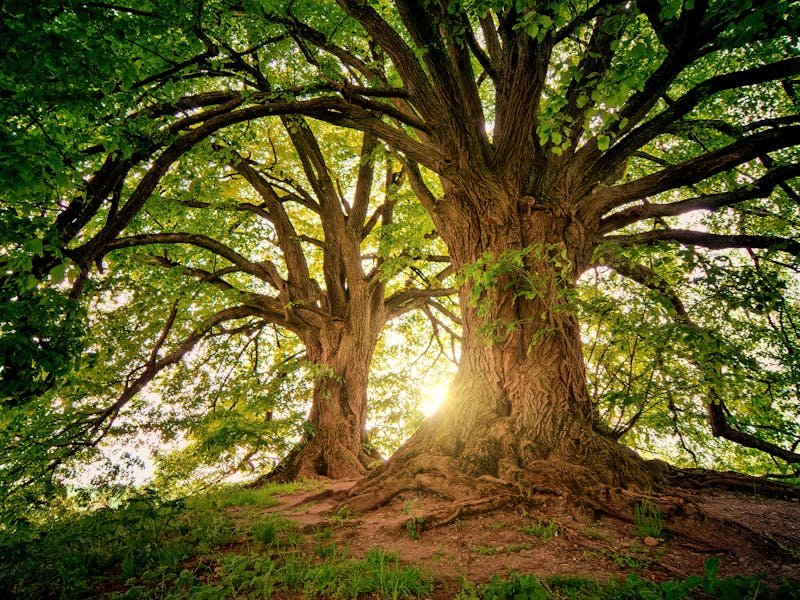
There's a reason people fall in love with the older neighborhoods in Huntsville. Drive through Twickenham, Blossomwood, or Old Town on a summer afternoon and you'll notice it immediately: the canopy. Massive oaks and hickories arching over the streets, casting deep shade that drops the temperature ten degrees and makes the whole neighborhood feel like a different world compared to a new subdivision that's been clear-cut and replanted with twigs.
Those trees didn't get that way overnight. Someone, probably 50 to 80 years ago, picked the right species, planted it in a good spot, and nature did the rest. Now here you are, looking at your own yard, and you want that kind of shade. Maybe you just built a new home in Town Madison, Clift Farm, or one of the new developments in Meridianville, and your lot looks like a parking lot in July. Maybe you've had a large tree removed and now there's a sun-scorched hole in your yard where shade used to be. Or maybe you're just thinking long-term about making your property more comfortable, more beautiful, and more valuable.
Whatever brought you here, you're making a smart decision. A well-placed shade tree is one of the best investments you can make in your property. The USDA Forest Service estimates that properly placed shade trees can reduce summer cooling costs by 15 to 35 percent. In Huntsville, where we're running our air conditioning from May through September and July temperatures regularly hit the mid-90s, that translates to real money. Not to mention the increase in property value, which studies consistently show ranges from 5 to 15 percent for well-landscaped homes with mature trees.
But here's the thing: not all shade trees are created equal, and what works in Ohio or California doesn't necessarily work in North Alabama. We've got a specific set of conditions here, USDA Hardiness Zone 7b, heavy red clay soil, hot and humid summers, occasional ice storms, and severe thunderstorms through Dixie Alley, and the trees you plant need to handle all of that. We've also got to think about what species are going to be low-maintenance, resistant to common local diseases and pests, and structurally sound enough to handle our weather without becoming hazards.
After years of planting, maintaining, and yes, removing trees across the Huntsville metro area, here are our top 15 picks for shade trees that will actually perform well in your yard.
1. Willow Oak (Quercus phellos)
If we could only recommend one shade tree for Huntsville, the Willow Oak would be in strong contention. It's everything you want: fast-growing for an oak, reaching 2 feet of growth per year in good conditions, with a beautiful oval canopy that provides dense, even shade. Mature size runs 60 to 75 feet tall with a 40 to 60 foot spread. You'll see gorgeous specimens throughout Five Points, Blossomwood, and the older parts of South Huntsville.
Why it works here: Willow Oak handles clay soil better than most oaks. It's well-adapted to our heat and humidity, tolerates periodic wet conditions, and has strong wood that holds up well in storms. The fine, willow-like leaves create a soft, dappled shade rather than the heavy, dark shade of wider-leaved oaks.
Considerations: Plant at least 25 to 30 feet from structures. Small leaves mean less raking in fall, but they can clog gutters. Can develop iron chlorosis (yellow leaves) in extremely alkaline soil, but most Huntsville soils are acidic enough to avoid this.
2. Tulip Poplar (Liriodendron tulipifera)
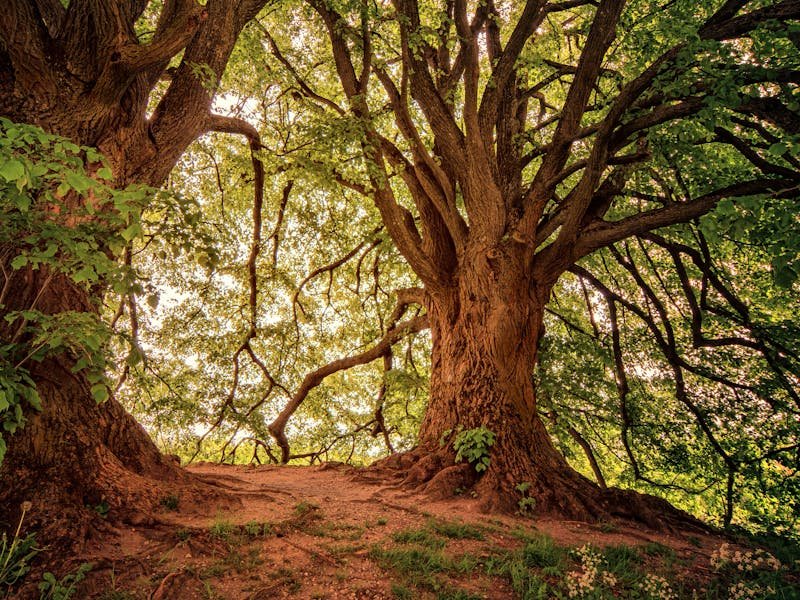
Alabama's state tree, and for good reason. The Tulip Poplar is a native powerhouse that grows fast, straight, and tall. We're talking 2 to 3 feet per year, which is exceptional for a hardwood. Mature trees commonly reach 70 to 90 feet tall with a 35 to 50 foot spread. The tulip-shaped flowers in spring are a bonus that most people don't even know about until their tree gets big enough to bloom.
Why it works here: It's native to our exact region and perfectly adapted to our soil, climate, and conditions. Fast growth means shade in a reasonable timeframe. The tall, straight trunk creates high shade that allows sunlight to reach your lawn and understory plantings while blocking the harshest midday sun. You'll see spectacular Tulip Poplars on Monte Sano and throughout the wooded areas of Hampton Cove.
Considerations: Tulip Poplars can drop aphid honeydew in summer, which can make a sticky mess on cars parked underneath. They don't handle drought as well as oaks, so supplemental watering during Alabama's dry spells in late summer is recommended, especially for younger trees. Plant well away from structures since they get very large.
3. Red Maple (Acer rubrum)
Red Maple is one of the most popular shade trees in the Southeast, and several improved cultivars have been developed specifically for our conditions. Varieties like 'October Glory,' 'Autumn Blaze,' and 'Red Sunset' offer outstanding fall color, something that can be hit or miss with other species in our relatively mild fall weather. Growth rate is moderate to fast at 1 to 2 feet per year, reaching 40 to 60 feet tall with a similar spread.
Why it works here: Native to our area and very adaptable to different soil types, including our clay. Red Maples have a naturally attractive, rounded canopy shape that requires minimal pruning to look good. The fall color display, bright reds and oranges, is consistently reliable, something that's hard to achieve in Zone 7b.
Considerations: Red Maples have relatively shallow root systems that can heave sidewalks and driveways if planted too close. Stick with named cultivars rather than seedling-grown trees for predictable form and color. Some varieties are more prone to surface roots than others, so ask your nursery. Space at least 20 feet from paved surfaces.
4. Southern Magnolia (Magnolia grandiflora)
Nothing says "Southern" quite like a big, glossy-leaved Magnolia. And while this is technically an evergreen rather than a deciduous shade tree, the dense year-round canopy of a mature Southern Magnolia provides incredible shade. Mature trees reach 60 to 80 feet tall with a pyramidal canopy that can spread 30 to 50 feet. The enormous white flowers in late spring and early summer are some of the most beautiful blooms in the tree world.
Why it works here: Southern Magnolias are native throughout our region and are perfectly adapted to Huntsville's climate. They're drought-tolerant once established, handle our clay soil reasonably well, and their dense canopy provides shade even in winter. You'll find stunning old Magnolias throughout Twickenham, Old Town, and the historic neighborhoods near downtown Huntsville.
Considerations: Magnolias are evergreen, meaning they shed leaves year-round rather than all at once in fall. The thick, waxy leaves decompose slowly and can smother grass underneath. The dense canopy and shallow roots make growing anything under a mature Magnolia very difficult. They also require a lot of space since the lower branches sweep to the ground if not pruned up. Smaller cultivars like 'Little Gem' and 'Bracken's Brown Beauty' work better in tighter spaces.
5. Bald Cypress (Taxodium distichum)
Bald Cypress is one of those trees that surprises people. Most folks associate it with swamps and bayous, but it's actually one of the toughest, most adaptable shade trees you can plant in North Alabama. It handles wet soil and dry soil equally well, which is something very few trees can claim. Growth rate is moderate at 1 to 2 feet per year, reaching 50 to 70 feet tall with a 20 to 30 foot spread. The feathery, needle-like foliage turns a gorgeous copper-bronze in fall before dropping.
Why it works here: Extremely tolerant of our clay soil and its moisture swings. Virtually pest and disease-free in our area. Incredibly wind-resistant with a strong, tapering trunk that handles storms beautifully. This is one of the few trees we almost never have to remove due to storm damage. It's also long-lived, with specimens regularly reaching 200 to 600 years old.
Considerations: Deciduous (loses its needles in winter despite being a conifer), so you lose shade in the cold months, though in Alabama that's actually an advantage since winter sun helps warm your home. Can develop "knees" (root projections) in consistently wet soil, which can be a nuisance in lawns. Plant at least 20 feet from foundations and paved surfaces.
6. American Elm — Disease-Resistant Cultivars
The classic American Elm that once lined every street in America was nearly wiped out by Dutch Elm Disease. But plant breeders have developed new cultivars that are highly resistant to the disease, bringing back this iconic shade tree. Varieties like 'Princeton,' 'Valley Forge,' and 'Jefferson' offer the classic vase-shaped canopy that made the original so beloved. Growth rate is moderate to fast at 1 to 3 feet per year, reaching 60 to 80 feet tall with a massive 50 to 70 foot spread.
Why it works here: The classic vase shape creates high, arching shade that's perfect for front yards and street trees. These cultivars tolerate a wide range of soil conditions including clay. They're also proving to be excellent storm-resistant trees thanks to their flexible wood and arching branch structure.
Considerations: Only plant named, disease-resistant cultivars. Do not plant generic "American Elm" seedlings from big box stores, as these may not have resistance to Dutch Elm Disease. The massive mature size means these need plenty of room. Not ideal for small lots. Regular pruning in the first 10 years to develop good structure is important.
7. Nuttall Oak (Quercus texana)
This is our sleeper pick, the tree that not enough people know about but should. Nuttall Oak is a fast-growing oak (yes, fast-growing and oak in the same sentence) that's becoming increasingly popular with arborists and landscape architects in the Southeast. Growth rate of 2 or more feet per year, with a mature height of 40 to 60 feet and a 35 to 50 foot spread. The pyramidal to rounded canopy fills in quickly and provides excellent shade.
Why it works here: Nuttall Oak is one of the most clay-tolerant oaks available. It actually prefers the heavy, poorly drained soils that so many other trees struggle with in the Huntsville area. It's a strong-wooded oak that handles storms well, grows fast enough that you'll see meaningful shade within 5 to 8 years, and is highly adaptable to urban conditions. We've been recommending it to homeowners in new developments across Madison, Town Madison, and Clift Farm as a replacement for the Water Oaks that developers unfortunately still plant.
Considerations: Produces acorns, which can be a nuisance on driveways and walkways. Fall color is variable, ranging from dull brown to occasionally nice red. Less commonly available at garden centers than some other species, but any good nursery can order them.
8. Zelkova (Zelkova serrata)
Japanese Zelkova has become a go-to replacement for the American Elm and for good reason. It has a similar vase-shaped canopy but in a slightly more manageable package, typically reaching 50 to 60 feet tall with a 40 to 50 foot spread. Growth rate is moderate at about 1 to 2 feet per year. The small, elm-like leaves turn yellow, orange, and russet in fall.
Why it works here: Zelkova is remarkably disease and pest resistant. It handles heat, drought, and urban conditions well. The wood is strong and wind-resistant. It's an excellent choice for front yards and streetscapes where you want a classic shade tree form without the disease problems of traditional elms. Cultivars like 'Green Vase' and 'Village Green' have been widely planted in newer Huntsville neighborhoods and are performing beautifully.
Considerations: Not native, if that matters to you. Can develop included bark in branch crotches if not properly pruned when young. Does best in reasonably well-drained soil, so in areas with the heaviest clay, amending the planting area with compost is recommended.
9. Eastern Redbud (Cercis canadensis)
We're including Redbud on this list even though it's a smaller tree because it fills a niche that the big shade trees can't: understory shade and beauty for smaller yards. Mature size is typically 20 to 30 feet tall with a similar spread. The lavender-pink spring blooms appear before the leaves and are one of the first signs of spring in North Alabama. The heart-shaped leaves provide light, pleasant shade through summer.
Why it works here: Native and completely at home in our climate. Grows in sun or partial shade, making it a great choice for planting under or near larger trees. Outstanding spring bloom display. Tolerant of clay soil. Fast establishing and begins blooming within 3 to 5 years of planting. You'll see wild Redbuds all over Monte Sano, along the Land Trust trails, and throughout the wooded areas of Huntsville.
Considerations: Too small to shade a house on its own, but perfect for patios, seating areas, and smaller spaces. Relatively short-lived compared to oaks (30 to 50 years typical). Can be susceptible to canker diseases in poorly drained locations. The cultivar 'Forest Pansy' offers stunning purple foliage.
10. Chinese Pistache (Pistacia chinensis)
If you want fall color that rivals any tree in New England, Chinese Pistache is your answer. This medium-sized tree reaches 30 to 45 feet tall with a 25 to 35 foot spread, and in November it turns brilliant shades of orange, scarlet, and crimson that are absolutely stunning against Huntsville's blue autumn skies. Growth rate is moderate at 1 to 2 feet per year.
Why it works here: Extremely heat and drought tolerant once established. Thrives in our clay soil. Very pest and disease resistant. The mature canopy develops a beautiful, rounded shape that provides excellent shade. The fall color is consistently spectacular, which is saying something for a Zone 7b location where fall color from native trees can be unpredictable.
Considerations: Female trees produce small berries that can be messy. Buy a male cultivar like 'Keith Davey' if this concerns you. Somewhat slow to establish and may look awkward in the first few years, but it develops a lovely form with maturity. Can occasionally suffer freeze damage in unusually cold winters, though this is rare in Huntsville.
11. Overcup Oak (Quercus lyrata)
Another underused native oak that deserves more attention. Overcup Oak is naturally found in bottomland areas throughout the Tennessee Valley, meaning it's superbly adapted to the heavy, wet clay that gives so many trees problems on Huntsville properties. Mature size of 40 to 60 feet tall with a similar spread. Growth rate is moderate at about 1 to 1.5 feet per year.
Why it works here: Handles wet clay better than almost any other oak. Strong wood, good storm resistance. Relatively low-maintenance with few pest or disease problems. The rounded canopy shape provides excellent shade without the excessive height of some other oaks.
Considerations: Slower growing than Willow Oak or Nuttall Oak. Acorns can be abundant in mast years. Not as readily available at retail nurseries, so you may need to special order from a wholesale or specialty nursery.
12. Shumard Oak (Quercus shumardii)
Shumard Oak is the Southern counterpart to the Northern Red Oak and is one of the most beautiful shade trees you can plant in North Alabama. It develops a broad, spreading canopy that reaches 50 to 70 feet tall with a 40 to 60 foot spread. Growth rate is moderate to fast at 1 to 2 feet per year. The deeply lobed leaves turn rich red in fall, and the tree has a strong, stately presence that commands attention.
Why it works here: Native to our region and well-adapted to clay soils. More alkaline-tolerant than many other red oak group species. Excellent storm resistance with strong wood. Provides deep, cooling shade from a wide-spreading canopy. Less susceptible to bacterial leaf scorch than some other oaks. Beautiful specimens can be found throughout the established neighborhoods of Huntsville, especially in Weatherly Heights and Blossomwood.
Considerations: Large mature size means it needs space. Plant at least 30 feet from structures. Produces acorns that can be a nuisance on hard surfaces. Takes several years to really get going, but once established, growth accelerates nicely.
13. White Oak (Quercus alba)
The king of shade trees. If you've got the space and the patience, a White Oak is one of the most magnificent trees you can grow. These trees can reach 80 feet tall with a canopy spread of 80 feet or more. They live for centuries, with some specimens in the Southeast estimated at over 400 years old. Growth is slow to moderate at 1 to 1.5 feet per year in youth, but they pick up speed once established.
Why it works here: Native and perfectly adapted. White Oak produces some of the strongest, most rot-resistant wood of any North American tree. It's our top pick for long-term storm resistance. The wide, spreading canopy creates massive shade coverage. Fall color is a reliable wine-red to burgundy. If you're planting for your grandchildren and great-grandchildren, this is the tree.
Considerations: Slow to establish and doesn't transplant as easily as some other oaks. Best planted as a small tree (5 to 7 gallon size) rather than a large specimen. Needs space, lots of it. Not for small lots. Doesn't tolerate soil compaction or changes in grade over the root zone, so protect it during any future construction.
14. Hickory (Carya species)
Shagbark Hickory and Pignut Hickory are two native species that make outstanding shade trees in the Huntsville area. Mature size of 60 to 80 feet tall with a 30 to 50 foot spread. Growth rate is slow to moderate. The compound leaves create a lighter, more open shade than oaks, and the fall color is a reliable, glowing gold.
Why it works here: Hickories are among the most storm-resistant trees in our forest, with extremely strong, flexible wood that bends rather than breaks in high winds. They're native, well-adapted, and virtually maintenance-free once established. The shaggy bark of Shagbark Hickory adds year-round visual interest. Hickory nuts attract wildlife and are edible (though you'll probably lose most of them to the squirrels).
Considerations: Hickories have a deep taproot that makes them difficult to transplant. Best planted from small container-grown trees or even from seed. Slow to establish. The falling nuts and husks can be a nuisance, and they're very hard, so watch where you step in fall. Not ideal near driveways where nuts can be a rolling hazard.
15. Pecan (Carya illinoinensis)
Yes, Pecan is technically a type of hickory, but it deserves its own entry because it brings something extra to the table: food. A mature Pecan tree is a massive shade producer, reaching 70 to 100 feet tall with a 50 to 70 foot spread. And it produces pounds and pounds of pecans every fall. Growth rate is moderate at 1 to 2 feet per year once established.
Why it works here: Pecans have been grown commercially and in home landscapes throughout North Alabama for generations. They're perfectly adapted to our growing season, our soil, and our climate. The massive canopy provides dense shade across a huge area. And then there are the pecans, which in a good year can produce 50 to 100 pounds per tree. There's nothing quite like picking up fresh pecans from your own yard.
Considerations: Very large at maturity and needs lots of space. Susceptible to pecan scab disease, so choose disease-resistant varieties like 'Elliott,' 'Kanza,' or 'McMillan' for our area. Drops husks, shells, and branches, so not ideal near patios or pools. Benefits greatly from a second variety planted nearby for cross-pollination and better nut production.
Trees to Avoid Planting in Huntsville
For every good tree we've recommended, there are species that we wish people would stop planting. These are trees that we frequently end up removing from Huntsville properties because they've become problems. Save yourself the money and headache by avoiding these:
Bradford Pear (Pyrus calleryana 'Bradford'): We could write an entire article just about why you should never plant a Bradford Pear. The branch structure is inherently weak, with tight, V-shaped crotch angles that guarantee the tree will split apart, usually within 15 to 20 years. They're now considered invasive in Alabama, with the thorny wild seedlings taking over fence rows and field edges across Madison County. They're also incredibly common in the neighborhoods around Research Park, Jones Valley, and South Huntsville, and our crew removes dozens of split Bradford Pears every year.
Silver Maple (Acer saccharinum): Grows fast, but that fast growth comes with weak, brittle wood that breaks in every storm. The aggressive root system invades sewer lines, heaves sidewalks, and makes growing grass underneath virtually impossible. There are so many better maples available.
Water Oak (Quercus nigra): This one surprises people because it's a native oak. But Water Oaks are relatively short-lived (40 to 60 years), prone to internal decay, and they're the species most likely to fail catastrophically in our area. We remove more hazardous Water Oaks than any other species. If you want a fast-growing oak, plant a Nuttall Oak or Willow Oak instead.
Mimosa (Albizia julibrissin): Yes, the pink puffball flowers are pretty. But Mimosa is invasive, messy, disease-prone, and structurally weak. It seeds prolifically and the seedlings pop up everywhere. Mimosa wilt disease is rampant in our area and can kill a tree in a single season.
Sweetgum (Liquidambar styraciflua): A beautiful native tree that we would probably recommend if not for one thing: the gumballs. Those spiky seed pods that cover your yard, clog your mower, and hurt like crazy when you step on them barefoot. If you can handle the gumballs, Sweetgum is actually a fine tree. But most homeowners regret it.
Planting Tips for Huntsville's Clay Soil
No matter which species you choose from our list, proper planting technique in our North Alabama clay soil is critical for getting your new tree off to a healthy start. Here's what we recommend based on years of experience planting and caring for trees across Huntsville, Madison, and the surrounding communities.
Dig wide, not deep. The planting hole should be two to three times wider than the root ball but only as deep as the root ball is tall. In clay soil, digging too deep creates a "bathtub effect" where the tree sits in a pocket of water-saturated soil that rots the roots. The top of the root ball should sit slightly above the surrounding grade.
Don't amend the backfill too heavily. An old piece of advice said to fill the planting hole with compost and peat moss. Current research shows this actually discourages roots from growing out into the native soil. Instead, backfill with the original clay soil and add a thin layer (1 to 2 inches) of compost mixed in. The roots need to learn to grow in the soil they're going to live in.
Mulch is your best friend. Apply 3 to 4 inches of hardwood mulch or wood chips in a wide ring around the tree, extending at least 3 to 4 feet out from the trunk. Keep the mulch pulled back 3 to 4 inches from the trunk itself. No mulch volcanoes. Mulch moderates soil temperature, retains moisture, suppresses weeds, and gradually improves the clay soil as it decomposes.
Water deeply and consistently for the first two years. New trees in clay soil need 1 to 2 inches of water per week during the growing season. Deep, infrequent watering is better than frequent shallow watering because it encourages roots to grow downward. A slow-running hose at the base of the tree for 30 to 45 minutes twice a week is a good starting point.
Plant in fall if possible. The best time to plant shade trees in Huntsville is from late October through December. Our mild winters allow roots to establish through the cool months before the tree faces its first Alabama summer. Spring planting works too, but requires much more attentive watering to get the tree through the heat.
Space appropriately. This is where most homeowners make their biggest mistake. That little 6-foot whip from the nursery is going to be 60 feet tall and 50 feet wide someday. Plant it accordingly. Large shade trees should be at least 20 to 30 feet from your home's foundation, 15 feet from driveways and walkways, and away from power lines and septic systems. Look up at the sky when choosing your planting spot and imagine a 50-foot wide canopy there. Does it fit without interfering with structures, utilities, or other trees?
Choosing and planting the right shade tree is an investment in the future of your property and your community. If you'd like help selecting the right species for your specific site, or if you need professional pruning to keep your existing trees healthy and beautiful, give us a call at (256) 555-0123. We're always happy to talk trees with fellow Huntsville homeowners.
Frequently Asked Questions
What is the fastest growing shade tree for Huntsville, Alabama?
The Tulip Poplar is one of the fastest growing native shade trees in the Huntsville area, adding 2 to 3 feet per year under good conditions. Red Maple and Nuttall Oak are also fast growers. However, fast growth often means weaker wood. For a balance of speed and strength, Nuttall Oak and Willow Oak are excellent choices, growing 2 or more feet per year while developing strong structural wood that holds up to our storms.
What trees grow best in Alabama clay soil?
Several excellent shade trees tolerate or even thrive in North Alabama's heavy clay soil. Willow Oak, Nuttall Oak, Bald Cypress, Overcup Oak, and Red Maple all handle clay well. Southern Magnolia and Chinese Pistache also adapt to clay soils. The key is proper planting technique: dig a wide, shallow hole, avoid over-amending the backfill, and mulch heavily to improve drainage and soil structure over time.
How far from my house should I plant a shade tree?
As a general rule, plant large shade trees at least 20 to 30 feet from your home's foundation, and 15 to 20 feet from driveways, sidewalks, and underground utilities. For very large species like White Oak, Pecan, and Tulip Poplar, 30 to 40 feet from structures is ideal. Always consider the tree's mature canopy spread, not just its current size, when choosing a planting location.
When is the best time to plant shade trees in Huntsville, Alabama?
The best time to plant shade trees in Huntsville is during the dormant season, from late October through early March. Fall planting (October through December) is ideal because roots continue to establish during our mild Alabama winters before the tree faces summer heat stress. Spring planting also works but requires more careful watering through the first summer.
What shade trees should I avoid planting in Huntsville?
Avoid Bradford Pear (weak branch structure, invasive), Silver Maple (aggressive roots, brittle wood), Water Oak (short-lived, prone to rot and catastrophic failure), Mimosa (invasive, disease-prone), and Sweetgum (produces extremely messy gumballs). These species frequently cause problems and often lead to expensive removal down the road.
How much shade can one tree provide and how much does it save on energy bills?
A single large shade tree can shade 1,000 to 2,500 square feet of ground depending on species and size. Properly placed shade trees on the south and west sides of a home can reduce summer cooling costs by 15 to 35 percent according to the USDA Forest Service. In Huntsville's hot summers, where air conditioning runs five months out of the year, that can translate to savings of $200 to $500 or more annually on electricity.