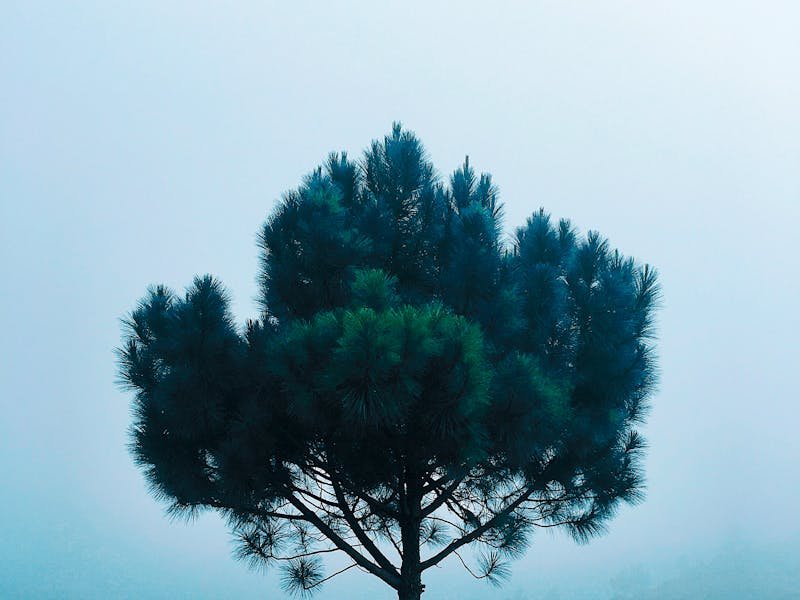
Pine trees are everywhere in the Huntsville area. Drive down any road in Madison County and you'll see them: tall, straight Loblolly Pines towering over rooftops, stands of Virginia Pine along fence lines, Shortleaf Pines mixed into hardwood forests on Monte Sano and Green Mountain. They're a fundamental part of our North Alabama landscape, and for good reason. Pines grow fast, they're evergreen, they provide year-round screening and windbreak, and they produce that wonderful pine straw that carpets the forest floor.
But pines also come with a unique set of problems that hardwood trees don't face, and those problems are particularly acute in our area. From the devastating Southern Pine Beetle to ice storm damage to the simple fact that a 90-foot Loblolly Pine next to your house is an inherently risky proposition, pine trees require a different kind of attention than the oaks and hickories in your yard.
We remove more pine trees in the Huntsville metro area than any other species. That's not because pines are bad trees. It's because they face more threats, grow in more challenging situations, and when they fail, they tend to fail catastrophically. An oak might lose a branch. A pine falls over in one piece.
This guide covers the most common pine tree problems we encounter across Huntsville, Madison, Decatur, Athens, and the surrounding communities. We'll help you understand what to watch for, when a pine can be saved, and when it's time to call in a professional.
Pine Species in the Huntsville Area
Before we get into the problems, let's make sure you know what kind of pine you're dealing with. The three most common pine species in North Alabama are:
Loblolly Pine (Pinus taeda): This is the big one. Loblolly Pine is by far the most common pine in the Huntsville area and across the entire Southeastern United States. Fast-growing (2 to 3 feet per year), reaching 60 to 100 feet tall at maturity with a trunk diameter of 2 to 3 feet. The needles are 6 to 9 inches long and come in bundles of three. Loblolly is the species you see towering over homes in Hampton Cove, Bailey Cove, and across the residential areas of South Huntsville. It's also the primary species in the extensive pine plantations throughout rural Madison County.
Virginia Pine (Pinus virginiana): A smaller, scrubby pine that typically reaches 30 to 50 feet tall. Common on poor, dry soils, road cuts, and disturbed areas. Short needles (1.5 to 3 inches) in bundles of two. Virginia Pine is the pine you see colonizing abandoned fields and growing along roadsides throughout Harvest, Meridianville, and the more rural parts of the county. It's a shorter-lived species (60 to 90 years) and is particularly prone to ice damage.
Shortleaf Pine (Pinus echinata): A medium to large pine reaching 50 to 80 feet tall, with needles 2.5 to 5 inches long in bundles of two or three. Less common than Loblolly in suburban areas but present throughout the natural forests of Monte Sano, Green Mountain, and the mountainous terrain around Owens Cross Roads and the Big Cove area. Shortleaf Pine is actually the only pine species that can resprout from the base after fire or damage, which is a unique trait among Southern pines.
Southern Pine Beetle: The Number One Killer
If there's one thing every pine tree owner in North Alabama needs to know about, it's the Southern Pine Beetle (SPB). This tiny insect, barely the size of a grain of rice, is the single most destructive pest of pine trees in the southeastern United States. Alabama has experienced multiple major SPB outbreaks, and the Huntsville area has not been spared.
How the Southern Pine Beetle works: Adult beetles fly to a pine tree, boring through the bark into the cambium layer, the thin layer of living tissue between the bark and the wood. Once inside, they create S-shaped tunnels called galleries where they lay eggs. But the beetles don't work alone. They carry a blue stain fungus on their bodies that they introduce into the tree. This fungus spreads through the tree's vascular system, clogging the tubes that transport water from the roots to the canopy. Between the physical destruction of the cambium by the beetles and the vascular blockage from the fungus, the tree is being killed from two directions simultaneously.
A pine tree under active SPB attack can go from healthy-looking to completely dead in as little as two to four weeks during warm weather. That's not an exaggeration. We've gotten calls from homeowners in the Moores Mill and Wade Mountain areas who noticed a couple of trees looking off-color one week and had five or six stone-dead pines the next.
How to identify an SPB infestation:
- Pitch tubes: Small globs of resin (sap) on the trunk, usually the size of a pencil eraser to a quarter. These are the tree's attempt to "pitch out" the invading beetles by flooding the entry holes with sticky sap. If the attack is light and the tree is healthy, it might succeed. If the attack is heavy, the tree can't produce enough sap to repel all the beetles.
- Boring dust: Fine, reddish-brown sawdust in bark crevices and at the base of the tree, produced by the beetles as they bore through the bark.
- Fading crown: The canopy transitions from green to yellow to red-brown, often starting at the top and working downward. By the time the entire crown has turned brown, the tree is dead and the beetles have already moved on to new hosts.
- S-shaped galleries: If you peel back a section of bark on an infested tree, you'll see the distinctive S-shaped tunnels carved into the sapwood. These are packed with boring dust and frass (beetle excrement).
- Woodpecker activity: Woodpeckers feed on bark beetle larvae. Heavy woodpecker activity on a pine, with sections of bark chipped away exposing lighter wood underneath, is a strong indicator of beetle infestation.
What to do: Unfortunately, once a pine tree is actively infested with SPB, there is no treatment that will save it. The tree needs to be removed as quickly as possible, and here's the critical part: the infested wood should be removed from the property promptly to prevent the beetles from emerging and spreading to adjacent pines. SPB infestations expand outward from the initial "spot," with beetles attacking the nearest pines first. If you have a cluster of pines and one gets infested, the clock is ticking for the rest.
In severe outbreaks, the Alabama Forestry Commission recommends "cut and remove" or "cut and leave" strategies for infested trees, along with a buffer of green, uninfested trees around the spot to break the cycle. If you suspect SPB on your property, getting a professional assessment immediately can mean the difference between losing one tree and losing ten.
Pine Wilt Disease
Pine wilt is another serious threat to pine trees in North Alabama, and it's been increasing in prevalence over the past decade. It's caused by a microscopic organism called the pinewood nematode, which is transmitted from tree to tree by pine sawyer beetles.
How it works: Pine sawyer beetles feed on healthy pine twigs. If the beetle is carrying pinewood nematodes, the microscopic worms enter the tree through the feeding wounds. Once inside, the nematodes reproduce rapidly in the resin canals and block the tree's water transport system. The tree essentially dies of thirst while standing in moist soil.
Symptoms: Pine wilt kills fast, often within a few months of infection during the growing season. The tree's needles turn gray-green, then brown, throughout the entire canopy simultaneously. Unlike normal needle drop or drought stress, which affects specific areas of the canopy, pine wilt causes uniform browning across the whole tree. The needles stay attached to the branches rather than falling off. If you break a branch, the wood inside will appear brown and dry rather than white and moist.
Which pines are affected: In our area, Virginia Pine and Shortleaf Pine are the most susceptible to pine wilt. Loblolly Pine can also be affected but seems to have somewhat more resistance, at least when healthy and not stressed by drought or other factors. Interestingly, non-native pines like Scots Pine and Austrian Pine, which are sometimes planted as ornamentals in Huntsville landscapes, are extremely susceptible and are frequently killed by pine wilt.
What to do: Like SPB, there is no effective treatment for pine wilt once a tree is infected. The tree should be removed and the wood destroyed (chipped or burned) to kill the nematodes and prevent the sawyer beetles from carrying them to other trees. Do not leave pine wilt-killed wood stacked on your property, as emerging sawyer beetles will spread the nematodes to nearby pines.
Needle Cast and Other Foliage Diseases
Not every pine tree problem is a death sentence. Several fungal diseases affect pine needles in North Alabama, causing discoloration, premature needle drop, and an overall thin, unhealthy appearance. While these diseases rarely kill a mature pine by themselves, they weaken the tree and can make it more susceptible to beetle attacks and other problems.
Brown spot needle blight: Particularly common on Longleaf Pine seedlings but also affects other species. Caused by the fungus Mycosphaerella dearnessii, it creates brown spots on needles that eventually cause the needle to die and drop. Severe infections can defoliate young trees.
Lophodermium needle cast: This fungal disease causes older needles (second and third year needles) to turn brown and fall off prematurely, giving the tree a thin, sparse appearance. The tree may look alarming, but since the current year's needles are usually unaffected, the tree continues to grow and typically recovers with the next flush of new growth.
Normal needle drop: Here's something that alarms a lot of homeowners unnecessarily. All pines naturally shed their older needles every year, typically in fall. Loblolly Pines keep their needles for about two years, then the inner (older) needles turn yellow-brown and fall off. If you're seeing yellowing and browning on the interior of the canopy while the branch tips stay green, that's normal seasonal needle drop and nothing to worry about. We get calls about this every October from homeowners in Five Points, Twickenham, and Blossomwood who think their pines are dying.
When to worry: Foliage diseases become a serious concern when they occur year after year and the tree is progressively thinning. A pine that loses more needles than it replaces is on a downward trajectory. If your pine's canopy has become noticeably thinner over the past two or three years, even though it's still alive and producing some new growth, a professional evaluation can determine whether the tree has a recoverable disease or whether the decline is irreversible.
Storm Damage: Pine Trees and Severe Weather
Living in Dixie Alley means dealing with severe weather, and pine trees are among the most vulnerable species when storms roll through. Our crew responds to more emergency calls for storm-damaged pines than any other species. There are several reasons why pines are so storm-vulnerable.
Height and leverage. Loblolly Pines routinely reach 80 to 100 feet tall. That height creates enormous leverage forces during high winds. The canopy acts like a sail, catching wind and transmitting the force down through the trunk to the root system. The taller the tree, the greater the force on the roots. This is basic physics, and it's why the tallest pines in your yard are the ones most likely to fail in a storm.
Shallow root systems. Unlike deep-rooted hardwoods like oaks and hickories, pines have relatively shallow, widespread root systems. In Huntsville's heavy clay soil, pine roots are even shallower than normal because they can't penetrate the dense clay easily. They spread laterally just below the surface, creating a wide but thin root plate. When heavy rain saturates that clay soil and then wind hits the canopy, the shallow roots can lose their grip. This is why you see pine trees that have toppled completely, root ball and all, while the nearby hardwoods are still standing.
Brittle failure at height. When pines fail in wind, they often snap at a weak point rather than uprooting. A healthy pine can bend significantly in wind, but if there's any weakness, a dead branch stub, beetle damage, a lightning scar, an old wound, the trunk will fracture at that point. A pine that snaps at 40 feet sends half the tree crashing down with devastating force. We've seen snapped pines punch holes through roofs, crush garages, and flatten cars across neighborhoods in The Ledges, McMullen Cove, and throughout South Huntsville.
Ice storm vulnerability. North Alabama gets ice storms every few years, and pines suffer disproportionately. The long, flexible branches and dense needle mass collect heavy ice accumulations. Virginia Pines are especially prone to ice damage because of their multiple, spreading stems. Ice loading bends branches to the ground and can split entire trees apart. After the ice storms that periodically hit the Tennessee Valley, our phone rings off the hook with pine damage calls from homeowners across the entire metro area.
The critical difference from hardwoods: When a hardwood tree like an oak loses its top in a storm, it can regenerate. Hardwoods have latent buds along the trunk and major branches that can sprout new growth, eventually rebuilding the canopy. Pines cannot do this. A pine grows from a single terminal bud at the very tip of the main leader. If that leader is broken off, the tree cannot grow a new one. A topped pine is a permanently disfigured pine that will never regain its shape and becomes increasingly vulnerable to beetles, disease, and future storm damage. In most cases, a pine that has lost its top to storm damage should be removed.
Leaning Pines: A Special Concern After Storms
We see this every spring storm season across the Huntsville area: a pine tree that survived the storm but is now leaning at an angle it wasn't at before. Maybe it's tilted 10 degrees. Maybe 20. It's still standing, still green, still looks like it might be okay. Should you be worried?
Yes. A leaning pine is almost always a pine that needs to come down.
Unlike hardwoods, which can sometimes stabilize at a new angle by growing compensating roots, pines don't have the same adaptive capability. The shallow root plate, once it's been shifted by wind, rarely re-anchors with enough strength to withstand another storm. The lean puts constant stress on the root system, the wood fibers on the compression side of the lean are being crushed while the fibers on the tension side are being pulled apart. This ongoing stress weakens the tree further with each passing week.
We've tracked leaning pines on properties in Owens Cross Roads, Meridianville, and the Moores Mill area after storm events. In the vast majority of cases, a pine that developed a significant lean (more than about 10 degrees) during one storm came down during the next storm, or in some cases, fell on a calm day when the root failure progressed past the tipping point.
If you have a pine tree that's developed a new lean after a storm, especially if you can see disturbed soil, cracking on the uphill side, or exposed roots on the leaning side, get a professional assessment right away. Don't wait for the next severe weather event to make the decision for you.
Pine Straw Management and Maintenance
Not everything about pine trees is problems and danger. One of the genuine benefits of having pines on your property is the pine straw they produce. Pine straw is an excellent natural mulch, and here in the Huntsville area, it's a significant commodity, you can buy bales of it at any garden center.
If you've got pines, you've got a free supply of premium mulch dropping into your yard every fall. Here are some tips for managing it.
Leave pine straw under the trees. A natural layer of pine straw under your pines is beneficial for the trees. It acts as mulch, retaining moisture, moderating soil temperature, and gradually improving the soil as it decomposes. Don't rake all the pine straw out from under your trees. Leave a 2 to 3 inch layer in place. You can rake up the excess for use elsewhere in your landscape.
Use it as mulch in garden beds. Pine straw makes excellent mulch around trees, shrubs, and perennials. It's particularly good on slopes because the needles interlock and resist washing away in heavy rain, something that's a real consideration on the hilly terrain around Monte Sano, Green Mountain, and the mountain-adjacent neighborhoods of Huntsville.
Fire considerations. Pine straw is flammable when dry. If your home is in a wooded area, particularly in the wildland-urban interface areas of Monte Sano, Wade Mountain, or Green Mountain, keeping pine straw raked back from your home's foundation, deck, and any combustible structures is an important fire safety practice. Maintain a defensible space zone of at least 30 feet around your home where accumulated dry pine straw is cleared regularly.
When a Pine Can Be Saved vs. When It Needs to Go
After reading about all these problems, you might be wondering whether any pine tree issue is fixable. The answer is yes, some are. Here's a quick decision guide.
Situations where the pine can likely be saved:
- Normal seasonal needle drop (interior browning in fall with green tips)
- Mild foliage disease (needle cast) with less than 30 percent canopy thinning
- Minor storm damage to lower branches that can be cleanly pruned
- Drought stress (needles drooping or slightly yellowing) that responds to watering
- Light bark beetle activity (just a few pitch tubes) on an otherwise healthy tree
Situations where removal is the right call:
- Active Southern Pine Beetle infestation with widespread boring dust and fading crown
- Pine wilt disease (entire canopy browning uniformly)
- Loss of the top third or more of the canopy from storm damage
- Significant lean developed after a storm event
- Major trunk damage (lightning strike, split, or large wound)
- Pine growing within 15 to 20 feet of your home with signs of stress or structural problems
- Progressive canopy thinning over multiple years that hasn't responded to care
- Root plate disturbance or soil heaving at the base
When in doubt, get a professional assessment. Our crew evaluates pine trees across the Huntsville metro area every week. We can tell you whether your pine is going through a temporary stress episode that it'll recover from or whether it's in irreversible decline. And we'll always recommend saving a tree when that's a realistic option. We don't get any satisfaction from removing a tree that could have been saved.
Pine Tree Removal Considerations
When a pine does need to come down, there are some unique aspects of pine removal that are worth understanding.
Height and weight. Loblolly Pines are among the tallest trees we remove in the Huntsville area. An 80-foot pine with a 24-inch trunk can weigh 8,000 to 12,000 pounds or more. Removing a tree that tall near a home, power lines, or other structures requires technical rigging, and often crane assistance. The trunk is typically removed in sections, with each piece lowered on ropes to prevent impact damage to the property below.
Shallow root systems and stump grinding. The good news about pine root systems being shallow is that the stumps are relatively easy to grind. Pine stumps don't send up suckers the way some hardwood species do, so once the stump is ground out, the pine is done. The pine root system will decay over the following years without sending up new growth.
Replanting after removal. If you're removing a pine and want to plant something in its place, wait until the stump has been ground and the chips have been raked back. Pine needles create a slightly acidic soil, which is fine for many plants but worth noting when selecting replacement species. Consider planting a hardwood shade tree that will be more wind-resistant and longer-lived than the pine it's replacing.
Pine trees are a significant part of what makes North Alabama's landscape beautiful and unique. When they're healthy and well-situated, they're wonderful trees. But when problems develop, pines tend to decline quickly and fail dramatically. Staying alert to the warning signs we've covered in this guide, and acting promptly when something doesn't look right, is the best way to protect your property and keep your healthy pines thriving for years to come.
If you've got a pine tree that's concerning you, whether it's browning needles, beetle holes, a new lean after a storm, or just a big pine that's uncomfortably close to your house, give Huntsville Tree Pros a call at (256) 555-0123 or contact us online. We'll come out, take a look, and give you our honest assessment. Free estimates, no obligation, for homeowners across Huntsville, Madison, Decatur, Athens, and the surrounding communities.
Frequently Asked Questions
How do I know if my pine tree is dying or just stressed?
A stressed pine typically shows yellowing or browning of needles starting from the inside of the canopy outward, which is normal seasonal needle drop. A dying pine shows browning from the top down or from the outside in, overall thinning, excessive pitch (sap) on the trunk, small round holes from boring insects, and bark that falls off easily. If the needles have turned uniformly brown throughout the entire canopy, the tree is dead. Do a scratch test on a twig: green tissue underneath means alive, brown and dry means dead.
What is the Southern Pine Beetle and how does it kill pine trees?
The Southern Pine Beetle (SPB) is a tiny bark beetle about the size of a grain of rice that's the most destructive insect pest of pine trees in the Southeast. The beetles bore through bark and create S-shaped tunnels in the cambium layer while introducing a blue stain fungus that blocks the tree's water transport. An infested tree can die within two to four weeks. The beetles then spread to adjacent pines, creating expanding circles of dead trees. There is no effective treatment once infestation is established.
Can a pine tree regrow its top after storm damage?
No. Unlike hardwoods that can resprout from latent buds, pine trees grow exclusively from a single terminal bud at the tip of the main leader. Once that top is broken off, it cannot regenerate. The tree may survive with a flat or lopsided canopy, but it will never regain its natural shape, and the broken top becomes an entry point for bark beetles and decay. Most topped pines eventually need to be removed.
Should I remove pine trees close to my house?
Pine trees within 15 to 20 feet of a home deserve careful evaluation. Loblolly Pines reach 80 to 100 feet tall with shallow root systems that make them vulnerable to wind throw during our Dixie Alley storms. A healthy, well-maintained pine in stable soil may be fine to keep, but any pine showing signs of stress, disease, or structural problems near a home should be assessed by a professional. The tree's height means it can potentially reach your house even from 40 to 50 feet away.
How much does it cost to remove a large pine tree in Huntsville?
Large pine tree removal in Huntsville typically costs $800 to $2,500 depending on height, location, and access. Pines over 70 feet near structures often require crane-assisted removal, which increases costs. Open-area pines with good access are less expensive. Pricing usually includes cutting and hauling the trunk and branches. Stump grinding is typically an additional $150 to $400. We provide free estimates for all tree services.
Is pine straw from my trees safe to use as mulch?
Yes, pine straw from healthy trees makes excellent mulch. It's lightweight, interlocks well on slopes, allows water penetration, and decomposes slowly. It does slightly acidify soil over time, which is generally beneficial for North Alabama landscapes since our soils are already slightly acidic. However, don't use pine straw from beetle-infested or diseased trees, as the needles may harbor pest organisms.