If you have lived in the Huntsville area for any length of time, you know our trees grow fast. Between the long growing seasons, the generous rainfall, and Alabama's fertile soil, a tree that was a manageable size three years ago can turn into an overgrown monster that is scraping your gutters and blocking your driveway before you know it. And once that happens, the question becomes: when should I actually trim this thing?
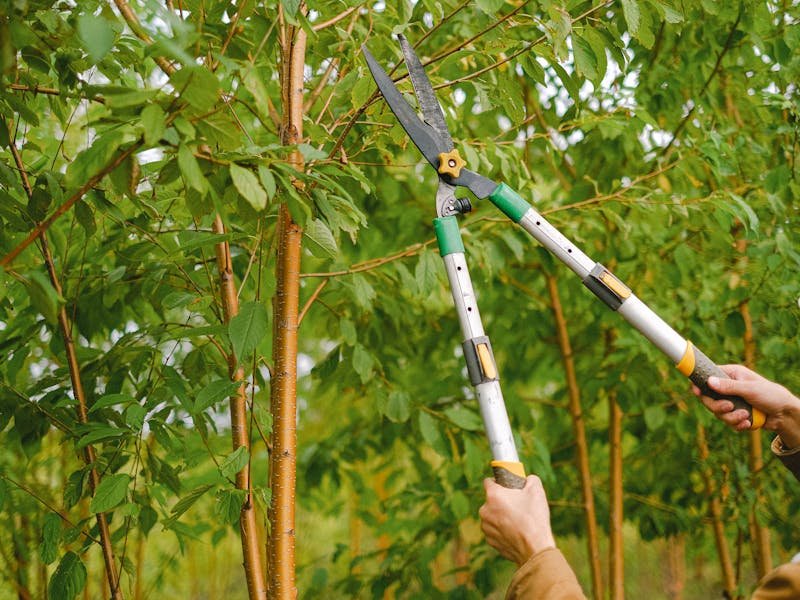
It sounds like a simple question, but the answer is more nuanced than most homeowners expect. The timing of your tree trimming affects everything from how quickly the tree heals, to whether you accidentally invite disease, to whether you are wasting your money on a job that will need to be redone in a year. We have been trimming and pruning trees across Huntsville, Madison, Decatur, and the surrounding Tennessee Valley communities for years, and the timing question is one of the most common things homeowners ask us about.
So let's break it down. Not just the general "dormant season is best" advice you will find on every gardening website, but the specific, species-level, North Alabama-specific timing that actually matters for the trees growing in your yard right now.
Why Pruning Timing Matters More Than You Think
Before we get into the seasonal specifics, it is worth understanding why timing matters in the first place. It is not just an arbitrary preference. There are real biological and practical reasons that make certain times of year significantly better or worse for tree pruning.
Wound Healing and Compartmentalization
Every time you cut a branch off a tree, you are creating a wound. Trees do not heal the way humans do. They do not regenerate lost tissue. Instead, they "compartmentalize" wounds by growing new wood around and over the cut, eventually sealing it off from the rest of the tree. This process is most effective when the tree has a full store of energy reserves and is about to enter its active growth period.
When you prune during the dormant season, the tree's stored energy is intact and ready to be mobilized as soon as spring arrives. Those pruning cuts get sealed quickly once growth resumes. When you prune in mid-summer or early fall, the tree has already spent a significant portion of its energy on the current year's growth, and it may not have the reserves to properly compartmentalize all those wounds before winter. That is how decay organisms get a foothold.
Disease Transmission Windows
This is the one that really matters here in North Alabama, and it is the reason we are so specific about timing for certain species. Many tree diseases are transmitted by insects that are attracted to fresh pruning wounds. The sap that seeps from a fresh cut is basically a dinner bell for certain beetles and borers. During the warmer months when those insects are active, pruning creates open invitations for disease.
Oak wilt is the big one in our area. This devastating fungal disease is spread by nitidulid beetles, also called sap beetles, that feed on the sweet sap from fresh wounds. These beetles are most active from April through July in the Tennessee Valley. Pruning an oak during that window is like rolling the dice with one of the most destructive tree diseases in the Southeast. We will cover this in more detail in the species-specific section below.
Stress Management in Alabama's Climate
Huntsville sits squarely in a humid subtropical climate zone, and our summers are no joke. July and August routinely bring temperatures in the mid-90s with humidity that makes it feel even worse. Trees are already under significant stress during these months, managing water loss through transpiration while trying to maintain their full canopy of leaves. Adding the stress of heavy pruning on top of summer heat stress is asking a lot, even from a healthy tree.
Our winters, on the other hand, are relatively mild. We might get a couple of hard freezes and occasionally some ice, but the dormant period from late December through mid-February is generally a safe window for pruning work. The trees are resting, insects are dormant, and the cooler temperatures mean less water stress and lower disease pressure.
The Dormant Season: Your Best Bet for Most Trees (Late December – Mid-February)
If you take nothing else away from this article, remember this: for the vast majority of trees in your Huntsville yard, the dormant season is the ideal time for professional pruning and trimming. Here in North Alabama, that window runs roughly from late December through mid-February, after the trees have fully dropped their leaves but before the buds start swelling in late February and early March.
Why Dormant Pruning Works So Well
During dormancy, the tree's internal processes are slowed to a crawl. Sap is not flowing actively, which means pruning cuts do not bleed excessively and are less attractive to insects. The tree's full branch architecture is visible without leaves in the way, which allows your arborist to make better decisions about which branches to remove and how to shape the canopy. And because growth is about to resume in just a few weeks, those pruning wounds will start compartmentalizing almost immediately once spring arrives.
There is a practical benefit too: dormant pruning is often more efficient and therefore more affordable. Without leaves, the branches are lighter, the sight lines are clearer, and the cleanup is easier. We can see exactly what we are working with, identify structural problems that leaves were hiding, and make precise, purposeful cuts. During the growing season, a fully leafed-out tree can hide a lot of issues and make it harder to assess the overall structure.
Trees That Thrive with Dormant Pruning
Most of the major shade trees you will find across Huntsville neighborhoods respond excellently to dormant-season pruning. This includes:
Southern Red Oak and White Oak: These are arguably the most important trees in the Huntsville landscape. Drive through Blossomwood, Twickenham, or any of the established neighborhoods along Whitesburg Drive and you will see magnificent oaks that are the backbone of the tree canopy. Dormant pruning is not just ideal for oaks; it is essentially mandatory. Pruning oaks during the growing season, especially from April through July, exposes them to oak wilt transmission via sap beetles. We will not prune healthy oaks during that window, period.
Hickory: Shagbark and pignut hickories are scattered throughout the wooded lots in Monte Sano, Green Mountain, and the hillside neighborhoods of Southeast Huntsville. These are tough, slow-growing trees that respond well to dormant-season trimming. Hickories are naturally strong-wooded and do not require as much structural pruning as faster-growing species, but removing dead branches and any crossing limbs during dormancy keeps them in excellent shape.
Tulip Poplar: These fast-growing natives are everywhere in North Alabama, easily recognizable by their tall, straight trunks and their distinctive tulip-shaped flowers in spring. Tulip poplars grow aggressively and often need regular pruning to remove lower branches and manage their canopy size. Dormant pruning gives them the best chance to seal wounds cleanly before their rapid spring growth kicks in.
Sweetgum: Love them or hate them (and plenty of Huntsville homeowners fall firmly in the "hate" camp because of those spiky gumballs), sweetgums are a significant presence in our urban forest. They are especially common in the newer subdivisions built in the 1990s and 2000s across Madison, Meridianville, and the developments along Highway 72. Sweetgums respond well to dormant pruning, and because they tend to develop a lot of interior crossing branches, winter is the perfect time to thin them out and improve their structure.
Maple: Red maples are common across the region, and they are notorious "bleeders." If you prune a maple in early spring when the sap is running hard, it will pour sap from every cut for weeks. This is mostly cosmetic and does not actually harm the tree, but it looks alarming and makes a mess. Pruning in late December or January, before sap flow ramps up, avoids this issue entirely.
Spring Pruning: Proceed with Caution (March – May)
Spring in the Tennessee Valley is gorgeous. The dogwoods and redbuds bloom, the azaleas go crazy, and every tree in Huntsville is putting on its best show. But from a tree care perspective, spring is a tricky window for pruning. It is not off-limits for all species, but there are some important rules to follow.
Spring-Flowering Trees: Prune Right After Bloom
If you have flowering dogwoods, redbuds, Bradford pears (or better yet, their replacement Chanticleer pears), or ornamental cherries, the rule is simple: prune them immediately after they finish flowering. These trees set their flower buds on the previous year's growth. If you prune them during the dormant season, you are cutting off next spring's flowers. If you prune them immediately after they bloom, you get this year's flower show and still have the full growing season for the tree to produce next year's buds.
Dogwoods are particularly important to mention because they are one of the most beloved trees in Huntsville. You will find them in virtually every established neighborhood, from the shady streets of Five Points to the wooded lots of Hampton Cove. They are beautiful, but they are also somewhat delicate and prone to dogwood anthracnose, a fungal disease. Pruning them in dry weather immediately after bloom minimizes disease risk.
Oaks: The Absolute No-Go Zone
We mentioned this earlier, but it bears repeating because it is that important: do not prune oaks from April through July in North Alabama. This is the peak activity period for the sap beetles that transmit oak wilt, and fresh pruning wounds are exactly what attracts them. Oak wilt has been confirmed in Alabama and it is a death sentence for red oaks, which include our Southern red oaks, water oaks, and Shumard oaks. White oaks are somewhat more resistant but not immune.
If an oak branch breaks during a spring storm and you need emergency trimming, that is one thing. But elective pruning on oaks should wait until the dormant season. If you absolutely must prune an oak during the risky period, the cut surfaces should be painted with wound sealant immediately, and we mean within minutes, not hours. This is one of the very few situations where wound paint is actually recommended by arborists.
Storm Prep Trimming: Late February Through Early March
Here is one of the most practical reasons to get your trees trimmed in the Huntsville area: storm season. Living in Dixie Alley, as the tornado-prone corridor through North Alabama is known, means we face severe thunderstorms and tornadoes every spring. The severe weather season typically ramps up in late March and peaks in April and May, though we can see significant storms as early as February and as late as June.
Getting your trees professionally trimmed and inspected in late February or early March, just as the dormant season is ending, serves double duty. You get all the benefits of dormant-season pruning and you go into storm season with your trees in the best possible shape. Dead branches that could become projectiles get removed. Canopies get thinned to reduce wind resistance. Weak branch attachments that are prone to failure get addressed before the first line of severe thunderstorms rolls through.
We see this every single year: homeowners who had their trees trimmed before storm season come through with minor cleanup, while their neighbors who put it off are dealing with major limb failures, roof damage, and emergency tree service calls. The cost of proactive trimming is a fraction of what emergency storm damage cleanup costs. It is one of the best investments you can make as a Huntsville homeowner.
Summer Pruning: When It Makes Sense (June – August)
Summer gets a bad reputation for tree pruning, and for good reason: heavy pruning during the hottest months of the year stresses trees that are already working hard to manage heat and water demands. But there are some legitimate reasons to prune in summer, and some species that actually benefit from it.
Deadwood Removal: Always Appropriate
The one universal truth about tree pruning timing is that dead, damaged, and diseased branches can and should be removed at any time of year. Dead branches are not contributing anything to the tree. They are a liability. Removing them in summer does not stress the tree because the tree has already written off that tissue. If you spot a dead limb hanging over your deck or your kids' play area in July, do not wait until December to deal with it. Get it out of there.
This is especially relevant in Huntsville because our summer thunderstorms, even the ones that are not technically "severe," can produce strong enough winds to bring down dead branches. We get a steady stream of calls through June, July, and August from homeowners in neighborhoods across South Huntsville, Jones Valley, and the Bailey Cove area who have had dead limbs come down in afternoon storms. Most of those limbs were showing signs of being dead well before they fell.
Crepe Myrtles: The Great Debate
Ah, crepe myrtles. No discussion of tree trimming timing in the South is complete without addressing these ubiquitous ornamentals. Crepe myrtles are everywhere in Huntsville, lining commercial strips along University Drive, anchoring residential landscapes in Weatherly Heights and Research Park, and filling medians and parking lot islands from one end of town to the other.
The best time to prune crepe myrtles is late winter, typically February in our area, before new growth begins. This is when you should do any structural pruning, removing crossing branches, suckers from the base, and any dead or weak growth. Light tip pruning can be done in summer after the first flush of blooms to encourage a second flowering.
What you should absolutely not do is "crepe murder," the practice of chopping crepe myrtles back to ugly stubs every year. We see it all over Huntsville and it makes us cringe every time. Topping crepe myrtles does not make them bloom better. It creates a mess of weak, whip-like growth that is prone to breaking, and it ruins the tree's natural form. A properly pruned crepe myrtle is a graceful, multi-trunked specimen. A topped one looks like a fistful of broomsticks. If your crepe myrtle is too big for its space, the answer is not butchering it every February. The answer is replacing it with an appropriately sized cultivar.
Loblolly Pines: Summer Pruning Works
Loblolly pines are the dominant pine species across North Alabama, and they are a major component of the tree canopy in neighborhoods with wooded lots, particularly out toward Owens Cross Roads, Big Cove, and the areas along Highway 431. Pines can be pruned in summer without significant issues. In fact, some arborists prefer summer pruning for pines because the warm, dry conditions help the pruning wounds seal with resin more quickly, reducing the risk of bark beetle infestation.
The key with pines is to never remove more than the lower third of the live crown in a single session. Pines do not regenerate from old wood the way hardwoods do. Once you remove a branch, it is gone for good. Over-pruning a pine can permanently damage its form and health.
Fall Pruning: The Season to Avoid (September – November)
If there is one season to be cautious about pruning in North Alabama, it is fall. And yet, this is when many homeowners start thinking about tree work because the weather is pleasant, the leaves are starting to thin out, and it seems like a good time to get things tidied up before winter. We understand the impulse, but here is why fall is generally the worst time to do significant pruning.
The New Growth Problem
Pruning stimulates growth. When you remove a branch, the tree responds by pushing out new shoots near the cut. During spring and early summer, this new growth has an entire growing season ahead of it to mature and harden off. But growth stimulated by fall pruning does not have that luxury. New shoots that emerge in October or November are soft, tender, and completely unprepared for the freezing temperatures that arrive in December and January.
When these tender shoots get hit by a hard freeze, the tissue dies back. And now instead of a clean pruning wound that the tree had compartmentalized, you have dead tissue at the tips of new growth, creating entry points for disease and decay. It is counterproductive. You pruned to improve the tree's health, and instead you created new problems.
Fungal Spore Season
Fall in North Alabama is also peak fungal spore dispersal season for many tree pathogens. The combination of cooling temperatures, falling leaves, and frequent rain events creates ideal conditions for fungal diseases to spread. Pruning wounds created in fall are exposed to a higher concentration of fungal spores in the air than at almost any other time of year. This is particularly relevant for the common tree diseases we see in North Alabama, including various canker diseases and wood-decay fungi.
The Exception: Emergency and Safety Pruning
Just like every other season, fall is an appropriate time to remove dead or hazardous branches. If you have a dead limb hanging over your driveway or a cracked branch that looks like it could fall, do not wait three months for the "right" pruning season. Safety always comes first. The seasonal guidelines we are discussing apply to elective, structural pruning, not emergency hazard mitigation.

Species-Specific Pruning Calendar for Huntsville
To make this as practical as possible, here is a quick-reference guide for the most common tree species you will find in Huntsville-area yards. Clip this, bookmark this, whatever you need to do so you have it when you need it.
Oaks (Southern Red Oak, White Oak, Water Oak, Post Oak)
Best time: Late December through February (dormant season). Avoid: April through July (oak wilt risk). Oaks are the backbone of Huntsville's tree canopy, dominant in neighborhoods from Twickenham to Monte Sano to the older streets of Decatur. Protect them by pruning at the right time. If you need a refresher on why oaks are worth the extra care, our article on tree removal warning signs covers what happens when oaks start to decline.
Loblolly Pine and Shortleaf Pine
Best time: Late winter (February) or summer (June through August). Avoid: Fall and early spring when bark beetles are most active. Pines are everywhere from Harvest to Hampton Cove, and they grow fast. Annual lower-limb removal keeps them manageable and reduces fire risk in wooded neighborhoods.
Crepe Myrtle
Best time: Late February, before new growth starts. Light deadheading after first bloom flush in summer. Avoid: Fall pruning, and please, no topping. Ever.
Dogwood
Best time: Immediately after flowering (typically late April in Huntsville). Avoid: Pruning during wet weather, which encourages anthracnose. Dogwoods are relatively small and do not need much pruning, but removing dead wood and opening up airflow through the canopy helps keep them healthy in our humid climate.
Sweetgum
Best time: December through February (dormant season). Avoid: Fall. Sweetgums are aggressive growers and develop a lot of interior branch congestion. Dormant-season thinning improves air circulation and reduces the chance of branch failure during storms.
Bradford Pear (and Chanticleer Pear)
Best time: Late dormant season (February) for structural work. After bloom for cosmetic pruning. Note: Bradford pears are notorious for splitting due to their poor branch structure. If you have one, structural pruning to reduce weight on competing leaders is essential. Honestly, if your Bradford pear is over 20 years old and has never been structurally pruned, removal and replacement may be the smarter investment.
Tulip Poplar
Best time: Dormant season (December through February). Avoid: Summer heat stress periods. Tulip poplars can grow 2 to 3 feet per year in our area and regularly reach 80 to 100 feet. Regular dormant-season pruning keeps them from outgrowing their welcome, especially in the tighter lots found in Madison and Meridianville subdivisions.
Hickory (Shagbark, Pignut, Mockernut)
Best time: Dormant season. Hickories are low-maintenance trees that rarely need heavy pruning. Deadwood removal and occasional structural work during dormancy is usually all they need. The main concern with hickories is that they produce large, heavy nuts that can damage cars and make a mess, but pruning does not help with that.
Storm Season Pruning: A Huntsville Priority
We touched on this earlier, but it deserves its own section because it is so relevant to living in this part of Alabama. Huntsville sits right in the heart of Dixie Alley, the tornado-prone region of the Southeast that rivals the traditional Tornado Alley of the Great Plains for severe weather frequency. Between straight-line winds, microbursts, hail, and actual tornadoes, our trees take a beating every spring.
Pre-Storm Season Checklist
Getting your trees ready for storm season is not just about trimming branches. It is a comprehensive assessment that should happen in late February or early March, before the severe weather window opens. Here is what a thorough pre-storm inspection and trim should include:
Dead branch removal: Every dead branch is a potential projectile. Get them all out before the first big storm. We find dead wood in virtually every tree we inspect across Huntsville, from the mature oaks in Five Points to the pines lining the streets in Research Park.
Canopy thinning: A dense canopy acts like a sail in high winds. Selective thinning, removing 15 to 20 percent of the interior growth, allows wind to pass through the canopy instead of pushing against it. This is one of the most effective storm-proofing measures you can take.
Weak attachment removal: Branches with included bark, narrow V-shaped crotches, or other structural weaknesses are the branches most likely to fail in a storm. Identifying and removing these before storm season eliminates the weakest links.
Crown reduction near structures: If your tree's canopy is overhanging your roof, touching your home, or within reach of power lines, pre-storm trimming to create clearance is critical. A branch that is rubbing your shingles in normal conditions becomes a battering ram in 60 mph winds.
If you want a more detailed breakdown of how to prepare your trees for storm season, we have a full article dedicated to that topic.
Post-Storm Damage: When Timing Does Not Matter
After a major storm event, all the seasonal timing guidelines go out the window. If a tree has been damaged by wind, lightning, or a fallen neighbor, it needs attention immediately regardless of the month. Storm-damaged trees with hanging branches, split trunks, or partially uprooted root systems are immediate hazards that need professional assessment.
What you should not do after a storm is attempt DIY cleanup on large, damaged trees. Storm-damaged trees are under unpredictable tension loads, with branches that can spring or shift in ways you would never expect. Every year we respond to situations where a homeowner tried to cut a storm-damaged limb and made the situation significantly worse and more dangerous. Emergency tree service exists for exactly these situations. Use it.
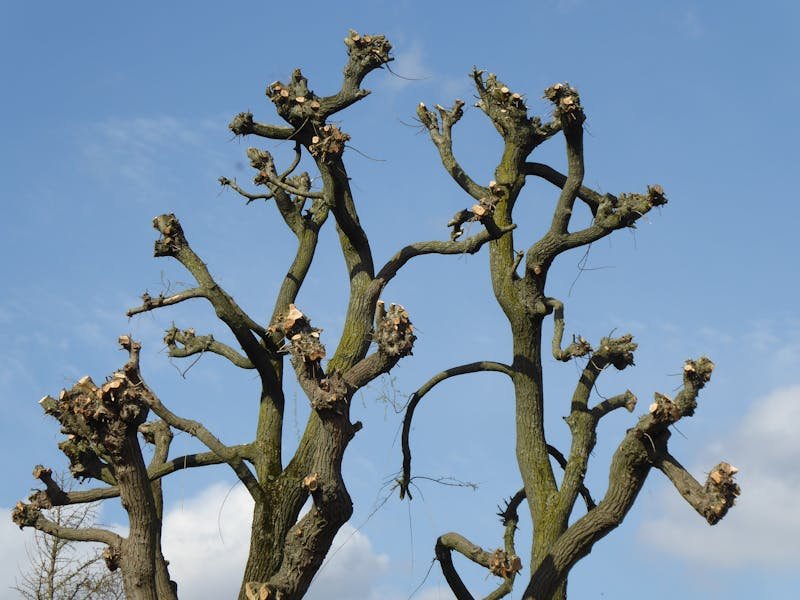
Common Pruning Mistakes Huntsville Homeowners Make
Over the years, we have seen every pruning mistake in the book. Here are the ones we encounter most frequently across the Huntsville metro area, along with why they matter and how to avoid them.
Topping Trees
Topping, the practice of cutting main branches back to stubs, is the single most destructive thing you can do to a tree short of cutting it down. And yet we see it constantly, not just on crepe myrtles but on shade trees too. We have seen topped oaks in South Huntsville, topped maples in Weatherly Heights, and topped sweetgums in Jones Valley that will never recover their natural form.
Topping does not make a tree smaller. It triggers an explosive burst of weakly attached water sprouts that grow back to the original size within a few years, except now instead of one strong branch you have a cluster of weak ones. It is worse than doing nothing.
Pruning Too Much at Once
A general rule of thumb is to never remove more than 25 percent of a tree's live canopy in a single session. We see homeowners or inexperienced operators take out 50 or 60 percent of a tree's crown, trying to "let more light in" or "make it safer." What they actually do is starve the tree by removing too much of its food-producing machinery. The tree responds with stress, excessive water sprout growth, sunscald on previously shaded bark, and often a slow decline that leads to removal a few years down the road.
Flush Cuts and Stub Cuts
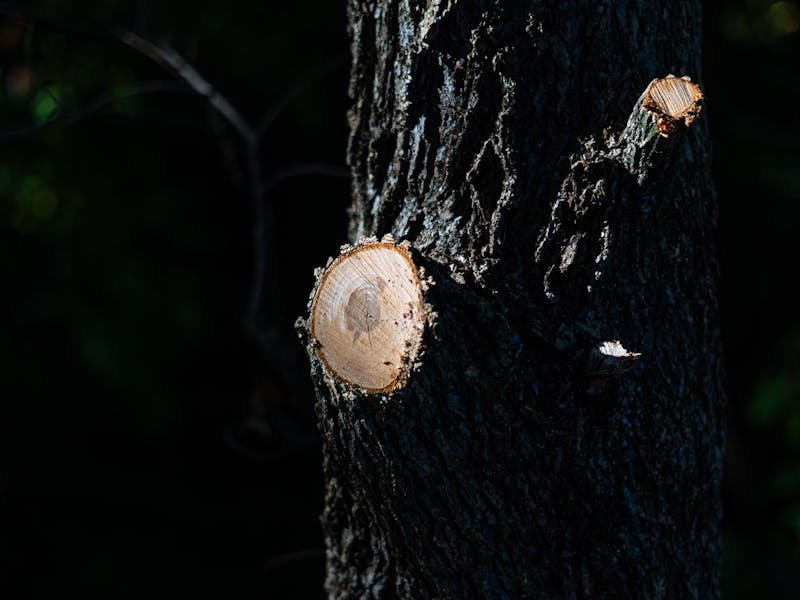
A proper pruning cut is made just outside the branch collar, the slightly swollen area where the branch meets the trunk or parent limb. A flush cut removes the branch collar, creating a larger wound that takes much longer to seal. A stub cut leaves too much of the branch attached, and the stub dies back and becomes an entry point for decay. Getting this right requires knowledge and experience. It is one of the main reasons professional tree trimming is worth the investment, because the quality of the cuts matters as much as which branches you remove.
Lion-Tailing
Lion-tailing is the practice of stripping all the interior and lower branches from limbs, leaving tufts of foliage only at the tips. It makes the tree look like, well, a lion's tail. This concentrates all the weight at the ends of the branches, increases leverage and sway in wind, and actually makes the tree more prone to failure, not less. We see this done to trees in neighborhoods across Athens and Decatur, usually by well-meaning homeowners who thought they were reducing wind resistance. Proper thinning, not stripping, is the right approach.
Frequently Asked Questions
What month is best to trim trees in Huntsville, Alabama?
For most deciduous trees in Huntsville, the sweet spot is late December through mid-February, during the dormant season. The trees have dropped their leaves, sap flow is minimal, disease transmission risk is at its lowest, and the full branch structure is visible for your arborist to make precise cuts. There are species-specific exceptions, particularly for spring-flowering trees like dogwoods and redbuds, which should be pruned immediately after they finish blooming. But as a general rule, dormant-season pruning is the way to go for the shade trees that dominate our landscape.
Can you trim trees in summer in Alabama?
Light pruning and deadwood removal are perfectly fine in summer. Removing dead, damaged, or diseased branches is appropriate any time of year and should not be delayed for seasonal reasons. However, heavy structural pruning during Alabama's brutal summer months puts additional stress on trees that are already working hard to manage heat and water demands. If you need significant pruning done, save it for the dormant season when the tree can handle it best. The exception is pines, which can be pruned in summer without significant issues.
When should you NOT trim trees in Huntsville?
The biggest "do not" is pruning oaks from April through July, when sap beetles that carry oak wilt are most active. Fresh pruning wounds on oaks during this period are an open invitation for this devastating disease. Beyond that, avoid heavy pruning in early fall (September through November) for any species. Pruning stimulates new growth, and shoots that emerge in fall will not have time to harden off before winter freezes, creating vulnerability to cold damage and disease entry points.
How often should trees be trimmed in North Alabama?
Most mature shade trees in the Huntsville area benefit from professional trimming every 3 to 5 years. Younger trees being trained for good structure may need attention every 2 to 3 years. Fast-growing species like sweetgums, tulip poplars, and water oaks tend to need more frequent attention, while slower species like white oaks and hickories can go longer between sessions. Any tree near your home, driveway, power lines, or where people regularly spend time should be visually inspected at least annually, with professional assessment if you notice any changes.
Is it bad to trim trees in spring in Alabama?
It depends on the species and the type of pruning. Light corrective pruning and deadwood removal are fine in spring for most trees. Spring-flowering trees should be pruned right after they finish blooming. But for oaks, spring is the danger zone for oak wilt transmission and pruning should be avoided entirely from April through July. And for any tree, heavy structural pruning is better done during the dormant season when the tree has full energy reserves to deal with the stress and wound closure.
Should I trim my trees before storm season in Huntsville?
This is one of the best things you can do to protect your property. Storm prep trimming in late February or early March, just as the dormant season winds down and before severe weather picks up, removes dead branches that could become projectiles, thins the canopy to reduce wind resistance, and eliminates weak branch attachments that are most likely to fail. Living in Dixie Alley means severe weather is a fact of life, and a well-maintained tree is dramatically safer than a neglected one. The cost of professional trimming is a fraction of what you would pay for emergency storm damage cleanup and home repairs.