If you have been putting off getting your trees trimmed because you have no idea what it should cost, you are not alone. Tree trimming pricing is one of the most opaque things in the home services world. Unlike getting your HVAC serviced or your gutters cleaned, there is no simple flat rate for tree work because every tree, every yard, and every situation is different. A 30-foot crepe myrtle in an open front yard is a completely different job than a 60-foot red oak hanging over a roof in a tight backyard.
We get pricing questions every single day from homeowners across Huntsville, Madison, Decatur, and the surrounding areas. People want to know if the quote they got is fair, what factors are driving the price, and whether there are ways to save money without sacrificing quality. Those are all smart questions, and this guide is going to answer every one of them.
Here is the thing about tree trimming cost: there is a real range, and where your specific job falls in that range depends on factors that are entirely specific to your property. But understanding those factors puts you in a much better position to evaluate quotes, ask the right questions, and make sure you are getting a fair deal. So let's get into it.
Tree Trimming Cost by Tree Size
The single biggest factor in tree trimming cost is the size of the tree. Larger trees require more time, more equipment, and more skill to trim safely. Here is what you can expect to pay in the Huntsville area in 2026, broken down by tree height.
Small Trees: Under 25 Feet ($150 – $400)
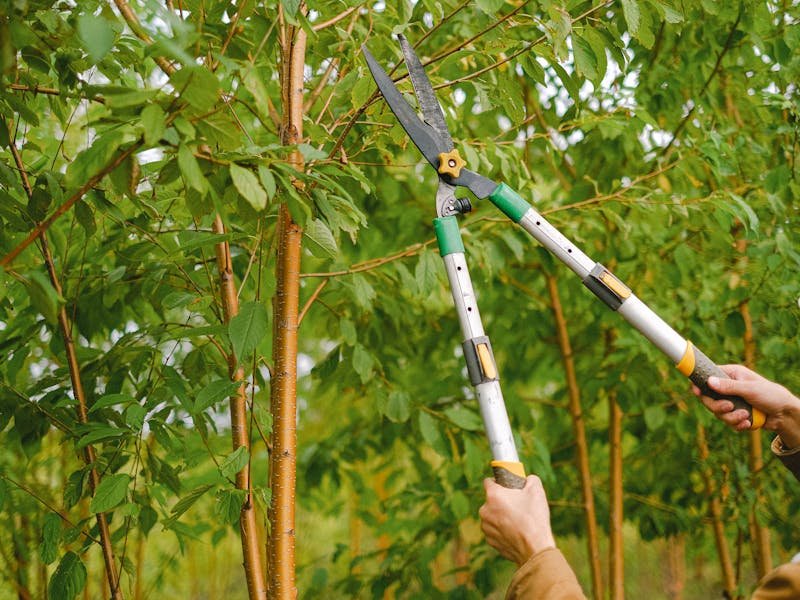
Small trees include younger hardwoods, ornamental trees, smaller crepe myrtles, dogwoods, Japanese maples, and most fruit trees. These are typically trees that can be trimmed from the ground with pole pruners or from a short ladder without requiring climbing or aerial equipment.
At the lower end of this range, around $150 to $200, you are looking at a single small tree with light trimming needs, maybe a dogwood that needs some deadwood removed or a crepe myrtle getting its annual cleanup. At the upper end, $300 to $400, the tree may have more extensive pruning needs, multiple trees may be involved, or access might be slightly complicated.
Dogwoods are one of the most commonly trimmed small trees in Huntsville, and you will find them in virtually every established neighborhood from Five Points to Hampton Cove. A typical dogwood trim runs $150 to $300. Crepe myrtles, which are everywhere in Huntsville from commercial properties along University Drive to residential yards in Weatherly Heights and Research Park, usually fall in the $125 to $250 range per tree for proper pruning, not the hack-job topping that unfortunately remains common.
Medium Trees: 25 to 50 Feet ($350 – $800)
This is where most residential tree trimming jobs fall. Medium trees include younger oaks, maples, sweetgums, Bradford pears, and mature ornamentals. These trees typically require climbing or a bucket truck to access the canopy, and the volume of material being removed is substantially more than a small tree.
A medium-sized Southern red oak getting a crown cleaning, which means removing dead, dying, and crossing branches, typically runs $400 to $700 in the Huntsville area. A sweetgum of similar size might be slightly less because sweetgum wood is lighter and easier to handle, though sweetgums tend to have more interior congestion that needs thinning.
Bradford pears in this size range are a special case because of their notoriously poor branch structure. The tight V-shaped crotches and competing leaders that Bradford pears develop make them prone to splitting, especially during the spring storms that are a fact of life here in Dixie Alley. Structural pruning to reduce the risk of storm failure on a medium Bradford pear typically runs $400 to $600, and it is money well spent if it prevents the tree from splitting in half during the next thunderstorm. That said, if your Bradford pear is getting up in years, you might want to read our article on warning signs that a tree needs removal, because many older Bradford pears are beyond the point where trimming can adequately address their structural problems.
Large Trees: 50 to 75 Feet ($700 – $1,200)
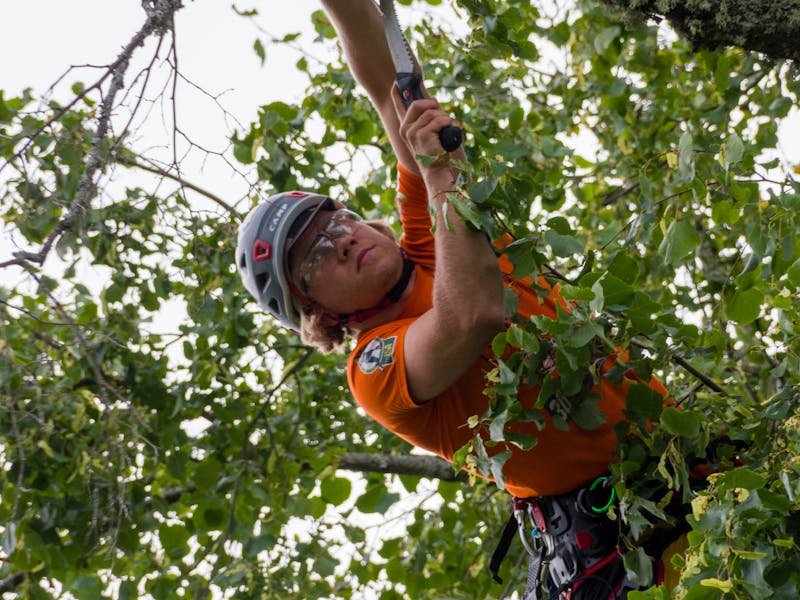
Large trees are where tree trimming becomes a genuinely technical operation. We are talking about mature oaks, hickories, tulip poplars, and large sweetgums, the kinds of trees that define the character of neighborhoods like Blossomwood, Twickenham, Monte Sano, and the older sections of Madison. These trees require experienced climbers or large bucket trucks, heavier rigging equipment to lower cut branches safely, and significantly more time to complete properly.
A large white oak with a 60-foot spread getting a thorough crown cleaning and deadwood removal typically runs $800 to $1,100. If the tree also needs crown raising (removing lower branches to increase clearance over a structure or driveway), crown thinning (selectively removing interior branches to reduce density and wind resistance), or crown reduction (reducing the overall size of the canopy), the price moves toward the higher end of the range or beyond.
Large loblolly pines are common throughout the Huntsville area, particularly in neighborhoods with wooded lots like those along Bailey Cove Road, in the Hampton Cove area, and through the Green Mountain and Monte Sano communities. Pine trimming is slightly different from hardwood trimming because pines do not regenerate from old wood. Once you remove a pine branch, it is gone permanently. A professional pine trim, typically involving removal of dead lower branches and crown cleaning, runs $600 to $1,000 for a large pine.
Very Large Trees: Over 75 Feet ($1,000 – $1,500+)
The big ones. Century-old white oaks, towering tulip poplars, massive loblolly pines that have been growing undisturbed for 50 or 60 years. These trees can exceed 80, 90, even 100 feet in height with canopy spreads of 60 feet or more. They are awe-inspiring, and they are expensive to trim because of the sheer scale of the operation.
At this size, everything is more complex. The equipment has to reach higher. The climber is working further off the ground with larger, heavier branches. The volume of debris is enormous. And the consequences of a mistake are magnified. A botched cut on a 6-inch diameter branch 80 feet up can send a chunk of wood through a roof or windshield. These jobs demand experienced crews, proper equipment, and adequate time to do safely.
If you have a property with multiple very large trees, which is common in the older Huntsville neighborhoods and the hillside lots along Monte Sano and Green Mountain, expect the total job to run several thousand dollars. However, multi-tree discounts are standard in the industry since the crew is already on site with their equipment. Getting five large trees trimmed at once will cost less per tree than having them done individually.
Factors That Affect Your Tree Trimming Cost
Beyond tree size, there are several other factors that can push your trimming cost higher or lower. Understanding these helps you make sense of the quote you receive and explains why two trees of similar size can have very different price tags.
Tree Species
Different species have different characteristics that affect the difficulty and time required for trimming. Hardwoods like oaks and hickories have dense, heavy wood that takes longer to cut and requires more care in lowering. Pines are lighter but messy, with sap that gums up equipment. Sweetgums tend to have a lot of interior crossing branches that require careful thinning. Species with thorns, like honey locust and hawthorn, take extra time simply because the crew has to work around them.
Fast-growing species also tend to need more work because they produce more growth between trimmings. A water oak or tulip poplar that has not been trimmed in five years will have significantly more work needed than a slow-growing white oak or hickory on the same schedule.
Location on the Property
A tree growing in the middle of an open yard with clear access from all sides is the easiest and least expensive scenario. Things get more complicated and more expensive when the tree is close to your house, overhanging the roof, growing next to a fence or deck, near the neighbor's property, or difficult to reach with equipment.
In the older Huntsville neighborhoods, tight lot lines and mature trees that have grown to completely shade the house are the norm, not the exception. Trimming a large oak that is growing 10 feet from a house with branches overhanging the roof requires careful rigging to lower cut branches rather than letting them freefall. That extra care takes extra time, which translates to higher cost. Similar situations are common in the established neighborhoods of South Huntsville, Jones Valley, and Blossomwood.
Power Lines
Trees near power lines add significant cost and complexity. Working near energized lines requires specialized training, additional safety protocols, and in many cases coordination with Huntsville Utilities or the Tennessee Valley Authority. Expect a 25 to 50 percent premium for trees that involve work near power lines.
It is worth noting that in many cases, the power company is responsible for trimming branches that directly contact or threaten their lines. Huntsville Utilities has a vegetation management program that addresses trees growing into power lines. However, the utility company's approach is typically to clear their lines, not to prune your tree for aesthetics or health. And branches that are near but not touching the lines remain your responsibility. If you are unsure about responsibility, give Huntsville Utilities a call before hiring a tree service.
Condition of the Tree
A healthy tree in good condition is more predictable and safer to work in than a tree with significant deadwood, decay, or structural problems. If a tree has extensive dead branches, large sections of decay, or compromised structure, the crew has to exercise extra caution because the wood is less predictable. Dead branches can snap unexpectedly, and decayed wood does not hold climbing gear or rigging equipment as reliably as sound wood.
If a tree is in bad enough condition that trimming is unsafe or ineffective, the honest recommendation may be removal rather than trimming. We would rather tell you upfront that your tree is past the point of trimming and needs to come down than charge you for a trim that is not going to solve the underlying problem. Our guide to tree removal warning signs can help you assess whether your tree is a trimming candidate or a removal candidate.
Access for Equipment
If a bucket truck can be positioned next to the tree, the job is typically faster and less expensive than if everything has to be done by climbing. But many Huntsville properties, particularly those with fenced backyards, narrow side yards, or trees on slopes, do not allow easy equipment access. In these cases, a skilled climber handles the work, which is perfectly safe but generally takes longer.
Properties in hilly areas like Monte Sano, Wade Mountain, and the ridge neighborhoods overlooking the city can present access challenges due to steep terrain. The same is true for properties with long driveways or limited street access in more rural areas like Owens Cross Roads, New Market, and Gurley.
Cleanup and Debris Disposal
A professional trimming quote should include cleanup of all branches, twigs, and leaves generated by the work. This is standard practice for reputable companies. However, some operators will quote a lower price and then inform you that cleanup is extra. Always confirm in writing that cleanup and debris hauling are included in the quote.
If you have a use for the wood chips, many tree services will leave them for you at no extra charge or even at a slight discount since it saves them the disposal trip. Wood chips from hardwood trimming make excellent mulch for garden beds, and here in North Alabama where the red clay soil benefits from organic amendments, that is a nice bonus.

Types of Tree Trimming and What They Cost
Not all trimming is created equal. The type of trimming your tree needs affects both the result and the cost. Here are the main types of pruning and what they typically run in the Huntsville market.
Crown Cleaning ($200 – $800)
Crown cleaning is the most common type of tree trimming and the one most homeowners need. It involves removing dead, dying, diseased, and broken branches from the canopy. This is the basic maintenance trim that keeps your tree healthy and reduces the risk of branch failure. Crown cleaning is the minimum level of trimming we recommend for every tree, and it is the foundation of any more comprehensive pruning job.
Crown Thinning ($400 – $1,200)
Crown thinning goes beyond cleaning to selectively remove live interior branches, reducing the overall density of the canopy without changing its shape or size. Thinning improves air circulation through the canopy, reduces wind resistance (which is critical for storm resistance here in the Tennessee Valley), and allows more light to reach your lawn and garden below. A properly thinned tree removes 15 to 25 percent of the interior growth while maintaining the tree's natural shape. This is one of the most effective storm preparation measures for Huntsville homeowners.
Crown Raising ($300 – $900)
Crown raising removes the lower branches of a tree to provide clearance underneath. This is what you need when branches are hanging too low over your driveway, sidewalk, patio, or lawn mower path. The standard clearance we aim for is 8 feet over pedestrian areas and 14 feet over streets and driveways. Crown raising is especially common on sweetgums and oaks, which tend to develop drooping lower branches as they mature.
Crown Reduction ($500 – $1,500)
Crown reduction carefully reduces the overall size and spread of the canopy by cutting branches back to appropriate lateral limbs. This is different from topping, which is destructive and indiscriminate. Crown reduction uses proper pruning cuts to shrink the tree while maintaining its natural form and health. This is what you need when a tree has outgrown its space and is encroaching on your home, power lines, or neighbor's property. It is more labor-intensive than other types of trimming because every cut has to be made to a lateral branch of adequate size.
Vista Pruning ($300 – $700)
Vista pruning selectively removes branches to create or maintain a view through the canopy. This is popular in Huntsville neighborhoods with views, such as properties on Monte Sano, The Ledges, Wade Mountain, and McMullen Cove, where homeowners want to see the valley below without removing their trees entirely. Vista pruning is an art that requires balancing the homeowner's desire for a view with the tree's need to maintain adequate canopy for health.
When Trimming Saves You Money vs. Putting It Off
Some homeowners defer tree trimming because of the cost. We understand the impulse, but deferring maintenance almost always costs more in the long run. Here is the math.
The Storm Damage Equation
Regular trimming reduces the risk of storm damage, which is one of the most expensive tree-related problems a Huntsville homeowner can face. The cost of having a medium tree trimmed, around $400 to $700, is a fraction of what you will pay for emergency storm damage cleanup, which typically runs $500 to $3,000 or more. Add in the potential cost of roof repairs, fence replacement, or vehicle damage from a fallen branch, and the financial case for proactive trimming is overwhelming.
We see this play out every spring during severe weather season. Homeowners who keep their trees well-maintained come through storms with minimal damage. Their neighbors who have been putting off tree work for years end up with branches through roofs, downed limbs blocking driveways, and emergency tree service bills that dwarf what preventive trimming would have cost. For more on preparing your property, our storm season preparation guide covers the topic in detail.
The Property Damage Prevention Equation
Branches that scrape your roof wear away shingles and can cause leaks. Branches pressing against siding create moisture traps that lead to rot and mold. Roots from improperly managed trees can damage foundations, driveways, and underground utilities. The cost of the tree trimming that prevents these issues is almost always less than the cost of the repairs.
The Tree Health Equation
A tree that receives regular professional pruning tends to live longer, stay healthier, and maintain its structural integrity better than one that is neglected. Removing dead and diseased wood prevents decay from spreading into the main trunk. Thinning improves air circulation, which reduces fungal disease pressure, a real concern in Alabama's humid climate. Structural pruning when a tree is young prevents the weak branch attachments that cause failures when the tree is mature.
The cost of maintaining a tree over its lifetime through periodic trimming is dramatically less than the cost of removing and replacing it once it fails. A mature shade tree adds $5,000 to $15,000 to your property value. Protecting that asset with a few hundred dollars of maintenance every few years is a smart investment by any measure.
Seasonal Pricing: When to Trim for the Best Rate
Timing your tree trimming can save you real money. Here is how seasonal demand affects pricing in the Huntsville market.
Winter: The Bargain Season (December – February)
Winter is the slow season for tree service companies in North Alabama. Demand drops because most homeowners are not thinking about trees when the leaves are off and the weather is cold. This lower demand means companies are more willing to offer competitive pricing to keep their crews busy. You can often save 10 to 20 percent on tree trimming during the winter months compared to the busy spring and summer periods.
The added bonus is that winter, specifically late December through mid-February, is the best time to trim most tree species from a horticultural perspective. So you get a better price and a healthier result. It does not get more win-win than that.
Spring: The Rush Season (March – May)
Spring is the busiest time for tree service companies in the Huntsville area, for two reasons. First, homeowners emerge from winter and notice all the things their trees need. Second, storm season begins, and everyone who has been putting off tree work suddenly wants it done before the next big storm rolls through. This surge in demand can push wait times to two to three weeks for an estimate and several weeks beyond that for scheduling.
Pricing during spring is typically at its peak, though reputable companies do not gouge customers just because it is busy season. However, if you can plan ahead and get your trimming done in winter, you will generally get both faster scheduling and better pricing.
Summer and Fall: Middle Ground (June – November)
Summer demand is moderate, driven mainly by storm cleanup and homeowners dealing with overgrown trees that are blocking views or rubbing against structures. Fall has lower demand and can sometimes offer pricing comparable to winter, though as we discussed in our seasonal trimming guide, heavy pruning in early fall is not ideal for tree health in our climate.
How to Save Money on Tree Trimming
Beyond timing your trimming during the slower season, here are several practical ways to reduce your tree trimming costs without cutting corners.
Bundle Multiple Trees
If you have several trees that need attention, get them all done at once. Most tree companies offer a per-tree discount when doing multiple trees because the crew, equipment, and travel time are already committed. Getting five trees trimmed in one visit can save you 15 to 25 percent compared to having each one done separately over time.
Coordinate with Neighbors
If your neighbors also need tree work, coordinating so the same company handles multiple properties in one visit can benefit everyone. Some companies offer neighborhood discounts when they can work multiple adjacent properties in a single trip. This is common in Huntsville neighborhoods where homes are relatively close together, like the established neighborhoods of Madison, the South Huntsville streets along Whitesburg, and the communities in the Five Points area.
Keep Up with Regular Maintenance
A tree that receives regular trimming every three to five years accumulates less work between sessions. A tree that has been neglected for ten years will have significantly more dead wood, more crossing branches, and more structural issues that need to be addressed, all of which take more time and cost more money. Staying on a regular maintenance schedule is the single best way to keep your per-session costs manageable.
Skip the Stump If You Do Not Need It
If your trimming job includes removing a tree entirely and stump grinding is quoted separately, you can save $150 to $400 per stump by skipping the grinding if the stump is in an out-of-the-way location where it does not bother you. That said, stumps in Alabama attract termites and carpenter ants, so leaving stumps near your home is generally not advisable. Our stump grinding vs. removal guide can help you decide.
Get Multiple Quotes
This is standard advice, but it is worth repeating: get two to three quotes from reputable local companies. This gives you a realistic price range and helps you identify outliers on both ends. Just make sure you are comparing apples to apples by confirming that each quote includes the same scope of work and cleanup. If you need guidance on evaluating quotes, our article on how to choose a tree service company covers the comparison process in detail.
What Professional Tree Trimming Should Include
When you hire a professional tree service for trimming, here is what you should expect as standard practice. If a company is not delivering these basics, you are not getting your money's worth.
Pre-Work Assessment
Before any cutting begins, the arborist or crew leader should walk the property with you, identify which trees are being trimmed, and explain what work will be done on each one. This is the time to ask questions, point out specific concerns, and make sure everyone is on the same page about the scope of work.
Proper Pruning Cuts
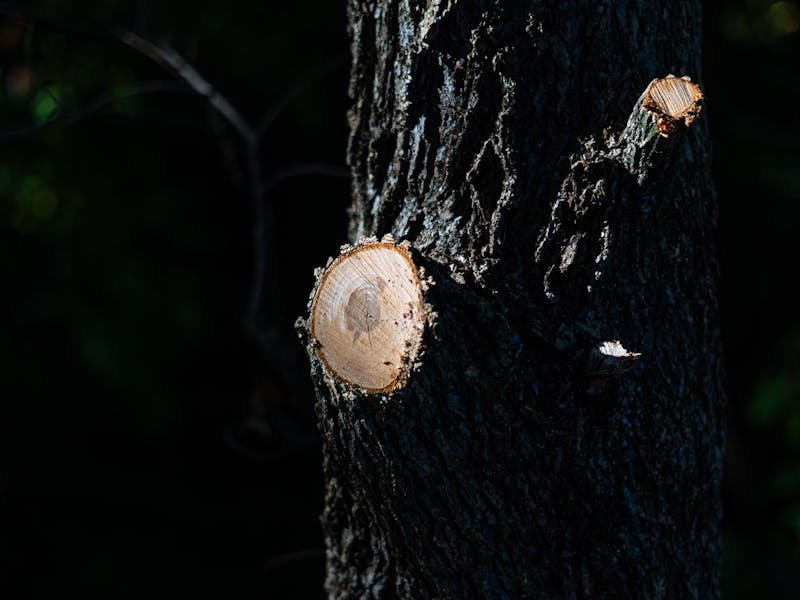
Every cut should be made at the branch collar, the slightly swollen ring where the branch meets the trunk or parent limb. Proper cuts promote fast healing and minimize the risk of decay. Flush cuts (too close to the trunk) and stub cuts (too far from the trunk) are signs of inexperienced or careless work. If you see stubs or flush cuts after your trees have been trimmed, you did not hire the right company.
Complete Cleanup
When the crew leaves, your yard should look better than when they arrived. All cut branches, twigs, and leaf debris should be cleaned up and removed. Equipment ruts in the lawn should be addressed. If a chipper is used on site, the chip debris should be cleaned up as well. There should be no sawdust on your driveway, no branches stacked against the fence, and no evidence that the crew was ever there except for the improved look of your trees.
Debris Hauling
All cut material should be removed from the property unless you have specifically requested that wood or chips be left for your use. This should be confirmed in writing as part of the estimate. Some less professional operators will cut the branches and leave them for you to deal with, which is not acceptable unless that was the agreed-upon arrangement.
Frequently Asked Questions
How much does it cost to trim a tree in Huntsville, AL?
In 2026, tree trimming costs in Huntsville range from $150 to $1,500 or more per tree depending on size. Small trees under 25 feet typically cost $150 to $400. Medium trees between 25 and 50 feet run $350 to $800. Large trees between 50 and 75 feet cost $700 to $1,200. Very large trees over 75 feet can cost $1,000 to $1,500 or more. These ranges reflect the Huntsville metro market and include cleanup and debris removal. Your specific cost depends on species, condition, location on the property, and the type of trimming needed.
Is tree trimming cheaper in winter in Alabama?
Generally yes. Winter is the slow season for tree services in North Alabama, and many companies offer lower rates or seasonal specials to keep their crews working during December through February. You can typically save 10 to 20 percent compared to peak spring pricing. Even better, dormant-season trimming is actually the recommended timing for most tree species, so you get a better price and a better outcome for your trees. It is worth planning ahead to take advantage of the winter window.
How often should I have my trees professionally trimmed in Huntsville?
Most mature hardwoods and shade trees do well with professional trimming every 3 to 5 years. Fast-growing species like sweetgums, water oaks, and tulip poplars may benefit from trimming every 2 to 3 years because of their aggressive growth rate. Ornamental trees and fruit trees often benefit from annual pruning. Any tree near your house, over your driveway, or near power lines should be inspected annually and trimmed whenever branches encroach on structures or create safety hazards. Your arborist can recommend a schedule based on your specific trees and property.
Does tree trimming cost more if the tree is near power lines?
Yes, significantly. Working near energized power lines requires specialized line-clearance training, additional safety equipment and protocols, and sometimes coordination with the utility company. This typically adds 25 to 50 percent to the cost of trimming compared to the same tree in an open location. Before hiring a tree service, check with Huntsville Utilities to see if the branches threatening the power lines fall under their vegetation management program, which may cover the cost of clearing branches from the utility's lines at no charge to you.
What is included in professional tree trimming?
A professional trim should include a pre-work assessment, proper pruning cuts made at the branch collar for optimal healing, removal of all dead, diseased, broken, and crossing branches, any specific work agreed upon such as crown thinning or raising, complete cleanup of all debris generated by the work, and hauling away of all cut material. This should all be spelled out in the written estimate before work begins. If a company cannot tell you exactly what is included in their price, that is a red flag.
Can I save money by trimming my trees myself?
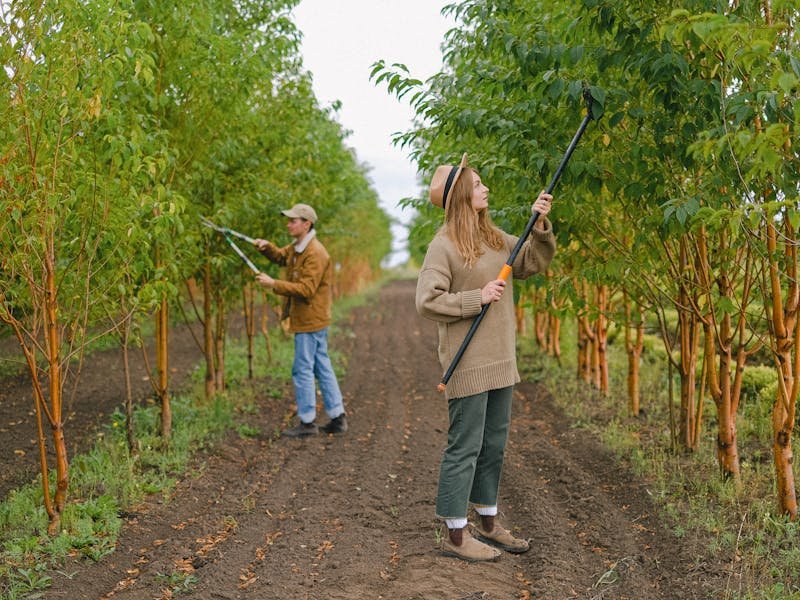
For very light work, yes. Small branches under 3 inches in diameter that you can reach from the ground with a pole pruner are safe to handle yourself. Make your cuts just outside the branch collar and avoid leaving stubs. However, anything requiring a ladder, climbing equipment, or a chainsaw should be left to professionals. Falls from ladders and chainsaw injuries are among the most common causes of homeowner injuries, and the medical costs far exceed what professional trimming would have cost. For the safety and long-term health of both you and your trees, hire a pro for anything beyond basic ground-level maintenance.