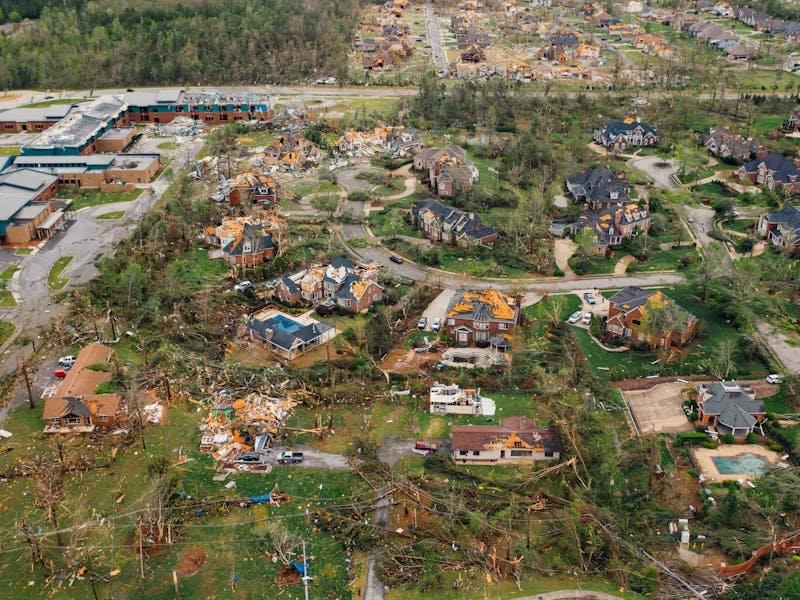
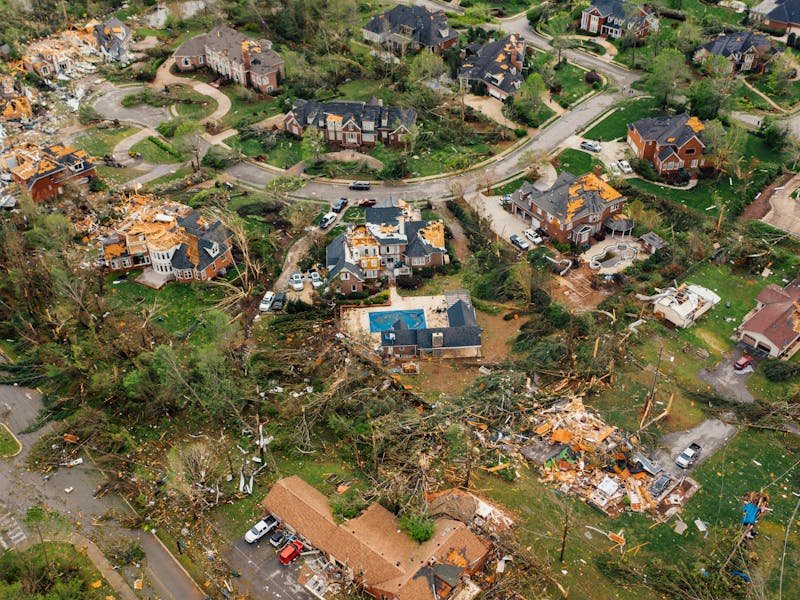
If you have lived in Huntsville for more than a year or two, you have been through it. A severe thunderstorm rolls through the Tennessee Valley, maybe with straight-line winds pushing 70 miles per hour, maybe with a tornado warning attached. The power goes out. You hear cracking and crashing outside. And when you step out the next morning, your yard looks like a war zone. Trees down everywhere. Limbs across the driveway. Maybe a massive pine leaning on your roof or a big oak blocking the street.
Your first instinct is to get it cleaned up as fast as possible. And that instinct is understandable. But in the chaos and urgency after a major storm, a lot of Huntsville homeowners make decisions they later regret. They hire the first person who shows up at their door, pay too much, get subpar work, or worse, fall victim to an outright scam.
Huntsville sits right in the heart of Dixie Alley, and we get hit by serious storms every year. The April 2011 tornado outbreak devastated communities across Harvest, Toney, and northern Madison County. Major wind events roll through every spring. Even routine summer thunderstorms can bring down weakened trees all across South Huntsville, Jones Valley, and Monte Sano. After every single one of these events, the storm chasers show up. They come from out of state, they go door to door, and they target homeowners who are stressed, scared, and desperate to get their property cleaned up.
This guide is going to help you avoid the scams, understand what fair pricing looks like, navigate the insurance process, and hire a legitimate tree service that will do the job right. Whether you are reading this after a storm just hit or you are preparing for the next one, this information could save you thousands of dollars and a lot of headaches.
How Storm Chasers Operate in Huntsville
Storm chasers are individuals or crews that follow severe weather events from state to state, looking to profit from the high demand and desperation that follows a major storm. They are not all criminals, but many of them operate in a way that is predatory, and the work they do ranges from mediocre to outright dangerous.
Here is how the typical storm chaser operation works in the Huntsville area after a major weather event.
They Show Up Fast
Within hours of a major storm, sometimes before the rain has even stopped, crews with out-of-state plates start rolling into town. They monitor weather patterns and dispatch crews to affected areas, knowing that demand for tree removal will overwhelm local companies. By the morning after a big storm, they are already knocking on doors in neighborhoods with heavy tree damage.
They Target Vulnerable Homeowners
Storm chasers look for visible damage: trees on houses, leaning trees, blocked driveways. They knock on doors, often while homeowners are still shaken and stressed, and offer to take care of the problem right now. The pitch usually sounds something like: "We have a crew right here and we can take care of that tree today. If you wait, it might be weeks before a local company can get to you."
That last part is sometimes true. After a major storm, local tree services in Huntsville are booked solid for days or even weeks. Storm chasers exploit that backlog to create urgency and pressure you into making a quick decision.
They Demand Cash Upfront
One of the biggest red flags is a demand for full payment before any work begins. Legitimate tree services may ask for a deposit on large jobs, but they do not demand full cash payment upfront. Storm chasers do this because they know that once they have your money, you have almost no leverage if the work is not completed or is done poorly. They will be three states away before you realize there is a problem.
They Do Subpar Work
Even when storm chasers do complete the work, the quality is often lacking. They may cut the fallen tree and haul away the big pieces but leave a mess of smaller debris in your yard. They may cut corners on stump work or leave hanging branches that are still dangerous. They may damage your landscaping, driveway, or other property with heavy equipment and take no responsibility for it. And because they do not have local roots, there is no reputation to protect and no accountability after they leave town.
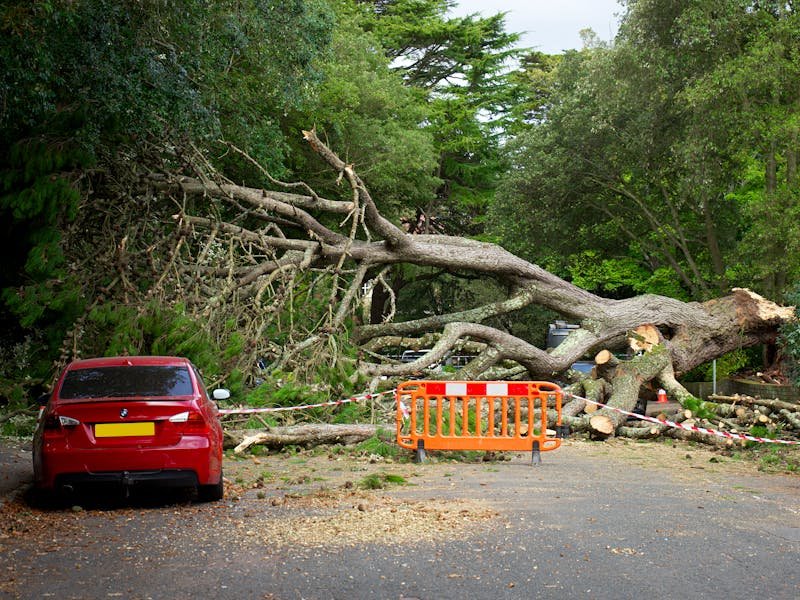
Red Flags: How to Identify a Storm Chasing Scam
Not every unfamiliar face after a storm is a scammer. Some out-of-area crews are legitimate companies that come to help with overflow work. But you need to be able to tell the difference. Here are the red flags that should make you walk away.
- They knock on your door unsolicited. Reputable tree services in Huntsville get their business through referrals, online presence, and repeat customers. They do not go door-to-door after storms. If someone shows up at your door offering tree work, that alone is a yellow flag.
- Out-of-state license plates. Look at their trucks and trailers. If the plates are from Georgia, Texas, Florida, or somewhere else, ask them directly: are you a local company? Where is your office? How long have you been working in the Huntsville area?
- No proof of insurance. Ask for a certificate of insurance showing both general liability and workers' compensation coverage. A legitimate company will have this readily available. If they cannot produce it, do not hire them. If an uninsured worker gets hurt on your property, you could be liable. This is not a theoretical risk. It happens.
- Demand for cash payment upfront. This is the single biggest red flag. If someone demands full cash payment before doing any work, walk away. Period.
- No written estimate. A legitimate tree service will provide a written estimate detailing the scope of work, what is included, and the total price. If someone just throws out a verbal number and wants you to agree on the spot, that is not how professionals operate.
- High-pressure sales tactics. Phrases like "this price is only good today" or "we are about to leave and you will wait weeks if you do not hire us now" are pressure tactics designed to prevent you from thinking clearly and getting competing estimates.
- No local references or reviews. Ask for references from previous customers in the Huntsville area. Search for the company name online. A company with no Google reviews, no website, and no local presence should not be trusted with a major job on your property.
- No business license. Companies operating in Huntsville need a City of Huntsville business license. Ask for it. If they do not have one, they are operating illegally.
What Fair Post-Storm Pricing Looks Like in Huntsville
One of the hardest things about hiring a tree service after a storm is knowing whether the price you are being quoted is fair. The honest reality is that emergency tree removal does cost more than planned removal. That is legitimate. But there is a difference between a reasonable emergency premium and outright price gouging.
Here are the general price ranges you can expect for post-storm emergency tree work in the Huntsville area in 2026. These include the typical 25 to 50 percent premium over standard pricing that reflects the urgency, after-hours work, and increased demand.
| Situation | Fair Price Range | Notes |
|---|---|---|
| Tree fallen in yard, no structural damage | $500 – $1,500 | Depends on tree size and accessibility |
| Tree on fence or shed | $800 – $2,500 | Requires careful removal to minimize further damage |
| Tree on house or garage | $1,500 – $4,000 | Complex work, may need crane |
| Tree blocking driveway or road | $500 – $2,000 | Often prioritized for access |
| Tree in power lines | $1,500 – $5,000+ | Requires Huntsville Utilities coordination |
| Large limb removal and cleanup | $200 – $800 | Per limb, depends on size and location |
| Full yard storm debris cleanup | $500 – $3,000 | Multiple trees and extensive debris |
If someone quotes you dramatically more than these ranges for a comparable job, push back. Get other estimates. And if someone quotes you dramatically less, be suspicious. An unrealistically low quote can be a sign of an unlicensed, uninsured operator who is going to do a hack job and disappear.
For a more detailed breakdown of tree removal pricing in our area, see our complete Huntsville tree removal cost guide.

What Your Insurance Covers After Storm Damage
Understanding your insurance coverage before you start spending money on tree removal is critical. Here is how homeowners insurance typically works for storm-related tree damage in Alabama.
When Insurance Usually Covers Tree Removal
Your homeowners insurance will generally cover tree removal costs when:
- The tree fell due to a covered peril such as wind, lightning, hail, or tornado
- The fallen tree damaged a covered structure such as your house, garage, fence, deck, or other insured structure
- The tree is blocking a driveway or accessible entrance (some policies cover this even without structural damage)
Coverage for tree removal itself is often capped, commonly at $500 to $1,000 per tree, depending on your policy. The structural damage the tree caused is covered separately under your dwelling or other structures coverage, minus your deductible.
When Insurance Usually Does Not Cover Tree Removal
- A tree fell but did not damage any covered structure and is just lying in your yard
- The tree was dead or clearly neglected before the storm, and the insurer argues it was a maintenance issue
- You want to proactively remove a damaged tree that has not fallen yet (though some insurers may cover this if it poses an imminent threat to a structure)
Steps to Take for an Insurance Claim
If a storm damages trees on your property, follow these steps to protect your insurance claim:
- Document everything immediately. Take photos and video of all damage from multiple angles before anything is moved or cleaned up. Include wide shots showing the tree's position relative to your house, close-ups of structural damage, and photos of the tree itself. The more documentation you have, the smoother the claims process will be.
- Call your insurance agent as soon as possible. Report the damage and get your claim started. Ask about your specific coverage, deductible, and tree removal limits.
- Do not authorize major work until you talk to your adjuster. If the situation is an immediate safety hazard, it is reasonable to have the tree removed or tarped to prevent further damage. But for non-emergency situations, your insurer may want to send an adjuster to inspect the damage before you proceed with removal. Proceeding without their approval can complicate your claim.
- Make temporary emergency repairs. If a tree has damaged your roof and rain is coming, you are responsible for taking reasonable steps to prevent further damage. This might mean covering a hole with a tarp. Keep receipts for any materials you buy for emergency repairs since these costs are typically reimbursable.
- Get written estimates. Get at least two or three written estimates from reputable tree services for the removal work. Your insurance company will want to see documented costs.
- Keep all receipts and invoices. Save everything related to the storm damage and cleanup, including tree removal invoices, tarp and supply purchases, and any other expenses. Your insurance company will need these for reimbursement.
For a deeper dive into how insurance works with tree removal, check out our article on what to know about tree service and insurance.
FEMA Assistance After Major Storms
When a storm event is severe enough that the President declares a federal disaster for your area, FEMA assistance may be available. Huntsville and Madison County have received federal disaster declarations several times, most notably after the April 2011 tornado outbreak.
What FEMA Can Help With
- Tree removal that eliminates an immediate threat to life or safety – This includes trees that have fallen on occupied structures, are blocking access to your home, or pose an immediate danger of falling on people or structures.
- Debris removal from public roads and rights-of-way – The city and county handle this, often with FEMA reimbursement, but it covers public areas, not your private property.
- Individual Assistance grants – These can help cover home repair costs and other disaster-related expenses that insurance does not cover.
What FEMA Typically Does Not Cover
- General yard cleanup and cosmetic tree removal
- Removal of trees that fell but did not threaten structures or safety
- Stump grinding or complete stump removal
- Tree trimming or pruning of damaged but standing trees
To apply for FEMA assistance after a declared disaster, register through DisasterAssistance.gov or call 1-800-621-3362. Document all damage thoroughly with photos before any cleanup begins. FEMA representatives may visit your property to assess the damage, and having comprehensive documentation helps your case significantly.
One important note: FEMA assistance is generally a last resort after insurance. If your homeowners insurance covers the damage, FEMA expects you to use that coverage first. FEMA assistance may cover the gap between what insurance pays and your actual costs, including your deductible in some cases.
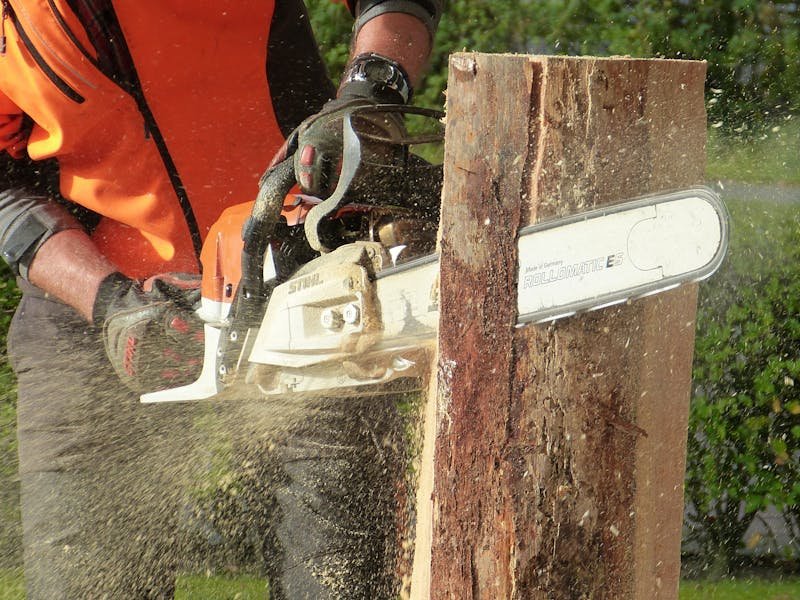
How to Hire a Legitimate Tree Service After a Storm
Now that you know what to avoid, here is what you should do to find and hire a reliable tree service after storm damage hits your property in Huntsville.
Start with Companies You Already Know
If you have used a tree service before and had a good experience, call them first. They will be busy, but established customers often get priority. If you have not used a tree service before, ask neighbors, friends, and family for recommendations. In the Huntsville area, word of mouth is still one of the best ways to find reliable service providers.
Check Online Reviews and Reputation
Search for tree services in Huntsville on Google and look at the reviews. A company with dozens of positive reviews from local homeowners is going to be a much safer bet than someone who just showed up in town. Look for companies that specifically serve the Huntsville, Madison, and Decatur area and have been in business for multiple years.
Verify Insurance and Licensing
This is not optional. Every tree service you consider hiring should be able to provide proof of general liability insurance and workers' compensation coverage. Ask for a certificate of insurance and verify that it is current. A legitimate company will have no problem providing this information. For more on why this matters, read our guide on tree service insurance.
Get Written Estimates
Even in an emergency situation, you should get a written estimate before work begins. The estimate should include a detailed description of the work to be performed, what is included in the price such as cleanup and hauling, the total cost, payment terms, and estimated timeline. If a company will not put it in writing, do not hire them.
Prioritize by Urgency
After a major storm, you may have multiple tree issues on your property. Not all of them are equally urgent. Prioritize as follows:
- Immediate safety hazards – Trees on houses, blocking exits, or in power lines. These need emergency attention right away.
- Potential safety hazards – Leaning or partially uprooted trees that could fall on structures. These need attention soon but can usually wait a day or two.
- Access issues – Trees blocking driveways or sidewalks. Important but can sometimes be worked around temporarily.
- Cosmetic and cleanup – Fallen trees in the yard that are not threatening anything. These can wait until demand and prices normalize, potentially saving you significant money.
By separating the true emergencies from the can-wait items, you avoid paying emergency premiums on work that does not actually need to be done immediately.
Understand Payment Terms
A reasonable payment structure for post-storm tree work looks like this: a deposit of 10 to 30 percent on large jobs, with the balance due upon completion. Some companies do not require a deposit at all for standard emergency work. Payment by check or credit card creates a paper trail that protects you. Never pay cash with no receipt, and never pay the full amount before the work is complete.
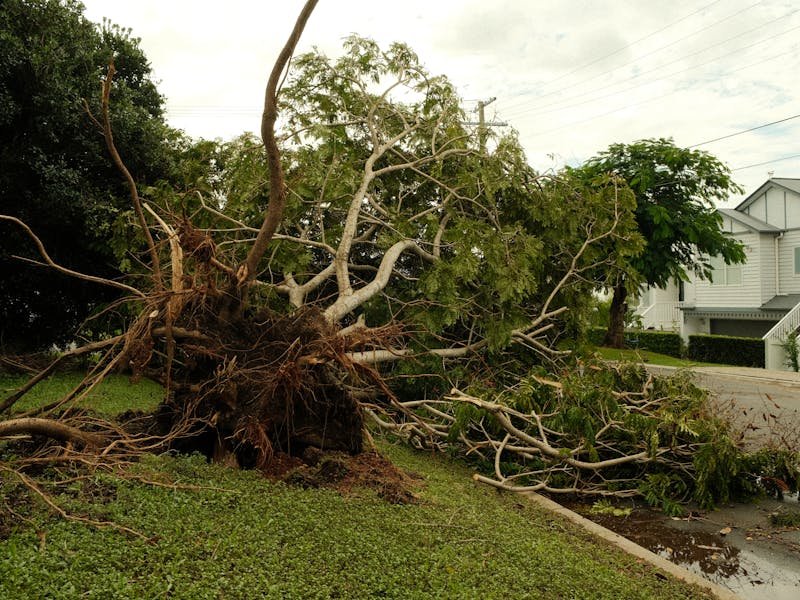
Protecting Yourself: Documentation and Records
Thorough documentation protects you in three ways: it supports your insurance claim, it gives you evidence if there is a dispute with a contractor, and it creates a record for potential FEMA assistance. Here is what to document and how.
Before Any Work Begins
- Take extensive photos and video of all storm damage from multiple angles
- Photograph the entire property, not just the obvious damage, since you may discover additional damage later
- If a tree hit your house, photograph the structural damage, the tree's position, the trunk where it broke, and the root ball if it was uprooted
- Take photos of any damaged personal property inside the home
- Record the date and time of the storm and the approximate time you discovered the damage
During the Hiring Process
- Get copies of the company's insurance certificate
- Get a written estimate signed by a company representative
- Read any contract or work order carefully before signing
- Do not sign anything you do not fully understand
- Take a photo of the company truck, including license plate, and the crew who comes to do the work
After Work Is Completed
- Inspect the work thoroughly before making final payment
- Take photos of the completed work showing the area cleaned up
- Get a written receipt that details all work performed and the amount paid
- Keep all paperwork in a safe place for your insurance claim
Preparing Before the Storm: Your Best Protection
The best time to deal with storm-related tree problems is before the storm hits. Here in Huntsville, we know severe weather is coming every year. The question is not if we will get hit by serious storms, but when. Here is how to prepare.
Establish a Relationship with a Local Tree Service
Find a reputable, local tree service now, while you are not in crisis mode. Get familiar with their services, pricing, and contact information. When a storm hits and you need help fast, you will already know who to call and they will already know your property. Existing customers almost always get priority when the phones are ringing off the hook after a storm.
Have Your Trees Inspected Annually
A professional tree inspection can identify dead trees, weak branch structures, compromised root systems, and other hazards before a storm turns them into emergencies. Having hazardous trees removed proactively or trimmed back from structures costs a fraction of what emergency removal costs, and it eliminates the risk of damage to your home entirely. For our complete guide on identifying warning signs, read our article on signs you need tree removal.
Review Your Insurance Coverage
Do you know what your homeowners policy covers for tree damage? What is your deductible? What is the per-tree removal limit? Many homeowners in Blossomwood, Five Points, Twickenham, and other heavily treed neighborhoods have significant tree exposure and limited understanding of their coverage. Call your insurance agent and ask these questions before storm season starts, not after a tree is through your roof.
Keep Your Property Prepared
Our detailed guide to storm season tree preparation in Huntsville covers this in depth, but the key steps are: have dead or dying trees removed, trim branches that overhang your roof, reduce the canopy weight on trees near your home, and remove dead limbs that could become projectiles in high winds. Every bit of proactive maintenance you do reduces your storm damage risk.
Frequently Asked Questions About Hiring Tree Services After Storms
We Are Here When the Storm Hits
Huntsville gets hit hard by storms, and we know how stressful the aftermath can be. We have helped homeowners across Huntsville, Madison, Decatur, Athens, and throughout the Tennessee Valley clean up after every major weather event. We are a local company with local roots, full insurance, and a reputation built on doing honest work at fair prices.
After a storm, we prioritize emergency situations, including trees on homes, trees blocking access, and immediate safety hazards. We provide written estimates, we accept insurance documentation, and we do not ask for full payment until the work is done to your satisfaction. We are the kind of tree service you can call before the storm season and know we will be here when you need us.
If you have storm damage on your property or just want to get your trees inspected before the next round of severe weather, call us at (256) 555-0123 or request your free estimate online. We are available 24/7 for emergencies and typically schedule non-emergency assessments within a few days.