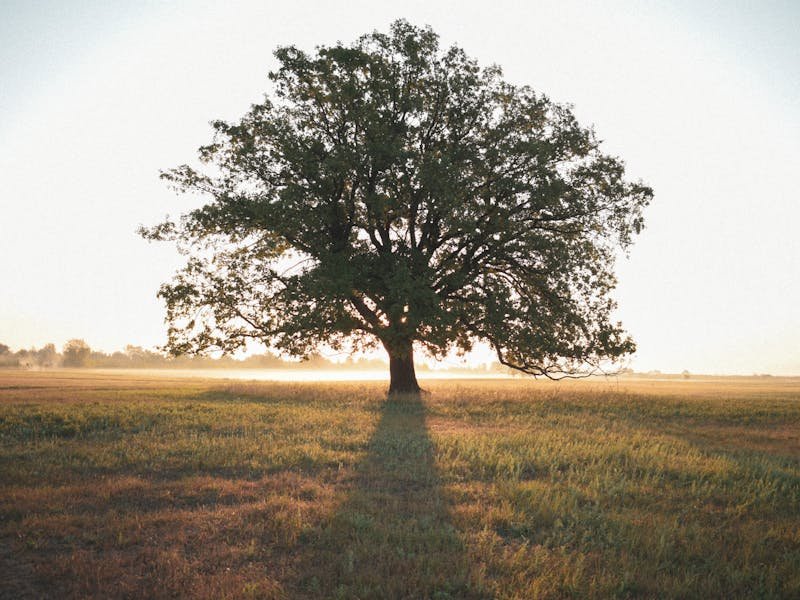
If you drive through any neighborhood in Huntsville for ten minutes, you will see a holly. Tucked into foundation beds at ranch homes in Five Points. Towering over the historic Victorians in Twickenham. Lined up as privacy hedges between the new builds in Hampton Cove. Hollies are everywhere in this part of north Alabama, for good reason.
They work. They tolerate our clay soil, handle the heat, keep their leaves in winter, give you berries for Christmas decorations, and deer mostly leave them alone. If I had to name the workhorse landscape tree of the Tennessee Valley, it would be the holly without much of a contest.
But "low maintenance" does not mean "no maintenance," and I get calls every week from homeowners confused about something their holly is doing. Yellow leaves. No berries. A pile of holly leaves on the lawn that makes them think the tree is dying. So I want to walk through what I have learned about hollies after years of working on them around Huntsville.
Common holly varieties in Huntsville
Before you can take care of a holly, it helps to know which one you have. There are dozens of holly species and hundreds of cultivars, but in the Huntsville area you are going to run into a handful over and over again.
American Holly (Ilex opaca)
This is the native species and the one most people picture when they hear "holly tree." Tall, pyramidal, with the classic spiny dark green leaves and bright red berries on female plants. American Holly grows 30 to 50 feet tall, sometimes taller. The big ones you see around old homes in Twickenham have been there for 50 or 80 years.
Burford Holly
Burford Holly is a Chinese Holly cultivar and the big rounded shrub form you see anchoring corners of houses across Huntsville. The leaves are nearly spineless except for one tip, which makes it friendlier to walk past. It grows dense, holds its shape, and tops out around 15 to 20 feet tall and nearly as wide if left alone.
Nellie Stevens Holly
Nellie Stevens is the privacy hedge favorite right now. If you have seen new construction in Madison or Hampton Cove with a row of pyramidal evergreens along the property line, that is probably Nellie Stevens. It grows 15 to 25 feet tall, holds a tight pyramid shape, and is one of the fastest-growing hollies you can buy. Also one of the more reliable berry producers.
Yaupon Holly (Ilex vomitoria)
Yaupon is a smaller native holly, usually topping out around 15 to 20 feet. The leaves are tiny with no spines, which is a relief if you have ever cleaned up under an American Holly. Weeping Yaupon and dwarf Yaupon are popular landscape forms.
Foster's Holly
Foster's Holly has a narrow, columnar shape that fits in tight spots where you want height without width. It gets to about 20 to 30 feet tall but only 10 to 15 feet wide. Good choice for narrow side yards or as a vertical accent.
Japanese Holly (Ilex crenata)
Japanese Holly looks almost nothing like the others. Tiny oval spineless leaves, more like a boxwood than a traditional holly, and often used as a boxwood substitute. The berries are black. It stays small, usually 3 to 6 feet tall.
Inkberry Holly (Ilex glabra)
Inkberry is a native compact smooth-leaved holly that handles wet feet better than most. You see this in rain gardens and lower spots in the yard. It grows 4 to 8 feet tall with black berries. A solid choice if your soil drains poorly, which is a real issue in some older Huntsville neighborhoods built on heavy clay.
The male and female holly thing
If I had to pick the single biggest source of holly questions I get, it is this. People plant a holly, wait three years, and call me wondering why it has never produced a berry.
The answer is almost always that they have a male holly, or they have a female with no male nearby.
Hollies are dioecious, meaning each plant is either male or female. Only the females produce berries. The males are the pollen source. You need at least one male holly within roughly 200 feet of your female for pollination and berries to form.
One male can pollinate a lot of females, so if you have a row of female Nellie Stevens for privacy, you only need one male in the area. Many cultivars are sold with their pollinator labeled: "Blue Princess" needs "Blue Prince," and "Nellie R. Stevens" can be pollinated by a male Chinese Holly.
If you already have hollies that are not producing, take a walk around your block. There may already be a male holly within range that you do not know about.
Holly health basics
Hollies are tough plants, but like anything, they have preferences. Get the basics right and you can mostly forget about them.
Sun
Most hollies prefer full sun, meaning at least six hours of direct light. They tolerate part shade but get leggy and produce fewer berries in too much shade. American Holly and Inkberry handle shade better than most. Yaupon and Nellie Stevens really want sun.
Soil
Slightly acidic soil is the sweet spot, with a pH between 5.5 and 6.5. The native soil in much of Huntsville and Madison County leans more neutral, sometimes alkaline depending on how much limestone is in the subsoil. That is one reason chlorosis (yellow leaves with green veins) is so common here. Drainage matters too. Hollies do not like sitting in water, with Inkberry being the exception.
Water
For the first two years after planting, water deeply once a week during dry weather. After that, established hollies are drought tolerant and will hold up through a normal Huntsville summer with no irrigation. During an extended drought, a deep soak every two or three weeks keeps them comfortable.
The three most common holly problems in Huntsville
Out of every holly problem call I have taken in this area, three issues account for probably 80 percent of them.
Yellowing leaves (chlorosis)
Pale yellow leaves with darker green veins is iron chlorosis, usually caused by soil pH being too high, which makes iron unavailable even when there is plenty in the soil. Poor drainage produces the same symptom. The fix is to lower soil pH with elemental sulfur or an acidifying fertilizer like Holly-tone, spread under the dripline and watered in. It takes a few months to see real change.
Important note: every spring, especially around April, hollies drop a lot of older interior leaves. Those leaves turn yellow first and people panic. It is just the normal annual leaf shed. If only the inside, oldest leaves are yellow and the outer growth looks fine, do not worry about it.
Leaf miners
Holly leaf miners are tiny insect larvae that tunnel through the inside of the leaf, leaving thin tan or whitish trails. They are mostly cosmetic but look bad, and heavy infestations stress the plant. You can prune off and destroy heavily affected leaves to knock the population back. For ongoing problems, systemic insecticides applied in spring are the most effective control. American Holly is the most commonly affected variety here.
Spider mites
Spider mites love hot dry summers. They suck juice out of leaves, leaving them dusty, bronzed, or stippled, sometimes with fine webbing between leaves and stems. Hollies in stressed locations like next to hot pavement or a south-facing brick wall are the most likely victims. A strong spray of water from the hose, repeated every few days, knocks down a light infestation. For heavier problems, horticultural oil or a miticide works.
Holly pruning: when and how
Hollies handle pruning better than most landscape plants, which is part of why they work so well as hedges. But timing and technique still matter.
Best pruning window
Late winter to very early spring is the best time for any significant pruning. In north Alabama that is roughly mid-February through mid-March. The plant is dormant, the structure is easy to see, and the new spring growth flush quickly covers any cuts. Our post on tree pruning when, why, and how in Huntsville goes through the science.
Light shaping during the year
Light maintenance pruning, like trimming a stray branch or evening up a hedge, can be done almost any time. The two windows I avoid are the heat of July and August, when pruning stresses the tree, and late fall, when fresh cuts can attract pests and the tree does not have time to seal the wounds before winter.
Renewal pruning for overgrown hollies
Hollies that have not been touched in 15 or 20 years get woody, leggy, and bare on the inside. Cutting them back hard in one shot is risky. They might recover, or they might sit there looking awful for two years before filling in.
The safer method is the three-year rotation. Year one, cut about a third of the oldest, thickest branches down to a foot or so above the ground. Year two, do another third. Year three, finish the last third. The plant pushes new growth from the base each year, and by the end you have a renewed dense plant without ever having a bare shrub in the yard.
The "wreath cut" tradition
A lot of older Huntsville homeowners cut holly branches in early December for Christmas wreaths and holiday decorations. They have been doing it for generations. This is fine. Hollies tolerate this kind of light cutting easily. As long as you are not stripping every berry-bearing branch off and the cuts are clean, the plant will be perfectly happy.
The caution is to avoid going so heavy that you remove most of the previous year's growth, because that is where next year's flowers and berries form. Cut what you need for the wreath, leave the rest.
Holly tree spacing and placement
For American Holly as a specimen tree, give it 20 to 30 feet from any structure or other large tree. Those mature pyramids get wide at the base, and you do not want to be fighting branches against your siding in 20 years. Keep them away from walkways because the spiny leaves will poke you when they fall.
For privacy hedges (Nellie Stevens, Foster's Holly, Burford), 4 to 6 feet on center is the standard spacing. Six feet on center gives you a continuous screen within four or five years and is easier to maintain long term.
For foundation plantings, look up the mature size of your specific cultivar and give it that much room. A "dwarf" Burford Holly that the tag says will stay 6 feet tall needs to be planted at least 3 feet from the foundation, not jammed up against the bricks.
Diseases to watch for
Hollies in our area are fairly disease resistant compared to a lot of landscape plants, but a few issues do show up.
Black root rot
Caused by a soil-borne fungus, black root rot shows up most often in Japanese Holly and Inkberry growing in poorly drained soil. Above ground the plant looks weak, leaves yellow, and twigs die back. There is no good cure once the plant has it. Prevention is everything: plant hollies in well-drained sites and avoid overwatering established plants.
Anthracnose and tar spot
Both are fungal leaf diseases that show up after wet springs. Anthracnose causes brown or black blotches; tar spot creates raised black spots that look like what the name suggests. Both are cosmetic and rarely kill the plant. Rake up and dispose of fallen infected leaves to reduce reinfection. For more on fungal issues across our area, see common tree diseases in north Alabama.
The deer situation
Hollies are mostly considered deer resistant, which is why they get used so heavily in places like Hampton Cove where deer pressure is real. The spiny leaves discourage browsing, especially on American Holly and Burford.
However, "deer resistant" is not "deer proof." Young hollies with softer new growth can absolutely get nibbled. Yaupon and Japanese Holly with less spiny leaves are more vulnerable. If you are planting hollies in a high-deer area, protect them for the first two years with a wire cage or a deer repellent product. Once they get a few feet tall, deer pressure drops off.
Berry production tips
For homeowners who specifically want a holly loaded with red berries every winter, here is what helps.
Confirm you have a female plant and that there is a compatible male within 200 feet. This alone solves most berry problems. Give the tree full sun, since hollies in deep shade flower less and set fewer berries.
Do not over-prune in summer. Holly flowers form on the previous year's growth, so cutting all the new growth off in late summer removes next spring's flowers and next winter's berries. Heavy pruning is best done in late winter.
Feed lightly in early spring with a fertilizer designed for acid-loving plants. Holly-tone is the standard. Do not overdo it, because too much nitrogen pushes leafy growth at the expense of flowers and berries.
When a holly needs professional pruning versus DIY
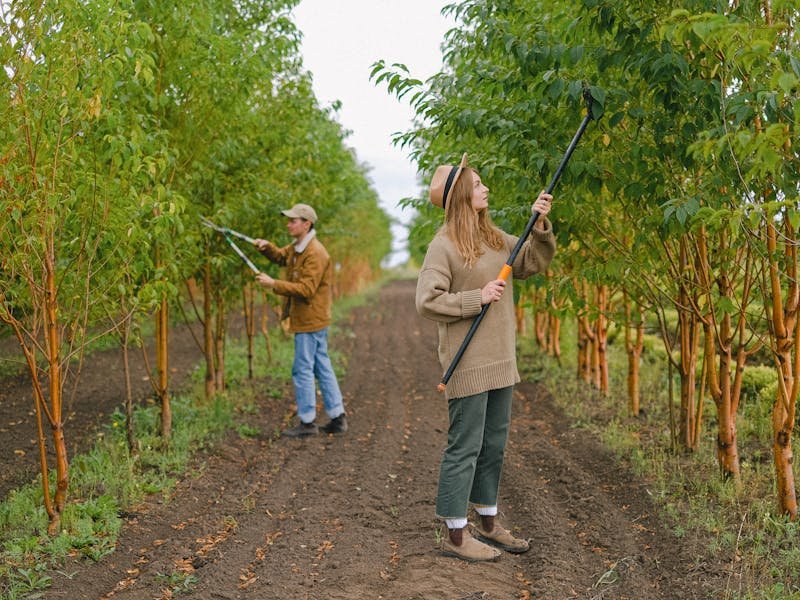
I am a fan of homeowners doing their own light pruning. A pair of bypass loppers, hand pruners, and a Saturday morning is enough for most foundation hollies and small specimens.
You should think about calling a pro when the holly is over 15 feet tall and would require a ladder and pole saw, when the tree has gotten away from you and needs renovation pruning, when the holly is near power lines, or when you have a long row of hedge hollies that needs uniform shaping. Our tree trimming service handles renewal pruning regularly. For smaller foundation work, see our guide to shrub trimming and pruning in Huntsville.
Holly removal considerations
If you ever decide a holly has to come out, know what you are getting into. Hollies have deep, dense root systems. They are not the kind of plant you can just dig up with a shovel after lunch.
For a small foundation holly under 4 feet, a strong person with a sharp shovel and an afternoon can usually win. For anything bigger, you want mechanical help. For mature American Holly trees, full removal usually means professional tree removal with proper equipment, followed by stump grinding. The stumps are dense and tough on grinder teeth.
Before you remove a healthy mature holly, consider whether heavy pruning could solve the problem you are trying to fix. A well-pruned American Holly is a beautiful tree, and replacing one would take 30 years.
One more thing
Hollies reward patience. They are not the kind of plant that wows you the year you put them in. They are the kind of plant that, 15 or 20 years later, you look out the window in February and notice that the holly is the only thing in the yard that looks alive.
Take care of the basics: right plant, right place, slightly acidic soil, decent drainage, and occasional pruning at the right time. Watch for the few problems that actually matter. Get a male in the neighborhood if you want berries.
If your holly is doing something weird, has gotten too big, or you want a row planted for privacy, give us a call. While you are thinking about your landscape, our list of best trees to plant in Huntsville covers other species that pair well with hollies.