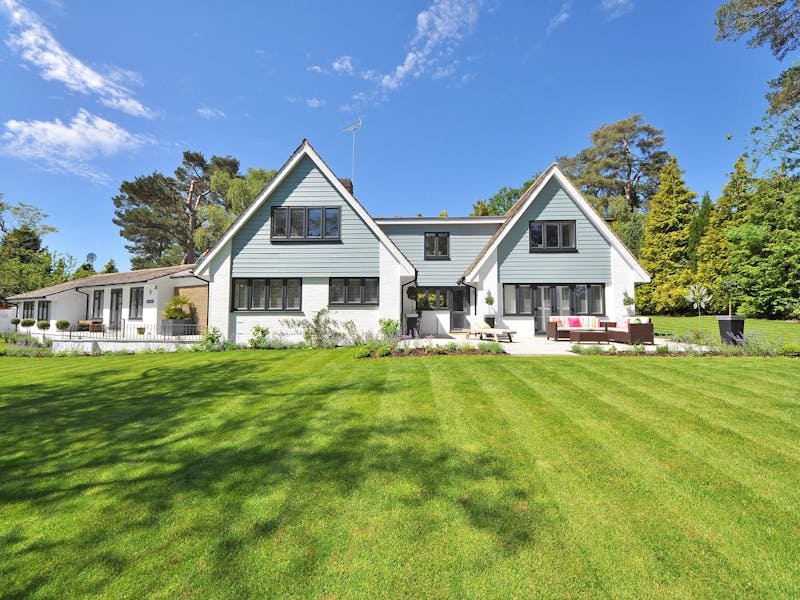
Madison is a strange city to work trees in, and I mean that as a compliment. Twenty years ago it was a small town tucked in next to Huntsville with a handful of older neighborhoods and a lot of farmland. Today it has more than 60,000 residents and subdivisions stretching from Madison Boulevard all the way down to Mooresville Road. You can drive five minutes in Madison and go from 80-year-old white oaks shading a brick ranch on Old Madison Pike to a brand-new build in Town Madison with a single Bradford pear sapling in the front yard.
That mix creates tree problems you do not see in other parts of north Alabama. The calls coming out of Madison are different from the calls coming out of Huntsville or Decatur. Madison has its own personality when it comes to yards, HOAs, soil, and the species planted during the building boom. This guide is for Madison homeowners who want to understand what is going on with the trees on their property.
Madison's tree landscape: the growth story
To understand Madison trees, you have to understand Madison's history. The original Madison was a small railroad town built around what is now Main Street and the historic district. Homes there go back to the late 1800s, and the trees on those lots are the kind you only get from a century of growth. White oaks with 4-foot trunks. Pecans that drop nuts the size of your thumb. Magnolias that have been there longer than anyone alive can remember.
That part of Madison, what locals call Old Madison, behaves like a mature urban forest. The tree work on those properties is mostly maintenance: pruning, deadwood removal, and cabling weak unions.
The rest of Madison is essentially a 30-year construction project. The city's population was around 14,000 in 1990. It is over 60,000 today. Almost everything outside the historic core was built since 1995. Those neighborhoods do not have a mature tree canopy. They have whatever the developer planted, plus whatever homeowners added in the last 10 to 20 years.
Then there is Town Madison, the newest piece, anchored by Toyota Field and Bridge Street. Most of those neighborhoods are less than 10 years old. The trees there are still saplings. The soil is recently disturbed clay fill from construction. Tree care in Town Madison is mostly about establishing young trees and dealing with the consequences of poor planting practices.
One more thing to know: Madison spans two counties. The bulk of the city is in Madison County, but a significant chunk on the western side, including parts of Town Madison, sits in Limestone County. The line runs along County Line Road. It matters because the soil profile shifts as you move west into Limestone County, which has more of the rocky, shallow soil the area is named for, and that affects what trees do well.
The Madison subdivision problem
Here is the thing nobody told Madison homeowners when they bought their houses. The trees in your yard were not chosen because they are good trees. They were chosen because they were cheap, fast-growing, and looked good in a sales brochure. Most have a designed life of 15 to 20 years.
That window is closing. If your house was built in 2005, your trees are now 21 years old. The species builders used were picked to make the lot look good when the house went on the market, not to last 50 years. Those trees are now failing all over Madison, and homeowners are getting hit with removal costs they did not see coming.
Bradford pears: the big one
Every Madison subdivision built between 1995 and 2010 has Bradford pears. Every single one. They were the default ornamental tree of that era because they grow fast, flower beautifully in spring, and stay a manageable size. Builders planted them in front yards by the thousands across Madison.
Bradford pears have a structural defect built into the species. The branches grow at very tight angles to the trunk, which creates weak unions that split as the tree matures. Around year 15 to 20, the trunk starts splitting. By year 25, most of them are broken in half or dropping major limbs in every storm. We pull dozens of split Bradford pears out of Madison yards every spring. If you have one, it is on borrowed time. We covered the full story on our blog post about Bradford pear trees and why they need to come down.
Leyland cypress hedges
Leyland cypress was the privacy hedge of choice during the Madison building boom. Builders and homeowners planted them along property lines as a fast-growing screen. They work great for about 15 years. Then they start dying from the inside out, usually because of fungal diseases like seiridium canker that thrive in our humid summers and clay soil.
If you have a Leyland cypress hedge in Heritage Plantation or Stoneridge or anywhere else in Madison, look at it carefully. Brown patches inside the canopy, dead lower branches, and thinning tops are all signs the hedge is failing. Once a Leyland cypress starts going, it does not recover. Selective removal and replacement is usually the only option.
Builder oaks too close to foundations
This one drives me a little crazy. Builders in Madison routinely planted shade trees, including white oaks and shumard oaks, within 10 to 15 feet of foundations. The trees were small when they went in. Twenty years later they are 30-foot canopies with root systems pushing into the foundation, and the homeowner has a decision to make.
If you have a large oak within 15 feet of your house in a Madison subdivision, you should have it inspected. Sometimes the answer is selective root pruning and crown thinning. Sometimes the answer is removal before it causes foundation damage. It depends on the species, the soil, and the specific situation, but ignoring it does not make it go away.
Common Madison tree issues by neighborhood
Different parts of Madison have different tree problems because they were built at different times by different developers. Here is the rough breakdown of what we see.
Town Madison and the Bridge Street area
This is the newest part of the city, mostly built after 2015. The trees here are young, often poorly planted, and frequently in trouble because of how the lots were graded. Subsoil compaction from construction is the biggest problem. We see young oaks and maples that look healthy for the first three years and then start declining as their roots fail to break out of the compacted clay around the planting hole. Tree pruning here is mostly about formative pruning to establish good structure while the trees are young.
Madison Boulevard older homes
The homes along Madison Boulevard between Hughes Road and Wall Triana are some of the older Madison housing stock outside the historic district. Many lots have mature pines and hardwoods 40 to 60 years old. The big issue is loblolly pines reaching the end of their lifespan. Pines start to decline around 70 to 80 years, and we are seeing a lot of removal calls on dead and dying pines in this part of Madison.
Heritage Plantation
Heritage Plantation is one of the larger established Madison subdivisions, with trees mostly 20 to 25 years old. Bradford pears are the dominant problem, followed by Leyland cypress hedges and red maples planted in spots that never quite worked. The HOA at Heritage Plantation is active, so any tree work needs to go through their approval process.
Stoneridge and Mill Creek
These newer subdivisions on the south side of Madison have similar tree profiles. The front yard tree is almost always a Bradford pear, flowering cherry, or crepe myrtle. The backyard trees are usually willow oaks or maples. Storm damage hits these neighborhoods hard because the trees are all the same age and species, so when a storm rolls through, you get widespread issues at once.
Madison Gardens
Madison Gardens goes back to the 1980s. The trees are mature, mostly hardwoods, and generally in better shape than the newer subdivision trees. The work here leans toward maintenance pruning and selective removal of declining trees.
Madison city tree ordinances
Madison has its own municipal code, separate from Huntsville's. The good news is that Madison does not have a strict tree preservation ordinance for private residential property. You can take down a tree in your own yard without applying for a city permit.
There are exceptions. Trees in the public right of way (typically the strip between the sidewalk and the street) are city property and require coordination with public works. Commercial properties have landscape buffer requirements. But for a homeowner taking down a tree from their own yard, no city permit is required.
What you do need to think about is your HOA, which is a separate issue and a much bigger deal in Madison than most people realize.
Madison HOA rules
Madison has stricter HOAs than Huntsville. That is something we deal with on almost every Madison job. Subdivisions like Heritage Plantation, Stoneridge, Mill Creek, Highland Lakes, and most of the Town Madison neighborhoods have active architectural review boards that approve tree removal, sometimes even tree pruning, before work can start.
If you take down a front yard tree without HOA approval, you can be fined, required to replace the tree at your own cost, or put through a hearing process that can drag on for months.
Before you call a tree service, pull out your HOA covenants and read the section on landscaping and tree removal. Most Madison HOAs require a written request with photos. Approval usually takes one to four weeks. We covered the broader subject in our post on HOA tree removal rules in north Alabama.
One exception: emergency removal of a hazardous or fallen tree generally does not require prior HOA approval. If a tree is on your house, blocking your driveway, or threatening structures, have it removed and deal with the paperwork after. Document everything with photos.
Storm patterns specific to Madison
Madison sits at the western edge of the Tennessee Valley, one of the most tornado-prone regions in the United States. The April 2011 tornado outbreak hit parts of north Alabama harder than almost anywhere in modern history, and Madison was directly affected. The Tennessee Valley tornado season runs roughly from late February through May, with a secondary peak in November.
Madison's storm risk has to do with its position relative to the terrain. Storms moving across the valley from the southwest tend to track right through Madison before hitting the higher ground east of Huntsville. The flat, open terrain west of the city gives storms room to organize. That is why Madison gets hit harder by straight-line winds and tornadoes than sheltered areas tucked against Monte Sano or in Hampton Cove.
Practically, Madison homeowners need to take storm prep seriously. Have your trees inspected before storm season. Take down anything dead, leaning, or showing structural problems. Clear weak limbs that overhang your roof. Document concerns about neighbors' trees in writing.
Local Madison tree species that thrive
Here is what does well in Madison soil and climate, based on what we see hold up over decades of growth.
Oaks are the workhorses. White oak and shumard oak handle our clay soil, tolerate the heat, and live 100 years or more. Willow oak grows fast and works for medium-sized lots. Live oak is fine in the warmer parts of Madison but sometimes struggles in cold snaps north of the river.
Bald cypress is an underrated option. It handles wet spots that kill other trees, grows tall and straight, and develops a nice form. River birch is similar but smaller, and it does well in the kind of poorly drained spots common in newer Madison subdivisions.
Southern magnolia is the classic Alabama option. Slow-growing, evergreen, and tough. The downside is the shed leaves, but if you can live with that, the tree is hard to beat.
Trees to avoid: Bradford pears (split in half by year 20), silver maples (weak wood, surface roots, short life), mimosas (invasive and short-lived), and Leyland cypress for hedges (dies back in 15 years). We have a more detailed list in our post on trees to avoid planting in north Alabama.
Madison tree services: what to look for
If you are looking for a tree surgeon in Madison AL, here is what matters. First, the company needs to be properly licensed and insured. Ask for proof of general liability insurance and workers compensation. If a crew gets hurt on your property and the company does not carry workers comp, your homeowners policy could end up paying for it.
Second, look for crews that work Madison regularly. A crew that works Madison every week understands which neighborhoods require HOA approval, which streets are tight for crane access, and how to navigate the alleys behind some of the older Madison Boulevard properties.
Third, get a written estimate that breaks down the work: removal, sectional cutting, hauling, stump grinding if applicable, and cleanup. A line item like "tree work, 1,800" tells you nothing.
Fourth, check for ISA certification. You do not need an ISA-certified arborist for every job, but for any large tree near structures or with structural concerns, having an ISA-certified person involved makes a real difference.
For stump grinding in Madison AL, the same rules apply. Check insurance, get a written quote, and confirm the depth of grinding. Most stumps should be ground to 6 to 12 inches below grade so you can sod or replant. A surface-only grind leaves a hump that reappears when the soil settles.
Tree care timing in Madison
Madison sits in USDA hardiness zone 7b, with some sheltered pockets that behave more like 8a. That gives you a wide planting window and a long growing season. Here is the timing that works best.
Planting: late fall through early spring, roughly November through March. Trees planted then have time to establish roots before summer heat arrives.
Pruning: most hardwoods are best pruned in late winter, January through early March, before bud break. Pines can be pruned anytime but heal best in late winter. Avoid pruning oaks during the growing season, especially April through July, because of oak wilt risk.
Removal: anytime, though spring and summer cost more because demand is higher. The cheapest time to schedule non-emergency removal is November through February.
Stump grinding: anytime the ground is not frozen solid, which in Madison is almost never an issue. Wet ground after heavy rain can sometimes delay work because the equipment tears up the lawn worse.
The "I just bought a house" Madison checklist
If you just closed on a house in Madison, do this before you do anything else with your trees.
Walk the property line. Identify every tree on your lot and note any that are leaning, dead, missing bark, or visibly hollow. Note neighbor trees that overhang yours. Take photos of everything.
Check distances. Any tree within 15 feet of your foundation is worth flagging. Same for trees overhanging your roof or close to your sewer line.
Identify the species. Count any Bradford pears, Leyland cypress, silver maples, and mimosas. These are the species most likely to cause problems in the next 5 to 10 years. Knowing what you have helps you plan removals over time instead of getting hit with three big bills in one storm.
Pull your HOA covenants. Save the landscaping and tree removal section where you can find it later.
Get a baseline inspection. For most Madison homes, a one-time walkthrough from a tree service is worth the cost. We charge nothing for that on properties where we end up doing work, and the homeowner walks away with a list of priorities and rough costs.
The Madison reality
Madison's tree situation will keep evolving. The Bradford pears that defined the city's landscape from 1995 to 2010 are coming out by the thousand. Leyland cypress hedges are aging out at the same time. Early subdivision oaks planted too close to foundations are forcing decisions homeowners did not expect to make. Town Madison is establishing its first generation of trees right now, and the decisions made in those young yards will shape the city for the next 50 years.
If you are dealing with any of this, you are not alone. We have helped hundreds of Madison homeowners work through tree issues from Old Madison to Town Madison. Visit our Madison service area page for more on how we work in the city, or reach out directly for a free estimate.