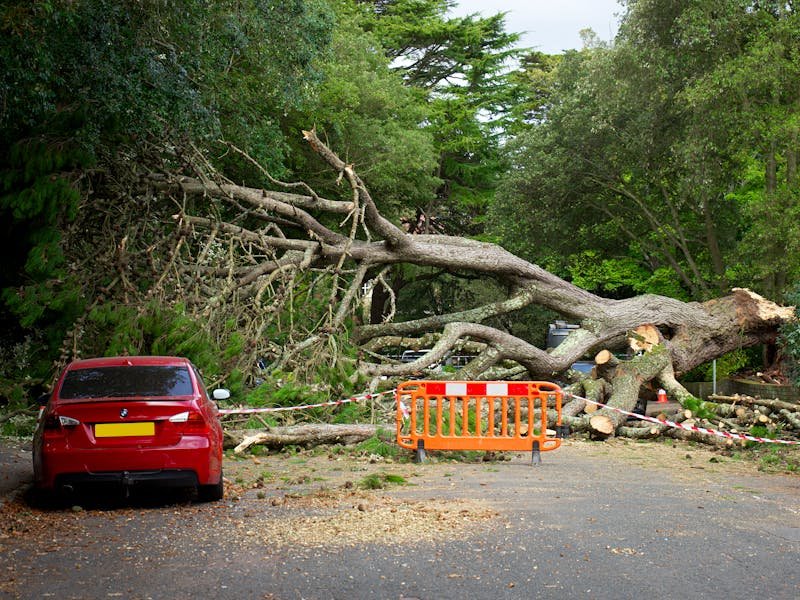
You wake up after a rough night of storms, walk outside with your coffee, and there it is. Your neighbor's giant oak is lying across your fence, your patio furniture is crushed, and half the canopy is resting against the side of your house. Maybe it missed the house entirely and just destroyed your yard. Either way, you are standing there thinking the same thing every homeowner in this situation thinks: my neighbor's tree did this, so my neighbor should pay for it.
I get it. That feels like it should be how it works. But Alabama law sees it differently, and if you go into this situation with the wrong assumptions, you are going to waste time, damage a relationship with your neighbor, and possibly spend money you did not need to spend.
We deal with this situation constantly at Huntsville Tree Pros, especially between March and June when the Tennessee Valley gets hammered with severe thunderstorms. I would estimate we handle 30 to 40 of these calls every spring. The conversation almost always starts the same way: "My neighbor's tree fell on my property, and I need them to pay for it." So I want to walk through what actually happens, what the law says, and what you should do right now if you are dealing with this.
The basic rule in Alabama (and it is going to frustrate you)
Here is the part nobody wants to hear. In Alabama, when a tree falls from your neighbor's property onto yours, your own homeowners insurance is generally responsible for covering the damage and removal. Not your neighbor's insurance. Yours.
It does not matter that the tree was rooted in their yard. It does not matter that they never trimmed it. If a storm knocked it down, the storm is the "peril" in insurance language, and your policy covers damage from storms to your property. That is just how it works in Alabama, and it is consistent with how most states handle this.
I know that feels unfair. A lot of homeowners in Huntsville push back hard on this when I explain it. But think about it from the insurance industry's perspective: storms are unpredictable, trees fall in unpredictable directions, and holding your neighbor responsible for an act of nature would create an impossible standard. Nobody can guarantee their trees will survive a tornado or straight-line winds.
The one exception that changes everything
There is an important exception to that general rule. If you can demonstrate that your neighbor knew their tree was dead, dying, or structurally dangerous and they did nothing about it, you may have a negligence claim against them. This shifts the responsibility.
But "knew" is doing a lot of work in that sentence. You need to be able to prove it. That means documentation. The strongest evidence is a written record showing you told your neighbor about the tree before it fell. A letter, an email, even a text message where you said something like "Hey, that big pine on the property line looks dead, I am worried it is going to come down in a storm" is worth its weight in gold.
Without that kind of documentation, proving negligence gets much harder. You would need to show that the tree was so obviously dead or dangerous that any reasonable person would have known it needed to come down. A completely bare tree in the middle of summer with visible rot and mushrooms growing from the trunk, for example. A tree that a previous arborist had flagged as hazardous. A tree that had already dropped large limbs on your property before.
Verbal conversations unfortunately carry very little weight. If you told your neighbor six months ago that you were worried about their oak tree and they said they would take care of it, that is going to come down to your word against theirs. Always put it in writing.
What to do right now if this just happened to you
If you are reading this because a neighbor's tree just fell on your property, here is what I would tell you to do, in order.
Stay safe first
This sounds obvious, but people do dangerous things when they are upset. Do not go near downed power lines. Do not try to climb on a damaged roof to assess the situation. If the tree is tangled in utility lines, call Huntsville Utilities at 256-535-4448 and stay well clear of it. Downed power lines can energize the ground around them, so "not touching it" is not enough. You need real distance.
If your home has structural damage that makes it unsafe (roof caved in, walls compromised), do not go inside. Call 911 if there is an immediate safety concern.
Document everything before anything gets moved
This is the step that separates homeowners who have smooth insurance claims from homeowners who fight with their adjusters for months. Before anyone touches that tree, before the neighbor comes over with a chainsaw, before anyone does anything, get your phone out and take photos.
Take a lot of them. Wide shots showing the full scene. Close-ups of every point where the tree contacts a structure, whether that is your roof, fence, shed, car, deck, or anything else. Photos of the root ball if the tree was uprooted (this tells the story of whether the tree was healthy or rotting from the inside). Photos of the trunk at the break point if it snapped. Video is even better because you can narrate what you are seeing.
Photograph the neighbor's yard too, specifically where the tree stood. Get shots of the stump, any remaining dead trees nearby, and the general condition of their property. All of this matters if negligence becomes part of the conversation later.
Call your homeowners insurance company
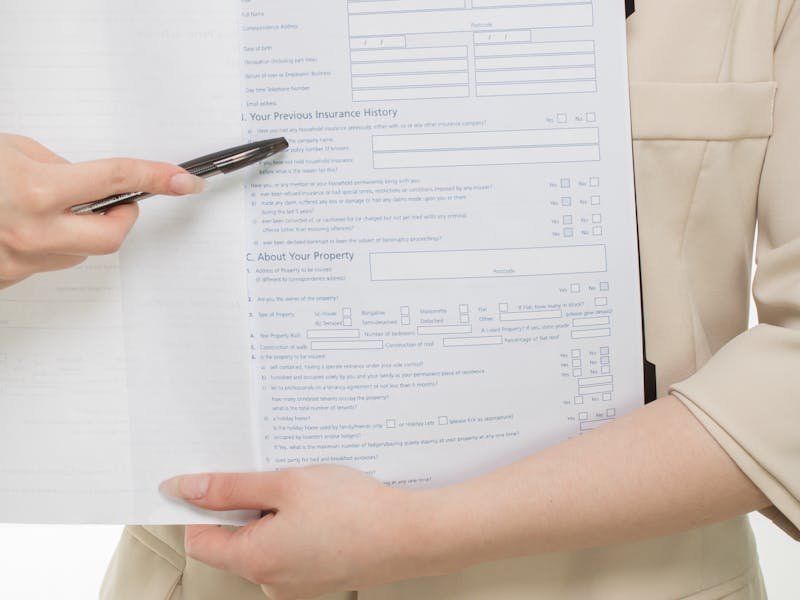
Call your own insurance company, not your neighbor's. Report the damage, provide your policy number, and describe what happened. Most Alabama policies require "prompt" reporting, and while there is no strict 24-hour rule, do not sit on this for weeks. Delayed reporting makes adjusters suspicious and gives them a reason to look harder for ways to reduce or deny your claim.
When you call, have this information ready: the date and time of the storm, a description of all damage to structures, whether the tree affected any utility lines, and whether you have made any temporary emergency repairs (like tarping a hole in the roof). For more detail on the insurance side, our guide on homeowners insurance and tree removal in Alabama covers the full process.
Call a tree removal service
You need a professional tree removal company to assess the situation and provide a written estimate. Your insurance company will want at least one written estimate, and having a detailed, itemized quote helps the adjuster understand exactly what the work involves. A one-line estimate that says "tree removal, $3,000" is going to get scrutinized a lot harder than a detailed breakdown of crane work, sectional cutting, debris hauling, and stump grinding.
If the tree is on your house, blocking your driveway, or creating a safety hazard, you likely need emergency tree removal. Do not wait for the adjuster to come out before getting a dangerous situation handled. Your policy covers reasonable emergency measures to prevent further damage, and no adjuster expects you to leave a tree sitting on your roof for three days while you wait for their schedule to open up.
What your insurance typically covers (and what it does not)
This is where people get tripped up. Insurance does not just write you a blank check for everything related to a fallen tree. The coverage has specific rules.
If the tree damaged a covered structure (your house, garage, shed, fence, sometimes your driveway), your policy generally covers both the structural repairs and the cost of removing the tree. The tree removal is treated as part of the overall claim. So if the tree punched through your roof and caused $12,000 in damage, the $2,500 to remove the tree gets rolled into that claim, minus your deductible.
Most policies cap tree removal at somewhere between $500 and $1,000 per tree, with a total aggregate limit of $5,000 to $10,000 for all trees affected in a single event. If you had three trees come down in the same storm, you could hit those limits quickly.
The "no structure damage" problem
Here is where a lot of Huntsville homeowners get a nasty surprise. If the tree fell in your yard but missed every structure on your property, most standard homeowners policies will not cover the removal. The tree is just lying there in your grass. It might be 70 feet of pine tree across your entire backyard. It might cost $2,000 to remove. But because it did not hit your house, your fence, your shed, or anything else that counts as a "covered structure," you are paying out of pocket.
This is one of the most common situations I see, and it genuinely catches people off guard. They assume a tree falling on their property is automatically a covered event. It is not. The covered event is the damage to a structure. The tree itself is just debris.
Some policies have a small provision for tree removal even without structural damage, but it is usually capped at $500 per tree and requires the tree to be blocking your driveway or an accessible entry point to your home. Check your policy's debris removal section for specifics.
What if the tree is blocking your driveway or a road
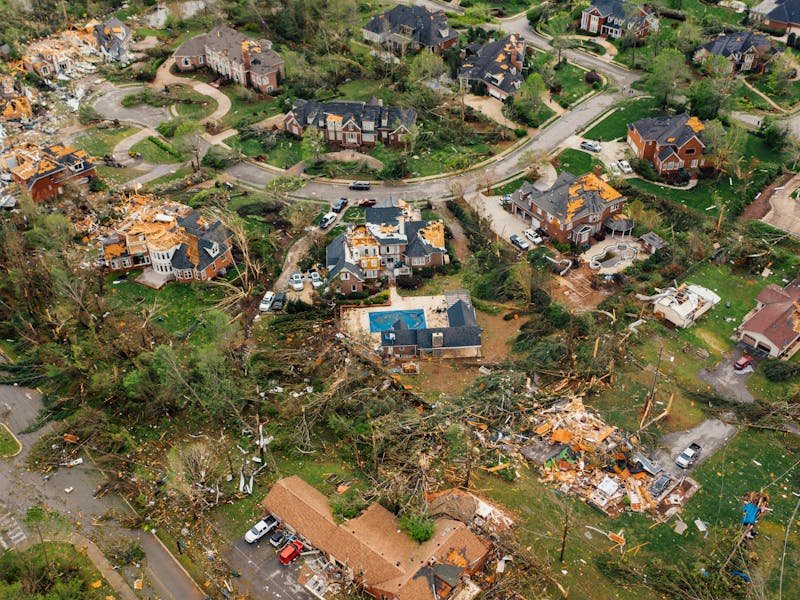
If the tree fell across your driveway and you cannot get your vehicles in or out, that changes the situation slightly. Many policies include a provision covering removal of trees that block essential access even if no structure was damaged. The coverage amount is usually modest (again, that $500 to $1,000 range), but it helps.
If the tree is blocking a public road, call your local government. In Huntsville, you can call 311 or the Public Works department. The city or county may handle removal of trees blocking public roads, though response times after a major storm can be lengthy. If it fell from your property or your neighbor's property onto the road, the municipality typically handles the road clearance portion while you handle anything on private property.
Talking to your neighbor
This is the part that makes most people uncomfortable, and honestly, how you handle this conversation matters more than most of the legal stuff I have covered so far. You still have to live next to this person.
My advice: do not come out swinging. Do not start the conversation with "your tree destroyed my fence and you are going to pay for it." Even if you are right, even if the tree was obviously dead and they ignored it, starting with accusations puts people on the defensive and makes everything harder.
A better approach is something like: "Hey, I know last night's storm was rough for everyone. Your oak came down across my fence and hit the corner of my garage. I have already called my insurance company to get things started. I just wanted to let you know what happened and see if we can figure this out together."
Most of the time, neighbors are reasonable. They feel bad about it. They want to help. Sometimes they will offer to split costs. Sometimes they will file a claim on their liability insurance voluntarily. But they are much more likely to do any of that if you approach the conversation as two neighbors dealing with a shared problem rather than as an accusation.
If the tree was clearly dead and you had previously warned your neighbor about it (in writing, hopefully), you are in a stronger position. But even then, try the friendly conversation first. Lawsuits and insurance disputes between neighbors create years of bad blood, and they are expensive for everyone.
When you might actually need a lawyer
Most of the time, you do not. The insurance claim gets filed, the tree gets removed, the damage gets repaired, and life goes on. But there are situations where legal help makes sense.
If the damage is significant (we are talking tens of thousands of dollars), the neighbor's tree was clearly dead or dangerous, you had warned them in writing, and either your insurance is not covering the full cost or you want to recover your deductible and any uncovered expenses, a consultation with a local property attorney is a reasonable step. Many Alabama attorneys offer free initial consultations for property damage cases.
The legal theory here is straightforward negligence. Your neighbor had a duty to maintain their property in a way that does not create unreasonable hazards for neighbors. They knew (or should have known) about the dangerous tree. They failed to act. The tree fell and caused damage. That is the basic framework.
What I would not do is hire a lawyer for a $1,500 fence repair. The legal fees will eat whatever you recover, and you will have destroyed your relationship with the person who lives 30 feet from your bedroom window. Pick your battles.
Alabama-specific legal context
I want to be clear that none of this is legal advice. I remove trees for a living, not practice law. But I have seen enough of these situations play out in Madison County and the surrounding areas to share some general observations about how Alabama handles these cases.
Alabama follows a general negligence standard for tree-related property damage between neighbors. The state does not have a specific "tree liability statute" the way some states do. Instead, courts apply standard negligence principles: duty, breach, causation, damages. The key question is almost always whether the tree owner knew or should have known the tree posed a risk.
Alabama's contributory negligence rule is also worth knowing about. Alabama is one of the few states that still uses pure contributory negligence, meaning if you are found to be even partially at fault for the damage, you may recover nothing. In the context of a fallen tree, this could come up if, for example, you built a structure right next to a tree you knew was dangerous and never said anything to your neighbor about it. It is a high bar, but it is something Alabama property attorneys take seriously.
The statute of limitations for property damage in Alabama is six years. That gives you time, but I would not wait. Evidence degrades, memories fade, and stumps get ground down. If you think you have a negligence case, talk to an attorney sooner rather than later.
How to prevent this from happening in the first place
I realize this section does not help you if a tree is already lying on your property. But for everyone reading this who has a neighbor with questionable trees, here is what I would do.
Walk your property line and look at your neighbor's trees. You do not need to be an arborist to spot the obvious warning signs. Trees with no leaves during the growing season. Trees with large dead branches in the canopy. Trees that are leaning noticeably toward your property. Trees with visible fungal growth (shelf mushrooms on the trunk are a red flag). Trees with large cavities or sections of missing bark.
If you see something concerning, talk to your neighbor about it. Be friendly, be non-confrontational, but be direct. Then follow up in writing. Send a letter or email that describes the specific tree (its location, species if you know it, what concerns you) and your request that they have it evaluated by a professional. Keep a copy. This written notice is the single most important thing you can do to protect yourself legally if that tree eventually falls on your property.
If your neighbor ignores you, consider having a certified arborist do a visual assessment from your side of the property line. Their professional opinion documenting that the tree appears hazardous adds significant weight to any future negligence claim. Some homeowners even go so far as to have the arborist send a letter directly to the neighbor, which creates an even stronger paper trail.
And take care of your own trees while you are at it. The same logic applies in reverse. If your tree falls on your neighbor's property and you knew it was a problem, you could be on the receiving end of a negligence claim. Regular tree maintenance and prompt removal of dead or dangerous trees protects you from liability and keeps your neighbors safe.
The reality of dealing with this in Huntsville
The Tennessee Valley gets severe weather. That is just the reality of living here. Between the spring thunderstorm season, the occasional tornado, and the ice storms that hit every few years, trees are going to come down. Some of them are going to land on other people's property. It has been happening as long as there have been trees and property lines, and it will keep happening.
The best thing you can do is understand the rules before you need them. Know that your insurance is your first call, not your neighbor's. Know that documentation matters enormously. Know that the friendly conversation with your neighbor is almost always more productive than the angry one. And know that a good tree service can help you navigate the whole situation, from emergency removal to working with your insurance adjuster.
If you are dealing with this right now, or if you are looking at a neighbor's tree and wondering how long until it becomes your problem, give us a call. We have helped hundreds of homeowners across Huntsville, Madison, Decatur, and the surrounding areas work through exactly this situation.