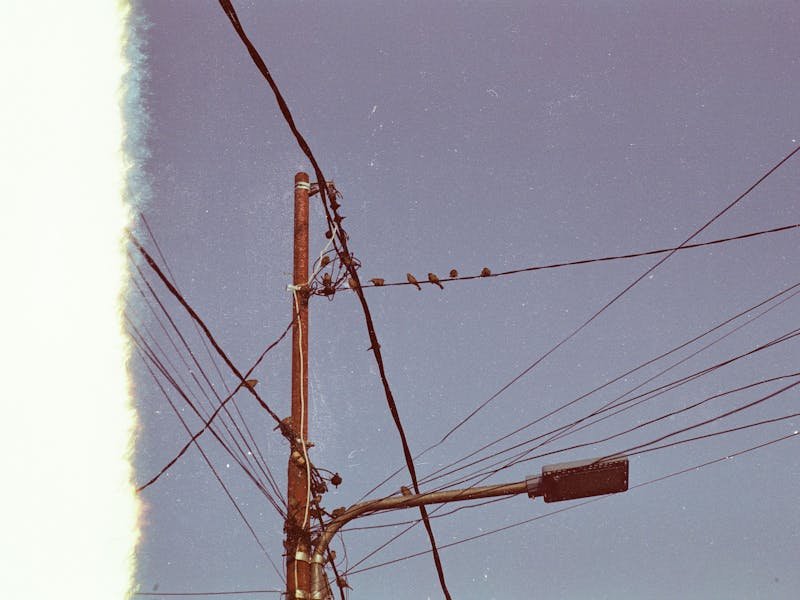
If you live in Huntsville and have trees growing near power lines on or adjacent to your property, there is an important municipal program you should know about. Huntsville Utilities operates a year-round vegetation management (tree trimming) program designed to keep trees clear of power lines, prevent outages, and reduce the risk of electrical fires and storm-related damage.
The program is free to Huntsville Utilities customers, but it comes with specific limitations that every homeowner should understand. Knowing what Huntsville Utilities will and will not do with your trees—and when you need to hire a private tree trimming service instead—can save you time, money, and frustration.
At Huntsville Tree Pros, we work alongside the Huntsville Utilities program every day. We handle the tree trimming and removal work that falls outside the utility's scope, and we regularly help homeowners understand where the utility's responsibility ends and theirs begins. This guide covers everything you need to know.
How the Huntsville Utilities Tree Trimming Program Works
Huntsville Utilities maintains a dedicated vegetation management division that operates year-round. The program uses a combination of in-house utility crews and contracted professional arborists to trim trees that pose a risk to the electrical distribution system throughout the Huntsville Utilities service area.
The Cycle-Based Approach
Huntsville Utilities divides its service territory into zones and works through them on a rotating cycle, typically trimming each zone every three to five years. This means crews may come through your neighborhood proactively, even if you have not reported a problem. When crews are working in your area, you will usually receive a door hanger or notice informing you that trimming is scheduled.
The utility does not need your permission to trim trees that are in their right-of-way or that threaten their power lines, but their crews will generally attempt to notify you before starting work. If you have concerns about specific trees or want to discuss what will be trimmed, respond to the notification as soon as you receive it.
What Huntsville Utilities Will Trim
The utility's vegetation management program focuses specifically on maintaining safe clearances around power lines. Here is what they will handle at no cost to you:
- Branches growing into or toward overhead power lines — The primary focus is on primary distribution lines (the high-voltage lines that run along streets and behind properties). Crews will trim branches to maintain a clearance zone, typically 10 to 15 feet from the conductors.
- Trees that are leaning toward power lines — If a tree is structurally compromised and poses an imminent risk of falling into power lines, the utility may remove it entirely.
- Dead branches overhanging power lines — Dead limbs that could fall onto lines during a storm are a priority for removal.
- Trees in the utility right-of-way — Trees growing within the utility's easement that interfere with line access or safety are subject to trimming or removal.
- Vegetation around power poles and equipment — Brush and small trees growing around the base of power poles, transformers, and other electrical equipment are cleared as part of the program.
How Trimming Is Performed
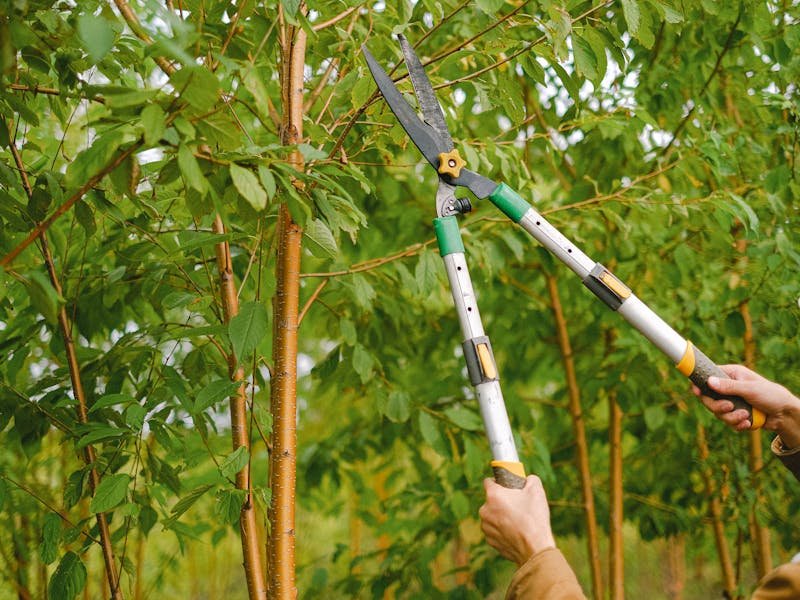
Huntsville Utilities line-clearance crews follow industry standards established by the International Society of Arboriculture (ISA) and ANSI A300 pruning standards. This means they use directional pruning techniques rather than simply hacking branches back indiscriminately:
- Directional pruning redirects growth away from power lines by cutting back to lateral branches that grow in a direction away from the conductors. This is healthier for the tree than topping or shearing.
- Crown reduction may be used on trees that are too tall for their proximity to lines, removing upper branches to reduce height while maintaining the tree's structural integrity.
- Removal of entire limbs is done when branches cannot be redirected effectively. Proper cuts are made at the branch collar to promote wound closure and prevent decay.
That said, utility trimming prioritizes line safety over tree aesthetics. A tree trimmed for line clearance will often look lopsided or unbalanced because branches are removed from only one side—the side facing the power lines. The utility is not responsible for making the tree look symmetrical or attractive; their mandate is keeping the lights on safely.
How to Request Tree Trimming from Huntsville Utilities
If you notice tree branches growing dangerously close to power lines on or near your property and the utility's regular cycle has not addressed them, you can request service directly:
- Call Huntsville Utilities at 256-535-4448 during business hours. Request to speak with the vegetation management department. Describe the location and the concern (branches touching lines, tree leaning toward lines, etc.).
- Report online through the Huntsville Utilities website. Navigate to their customer service or outage reporting section, where vegetation management requests can often be submitted.
- Report during an outage. If a tree or branches have already caused a power outage, call the outage reporting line. Tree-related outages are prioritized for immediate response.
Response times vary based on the severity of the situation and the utility's current workload:
- Emergency situations (tree on a line, sparking, active outage): same-day response, often within hours
- Imminent hazards (tree leaning heavily toward lines, large dead limb directly over lines): typically within 1 to 2 weeks
- Non-urgent requests (branches growing toward lines but not yet a hazard): may be scheduled for the next cycle visit, which could be weeks or months
What Huntsville Utilities Does NOT Cover
This is the part that catches many Huntsville homeowners off guard. The utility's tree trimming program has significant limitations, and a large amount of tree work falls entirely outside their scope:
1. Trees Not Near Power Lines
Huntsville Utilities will only trim trees that are interfering with or threatening their power line infrastructure. If your tree needs trimming for any other reason—aesthetic shaping, crown thinning, dead branch removal away from lines, clearance from your roof or house, or general tree health maintenance—that is your responsibility as the property owner.
2. Service Drop Lines (the Line to Your House)
The service drop is the individual power line that runs from the utility pole to your home. In many cases, Huntsville Utilities considers the service drop to be the homeowner's responsibility. Trees growing into or near your service drop may not be addressed by the utility's program. You would need to hire a private, line-clearance-qualified tree trimming service to handle branches near your service drop. Never attempt to trim branches near any power line yourself—it is extremely dangerous and potentially fatal.
3. Stump Grinding and Removal
When Huntsville Utilities removes a tree for line clearance, they typically leave the stump in place. Stump grinding or removal is the homeowner's responsibility. If the utility has removed a tree from your property and left a stump, contact a stump grinding service to have it dealt with.
4. Debris Cleanup Beyond the Right-of-Way
Utility crews will clean up the wood and debris generated by their trimming work within the right-of-way area. However, if trimming debris lands in your yard, on your driveway, or in your landscaping areas, the cleanup may be minimal. Some wood sections may be left for the homeowner to dispose of or keep as firewood.
5. Tree Health and Disease Management
Huntsville Utilities does not provide tree health assessments, disease treatment, fertilization, insect management, or any horticultural services. Their only concern is the relationship between the tree and the power line. If your tree is diseased, declining, or infested, you need a private arborist or tree service company.
6. Trees on Private Property Away from Lines
If a tree on your property is dead, dying, or hazardous but is not near power lines, the utility has no involvement. Removal of dangerous trees that do not threaten electrical infrastructure is entirely the homeowner's responsibility.
Tree Replacement and Voucher Programs
When Huntsville Utilities removes a tree from your property for line clearance, they may offer replacement tree programs or vouchers. These programs vary from year to year and are subject to funding availability, but they typically work as follows:
- Replacement tree vouchers provide a credit toward the purchase of a new tree from a participating local nursery. The voucher amount varies but is typically $25 to $75 per tree removed.
- Species recommendations are provided to help you choose a tree that will not grow into power lines. Low-growing species (under 25 feet at maturity) are recommended for planting beneath or near power lines. Popular approved species for the Huntsville area include crepe myrtles, dogwoods, Japanese maples, Eastern redbuds, and small ornamental varieties.
- Planting guidance includes recommended distances from power lines for different tree sizes. As a general rule, tall-growing trees (oaks, pines, sweetgums) should be planted at least 50 feet from overhead lines, medium-height trees at least 25 feet, and small ornamental trees at least 15 feet.
If a tree is removed from your property and you are not offered a replacement voucher, ask. The program availability depends on the season and budget, and homeowners who ask are more likely to receive assistance than those who do not.
Planting the Right Trees in the Right Places
The best way to avoid future conflicts between your trees and power lines is to plant the right species in the right locations from the start. Many of the tree-versus-power-line problems we see across Huntsville, Madison, and Decatur are the result of fast-growing trees that were planted too close to overhead lines decades ago.
Trees to Avoid Planting Near Power Lines in Huntsville
- Loblolly pines — Extremely common in North Alabama but grow 60 to 90 feet tall and are prone to storm damage. Keep them at least 60 feet from lines.
- Water oaks — Fast-growing but structurally weak. Common in the Tennessee Valley and frequently responsible for storm-related outages.
- Sweetgums — Grow 60 to 80 feet tall and are already overrepresented in many Huntsville neighborhoods. Their aggressive growth makes them a constant line-clearance concern.
- Silver maples — Fast-growing with brittle wood that breaks easily in storms. A poor choice near any structure or utility infrastructure.
- Bradford pears — Notorious for splitting apart in storms due to their weak branch structure. They are also invasive in Alabama and should be avoided entirely.
Good Choices for Planting Near Power Lines in Huntsville
- Crepe myrtles — Top out at 15 to 25 feet depending on variety. Well-adapted to Huntsville's heat and drought conditions.
- Eastern redbuds — Native to Alabama, beautiful spring blooms, and mature at 20 to 30 feet.
- Dogwoods — Another Alabama native that stays under 25 feet. Both flowering dogwoods and kousa dogwoods perform well in Huntsville.
- Japanese maples — Small, ornamental, and unlikely to ever reach power line height.
- Hollies (Savannah, Nellie Stevens) — Moderate height, dense foliage, and low maintenance. Good for screening while staying clear of lines.
When to Call a Private Tree Service Instead
Based on what we have covered, here is a clear guide to when you need Huntsville Utilities versus when you need a private tree service like Huntsville Tree Pros:
| Situation | Who to Call |
|---|---|
| Branches touching or growing into high-voltage power lines | Huntsville Utilities (256-535-4448) |
| Tree has fallen on a power line | Huntsville Utilities (emergency line) |
| Tree leaning toward power lines | Huntsville Utilities |
| Branches near your service drop (line to your house) | Private tree service (line-clearance qualified) |
| Tree trimming for aesthetics, health, or roof clearance | Private tree service |
| Dead or hazardous tree not near power lines | Private tree service |
| Stump grinding after utility removes a tree | Private tree service |
| Complete tree removal (not utility-related) | Private tree service |
For a more detailed look at safety concerns and regulations around trees and power lines, read our related guide: Trees Near Power Lines in Huntsville: What You Need to Know.
Important Safety Reminders
We cannot stress this enough: never attempt to trim or remove branches near power lines yourself. Even the seemingly small service drop line running to your house carries enough voltage to kill you instantly. Every year in the United States, people are seriously injured or killed attempting to trim trees near power lines.
- Always assume power lines are energized. Even if a line appears dead or has fallen to the ground, treat it as live until the utility confirms it is de-energized.
- Maintain at least 10 feet of distance from any overhead power line when using ladders, pole saws, or any equipment.
- Never lean a ladder against a tree that has branches in contact with power lines.
- If a tree or branch falls on a power line, do not attempt to remove it. Call Huntsville Utilities immediately and keep everyone at least 35 feet away from the downed line.
- If you see a downed power line, call 911 and Huntsville Utilities at 256-535-4448. Downed lines can energize the ground around them, making the area dangerous even without direct contact.
Need Professional Tree Trimming in Huntsville?
If your tree trimming needs fall outside what Huntsville Utilities covers—and most residential trimming needs do—Huntsville Tree Pros is here to help. We provide professional tree trimming and pruning services throughout Huntsville, Madison, Decatur, and surrounding communities. Our crew is trained in proper pruning techniques that maintain tree health while achieving the clearance, shaping, or hazard reduction you need.