Ask anyone in Alabama to picture the state's iconic tree, and most will describe a Southern Magnolia. The big glossy leaves, the dinner-plate white flowers in late spring, the deep shade underneath. It is on postcards. It is in front of the antebellum homes in Twickenham. It is what people plant when they want their yard to feel like a real Alabama yard.
Here is the thing though. Most homeowners I talk to in Huntsville do not actually know how to take care of a magnolia. They plant one because it looks pretty, then they wonder why it is dropping leaves all spring or why the lawn underneath is dying. Magnolias have quirks other trees do not, and if you do not know the rules, you can make expensive mistakes.
I have been working on trees in north Alabama long enough to see every version of this. So I want to walk through what you actually need to know about magnolias in the Tennessee Valley. Varieties, care, problems, pruning rules, and the planting decisions that save you headaches 20 years from now.
Magnolia varieties you will see in Huntsville
People say "magnolia" like it is one tree. It is not. There are dozens of magnolia species and hundreds of cultivars. In Huntsville yards, you are mostly going to encounter six of them.
Southern Magnolia (Magnolia grandiflora) is the big one. Evergreen, glossy leaves, classic white flowers, mature size of 60 to 90 feet. This is the postcard magnolia. The vast majority of the large magnolias you see in older Huntsville neighborhoods are this species.
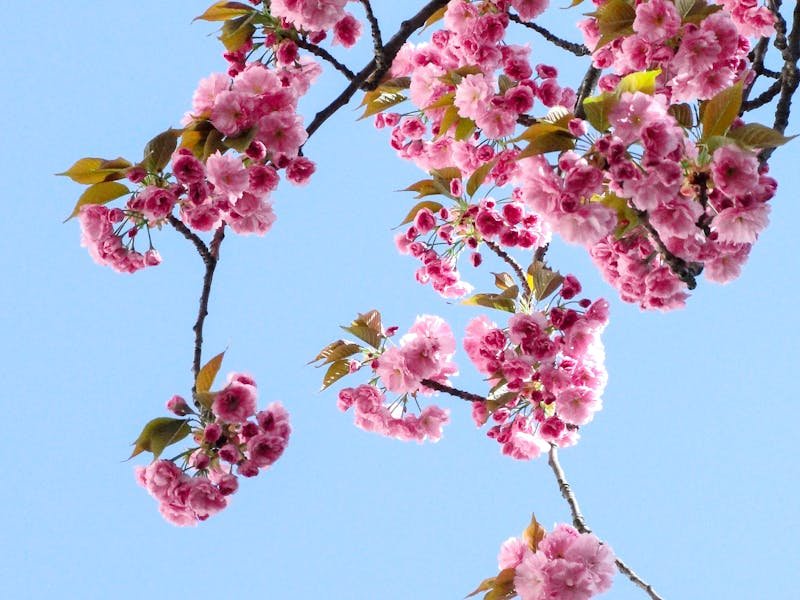
Saucer Magnolia is deciduous and much smaller, usually 20 to 30 feet at maturity. The flowers are pink and purple and they appear in early spring before the leaves come out. It is a stunning tree when it blooms, but the flowers are vulnerable to late frosts, which we do get in Huntsville some years.
Star Magnolia is the smallest of the common varieties, topping out at 15 to 20 feet. It blooms in late winter or very early spring with white star-shaped flowers. Good choice for small yards or as a foundation tree.
Sweetbay Magnolia is semi-evergreen in our climate and reaches 30 to 50 feet. It tolerates wetter soils than Southern Magnolia, which makes it a good option if you have a low spot in the yard. The flowers are smaller and lemon-scented.
Cucumber Magnolia is a large native, 50 to 80 feet, with greenish-yellow flowers that most people miss because they bloom up high and blend with the leaves. It is more of a forest tree than a landscape feature.
Bigleaf Magnolia is the novelty one. The leaves can be three feet long, which is unbelievable until you see it in person. It is more of a collector's tree than something you plant for curb appeal, but if you want a conversation piece, this is it.
The Southern Magnolia in detail
Most of what people mean when they say "I want to plant a magnolia" is Southern Magnolia. So here is the honest picture of what you are signing up for.
Mature size is 60 to 90 feet tall with a canopy spread of 30 to 50 feet. That is huge. People plant these as 6-foot saplings and forget that in 30 years they will have a tree that dwarfs their house. Growth rate is moderate, roughly 1 to 2 feet per year, but those years add up.
Leaves are glossy dark green on top and rusty fuzzy underneath. They are thick, almost waxy, and they hang on year-round. The tree is fully evergreen in our climate, which is one of its best features and also the source of one of its biggest problems.
The flowers are the show. They are white, six to twelve inches across, fragrant, and they appear in May and June. A mature Southern Magnolia in full bloom is one of the most striking sights in any Alabama yard. Each flower only lasts a couple of days, but a big tree will produce hundreds of them over the bloom season.
After the flowers come the cone-like fruits, which mature in late summer and early fall. They split open to reveal bright red seeds that birds love. The cones themselves drop and become part of the leaf litter, which I will get to.
Lifespan is 80 to 120 years for a healthy tree, and some specimens push past 150. The big magnolias in Twickenham and along the older streets in Five Points are easily 100 years old in many cases.
Magnolia care basics
Magnolias are not high-maintenance trees, but they do have preferences. Get these right and the tree will mostly take care of itself.
Sun exposure matters. Southern Magnolias will grow in partial shade, but they bloom best in full sun. Six hours of direct sun per day is the minimum if you want a heavy flower display. A magnolia stuck in dense shade will live, but it will be sparse and disappointing.
Soil should be rich, well-drained, and slightly acidic. Huntsville's native soil is mostly clay with limestone influence, which tends toward neutral to slightly alkaline pH. Magnolias prefer pH in the 5.5 to 6.5 range. If your soil is on the alkaline side, you may see iron deficiency issues. Adding compost and organic matter at planting time helps a lot.
Mature trees handle drought well. Once a Southern Magnolia is established (after about three years in the ground), it can tolerate dry stretches without much trouble. Young trees need consistent watering for the first two or three years, deep soaks once or twice a week during dry weather.
Salt tolerance is low. This matters more for coastal Alabama than for Huntsville, but it is worth knowing if you de-ice your driveway aggressively. Salt spray and salt-laden runoff can damage magnolia roots.
Common magnolia problems in north Alabama
Most of the calls we get about magnolias fall into a handful of categories. Knowing what these look like saves you from panicking over normal behavior or ignoring real problems.
Leaf drop in spring is the big one. Every year, I get calls in March, April, and May from homeowners convinced their magnolia is dying because it is shedding leaves. It is not. Southern Magnolias are evergreen, but they replace their leaves on an annual cycle. As new growth pushes out in spring, the old leaves yellow and fall. A healthy magnolia drops a significant percentage of its leaves over a six to eight week window every spring.
Brown leaf tips usually mean drought stress or salt damage. If the edges of the leaves are turning brown and crispy, the tree is not getting enough water, especially during summer dry stretches. Deep watering helps.
Sooty mold is a black, sticky coating on the leaves. It looks like the leaves are dirty. The mold itself is not harmful, but it is a symptom. Scale insects (small, immobile bugs that attach to branches and leaves) excrete a sticky substance called honeydew, and sooty mold grows on the honeydew. So if you see sooty mold, you have a scale problem to address. Heavy infestations can stress the tree and require professional treatment.
Yellow leaves with green veins, called interveinal chlorosis, point to iron deficiency. This usually shows up when the soil is too alkaline for the tree to absorb iron properly. Soil amendments and chelated iron treatments help, but the underlying soil chemistry is the real issue to address.
Slow growth or general failure to thrive often comes down to two things: planted too deep or watered too much. Magnolias hate having their root flare buried, and they hate sitting in saturated soil. If a young magnolia is just sulking and not growing, dig down at the base of the trunk and check that the root flare is at or just above ground level.
The leaf litter problem
Here is something nobody tells you when you plant a Southern Magnolia. The leaves are huge, thick, waxy, and they take years to break down.
Most tree leaves decompose in a single season. Magnolia leaves can sit on the ground for two to three years before they fully rot. They smother grass underneath the tree, fill up gutters, and clog flower beds. A mature magnolia drops thousands of leaves every spring, and they do not just blow away. They sit there.
Most people give up on growing grass under a magnolia. The shade is dense, the leaf litter is thick, and surface roots make mowing difficult. The honest answer is to mulch out to the drip line and treat it as a planting bed rather than lawn. If you want a clean look, plan on raking several times during spring drop season.
Magnolia pruning - the unique rules
This is where most homeowners go wrong. Magnolias do not prune like other trees, and treating them like an oak or a maple will damage them.
Avoid heavy pruning entirely. Magnolias do not heal well from large cuts, and they rarely produce new growth from old wood. Cut a major branch off a Southern Magnolia and you are likely to be looking at a stub for the next decade. The tree just does not respond.
The best time to prune is after the tree finishes blooming, which means late June through early July for Southern Magnolia. Pruning at any other time of year either cuts off next year's flower buds or interferes with the tree's preparation for winter dormancy.
Never top a magnolia. Topping is the practice of cutting the top off a tree to reduce its height. It is a bad practice on most species and a particularly bad one on magnolias. The tree will not regrow properly, and you will be left with an ugly, hazardous mess. If a magnolia is too big for its location, the right answer is removal and replacement, not topping.
Stick to light shaping and removal of dead branches. Take out anything that is genuinely dead, anything that is rubbing against another branch, and anything that is creating a clearance issue with a structure. That is it. Do not "thin out the canopy." Do not "open it up for light." A magnolia's dense canopy is part of how it is supposed to look.
For more on the timing and technique, our guide on tree pruning in Huntsville covers the broader principles, but magnolias really are their own category.
Planting a Southern Magnolia in Huntsville
If you are putting one in the ground, the planting decision is the most important one you will make. You cannot move a magnolia later, so getting the location right matters.
Allow a 30-foot radius from any structure. The mature canopy spreads 30 to 50 feet wide, and the surface root system extends well beyond the drip line. Plant a Southern Magnolia 15 feet from the house and you are guaranteeing a problem in 20 years.
Do not plant near foundations. The roots are surface-running and they will push against foundations, lift sidewalks, and crack driveways over time. The damage is slow but it is real, and it gets expensive to fix.
Do not plant near septic systems or drain lines. Magnolia roots are aggressive about seeking water, and they will infiltrate any underground line that has the slightest leak. If you are on a septic system, keep magnolias at least 50 feet from the drain field.
Do not plant under power lines. A 70-foot tree under a power line is a guaranteed conflict. Either you end up paying to remove the tree later, or the utility company shows up and does a brutal pruning job that ruins it. Look up before you plant.
Our guide on the best trees to plant in Huntsville covers more on placement decisions, and if you are specifically looking for shade, the best shade trees article goes into species comparisons.
Magnolias in Huntsville's historic neighborhoods
If you want to see what mature Southern Magnolias look like, walk through Twickenham, Five Points, or the Old Town historic district in Huntsville. Some of the magnolias on those streets have been growing since the early 1900s.
That is also where I get a lot of my service calls. Old magnolias in old neighborhoods come with old problems: roots into utility lines, branches over slate roofs, declining health from decades of stress. The trees are often protected by historic district guidelines, which adds another layer to any work.
If you own a property in one of these areas with a mature magnolia, invest in regular professional inspections. A certified arborist looking at the tree every two to three years will catch problems early, and that matters because magnolias are slow to recover from anything.
Transplanting magnolias
Short version: do not try this on a mature tree.
Magnolias have a fleshy, brittle root system that does not respond well to disturbance. Young trees under about 6 feet tall can sometimes be moved successfully with a large root ball during the dormant season. Anything larger has poor odds, and a fully mature tree almost always dies after transplanting, even with a professional tree spade.
Buy a young container-grown tree and plan on it being permanent. If you have a mature magnolia in the wrong spot, your realistic options are to live with it, remove it, or build around it.
When to call a professional
You can handle a lot of magnolia care yourself. Watering, mulching, raking leaves, light shaping with hand pruners. None of that requires a tree service. But there are situations where calling a pro is the right move.
Large pruning jobs are one. Anything that requires getting up into the canopy of a 60-foot tree is not a homeowner job. The risk of injury is high, and the risk of doing damage that the tree cannot recover from is also high. Tree trimming on a mature magnolia should be done by someone who understands the species.
Disease and pest diagnosis is another. If your magnolia is showing symptoms you cannot explain, a certified arborist can identify what is going on and recommend treatment. Misdiagnosis is common, and treating for the wrong problem wastes money and may make things worse.
Storm damage assessment matters too. Magnolias have brittle wood for their size, and they can lose major limbs in high winds or ice storms. After a storm, get a professional to look at the tree before you assume it is fine. Cracked branches that are still attached are a major safety hazard.
For comparison with another local heavyweight, our oak tree care guide for Huntsville covers similar territory for a different species.
Removal considerations
If a magnolia has to come down, be prepared for the cost. Magnolia removal is not cheap.
The wood is heavy and dense, which makes every section harder to handle. The canopy is full and tight, which means more time cutting and lowering branches. The roots are deep and wide, which makes stump grinding a bigger job.
A typical Southern Magnolia removal in Huntsville runs $1,800 to $5,000 depending on size, location, and access. A tree close to a house with limited crane access can push higher. Tree removal on a mature magnolia is one of the more involved jobs we do.
If you are thinking about removing a healthy magnolia just because the leaves are a nuisance, I would push back. The tree took 30 to 50 years to reach this size. Replacing it with anything comparable is a multi-decade project.
The bottom line on Huntsville magnolias
Southern Magnolias are the signature tree of the South for a reason. They are gorgeous, they live for over a century, and a mature one anchors a property in a way few other trees can. But they have rules. Plant them in the right spot, prune them at the right time and only lightly, accept the leaf litter as part of the deal, and watch for the specific problems that show up in our soil and climate.
Most of the magnolias I see in trouble around Huntsville got that way because someone treated them like a generic shade tree. They are not. They are their own thing, and once you understand what they need, they are some of the easiest trees to live with.
If you have questions about a magnolia on your property, want a planting consultation, or need work done on a mature tree, give us a call. We work on magnolias all over Madison County, from the historic neighborhoods in central Huntsville out to Madison, Hampton Cove, and the rest of the area.