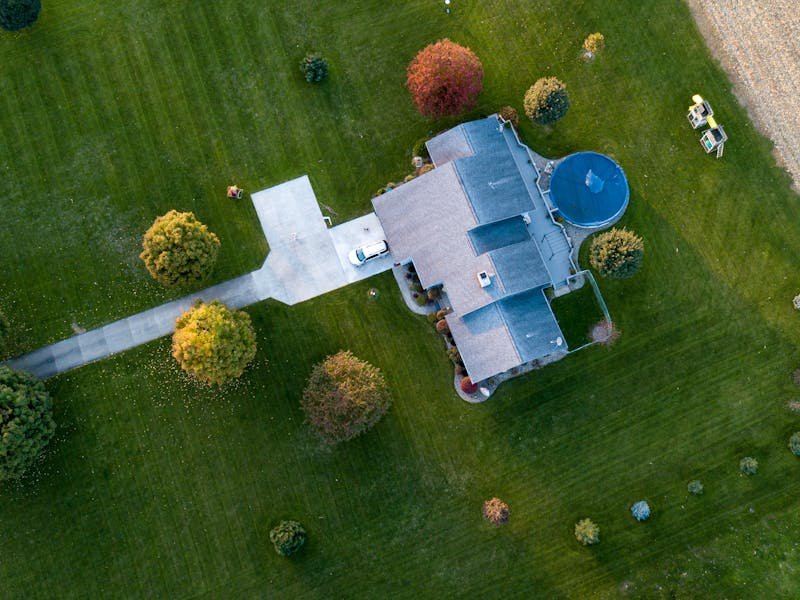
You got a solar quote last week. The salesperson walked the roof with a drone, the numbers looked good, and you were all set to sign. Then at the end of the meeting they said something like "oh, by the way, those three oaks on the south side are going to have to come down before we can install." Now you are sitting at your kitchen table trying to figure out whether you actually want to cut down mature shade trees to put panels on your roof, and what that is going to cost, and whether the installer is even right about needing to remove them.
I run a tree service in Huntsville and we get calls like this almost every week now, especially since TVA expanded the Green Power Providers program. Tree removal has quietly become one of the biggest hidden costs of going solar. I want to walk through what matters when you are deciding what trees to remove, what you can keep, and how to plan this so the whole project works.
Why solar installers get so worked up about shade
Shade is not a small problem for solar panels. It is the problem. A standard residential solar array made up of 20 to 25 panels is wired into what is called a string inverter, which means the panels are linked together electrically. When one panel gets shaded, the current dropping across that panel limits the output of every other panel in the string. One shaded panel can drop the performance of the entire array by 50 to 80 percent during that period of shade.
That is not an exaggeration. I have seen production reports where a single branch across two panels during morning hours cut daily production almost in half. The panels are not just "a little less efficient" in partial shade. They collapse.
Newer systems with micro-inverters or power optimizers on each panel handle shade better because each panel operates independently. But "better" does not mean "fine." A shaded panel still produces less power. The installer who said the oaks need to come down is working from the reality that your system only pays for itself if it produces near the numbers on the quote.
The four hour rule and why 10am to 2pm matters
The benchmark most solar installers in Huntsville use is that your roof needs at least four hours of direct, unobstructed sunlight per day, and those four hours need to fall between 10am and 2pm when the sun is strongest and most directly overhead. This is sometimes called the solar window.
You can have morning sun from 7am to 9am and afternoon sun from 4pm to 6pm and still have a bad solar roof if the midday hours are shaded. The sun delivers far more energy per hour at noon than it does at 7am. Those four hours in the middle of the day carry most of your annual production.
In Huntsville, the sun tracks from the southeast in the morning, through due south at solar noon (closer to 12:45pm here because of our position in the time zone), and into the southwest by late afternoon. Any tree tall enough to block that south to southwest arc during midday is a direct hit on production.
Which trees actually have to come down
Not every tree the installer points at truly needs to go. This is where a little knowledge saves you a lot of money.
The trees that almost always need removal are tall pines and tall oaks on the south or southwest side of the house, close enough that their canopy reaches over the roof or casts a shadow across it during midday. Loblolly pines are the worst offenders in Huntsville because they grow to 80 or 100 feet and have dense crowns near the top. A 90 foot pine 40 feet from the south side of your house is going to shade that roof all summer.
Wide spreading oaks are next. Water oaks, willow oaks, and white oaks all develop enormous canopies at maturity. A mature water oak can easily throw a 60 foot wide shadow. If that shadow crosses your roof between 10am and 2pm, it has to go or your solar math falls apart.
Trees on the north side of your house almost never need to come down. Their shadow falls away from your roof. Same with trees far enough east or west that their shadow only hits during early morning or late afternoon. I have talked a lot of homeowners out of cutting perfectly good north side trees because a solar salesperson waved at them during a site walk.
Alabama solar access laws (the short version)
California and some other states have solar access laws that protect a homeowner's right to sunlight and can restrict neighbors from growing trees that shade their panels. Alabama does not. We do not have solar easement statutes or solar rights legislation. That means if your neighbor has a 70 foot pine that is going to grow into your solar window five years from now, there is nothing legally you can do about it. You cannot force them to cut it. You cannot demand compensation when it eventually shades your panels.
This matters when you are planning. If the trees causing your shade problem are on your neighbor's property, you need to have that conversation before you spend $30,000 on solar. Some neighbors will cooperate, especially if you offer to pay for the removal. Others will refuse. If you are in a situation where neighbor trees are the core of your shade problem, think hard about whether solar makes sense for your specific property.
Before you cut anything, get a second solar opinion
This is the advice I give every homeowner who calls me about tree removal for solar. Before you pay to cut down mature trees, get a second quote from a different solar installer, and specifically ask them about these alternatives.
Micro-inverters or DC optimizers on each panel change the shade equation significantly. Panel placement can shift to avoid the worst of the shade. The array can be smaller than originally quoted, sized to the part of the roof that does get full sun. Sometimes the answer is a ground mount array in a sunny part of the yard rather than a rooftop system. Sometimes the answer is that solar is not the right fit for this particular house.
I have had homeowners call ready to cut six trees who, after a second solar quote, ended up cutting two. The savings on tree removal alone was $4,000 and they got a solar array that still made economic sense.
Timing the tree work inside the solar project
The right time to remove trees for a solar installation is after you have signed with your installer and you know the panel layout, but before the installer is on site. Most solar projects take eight to twelve weeks from signed contract to installation day, which gives you plenty of time to schedule tree work.
Do not wait until the installer shows up. Solar crews book out weeks in advance and if they arrive and cannot install because of shade issues that were not resolved, you will go to the back of their schedule. I have seen installs delayed by months because the homeowner was still trying to coordinate tree removal when the panels arrived.
On the other end, do not remove trees before you have a signed solar contract. If the project falls through for permitting, HOA, or financing reasons, you will have cut down mature trees for nothing.
Full removal or heavy pruning, how to tell the difference
Some trees can be saved with aggressive tree trimming rather than full removal. The question I ask homeowners is: how much of the canopy has to come off to clear your solar window?
If the answer is 10 or 20 percent, usually in the form of branches hanging over the roof or a few lateral limbs that extend into the southern sky, pruning is the right call. A certified arborist can crown raise, crown reduce, or selectively thin the tree in a way that preserves its health and shape while opening up your sunlight.
If the answer is 40 percent or more, or if the main trunk itself sits between your roof and the sun, pruning is a waste of money. You will be left with a disfigured tree that looks terrible, stresses out, and starts dropping limbs as it declines. In that case full tree removal is the honest answer. It is also usually cheaper in the long run because you avoid the cost of coming back every two years to re-prune a tree that is constantly growing back into your solar window.
What the tree removal actually costs
Here is what I see in the Huntsville market for solar related tree work in 2026.
A standard loblolly pine, 60 to 80 feet tall, in an open part of the yard: $600 to $1,000. Add another $200 to $400 if it is close to the house and requires rigging or a crane.
A tall pine, 90 to 110 feet, close to the house: $1,000 to $1,400. These are the pines that most often need to come down for solar and they are physically demanding jobs.
A mature water oak or willow oak, 50 to 70 feet tall with a wide canopy: $1,000 to $1,800 in an open area, $1,500 to $2,500 when it is close to the house or other structures.
A massive old white oak or post oak, the kind that predates the subdivision: $2,000 to $3,500 and sometimes more. These are multi day jobs with crane work.
Most solar projects I have worked on involve removing two or three trees. A realistic budget for the tree portion of a solar project in Huntsville is $1,500 to $5,000. I have seen it go higher when we are removing four or five mature oaks, and I have seen it as low as $800 when it was one dead pine that needed to come down anyway. For a more detailed breakdown of removal pricing in our area, see our guide on tree removal cost in Huntsville.
What to do about the stumps
A question I get a lot: can the solar installer just mount panels over the stump, or do I need to have it ground down?
The panels are on your roof, not on the ground, so the stump itself does not physically interfere with the install. But most homeowners grind the stumps anyway for three practical reasons. First, stumps attract termites, which you do not want near your house. Second, new shoots and sprouts will come up from many oak and some pine stumps for years, creating ongoing yard maintenance. Third, ground level stumps are mowing hazards and just look bad.
Expect to pay $150 to $400 per stump for stump grinding in the Huntsville area, depending on size. If you are removing three oaks and grinding all three stumps, that adds about $750 to $1,200 on top of the removal cost. Some homeowners skip the grinding to save money and deal with it a year or two later. That is a fine choice if you are trying to stay on budget.
The tax credit misconception
I want to spend a minute on this because I hear it constantly. The federal residential clean energy credit covers 30 percent of the cost of your solar system. The credit applies to the panels, the inverters, the wiring, the mounting hardware, the labor to install the system, and the permit fees tied to the install.
It does not cover tree removal. Even when the tree removal is absolutely required for the system to work, the IRS does not treat tree work as part of the qualified solar property. I have heard solar salespeople hint that "you can just add the tree work to the invoice and it is all deductible." That is bad advice. Do not do it. Your tax preparer will pull it out, and if you claim it and get audited, you are going to have a bad time.
Budget for tree removal as a separate, out of pocket expense. It is not part of the credit. It is part of what it costs to get your property ready for solar.
Huntsville specific notes on sun, seasons, and trees
A few things that are specific to putting solar on a roof in the Tennessee Valley.
Our sun angles favor south facing roofs strongly. At the latitude of Huntsville (about 34.7 degrees north), the sun sits high in the sky during summer and drops to about 32 degrees above the horizon at solar noon in late December. That low winter sun is the tricky part for tree shading because even a shorter tree can cast a long shadow across a roof in January.
TVA runs the Green Power Providers program and also a distributed solar program through local power companies like Huntsville Utilities and Athens Utilities. The economics of residential solar in our area depend on this interconnection working properly, which means the installer has to hit the production numbers they committed to in your contract. Shade that kills production is a direct hit on whether the system pays off.
The most common shade trees around Huntsville homes are loblolly pines (very tall, dense tops), water oaks (medium height, wide canopies), willow oaks (tall and wide), and sweetgums. All four are aggressive shaders of rooftops. Pecans and tulip poplars also show up on south sides of older homes, especially in neighborhoods like Huntsville, Blossomwood, and Hampton Cove where mature landscapes are the norm. Newer subdivisions in Madison and Harvest have smaller trees that rarely cause solar problems yet, but will in ten years if nobody plans ahead.
Best time of year to do the tree work
I get asked about timing a lot. Here is my honest take for solar prep tree removal in our area.
Winter (December through February) is the best time for most tree removal jobs. The ground is firm, the trees have no leaves so cleanup is lighter, and crews have more availability because storm calls are slower. If your solar install is scheduled for spring, aim for January or February.
Spring (March through May) is our busiest storm season. Wait times are longer and rain delays jobs for days at a time. Summer is doable but hot, and it is also peak solar install season, so coordinating tree crews and solar crews gets tricky. Fall (September through November) is the second best window with stable weather and easier scheduling.
Putting it all together
If I were starting a solar project today in Huntsville and there were trees in the way, here is what I would do. I would get two solar quotes, not one, and I would ask specifically about micro inverters and panel placement options that reduce how many trees have to come down. I would walk the property with a tree service before I signed the solar contract to get a realistic estimate for the tree work so I could budget the whole project accurately. I would schedule the tree removal for about a month before the solar install, not the week before. I would plan on stump grinding for any stumps near the house. And I would not try to write the tree removal off on my taxes as part of the solar credit.
Solar works great in north Alabama when the roof has good sun. But most Huntsville homes were built under shade trees for a reason, and solar and shade do not mix. Being honest with yourself about what has to come down, what can stay, and what it is going to cost gets the project off on the right foot.
If you are working through a solar project and need someone to walk the property and tell you straight what needs to come down versus what can be pruned, give us a call. We have done this enough in Huntsville and Madison County to give you a realistic read on the trees and a fair estimate on the work.