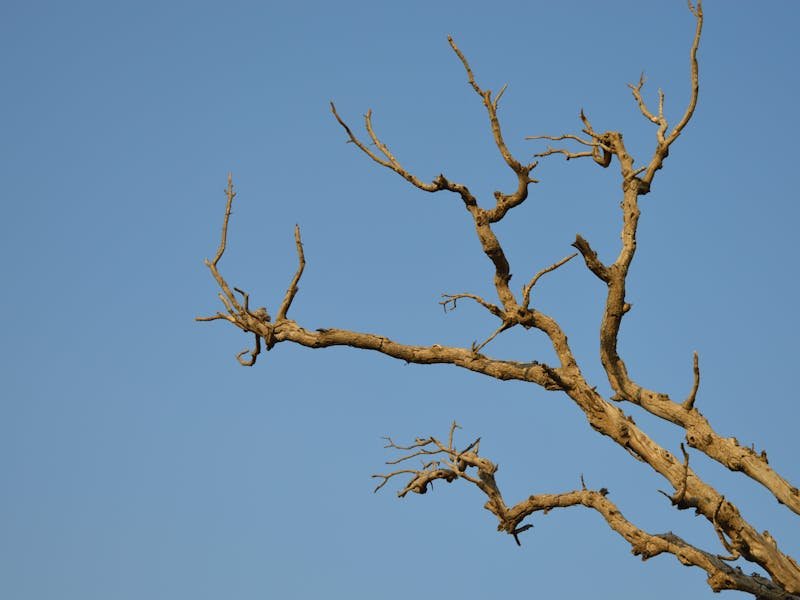
The short answer is winter. December through February is the best window for tree removal in Huntsville, and it is not particularly close. If you have a tree you know needs to come down and you have any flexibility on timing, schedule it for late January or February. You will pay less, your yard will hold up better, the work will be safer, and you will not have to wait three weeks for a crew to show up.
I have been running tree work in the Tennessee Valley for years, and I get this question constantly. People want to know if there is some secret cheap month. There kind of is. It is February. But there are also seasons where I would actively talk a homeowner out of removing a tree if it can wait, and that part is just as important. Below is the honest, season-by-season answer.
Why winter is the best time to remove trees in Huntsville
Winter wins on five separate fronts, and any one of them would be enough to recommend it. Combined, it is not really a debate.
No leaves means lighter weight and a smaller drop zone
A mature oak in full leaf can carry several thousand pounds of foliage. That weight is in the canopy, swinging around in the wind, and every branch we cut comes down heavier than it would in February. With no leaves, branches drop cleaner, the rigging is simpler, and we can get more wood down per cut.
It also shrinks the drop zone. With foliage, a falling limb spreads debris across a wider area as it crashes through other branches. Bare branches drop in tighter patterns. That matters when we are removing a tree close to a house, a fence, or your neighbor's property.
The ground holds up better
Alabama does not get hard frozen ground the way Minnesota does, but the soil is firmer in winter than during a wet spring. We bring heavy equipment onto your property to remove a tree, and that equipment leaves ruts on soft ground. Spring removals on saturated soil tear up lawns. Winter, especially after a few dry weeks, is when we can drive a bucket truck across your yard without leaving deep ruts. If you care about your lawn, this is a real consideration.
Trees are dormant and wildlife impact is minimal
Birds are not nesting in winter. Squirrels are quieter. Bats are mostly absent. When we cut a tree in February, we are very rarely interrupting an active nest or den. In May, we are sometimes finding three or four nests in a single mature tree, and that changes everything about how the work has to proceed. Dormant trees also seal wounds cleaner if you are pruning rather than fully removing.
Crew availability is wide open
Demand drops in winter. Storms slow down and homeowners stop thinking about yard projects, which means tree services have crews sitting idle. Idle crews are expensive to keep on payroll, so most companies (including ours) will quote tighter prices in January and February to keep work coming in. You will also get scheduled faster. In summer, a non-emergency removal might be three to four weeks out. In February, we can usually be there within a week.
You can actually see what we are working with
This is the one most homeowners do not think about, but it matters a lot for safety. With no leaves, we can see the tree's structure clearly. Every dead branch, every weak fork, every cavity. In summer, foliage hides everything and we have to feel our way up the tree, finding problems as we encounter them. Winter removals go faster because the planning is more accurate before we ever start cutting.
Spring tree removal (March through May)
Spring is the second most popular time for removals in Huntsville, mostly because homeowners notice tree problems when everything else is greening up and the dead tree in the back corner suddenly stands out. It is not a bad time to remove a tree, but it has tradeoffs.
The pros are real. The weather is pleasant for crews, which means efficient work. You can plant a replacement tree right away, which is the right window for getting a new oak or maple established before summer heat.
The cons are also real. Bird nesting season is in full swing from late March through July, and active nests of migratory species are protected under federal law. Wet ground after spring rain creates rutting problems. And in oaks specifically, sap is rising hard, which makes wounds bleed and creates oak wilt risk. Do not prune or wound oaks between April and October if you can help it.
Spring rates run at standard pricing. Not the discount of winter, but not the peak of summer either. If winter does not work for you, spring is a reasonable second choice.
Summer tree removal (June through August)
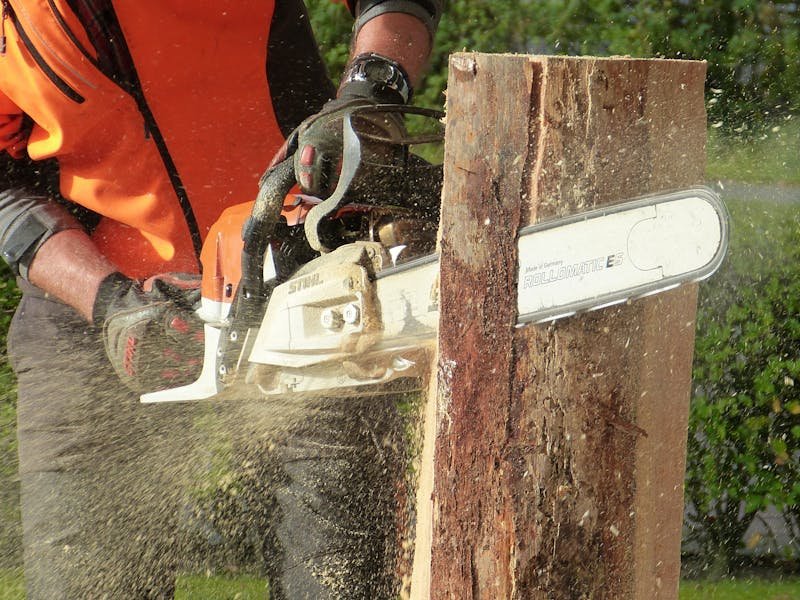
Summer is the worst time of year to remove a tree in Alabama if you have any choice in the matter. I want to be honest about this even though my company makes plenty of money on summer work.
The heat is brutal on crews. Adding 95 degrees with high humidity to already-demanding tree work makes it dangerous. Crews work shorter days, take longer breaks, and produce less per hour. That cost gets passed along to the homeowner.
Foliage is at its peak. Every branch weighs more, every cut produces more debris, and cleanup takes longer. A removal that would take six hours in February might take ten hours in July with the same crew. That is forty percent more labor on the bill.
Demand goes through the roof. Every thunderstorm in the Tennessee Valley produces a wave of emergency calls. Companies prioritize emergency work, non-emergency removals get pushed back three to four weeks, and prices climb to match the demand. Bird nesting also continues through early summer with the same federal protections.
For oak trees specifically, oak wilt transmission peaks in summer. Sap-feeding beetles carry the fungus from infected trees to fresh wounds on healthy ones. If you have any healthy oak nearby, freshly cut wood and the cut stump can attract beetles that then move on. Our oak trees Huntsville care guide has more detail. Summer pricing typically runs 20 to 40 percent above winter rates.
Fall tree removal (September through November)
Fall is the second-best time of year for tree removal, and in some years it is actually the best. The weather cools off, foliage starts dropping after the first frost in late October or early November, bird nesting is over, and storm season tapers down. Cooler temperatures make crews efficient and the ground firms up after summer dryness.
The one catch with fall is what I call the Christmas rush. Starting around mid-November, homeowners suddenly remember that a tree is leaning toward the house and decide they want it gone before the holidays. Phones ring nonstop in the first three weeks of December. If you can get your removal scheduled by early November, you avoid that bottleneck.
Fall pricing runs at standard rates with some flexibility late in the season. By the third week of November, most companies will offer small discounts to lock in work before the holidays slow things down. Our fall tree care guide for Huntsville covers what else to address during this window.
Emergency removal does not care about the calendar
Everything I just wrote assumes you have flexibility. If a tree fell on your house at 2 AM during a storm, none of this matters. You need emergency tree removal right now, and the calendar is irrelevant.
Same goes for trees that are actively dangerous. A leaning tree over your bedroom, a split trunk near power lines, a dead pine that could come down in the next storm. These do not wait until February. The seasonal pricing logic only applies to planned removals where the tree is stable enough to wait a few months. If you are not sure which category your tree falls into, get a hazard assessment from a licensed arborist before you make any timing decisions.
Huntsville and Alabama-specific timing considerations
National tree advice is fine, but Huntsville has its own seasonal patterns that change the math.
Oak wilt season runs April through October
Oak wilt is a fungal disease that kills oaks fast, and it is in north Alabama. The fungus spreads through root grafts between nearby oaks and through sap-feeding beetles that carry spores to fresh wounds. The beetles are active when daytime temperatures stay above 50 degrees, which in our area means April through October. If you have other oaks within 50 feet, fresh-cut wood and the cut stump can attract beetles that move on to your other trees. Best practice is to remove oaks in winter.
Dixie Alley storm season hits in spring
Huntsville sits in Dixie Alley, the secondary tornado corridor that runs across the southeastern United States. Severe weather peaks from March through May with a smaller second peak in November. If you have a tree you have been worrying about, getting it removed before March is a smart hedge against having it become an emergency in April. Our storm season tree preparation guide for Huntsville covers what to look at before spring storms start.
Hurricane remnants and ice storms
Gulf Coast hurricanes occasionally push remnants up into north Alabama in August and September. They are rarely catastrophic at our latitude, but the sustained winds finish off already-weakened trees. On the winter side, the Tennessee Valley does not get ice storms every year, but when we do, they cause more tree damage than tornadoes. The 2014 ice storm took down more trees in Madison County than any single weather event I can remember. If you have brittle species like Bradford pears, willow oaks, or silver maples, removing them in early winter before ice season is a reasonable strategy.
Removal price differences by season
Here is roughly how pricing breaks down across the year for a standard residential removal in Huntsville. These are general patterns, not guarantees.
Winter (December through February): 15 to 25 percent below summer peak. February is usually the cheapest single month. Crews are available, schedules are open, and most companies will negotiate.
Spring (March through May): standard rates. Demand picks up steadily through the spring as homeowners start tackling yard projects. Storm damage in April and May can spike short-term pricing.
Summer (June through August): peak pricing, 20 to 40 percent above winter rates. Heat, foliage, and storm demand all push prices up. July and August are the most expensive months for non-emergency work.
Fall (September through November): standard rates with mild discounts in late November. Some companies will discount to fill out their schedule before the holiday slowdown.
For a more detailed breakdown of what tree removal actually costs in our area, our Huntsville tree removal cost guide walks through the variables. The biggest factors are tree size, location relative to structures, and access for equipment, but the season is a real component too.
Permit and HOA timing considerations
The City of Huntsville does not require a permit to remove a tree on private residential property in most cases. Trees in the right-of-way (the strip of land between the sidewalk and the street) require coordination with the city. Trees that affect public utilities require notification.
HOAs are a different story. Many subdivisions in Madison County, especially newer ones in Hampton Cove, McMullen Cove, and parts of Madison, have covenants that require HOA approval before removing certain trees. The approval process can take two to six weeks depending on how often the architectural review committee meets. If you are planning a winter removal in February, you should be submitting paperwork in December.
If you are in an older neighborhood like Five Points, Twickenham, or Blossomwood, historic district rules may apply to mature trees. Always check before you schedule.

Endangered species, migratory birds, and nesting eagles
This rarely comes up, but when it does, it is important. The Migratory Bird Treaty Act protects nearly every native songbird, hawk, owl, and woodpecker in Alabama. Active nests with eggs or chicks cannot be disturbed, and that means tree removal has to wait or work around them.
In practice, this is mostly a spring and early summer issue. Our crews check every tree before any cut goes in. If we find an active nest of a protected species, we either delay the work two to four weeks until the chicks fledge or, if the tree is genuinely hazardous, contact U.S. Fish and Wildlife for guidance.
Bald eagles get extra protections, and there are eagle territories scattered around the Tennessee River and Wheeler Wildlife Refuge area. If you have an eagle nest on your property, there is a federal permitting process that can take months. Bat species are another consideration if you have a hollow tree, especially in early summer when maternal colonies have legal protections.
The "wait or remove now" decision tree
Here is how I would think through your specific situation.
Is the tree an active hazard? Leaning over a structure, split trunk, large dead branches over a driveway, root failure visible? Remove it now, regardless of season. The cost of waiting is the cost of the tree falling on something.
Is the tree a future hazard but currently stable? Dead but not leaning, dying but still upright, structurally compromised but holding for now? Schedule it for the next available winter window. If it is October, plan for January. If it is March, plan for late November.
Is the tree healthy but you want it gone for landscape reasons? Definitely wait for winter. There is no rush, prices will be lower, and the work will be cleaner.
Is the tree an oak you want to remove and it is currently April through October? Wait for late fall or winter unless there is a good reason not to. The oak wilt risk to nearby oaks is real.
Is the tree affecting an upcoming project, like a construction start date or a sale? Sometimes the calendar does not give you a choice. In that case, get the work done when you need it done, and just understand the seasonal pricing.
How to think about the timing for your situation
Most homeowners I talk to are not in a true emergency. They have noticed a tree that needs to come down and they are wondering when to schedule it. For that situation, my honest advice is to call us in late January, get on the schedule for February, and save 20 percent. The tree will still be there. The crew will be efficient. The bill will be smaller.
If you have a tree that is genuinely dangerous, do not wait. Storm season starts in March, and the cost of having a hazardous tree fail during a storm is far higher than the cost of removing it before that happens. We deal with too many "I should have taken it down last fall" calls every spring.
We work across Huntsville, Madison, Decatur, Athens, and the surrounding Madison County area year-round. We will give you an honest answer about whether your tree can wait or whether it cannot. If you have spring work to plan instead, our spring tree care guide covers what should get attention in March and April. The consultation is free and we will not push you to remove a tree that does not need to come down.