Spring in Huntsville is one of the most beautiful times of the year. The Dogwoods bloom along the streets of Twickenham, the Redbuds light up the woods on Monte Sano, and the Bradford Pears (well, the ones that have not been removed yet) put on their showy white display. But for homeowners, spring is also the most important season for tree care. What you do, or do not do, in the next few weeks sets the stage for how your trees perform all year long.
Winter in North Alabama is usually mild, but we still get our share of ice storms, freezing rain, and the occasional hard freeze that can damage trees. Throw in a late-season tornado or windstorm, and by the time March rolls around, your trees may have taken some hits that are not immediately obvious. Spring is the time to assess the damage, clean things up, and set your trees up for a healthy growing season.
Here is our complete spring tree care checklist for Huntsville homeowners. We have organized it roughly in the order you should tackle things, starting in late February and working through April.
Step 1: Post-Winter Damage Inspection
Before you do anything else, walk your property and really look at your trees. Winter damage is not always dramatic. Sometimes it is a crack in a branch that will not become apparent until the weight of full summer foliage causes it to split. Other times it is a subtle lean that developed after saturated soil let roots shift during a winter storm.
Here is what to look for during your spring inspection:
Broken or hanging branches. Check the canopy carefully for branches that cracked but did not fall. These are called "hangers" or "widow-makers" in the industry, and they can drop without warning when wind hits them or they take on the weight of new leaves. If you see hanging branches, call for professional pruning before someone parks under the tree or the kids start playing in the yard.
Cracks in trunks or major branches. Ice loading can cause vertical splits in trunks and branch unions. Run your eyes up and down the trunk looking for fresh cracks, especially at branch attachment points. V-shaped crotches (where two branches emerge at a narrow angle) are particularly vulnerable. If you find a significant crack, get a professional assessment before spring winds make it worse.
Changes in lean. Compare your trees to how they looked before winter. A tree that has developed a new lean, even a slight one, may have root damage from saturated soil or ice loading. This is especially common in areas with heavy clay soil like Jones Valley, South Huntsville, and Bailey Cove where the soil stays waterlogged for weeks during winter.
Root heaving. Check around the base of the tree for signs that roots have been pushed upward by freeze-thaw cycles. If you see soil cracking or lifting on one side of the root flare, the tree's anchor system may be compromised. This is more common with shallowly-rooted species like Silver Maple and some Pines.
Bark damage. Look for areas where bark has split, peeled, or cracked on the south and southwest sides of the trunk. This is called "sunscald" and it happens when warm winter sun heats the bark during the day and then rapid nighttime freezing kills the underlying tissue. Young, thin-barked trees like Maples, Dogwoods, and Fruit trees are most susceptible.
Step 2: Spring Pruning (Timing Matters)
Spring pruning in Huntsville requires some knowledge of species-specific timing. Get the timing wrong and you can remove flower buds, increase disease risk, or stress a tree at the worst possible moment. Here is the breakdown:
Late winter (January-February): Most shade trees. If you did not get to dormant-season pruning over the winter, you still have a narrow window in late February before sap starts flowing. Oaks, Maples, Elms, and most hardwoods can be pruned in late winter while still dormant. This is the ideal time for structural pruning, deadwood removal, and thinning.
After bloom: Spring-flowering trees. Dogwood, Redbud, Flowering Cherry, Saucer Magnolia, and Azaleas should only be pruned AFTER they finish blooming in spring. These trees set their flower buds on the previous year's wood. If you prune them before they bloom, you are cutting off this year's flowers. Wait until the petals drop, then prune as needed.
After bloom: Crepe Myrtles. This one gets its own bullet point because it is the most abused tree in Huntsville. Crepe Myrtles bloom on new wood, so they do not technically need spring pruning to flower. If you must prune, just remove crossing branches and dead wood. Do NOT commit "crepe murder" (cutting all branches back to stubs). Check our complete crepe myrtle guide for proper technique.
CRITICAL: Do NOT prune Oaks April through October. Oak Wilt is present in Alabama, and the fungal spores that spread it are carried by sap beetles that are most active from April through October. Any pruning wound on an Oak during this period is an invitation for infection. If your Oak needs pruning, get it done before the end of March or wait until November. Read more about this and other tree diseases in North Alabama.
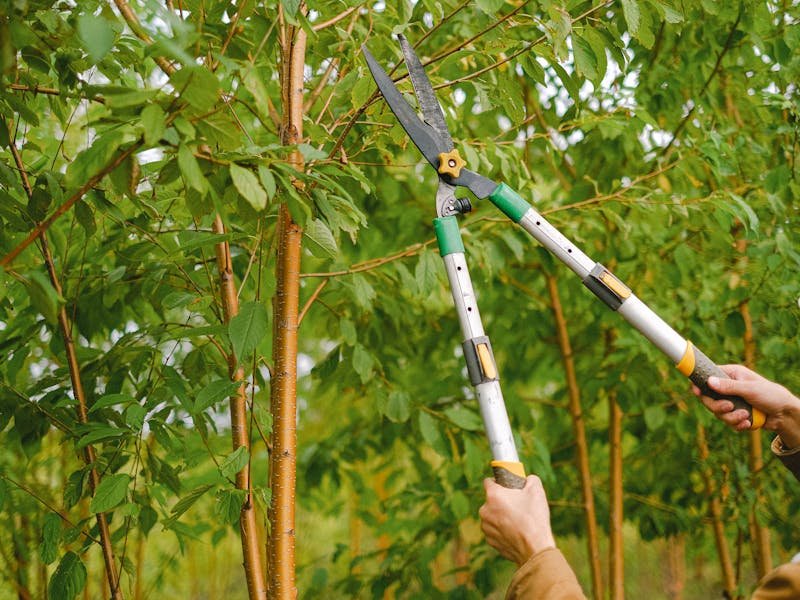
For any pruning work beyond small dead branches you can reach from the ground, we strongly recommend hiring a licensed professional. Improper pruning cuts can cause long-term damage that is far worse than leaving the tree alone. And working above your head with cutting tools is one of the most dangerous activities a homeowner can attempt.
Step 3: Fertilization and Soil Care
Spring is the optimal time to fertilize trees in Huntsville because the trees are just breaking dormancy and gearing up for their biggest growth push of the year. Nutrients applied now will be immediately available as roots become active.
When to fertilize: Late February through mid-March in Huntsville, as the soil temperature reaches about 55 degrees at a 4-inch depth. You can buy an inexpensive soil thermometer at any garden center, or just wait until you see Forsythia blooming in the neighborhood. That is nature's signal that the soil has warmed up enough.
What to use: A slow-release, balanced fertilizer (like 10-10-10 or 12-6-6) works well for most shade trees. Specialty tree fertilizers with a higher nitrogen ratio are also effective. Apply according to the package directions, distributing the fertilizer in a ring around the drip line of the canopy (not at the base of the trunk).
When NOT to fertilize:
- Newly planted trees in their first year (they need to focus energy on root development, not leaf growth)
- Trees showing signs of disease or stress (fertilizer forces growth that a sick tree cannot sustain)
- Trees in naturally rich, amended soil (over-fertilization is as bad as under-fertilization)
Soil testing: If you have never had your soil tested, spring is a great time to do it. The Alabama Cooperative Extension System offers free or low-cost soil testing through the Madison County Extension Office. A soil test will tell you exactly what nutrients your soil is lacking, so you can fertilize precisely instead of guessing. Most Huntsville soils are slightly acidic and low in phosphorus, which is good information to have.
Step 4: Pest and Disease Prevention
Spring is when insect populations explode and fungal diseases that lay dormant over winter come roaring back. Getting ahead of these issues in spring is far easier and cheaper than treating a full-blown infestation or infection in summer.
Eastern Tent Caterpillars. Those silky white webs that appear in the crotches of Cherry, Crabapple, and other flowering trees in March and April? Those are tent caterpillar colonies. They are more ugly than harmful to healthy trees, but heavy infestations can defoliate branches. Remove the webbing with a stick (or a blast from the garden hose) in early morning or evening when the caterpillars are inside the web. Do NOT burn them out, a shockingly common practice that damages the tree and risks fire.
Bagworms. If you have Eastern Red Cedars, Leyland Cypress, or Arborvitae, check for the spindle-shaped bags hanging from branches. These are bagworm pupae from last fall, and the caterpillars will emerge in late May to start feeding. Handpick and destroy bags now to prevent the next generation. A single bag can contain 500 to 1,000 eggs.
Scale insects and aphids. Watch for sticky residue on leaves (honeydew), black sooty mold on foliage, and clusters of tiny insects on the undersides of new leaves. These pests are most effectively treated in spring when populations are small. Horticultural oil or insecticidal soap applied before temperatures reach 85 degrees are effective organic treatments.
Fungal diseases. Huntsville's warm, humid springs create ideal conditions for fungal diseases like anthracnose, powdery mildew, and leaf spot. Good air circulation through proper pruning is the best prevention. If a tree had fungal issues last year, a preventive fungicide spray in early spring (before leaf-out) can be worthwhile. Consult an arborist for product recommendations specific to the disease and tree species.
Step 5: Mulch Refresh
Winter rains and natural decomposition typically knock mulch depth down by an inch or two. Spring is the time to refresh your tree mulch rings to the proper 3 to 4 inch depth. This is one of the simplest and most impactful things you can do for your trees.
Before adding new mulch, take a minute to do some housekeeping:
- Pull back any mulch that has crept against the trunk. This is extremely common and extremely damaging over time. Mulch piled against bark traps moisture and promotes rot, fungal infection, and bark decay. Maintain a 3-inch bare zone around the trunk.
- Check total depth. If existing mulch is still 3 inches or more deep, you do not need to add more. Just rake it to redistribute and break up any matted layers. Excessive mulch depth (more than 4 to 5 inches) can actually suffocate roots and repel water.
- Remove weeds and grass. Pull any grass or weeds that have grown into the mulch ring. The whole point of mulching is to suppress competing vegetation that steals water and nutrients from the tree's roots.
For detailed mulching technique, best materials for North Alabama, and the most common mistakes, check our complete mulching guide.
Step 6: Spring Planting Window
If you have been thinking about adding trees to your property, early spring is an excellent planting window in Huntsville, second only to fall. The ideal window is mid-February through mid-March, when soil temperatures are warming but daytime highs are still below 80 degrees consistently.
Spring planting gives trees the entire growing season to establish roots before their first winter, which is a significant advantage. The trade-off compared to fall planting is that spring-planted trees face the demands of summer heat before their root systems are fully developed, so they will need more attentive watering through July and August.
Some planting tips specific to Huntsville's spring conditions:
Buy local. Trees grown in Alabama nurseries are already adapted to our climate and soil conditions. They establish faster and survive better than trees shipped from out of state. Several excellent nurseries operate in the Huntsville area.
Plant at the right depth. The root flare (where the trunk widens at the base) should be at or slightly above soil grade. Planting too deep is the number one planting mistake and slowly suffocates the tree over several years. In clay soil, plant slightly high (1 to 2 inches above grade) because settling will occur.
Commit to watering. If you are planting a tree in spring, you are committing to watering it through its first summer. Period. No exceptions. See our summer watering guide for schedules and techniques. If you are not prepared to water consistently, wait and plant in fall instead.
For species recommendations, see our guides on fastest growing shade trees and best shade trees for Huntsville.
Step 7: Storm Preparation Assessment
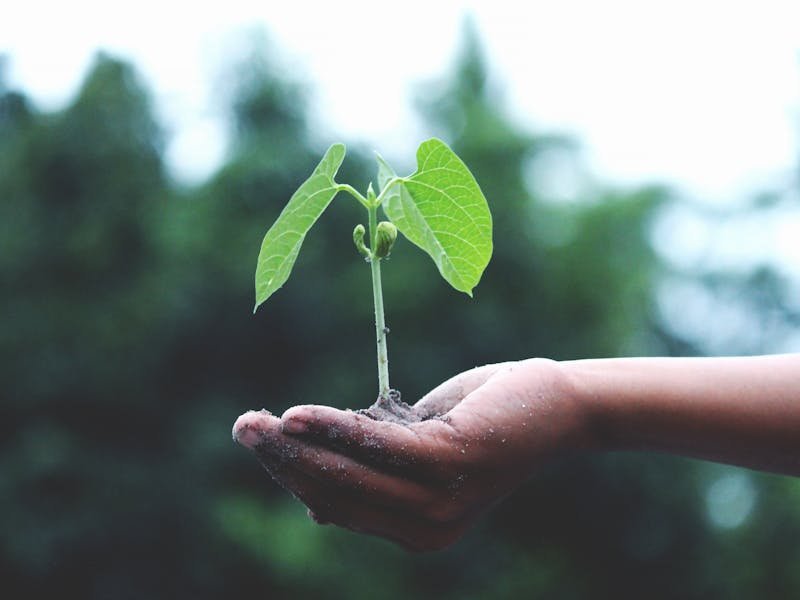
Huntsville sits squarely in Dixie Alley, and our severe weather season typically runs from March through June. Spring is the time to assess your trees' readiness for high winds, heavy rain, and the occasional tornado.
Priority items for storm preparedness:
Remove dead branches. Dead wood has zero flexibility. When wind hits it, it breaks. Period. Any dead branches larger than 2 inches in diameter should be removed before storm season. Pay special attention to dead branches over your roof, driveway, or areas where people spend time.
Thin dense canopies. Trees with overly dense canopies catch wind like a sail. Professional canopy thinning (removing 15% to 20% of interior branches) allows wind to pass through the canopy instead of pushing against it. This dramatically reduces the chance of a tree blowing over in straight-line winds.
Address structural weaknesses. V-shaped branch unions, co-dominant stems, and trees with multiple trunks are all more likely to split in storms. A professional arborist can install cables or bracing to support structurally weak trees, or may recommend removal if the risk is too high. Get a free assessment before storm season begins.
Check for root issues. Trees with compromised root systems are the ones that blow over. Signs include soil heaving on one side, exposed or damaged roots from construction or mowing, and a lean that has worsened over time. If the root system is compromised, no amount of canopy work will save the tree in a severe storm.
For a complete guide to storm readiness, read our storm season tree preparation guide.
Step 8: Schedule a Professional Spring Inspection
Even if everything looks fine to your eye, spring is the best time to have a professional arborist walk your property and evaluate your trees. Here is why:
Professional arborists are trained to spot problems that homeowners miss. Internal decay, early-stage diseases, subtle structural defects, and root zone issues are all things that look normal from the ground but indicate serious problems developing below the surface. A trained eye catches these issues early, when they are cheaper and easier to address.
A typical spring tree inspection from our team includes:
- Visual assessment of all trees on the property
- Identification of dead, diseased, or structurally weak branches
- Root zone evaluation for signs of damage or disease
- Species-specific recommendations for pruning timing and technique
- Storm readiness assessment with prioritized recommendations
- Pest and disease identification with treatment options
The inspection is free and comes with no obligation. We would rather tell you your trees are healthy and you do not need us than have you call us in July with a tree emergency that could have been prevented in March.
Call Huntsville Tree Pros at (256) 555-0123 or request your free spring inspection today. We serve homeowners across Huntsville, Madison, Decatur, Athens, and the entire Tennessee Valley.
Frequently Asked Questions
Most trees should be pruned in late winter before spring growth begins, typically late January through mid-February. Spring-flowering trees like Dogwood and Redbud should be pruned immediately after blooming. Do NOT prune Oaks from April through October to prevent Oak Wilt spread.
Yes, early spring (late February to March) is a good time. Use a slow-release balanced fertilizer like 10-10-10. Apply in a ring around the drip line, not at the trunk. Do not fertilize newly planted trees in their first year or stressed trees.
Watch for Eastern Tent Caterpillars, Bagworms, aphids, scale insects, and Japanese Beetles starting in late May. Spring is also when fungal diseases like anthracnose and powdery mildew begin spreading in Huntsville's warm, humid conditions.
You can safely plant container-grown trees from late February through April. The ideal window is mid-February to mid-March before temperatures consistently exceed 80 degrees. Earlier planting gives more time for root establishment before summer.
By mid-March, most deciduous trees should show swollen buds or early leaf growth. If no bud activity by early April, perform a scratch test: scratch bark on a young branch. Green tissue underneath means alive, brown and dry means dead.
Yes, spring is a great time. Top off to 3 to 4 inches total depth, pull mulch 3 inches from the trunk, and extend the ring as wide as practical. Do not pile new mulch on top of excessively deep existing mulch.