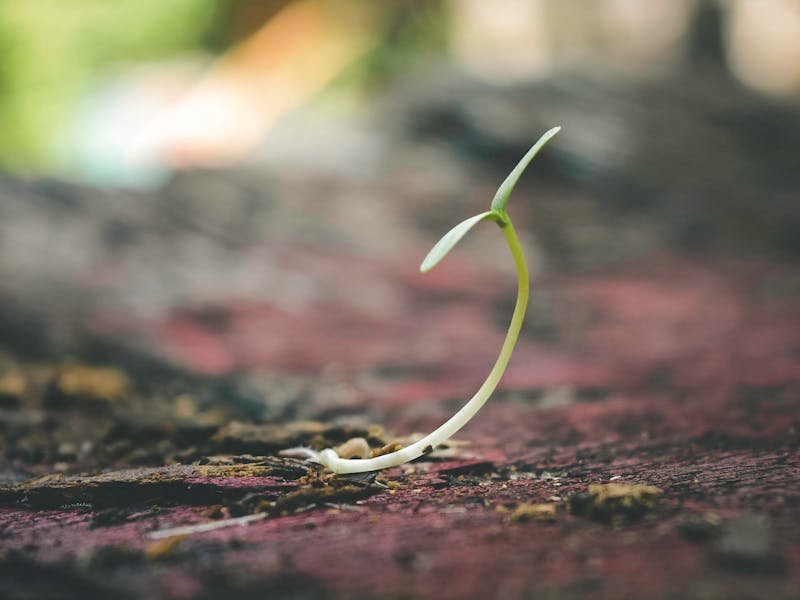
There is nothing quite like sitting on your porch on a scorching Huntsville afternoon, looking out at a patch of bare, sun-blasted yard, and wishing you had shade. We get it. When temperatures hit 95 degrees in July and August and the humidity makes it feel like 105, shade is not a luxury, it is a survival strategy. And if you have just built a new home in Hampton Cove, cleared a lot in Madison, or moved into a newer subdivision in Meridianville, chances are your yard is a blank canvas with zero shade to speak of.
The good news? Huntsville's climate is exceptionally kind to trees. Our long growing season, typically around 200 frost-free days, combined with an average of 54 inches of rain annually means trees can put on serious growth here compared to other parts of the country. Some species in our area will add 3 to 5 feet of height every single year.
But here is what most people get wrong. They either plant a species that is not suited for North Alabama's clay soil, or they pick something that grows fast but falls apart in the first ice storm or tornado. We have seen it hundreds of times. Silver Maples that split right down the middle during a thunderstorm. Bradford Pears that shatter like glass when they hit 15 years old. Choosing a fast-growing tree is not just about speed, it is about picking something that will be fast AND strong AND well-adapted to life in the Tennessee Valley.
Below are our top 10 recommendations based on decades of working with trees across Huntsville, Decatur, Athens, and surrounding communities. Every species on this list grows quickly, handles our clay soil, survives our storms, and looks great doing it.
1. Tulip Poplar (Liriodendron tulipifera)
Growth rate: 3 to 5 feet per year
Mature height: 70 to 90 feet
Mature spread: 35 to 50 feet
Best for: Large lots and rural properties
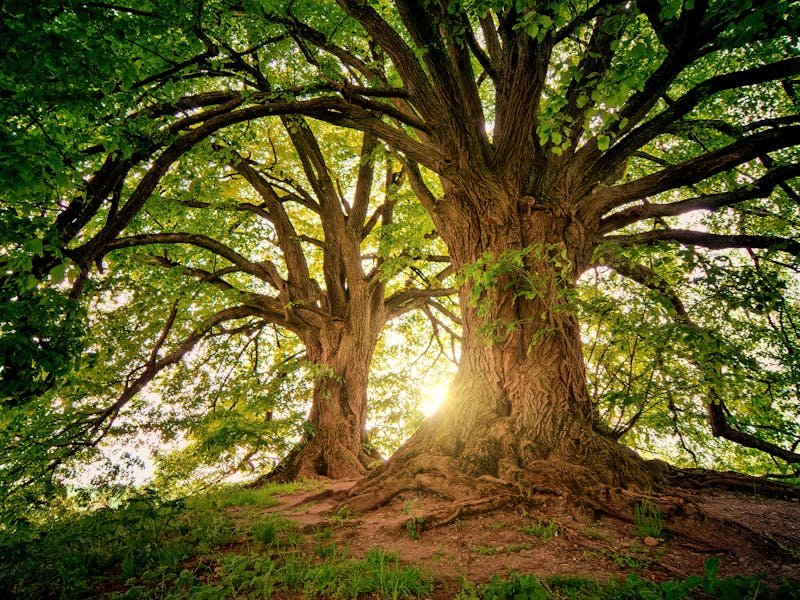
The Tulip Poplar is Alabama's state tree, and for good reason. It is one of the tallest hardwoods in the eastern United States and grows at a pace that borders on astonishing. We have seen young Tulip Poplars in Jones Valley and along Monte Sano put on 4 feet of growth in a single season with adequate rain. The trunk stays straight and tall, and the wood is surprisingly strong for how fast it grows.
The distinctive tulip-shaped flowers bloom in late spring and produce a gorgeous display of yellow-green petals with orange accents. The fall color is a clear, buttery yellow that is hard to beat. On the practical side, Tulip Poplars develop a deep root system that handles our storms well, and they tolerate clay soil without complaint.
The downside? They get big. Really big. If you have a standard subdivision lot, a Tulip Poplar may eventually dominate the entire yard. Plant it at least 25 feet from your house and keep it away from power lines. This is a tree for people who have the space and want shade NOW.
2. Autumn Blaze Maple (Acer x freemanii)
Growth rate: 3 to 5 feet per year
Mature height: 40 to 55 feet
Mature spread: 30 to 40 feet
Best for: Suburban yards, front yard shade
The Autumn Blaze Maple is a hybrid between Red Maple and Silver Maple, and it takes the best qualities of both parents. You get the blazing red fall color of the Red Maple with the fast growth rate of the Silver Maple, but with significantly stronger branch structure than a straight Silver Maple. We plant more Autumn Blaze Maples in the Huntsville area than almost any other species, and for good reason.
This tree establishes fast and tolerates our clay soil, heat, and occasional drought. It grows into a nice oval shape naturally without a lot of corrective pruning. Within 5 years of planting, you will have meaningful shade. Within 10 years, you will wonder how your yard ever lived without it.
One note: Autumn Blaze Maples have a somewhat shallow root system, so plant them at least 15 feet from sidewalks and driveways to avoid future heaving issues. Also, plan for professional trimming every 3 to 5 years to maintain good structure.
3. Shumard Oak (Quercus shumardii)
Growth rate: 2 to 3 feet per year
Mature height: 50 to 60 feet
Mature spread: 40 to 60 feet
Best for: Long-term shade, property value
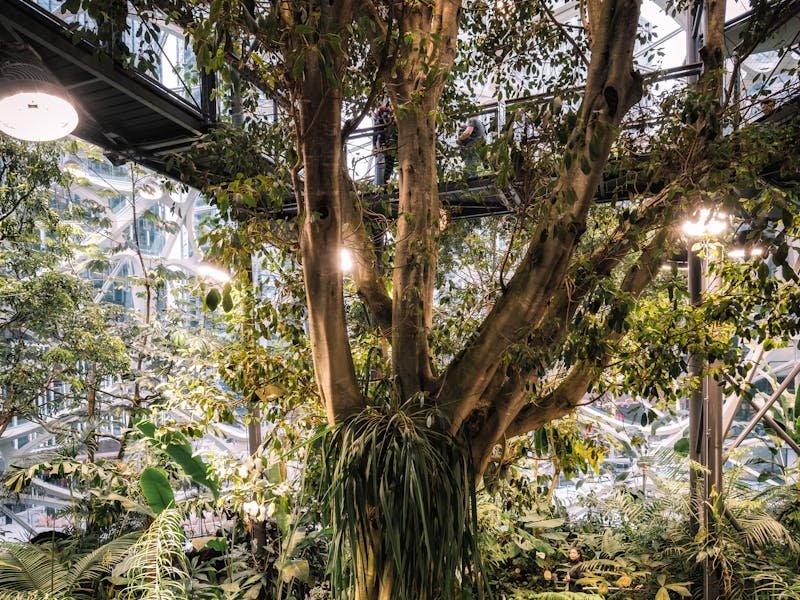
If you want the majesty of a Red Oak without the acorn mess of a Water Oak, the Shumard is your tree. It is native to North Alabama and thrives in our heavy clay without hesitation. While not quite as fast as a Tulip Poplar, 2 to 3 feet per year is still excellent for an oak, and the strength of the wood is in a completely different league.
Shumard Oaks are one of the most storm-resistant trees we work with in the Huntsville area. The deep taproot anchors it firmly, and the branch structure is naturally well-spaced. We rarely see storm damage on healthy Shumard Oaks unless a tornado is directly involved. The fall color is a deep, rich red that rivals any maple.
This is the tree we recommend to homeowners who are thinking 20 to 30 years ahead. A mature Shumard Oak can add $10,000 to $20,000 to your property value and provide shade that lasts generations. It is worth the slightly slower start when you consider the payoff.
4. River Birch (Betula nigra)
Growth rate: 2 to 3 feet per year
Mature height: 40 to 70 feet
Mature spread: 25 to 35 feet
Best for: Wet spots, clay soil, visual interest year-round
River Birch is practically a requirement in North Alabama landscaping, and for good reason. This native tree absolutely loves our wet, heavy clay soil that kills lesser species. If you have that low spot in your yard where water sits after every rain, a River Birch will drink it up and thank you for it.
The peeling, cinnamon-colored bark provides year-round visual interest, and the delicate leaves create a dappled shade that is perfect for understory plantings. River Birch is often planted in multi-stem clumps of 3 trunks, which creates a dramatic specimen that fills space quickly. We see beautiful specimens throughout Five Points, Blossomwood, and older South Huntsville neighborhoods.
The main drawback is leaf and catkin litter. River Birch drops something almost year-round: catkins in spring, small leaves in fall, and bark shreds throughout the year. If you are particular about a pristine lawn, be prepared for regular cleanup.
5. Bald Cypress (Taxodium distichum)
Growth rate: 2 to 3 feet per year
Mature height: 50 to 70 feet
Mature spread: 20 to 30 feet
Best for: Wet areas, narrow spaces, unique appearance
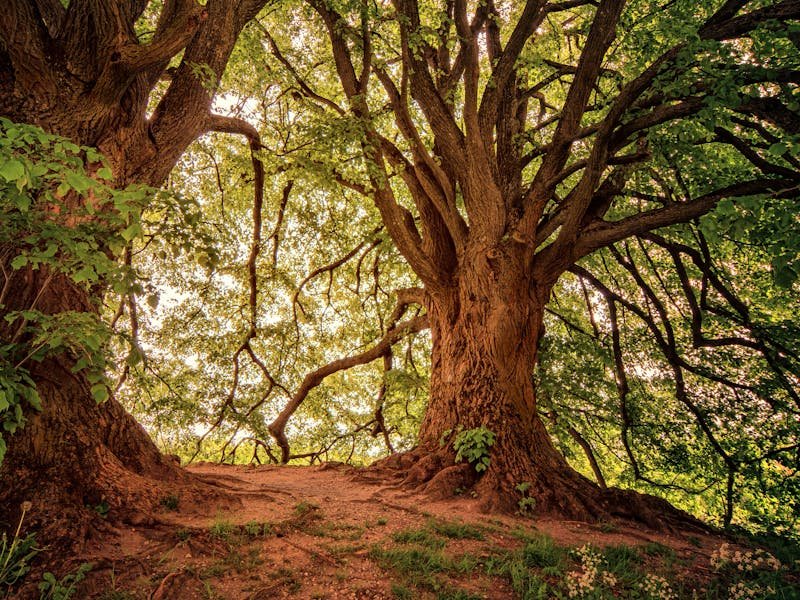
Most people think of Bald Cypress as a swamp tree, but it grows perfectly well in average yard conditions, and even handles dry spells once established. It is a deciduous conifer, meaning it has needle-like foliage that turns a beautiful coppery-orange in fall before dropping. The narrow, pyramidal shape makes it excellent for tight spaces where a broad-spreading tree would be too much.
What really sets Bald Cypress apart is its near indestructibility. We have seen Bald Cypress trees survive everything Huntsville weather can throw at them: ice storms, tornados, flooding, drought. The wood is naturally rot-resistant, and the tree has virtually no serious pest or disease problems in our area. It is as close to a plant-it-and-forget-it tree as you will find.
One thing to be aware of: Bald Cypress can develop "knees" (root protrusions) in wet soil, which can interfere with mowing. In normal yard conditions, knees are less common but still possible. Plant at least 15 feet from pavement and structures.
6. Willow Oak (Quercus phellos)
Growth rate: 2 to 4 feet per year
Mature height: 40 to 60 feet
Mature spread: 30 to 40 feet
Best for: Street trees, medium to large yards, dense shade
Willow Oak is one of the most popular shade trees in the Southeast for a reason. It grows fast for an oak, has a graceful oval shape, and provides exceptionally dense shade. The small, willow-shaped leaves are less of a cleanup headache than the large leaves of Red or White Oaks, and they break down quickly in the lawn.
We see Willow Oaks lining streets throughout Twickenham and the older Huntsville neighborhoods, and many of those trees are 60 to 80 years old and still going strong. They tolerate urban conditions, compacted soil, and heat remarkably well.
The caveat with Willow Oak is the small acorns. They produce a heavy crop every 1 to 2 years, and the tiny acorns can be slippery on driveways and sidewalks. They are also a favorite food for squirrels, which can be either a pro or a con depending on your perspective.
7. Red Maple (Acer rubrum)
Growth rate: 2 to 3 feet per year
Mature height: 40 to 60 feet
Mature spread: 25 to 35 feet
Best for: Front yards, color, medium lots
Red Maple is native to North Alabama and one of the most reliable shade trees for our area. It adapts to almost any soil condition, from dry upland to wet bottomland, and grows at a respectable clip. The fall color is the star of the show: brilliant scarlet reds that light up neighborhoods across Huntsville in October and November.
For homeowners in Bailey Cove, Weatherly Heights, and similar medium-lot neighborhoods, Red Maple is an excellent choice because it provides dense shade without getting as enormous as a Tulip Poplar or Shumard Oak. The cultivar 'October Glory' is particularly popular in our area for its consistent, late-season red color.
Maintenance-wise, Red Maples benefit from structural pruning when young to develop a strong central leader. They can develop included bark unions if left unpruned, which increases storm damage risk down the road. Invest in proper early training and you will have a tree that stands up to decades of Alabama weather.
8. Chinese Pistache (Pistacia chinensis)
Growth rate: 2 to 3 feet per year
Mature height: 25 to 35 feet
Mature spread: 25 to 35 feet
Best for: Small to medium yards, fall color, heat tolerance
If you are looking for a medium-sized shade tree that can handle the worst of Huntsville's summer heat, Chinese Pistache is hard to beat. This tree thrives in hot, dry conditions and actually performs better in our climate than in cooler regions. It has outstanding fall color, ranging from bright orange to deep red, and a nice rounded shape that requires minimal pruning.
Chinese Pistache is an excellent choice for the front yards of homes in newer subdivisions in Harvest, Owens Cross Roads, and Monrovia where lots are smaller and a 70-foot Tulip Poplar would be overkill. It stays proportional to a typical suburban yard and does not create the root problems that larger species can.
The only downside is that it can be slow to establish in its first year. Give it extra water the first two summers, and by year three it will take off and start growing 2 to 3 feet per year without any coddling.
Planting Tips for Huntsville's Clay Soil
Having worked with trees in North Alabama's notorious red clay for years, here are the practical tips that actually matter when planting fast-growing shade trees:
Dig wide, not deep. The biggest mistake homeowners make is digging a deep, narrow hole in clay soil. This creates a "bathtub" that fills with water and drowns roots. Instead, dig the hole 2 to 3 times wider than the root ball but no deeper than the root ball itself. The top of the root flare should be level with or slightly above the surrounding soil grade.
Amend at the edges. Mix compost into the native soil at about a 25/75 ratio when backfilling. You want the roots to transition into the native clay eventually, so do not create a pocket of perfect soil surrounded by an impenetrable clay wall. The roots need to learn to grow into the clay, and a gradual transition encourages that.
Mulch properly. Apply 3 to 4 inches of hardwood mulch in a wide ring around the tree, starting 3 inches from the trunk and extending to the drip line if possible. Do not build a mulch volcano against the trunk, as this traps moisture against the bark and invites disease and rot. Check out our complete mulching guide for more details.
Water deeply the first two years. Fast-growing trees need consistent moisture to maintain their growth rate. Plan to give a newly planted tree 15 to 25 gallons of water per week during its first two summers in Huntsville. A slow-drip bag or soaker hose running for 30 to 45 minutes twice a week is the most efficient approach.
Do not fertilize the first year. The tree's energy needs to go into root growth, not leaf production. Let it settle in for a full growing season before applying fertilizer the following spring. After that, a slow-release balanced fertilizer in early spring is all most shade trees need.
Trees to Avoid: Fast Growers That Cause Problems
We would be doing you a disservice if we only told you what to plant. Just as important is knowing what NOT to plant. These species grow fast but create serious problems in Huntsville:
Bradford Pear (Callery Pear). We have written an entire article about why Bradford Pears need to go. They split apart at 15 to 20 years, are now classified as invasive in Alabama, and their weak branch structure makes them a liability in storms. If you have one, we strongly recommend having it removed and replaced with any species on this list.
Silver Maple. While it grows at 3 to 5 feet per year, Silver Maple has notoriously brittle wood that snaps in storms. The aggressive, shallow root system invades sewer lines, lifts sidewalks, and makes mowing a nightmare. We remove more damaged Silver Maples than almost any other species after severe weather events.
Mimosa (Silk Tree). Gorgeous flowers, terrible tree. Mimosa is invasive, short-lived (15 to 20 years), susceptible to a fatal wilt disease that is present in Alabama, and drops seed pods everywhere. It also attracts webworms. Just say no.
Leyland Cypress. Not technically a shade tree, but so many people plant it for screening that it deserves mention. Leyland Cypress grows fast but rarely lives past 20 years in Alabama due to canker diseases. It also grows so top-heavy that it topples over in ice storms. We remove fallen Leylands every winter.
Empress Tree (Paulownia). Grows absurdly fast, sometimes 10 feet in a single year, but the wood is incredibly weak, it is highly invasive, and it produces a mess of huge leaves and seed pods. Several states are considering banning it.
Spacing and Placement Strategy
Where you put your shade tree matters as much as which species you choose. Here is a strategic approach to placement for Huntsville homes:
South and west sides first. Plant your shade trees on the south and west sides of your home for maximum energy savings. Afternoon sun from the west is the hottest and most energy-intensive to cool against. A well-placed shade tree on the west side of your home can reduce cooling costs by 20% to 35%.
Consider mature size. This seems obvious, but most people underestimate how big their tree will get. A Tulip Poplar planted 10 feet from the house will be a removal job in 15 years. Use the mature spread measurements above and add 5 feet as a buffer. Your future self will thank you, and so will the next homeowner.
Watch for utilities. Before you dig, call 811 to have underground utilities marked. And look up. If there are overhead power lines, choose a species that tops out below 25 feet at maturity, like Chinese Pistache, or plant far enough from the lines that the mature canopy will not interfere. Our article on trees near power lines covers this in detail.
Plan for your neighbor. Your beautiful shade tree's roots do not stop at the property line. Be considerate of neighboring structures, driveways, and gardens. A tree planted 5 feet from the fence line might create root issues on your neighbor's side in 10 years. Give it room.
Group plantings for impact. Instead of scattering individual trees, consider planting 2 to 3 trees in a grouping with varied species. A River Birch, a Shumard Oak, and a Red Maple planted 15 to 20 feet apart create a natural-looking grove that provides shade more quickly than a single tree and offers multi-season visual interest.
How Long Until You Actually Get Shade?
This is the question everyone really wants answered. Here is a realistic timeline based on planting a typical nursery tree (2 to 3 inch caliper, 10 to 14 feet tall at planting):
Year 1 to 2: The tree establishes its root system. Top growth may be minimal, maybe 1 to 2 feet. This is normal. The tree is investing energy underground. Do not panic if it does not seem to be growing much above ground.
Year 3 to 5: Growth accelerates noticeably. Fast-growing species like Tulip Poplar and Autumn Blaze Maple will be adding 3 to 4 feet per year. The canopy starts to spread. You will have a tree that is 20 to 25 feet tall with a canopy that is starting to cast meaningful shade in the late afternoon.
Year 5 to 8: This is when you start enjoying real shade. The canopy is 15 to 25 feet wide depending on species. You can sit under the tree and feel a noticeable temperature difference. Your air conditioning bills start dropping during Huntsville's brutal summers.
Year 10 and beyond: The tree is a significant presence in the landscape. Most fast-growing species are 30 to 45 feet tall by year 10 with substantial canopy coverage. Neighbors start asking what species you planted. Your initial patience has paid off.
The key takeaway? The best time to plant a shade tree was 10 years ago. The second best time is this fall. Every year you wait is a year of shade you will never get back.
Frequently Asked Questions
The Tulip Poplar is one of the fastest growing shade trees in Huntsville, adding 3 to 5 feet per year in good conditions. It is also Alabama's state tree and thrives naturally in our Zone 7b climate. Other fast growers include Autumn Blaze Maple (3-5 feet/year) and Sawtooth Oak (3-4 feet/year).
Fast-growing shade trees in Alabama typically add 2 to 5 feet of height per year depending on species, soil conditions, water availability, and sunlight. Huntsville's long growing season (about 200 frost-free days) and regular rainfall give trees an advantage over many other regions. Most fast-growing species will provide meaningful shade within 5 to 8 years of planting.
Several fast-growing trees handle Huntsville's heavy red clay soil well, including Willow Oak, River Birch, Bald Cypress, Red Maple, and Tulip Poplar. These species tolerate the poor drainage and compaction typical of North Alabama clay. Amending the planting hole with compost and mulching heavily helps any species establish in clay soil.
As a general rule, plant shade trees at least 15 to 25 feet from your home depending on the species' mature canopy spread. Large trees like Tulip Poplar or Shumard Oak need 25 or more feet of clearance. Medium trees like River Birch or Autumn Blaze Maple can be planted 15 to 20 feet away. Always consider underground utilities, septic systems, and foundation proximity.
Fall (October through early December) is the best time to plant shade trees in Huntsville. The cooler air temperatures reduce transplant stress while the soil remains warm enough for root growth. Trees planted in fall have several months to establish roots before the demands of summer heat. Early spring (February to March) is the second best window.
Some fast-growing trees do have weaker wood that is more prone to storm damage. Silver Maple, Bradford Pear, and Leyland Cypress are notorious for splitting in Huntsville's severe weather. However, not all fast growers are weak. Tulip Poplar, Shumard Oak, and Bald Cypress grow quickly while maintaining strong wood structure. Choosing the right species is key in Dixie Alley.
Ready to Plant? Let Us Help
Choosing and planting the right shade tree is an investment that pays dividends for decades. But it starts with the right species in the right spot, planted correctly in Huntsville's challenging clay soil.
Need advice on which tree is best for your property? Want help removing dead trees or grinding old stumps to make room for new plantings? We offer free on-site consultations and can recommend the best shade trees for your specific lot, soil conditions, and goals.
Call Huntsville Tree Pros at (256) 555-0123 or request a free estimate today. Whether you need tree removal to clear space or just want expert planting advice, we are here to help homeowners across Huntsville, Madison, Decatur, and the entire Tennessee Valley.