Every summer in Huntsville, the same thing happens. The heat settles in around late May, the humidity cranks up, and for the next four months your air conditioning runs almost nonstop. By the time you open your Huntsville Utilities bill in July or August, you are staring at a number that makes you wince. Two hundred dollars. Three hundred. Sometimes more, depending on the size of your home and how hard your system has to work to keep up with those 95-degree days and tropical humidity levels.
But have you ever noticed that some homes in your neighborhood seem to stay cooler than others? The houses tucked under big oak canopies in Blossomwood or Twickenham versus the ones sitting fully exposed to the sun in newer subdivisions? That is not a coincidence. That is the power of trees doing what they have done for millions of years: moderating temperature, blocking solar radiation, and creating microclimates that are significantly cooler than the surrounding environment.
The U.S. Department of Energy and the USDA Forest Service have studied this extensively, and the numbers are impressive. Properly placed shade trees can reduce home air conditioning costs by 25 to 40 percent. They can reduce winter heating costs by 10 to 20 percent when combined with strategic windbreak planting. For a typical Huntsville household, that translates to real money, potentially $500 to $1,500 or more per year in energy savings, year after year, for decades.
In this guide, we are going to break down exactly how trees save energy, where to place them for maximum benefit in Huntsville's climate, which species work best in our Zone 7b growing conditions, and how to maintain your trees so they keep delivering those savings for generations.
The Science: How Trees Reduce Your Energy Costs
Trees reduce energy consumption through three primary mechanisms, and understanding each one helps you make smarter decisions about which trees to plant and where to plant them.
Direct Shade
This is the big one for Huntsville. When a tree canopy shades your roof, walls, and windows, it blocks solar radiation from heating those surfaces. The difference is dramatic. An unshaded dark roof can reach surface temperatures of 150 to 170 degrees Fahrenheit on a summer afternoon. A shaded roof stays 20 to 40 degrees cooler. That heat reduction translates directly into less work for your air conditioning system and lower electricity bills.
The effect extends beyond the roof. Shaded walls absorb far less heat. Shaded windows stop the greenhouse effect that happens when sunlight streams through glass and heats the interior of your home. Even shading your outdoor air conditioning unit can improve its efficiency by 5 to 10 percent because the unit does not have to work against the heat of direct sun.
Evapotranspiration
Trees cool the air around them through a process called evapotranspiration. The tree draws water up from the soil through its roots and releases it as water vapor through its leaves. This process absorbs heat from the surrounding air, essentially working like a natural evaporative cooler. A single large, mature tree can transpire 40 to 100 gallons of water per day during the growing season, which has the cooling equivalent of roughly 10 room-sized air conditioners running for 20 hours.
This is why walking under a big tree canopy on a hot Huntsville summer day feels noticeably cooler, not just because of the shade but because the air itself is actually several degrees cooler. Studies have found that the air temperature under a mature tree canopy can be 6 to 10 degrees Fahrenheit lower than the surrounding unshaded area.
Wind Modification
Trees act as natural windbreaks, and this matters for energy costs in both summer and winter. During Huntsville's cold months, November through March, winds from the north and northwest push cold air against your home, increasing heat loss through walls, windows, and any gaps in your building envelope. Evergreen trees planted as a windbreak on the north and northwest sides of your home can reduce wind speed by 50 to 70 percent, which translates to a 10 to 20 percent reduction in heating costs.
In summer, trees can channel and direct breezes in beneficial ways. A well-designed landscape can funnel cooling breezes toward your home while blocking hot, dry winds. This is less about energy bill reduction and more about outdoor comfort, but it also reduces the urge to crank the AC down another couple of degrees.
Optimal Tree Placement for Huntsville Homes
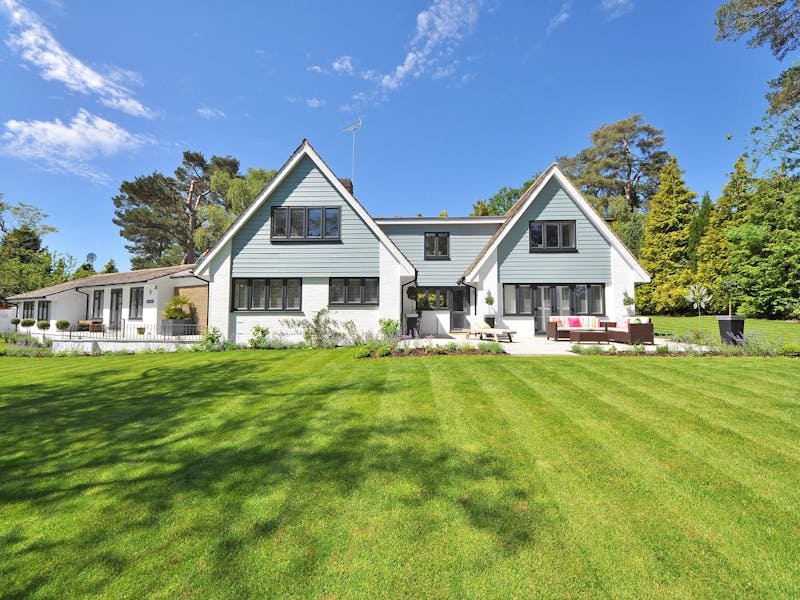
Where you place trees around your home matters just as much as what species you plant. In Huntsville, our specific latitude, sun angle, and prevailing wind patterns determine the optimal placement strategy. Here is a side-by-side breakdown.
West and Southwest: Your Priority
The west and southwest sides of your home receive the most intense solar heat during summer afternoons, which is exactly when temperatures peak and your AC is working hardest. In Huntsville, the sun is at its most intense between about 2:00 PM and 6:00 PM in summer, and it is pounding on your west-facing walls, windows, and roof during that entire window.
Plant your largest shade trees on the west and southwest sides of your home. At maturity, these trees should shade both the roof and the west-facing walls during afternoon hours. This single placement strategy delivers the biggest energy savings of any tree positioning. If you can only plant one or two new trees, put them on the west side.
East Side: Morning Sun Block
The east side of your home gets the morning sun, which is less intense than afternoon sun but still contributes to heat gain, especially in bedrooms that face east. Trees on the east side help keep the house cooler during morning hours and reduce the heat load that your AC has to overcome as the day progresses.
South Side: Midday Protection
This is where species selection really matters. The south side of your home gets sun throughout the middle of the day during summer. But here is the key: you want that south-facing sun in winter because it provides free solar heating through your windows. So you need deciduous trees on the south side, meaning trees that drop their leaves in fall. During summer, the full canopy blocks the high-angle sun. In winter, after the leaves drop, the low-angle winter sun passes through the bare branches and warms your home.
This dual benefit is one of the most elegant aspects of using deciduous trees for energy management. The same tree that cuts your cooling bill in July helps reduce your heating bill in January.
North and Northwest: Windbreak Zone
Plant evergreen trees, like Eastern Red Cedar, Southern Magnolia, or Loblolly Pine, on the north and northwest sides to create a windbreak. These trees keep their foliage year-round and deflect cold winter winds away from your home. The windbreak should be planted far enough from the house that it does not shade the north-facing roof, which does not receive significant solar heat anyway, while still close enough that the wind-deflecting effect reaches the house.
A general rule of thumb is to plant a windbreak row at a distance equal to two to five times the expected mature height of the trees. For a row of 40-foot pines, that means 80 to 200 feet from the house. If you do not have that much space, which many homeowners in Five Points, Weatherly Heights, or Twickenham do not, even a single evergreen on the northwest corner provides some wind protection.
Shade the AC Unit
One often-overlooked placement tip: shade your outdoor air conditioning condenser unit. An AC unit sitting in full sun has to work harder because the surrounding air it is trying to discharge heat into is already hot. Shading the unit with a tree or large shrub, while maintaining at least 3 feet of clearance on all sides for airflow, can improve the unit's efficiency by up to 10 percent. Just make sure the tree does not drop leaves or debris directly onto the unit.
Best Trees for Energy Savings in Huntsville (Zone 7b)
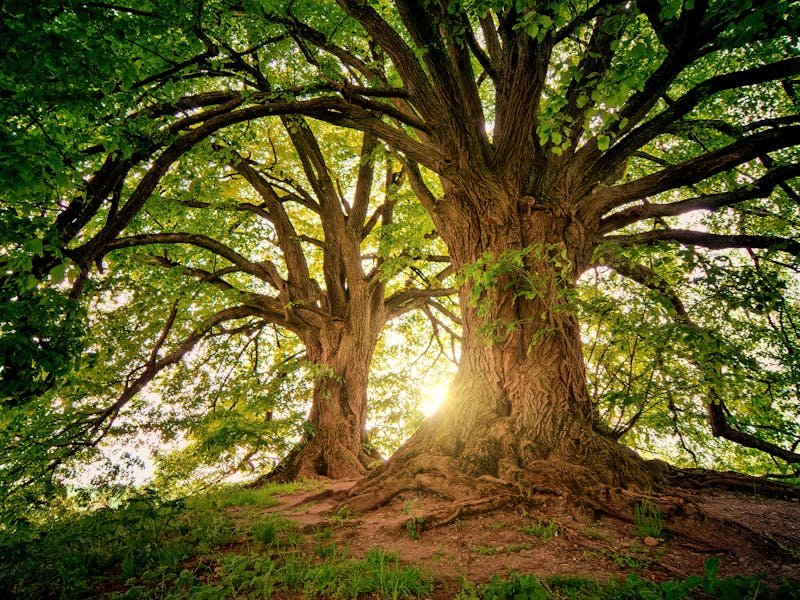
Huntsville falls in USDA Hardiness Zone 7b, with average minimum winter temperatures of 5 to 10 degrees Fahrenheit. Our summers are hot and humid, our soil ranges from heavy red clay in the valleys to rocky limestone on the hills, and we get about 55 inches of rain per year. The trees you choose need to thrive in these conditions while providing maximum shade coverage.
Large Shade Trees (Canopy Spread 40+ Feet)
These are your heavy hitters for energy savings. They provide the most coverage and the most cooling benefit at maturity.
- White Oak (Quercus alba) – The king of shade trees in North Alabama. White oaks develop massive, spreading canopies that can span 60 to 80 feet at maturity. They are long-lived, incredibly strong, and provide dense shade. Growth rate is moderate at 12 to 15 inches per year, so this is a long-term investment. But a mature white oak is worth its weight in gold for energy savings and property value. You see magnificent specimens all over Twickenham and Monte Sano.
- Red Oak (Quercus rubra) – Faster growing than white oak, about 2 feet per year, with a wide spreading canopy. Excellent fall color. Red oaks are already one of the most common trees in the Huntsville area, and for good reason. For more about caring for these magnificent trees, see our Huntsville oak tree care guide.
- Tulip Poplar (Liriodendron tulipifera) – One of the fastest-growing large shade trees for our area, putting on 2 to 3 feet per year. The Alabama state tree. Tulip poplars can reach 70 to 90 feet tall with a canopy spread of 35 to 50 feet. They provide excellent shade quickly and have beautiful yellow fall color. The tradeoff is they can be somewhat messy with dropped flowers and leaves, and they are more susceptible to storm damage than oaks.
- American Sycamore (Platanus occidentalis) – A native powerhouse that grows fast and provides massive shade. Sycamores have some of the largest leaves of any North American tree, which means dense, heavy shade. They grow naturally along creeks and river bottoms in the Tennessee Valley and tolerate wet soils well. Not ideal for small lots because they get very large.
- Red Maple (Acer rubrum) – Fast-growing, beautiful red fall color, and well-adapted to Huntsville conditions. Red maples provide excellent shade with canopy spreads of 30 to 50 feet. They are one of the most popular shade trees in newer Huntsville subdivisions for good reason.
Medium Shade Trees (Canopy Spread 25 to 40 Feet)
For smaller lots or tighter spaces where a giant oak would be too much tree, these medium-sized species deliver strong energy savings without overwhelming your property.
- Chinese Pistache (Pistacia chinensis) – One of the best medium shade trees for Huntsville. Moderate growth rate, gorgeous orange-red fall color, drought tolerant once established, and resistant to most pests and diseases. Canopy spread of 25 to 35 feet makes it ideal for typical subdivision lots in Madison, South Huntsville, and Hampton Cove.
- Zelkova (Zelkova serrata) – An elm-lookalike that is resistant to Dutch elm disease. Beautiful vase-shaped canopy, moderate to fast growth rate, and excellent shade density. Increasingly popular in Huntsville landscaping as a street tree and yard tree.
- Bald Cypress (Taxodium distichum) – Technically a deciduous conifer, meaning it drops its needles in fall. Excellent for wet areas and along drainage features. Surprisingly good shade tree with a feathery, attractive canopy. Native to the Tennessee Valley and perfectly adapted to our climate.
Evergreen Windbreak Trees
- Eastern Red Cedar (Juniperus virginiana) – Native, extremely tough, drought tolerant, and provides year-round wind screening. You see them growing wild all over the limestone hills around Huntsville. Excellent for windbreak rows on the north side of your property.
- Loblolly Pine (Pinus taeda) – The most common pine in North Alabama. Fast growing, provides year-round screening, and works well in windbreak rows. Space them 10 to 15 feet apart for a solid wind barrier.
- Southern Magnolia (Magnolia grandiflora) – Beautiful evergreen with large, glossy leaves that provide year-round wind screening and shade. Slower growing than pines but much more ornamental. A single magnolia on the northwest corner of your lot provides both windbreak and visual appeal.
For a broader look at the best shade trees for our area, check out our complete guide to the best shade trees for Huntsville, Alabama.
The Numbers: Real Energy Savings for Huntsville Homes
Let us put some actual dollar figures on what strategic tree planting can save you. These estimates are based on average Huntsville Utilities rates and typical residential energy usage in the Tennessee Valley Authority service area.
Summer Cooling Savings
The average Huntsville home spends approximately $150 to $300 per month on electricity during the peak summer months of June through September. Air conditioning accounts for roughly 50 to 60 percent of that total. So you are spending roughly $75 to $180 per month just on cooling.
With properly placed shade trees reducing cooling costs by 25 to 40 percent, that translates to:
- Monthly cooling savings: $19 to $72 per month during peak summer
- Annual cooling savings: $75 to $290 per year (across the full cooling season, roughly May through September)
Homes with significant west and south facing exposure and no existing shade will see the biggest improvements. If you live in a newer subdivision in Madison or Owens Cross Roads where the trees are still young, the potential savings from mature shade trees are substantial.
Winter Heating Savings
Heating costs in Huntsville are generally lower than cooling costs because our winters are relatively mild. The average household spends $100 to $200 per month on heating during the coldest months, December through February. Windbreak trees reducing heating costs by 10 to 20 percent yields:
- Monthly heating savings: $10 to $40 per month during peak winter
- Annual heating savings: $30 to $120 per year
Total Annual Energy Savings
Combining summer cooling and winter heating benefits, a well-designed tree landscape around a Huntsville home can save:
- Conservative estimate: $100 to $200 per year
- Moderate estimate: $200 to $400 per year
- High-performance landscape: $400 to $600+ per year
Over the 50 to 100+ year lifespan of a well-maintained shade tree, the total energy savings can easily exceed $10,000 to $30,000 per tree. And that does not even factor in the property value increase, which studies consistently show at 3 to 15 percent for well-landscaped homes with mature trees.
Maintaining Trees for Maximum Energy Efficiency
Planting the right tree in the right spot is the first step. But to keep getting those energy savings year after year, your trees need proper care. Here is what matters most for energy-efficient tree maintenance in the Huntsville area.
Regular Pruning and Trimming
A well-pruned tree maintains a dense, healthy canopy that provides maximum shade. Dead branches, diseased limbs, and excessive inner growth all reduce canopy effectiveness. Regular professional trimming keeps your shade trees healthy and their canopies full and dense.
Pruning also maintains proper clearance from your roof and siding. While you want shade on your house, you do not want branches rubbing on your roof or creating moisture traps against your siding. A professional arborist can thin the canopy for optimal shade while maintaining safe clearance from structures. For tips on timing, read our guide on the best time to trim trees in Huntsville.
Watering During Drought
Huntsville gets decent annual rainfall, about 55 inches, but we also get dry spells, particularly in late summer. When trees are drought-stressed, they drop leaves early to conserve water, which reduces their shade canopy right when you need it most. Deep watering during extended dry periods helps your shade trees maintain their full canopy through the hottest months.
Pest and Disease Management
Trees weakened by pests or disease produce thinner canopies and less shade. Keep an eye out for the common tree diseases in North Alabama and address problems early. A healthy tree is a tree that is working at full capacity for your energy savings.
Knowing When to Remove
Sometimes a tree that once provided great shade becomes a liability. Dead trees, trees with structural defects, and trees that have outgrown their space can actually increase your costs through potential storm damage. If a tree is in decline and no longer providing a healthy canopy, removing it and planting a vigorous replacement in the optimal position may be the better long-term strategy. For guidance, see our article on when to remove versus save a tree.
Common Mistakes That Reduce Energy Savings
We see a lot of well-intentioned tree planting that does not deliver the energy savings it could because of a few common mistakes. Here are the ones to avoid.
Planting Too Close to the House
A tree planted 5 feet from your foundation will eventually cause root damage, branch contact with your roof, and moisture problems against your siding. These issues can cost far more to fix than the energy savings the tree provides. Maintain a minimum of 15 feet from the foundation for large trees and 10 feet for medium trees. This is especially important in areas like Jones Valley and Bailey Cove where homes with mature trees sometimes experience root interference with foundations.
Planting Evergreens on the South Side
Evergreen trees on the south side of your home block winter sunlight that would otherwise warm your house for free. Always use deciduous species on the south side so the winter sun can pass through bare branches and help heat your home. Save the evergreens for the north and northwest windbreak positions.
Choosing Weak or Short-Lived Species
Bradford Pear trees, for example, grow fast and provide decent shade for a few years. But they split apart in storms, have weak branch structure, and rarely live more than 20 to 25 years before becoming hazards. Investing in a slower-growing but longer-lived species like an oak or Chinese Pistache will provide decades more energy savings and far less risk of storm damage. If you have Bradford Pears, our guide on Bradford Pear removal in Huntsville explains your options.
Ignoring the West Side
Many homeowners focus on the front yard aesthetic and plant shade trees where they look nice from the street. But the west side of your home, which may be a side yard with no curb appeal concerns, is where shade trees deliver the biggest energy payoff. Plant for function on the west side, and for aesthetics in the front.
Failing to Maintain the Canopy
A shade tree that has not been properly pruned in years may have dead sections, thin spots, and reduced density that significantly decreases its shade effectiveness. Annual or biannual professional inspections and pruning keep your canopy dense and healthy for maximum energy savings.
Frequently Asked Questions About Trees and Energy Savings
Start Saving: Talk to Us About Your Trees
Whether you want to protect the shade trees you already have, remove a dead tree and replace it with a better species, or just get an expert opinion on the trees around your home, we are here to help. Our team knows the trees and growing conditions of the Huntsville area inside and out, from the clay-heavy lots in Madison to the rocky hillsides of Monte Sano to the bottomland properties near the Flint River in Owens Cross Roads.
We can help you assess your existing trees, identify hazards that need to be removed, and recommend optimal species and placement for energy savings. And if you need pruning or trimming to keep your shade trees healthy and their canopies full, we do that too.
Call us at (256) 555-0123 or request your free consultation online. Your trees are one of the best investments on your property, both for your energy bills and your home's value. Let us help you make the most of them.