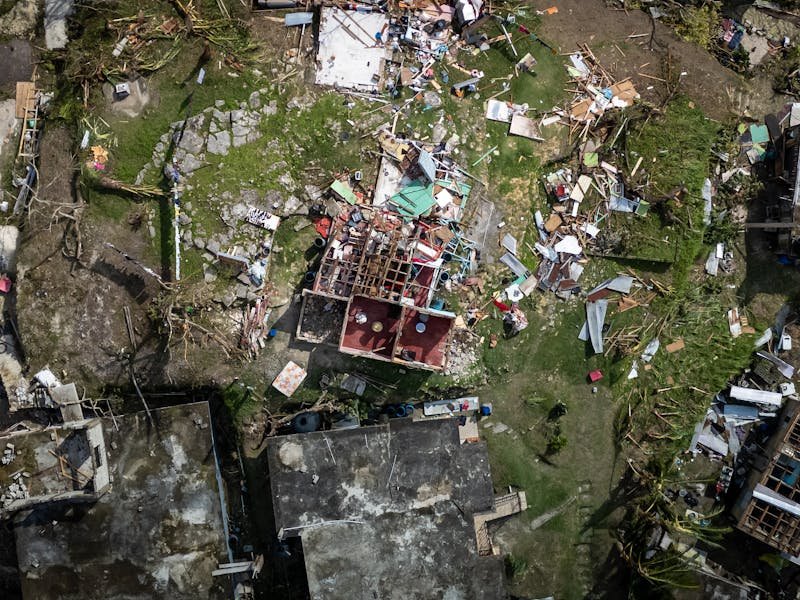
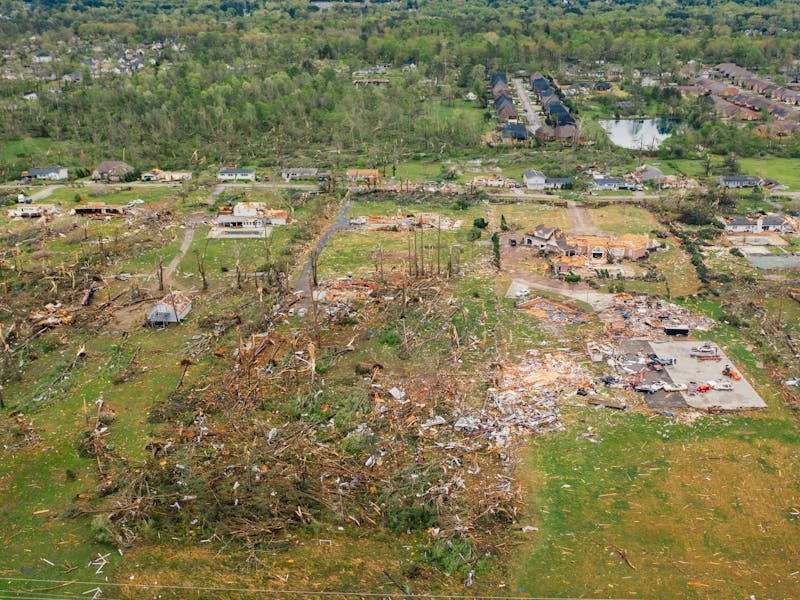
Huntsville sits squarely in the heart of Dixie Alley, the region of the southeastern United States that experiences more tornadoes per square mile than almost anywhere else on Earth. The Tennessee Valley's geography—warm, moist air from the Gulf of Mexico colliding with cool fronts coming off the Cumberland Plateau—creates conditions that produce violent storms with devastating regularity. From the catastrophic April 27, 2011 tornado outbreak to the annual severe weather season that runs from March through May, Huntsville homeowners know that tornado damage is not a matter of if, but when.
When a tornado or severe storm strikes your neighborhood, one of the most immediate and visible consequences is tree damage. Massive oaks snapped in half, pines uprooted from the saturated red clay, branches driven through roofs and fences, and entire canopies stripped bare. In the chaotic aftermath, it can be overwhelming to figure out what to do, who to call, and how to prioritize. This guide gives you a clear, step-by-step process for dealing with tornado-damaged trees on your Huntsville-area property.
Step 1: Safety First—Stay Away From Danger
Before you touch a single branch or make a single phone call about tree cleanup, assess the safety situation. Tornadoes create hazards that are not always immediately obvious:
Downed Power Lines
This is the number one danger after any storm. Trees fall on power lines, and those lines may still be energized even if they appear dead. A downed power line in contact with a tree, a fence, or wet ground can electrocute anyone who touches the tree or steps in the area. Assume every downed line is live until Huntsville Utilities confirms it is de-energized. Call Huntsville Utilities at (256) 535-1200 to report downed lines.
- Stay at least 35 feet away from any downed power line
- Do not touch any tree or branch that is in contact with a power line
- Do not attempt to move debris away from power lines
- Keep children and pets away from the area
- If a power line has fallen on your car, stay inside the car and call 911
Hanging Branches and Partially Fallen Trees
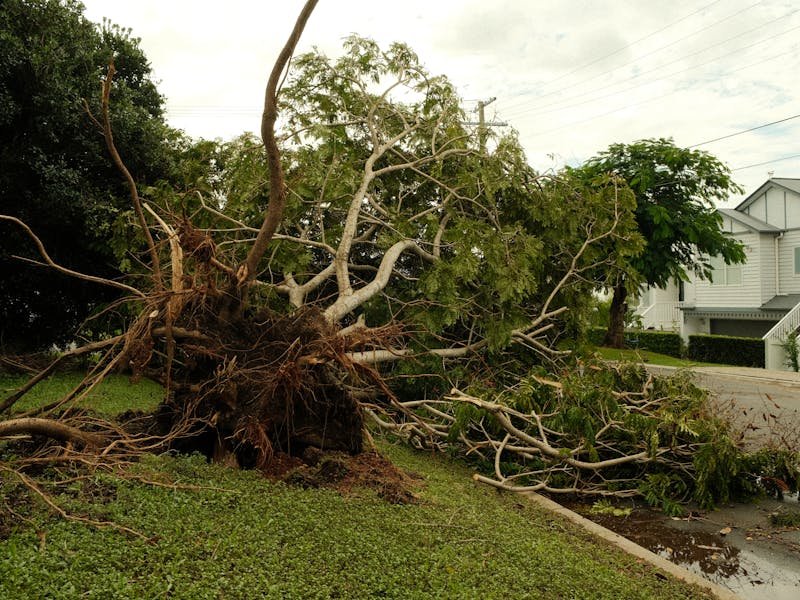
Trees that are damaged but still standing pose a serious hazard. Branches hanging in the canopy (called "widow makers" in the tree industry) can fall without warning. Trees with cracked trunks can collapse at any time. A partially uprooted tree that appears stable may suddenly complete its fall, especially if wind picks up again.
Do not stand under or near damaged trees. Do not try to pull branches out of a damaged canopy. These are jobs for professionals with the equipment and training to work safely around compromised trees.
Gas Leaks and Structural Damage
If a tree has fallen on your house, garage, or any structure, there may be structural damage that is not visible from outside. There may also be ruptured gas lines, damaged electrical wiring, or compromised water pipes. If you smell gas, leave the area immediately and call 911. Do not enter a structure that a tree has fallen on until it has been assessed by emergency services.
Step 2: Document Everything Before Cleanup Begins
Once the immediate safety threats are addressed, your next priority is documentation. This step is critical for your homeowners insurance claim, and skipping it can cost you thousands of dollars.
- Take photos and video from multiple angles. Capture the full scope of the damage—the fallen tree, where it landed, any structural damage, damage to vehicles, fences, landscaping, and neighboring properties.
- Photograph the tree's root ball if it was uprooted. The size and condition of the root system is relevant to insurance claims and can help determine whether soil conditions or tree health contributed to the failure.
- Document the damage to the tree itself. Take close-up photos of the break point on the trunk or limb. Note whether the wood appears healthy (clean, white interior) or rotted (dark, crumbly, hollow). This information matters for insurance purposes and for understanding whether the tree had pre-existing issues.
- Write down what happened. Note the date, approximate time, and weather conditions. Was there a confirmed tornado? Straight-line winds? Hail? This context helps your insurance adjuster classify the event.
- Document neighboring property damage. If your tree fell on a neighbor's property (or vice versa), photograph the damage from your side. This information may be needed for liability discussions.
Step 3: Assess Each Tree—Save or Remove?
Not every storm-damaged tree needs to come down. Some trees can recover from significant damage if they receive proper care. Here is how to evaluate your damaged trees:
Trees That Can Usually Be Saved
- Minor crown damage: Trees that lost less than 25% of their crown (branches and leaves) will typically recover fully within one to two growing seasons with proper pruning of broken branches.
- Moderate crown damage: Trees that lost 25% to 50% of their crown can often be saved, though recovery will be slower. Professional pruning to remove damaged wood and reshape the canopy is essential.
- Small branch breakage: Broken branches under 3 to 4 inches in diameter, even in large numbers, are usually not fatal. The tree can seal these wounds and regenerate.
- Bark stripping on one side: If bark has been stripped from one side of the trunk but the other side is intact, the tree may survive if the damaged area is less than 50% of the trunk circumference.
Trees That Usually Cannot Be Saved
- Uprooted trees: Once a tree's root system has been torn from the ground, the tree cannot be replanted (with very rare exceptions for small, recently planted trees). Uprooted trees must be removed.
- Split trunks: A trunk that has split into two or more pieces has suffered fatal structural damage. Even if parts of the canopy look alive, the tree cannot recover from a major trunk split.
- More than 50% crown loss: Trees that have lost more than half their crown have lost too much of their food-producing capacity. They will struggle to survive and are prone to secondary pest and disease attacks.
- Trunk snapped above ground: A tree whose trunk has snapped clean through above the root flare is dead. While some hardwoods will send up sprouts from the stump, the original tree is gone.
- Severe lean with root lifting: If a tree is leaning significantly and you can see root plate lifting on the upwind side, the root system has failed and the tree will continue to fall.
For a more detailed guide on this decision, see our post on tree care after a tornado in Huntsville.
Step 4: Prioritize Your Cleanup
After a tornado, you may have multiple damaged trees on your property. You cannot address everything at once, so prioritize based on risk and urgency:
- Priority 1: Trees on structures. Trees that have fallen on your house, garage, or any occupied structure need to be addressed first. These situations often require emergency tree service and may involve coordinating with your insurance company and possibly a structural engineer.
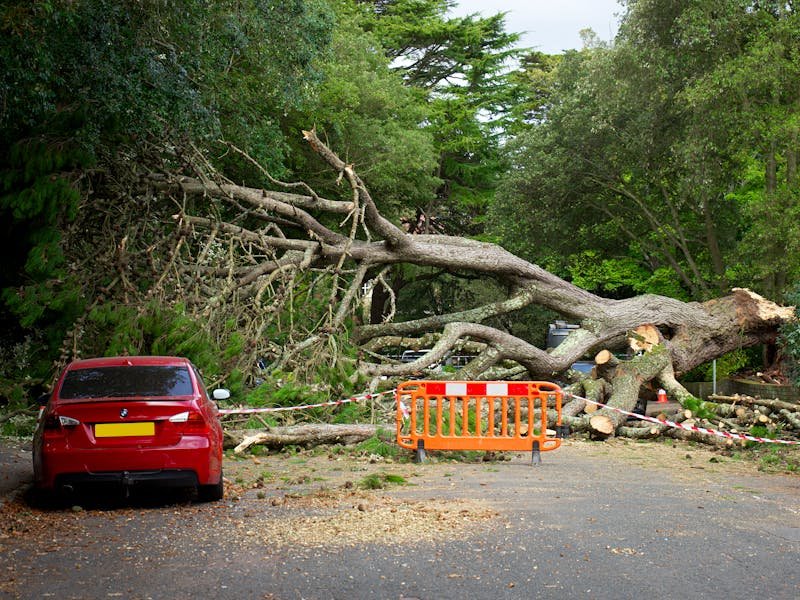
- Priority 2: Trees blocking access. Trees blocking your driveway, sidewalk, or the street need to be cleared so you can get in and out of your property and so emergency vehicles can access your neighborhood.
- Priority 3: Trees threatening to fall. Damaged trees that are still standing but clearly compromised—severe leans, cracked trunks, hanging limbs over walkways—should be addressed before they complete their failure and cause additional damage.
- Priority 4: Downed trees on the ground. Trees that have already fallen in open areas of your yard are not an immediate hazard. They can wait for scheduled cleanup once the urgent items are handled.
- Priority 5: Crown damage requiring pruning. Trees with broken branches that are still attached can usually wait days or even weeks for professional pruning. These are lowest priority unless broken limbs are hanging over high-traffic areas.
Step 5: Contact Your Insurance Company
File your insurance claim as soon as possible after the storm. After a major tornado event in the Huntsville area, insurance adjusters are overwhelmed with claims, and the sooner you file, the sooner your claim will be processed.
What Homeowners Insurance Typically Covers
- Structural damage: Damage to your home, garage, shed, fence, or other insured structures caused by fallen trees is covered under most standard policies.
- Tree removal from structures: The cost of removing a tree from an insured structure is typically covered in full.
- Debris removal: Most policies include some coverage for removing trees that have fallen in the yard, even if no structure was damaged. This is often capped at $500 to $1,000 per tree, with a total limit of $5,000 to $10,000 for the entire claim.
- Additional living expenses: If your home is uninhabitable due to tree damage, your policy may cover temporary housing costs.
What Is Typically Not Covered
- Trees that fell but damaged nothing: If a tree fell in your yard and did not hit any insured structure, many policies will not cover the removal cost, or will cover only a minimal amount.
- Pre-existing damage: If the tree was already dead or diseased before the storm, your insurer may argue that the failure was due to neglect rather than the storm event. This is why regular tree maintenance matters.
- Landscaping replacement: The cost of replacing the tree and restoring your landscaping is usually not covered or is covered at very low limits.
For comprehensive information on insurance and tree damage, read our detailed guide on homeowners insurance and tree removal in Alabama.
Step 6: Hire the Right Tree Service—Avoid Storm Chasers
After every major tornado in the Huntsville area, out-of-state tree service crews swarm into the affected neighborhoods. Some are legitimate companies coming to help with the overwhelming demand. Many others are unlicensed, uninsured opportunists looking to make fast cash from homeowners who are desperate to get trees off their houses and out of their yards.
Red Flags for Storm Chasers
- They knock on your door offering immediate service before you have called anyone
- They demand cash payment upfront before starting work
- They cannot provide proof of insurance
- Their trucks are unmarked or have out-of-state plates with no local business presence
- They pressure you to sign a contract on the spot
- They offer to deal directly with your insurance company and ask you to sign over your claim
How to Hire Safely After a Storm
- Use local companies. Tree service companies with established businesses in the Huntsville area have reputations to protect and are accountable to the community. They will be here long after the storm chasers are gone.
- Verify insurance. Any company doing tree work on your property should provide a certificate of insurance showing general liability and workers' compensation coverage. Verify by calling the insurance company directly.
- Get a written estimate. Even in an emergency, get the scope of work and price in writing before work begins. Verbal agreements in stressful situations lead to billing disputes.
- Never pay everything upfront. A small deposit (10-25%) for large jobs is reasonable. Pay the balance only after work is completed.
- Do not sign over your insurance claim. Some storm chasers will ask you to assign your insurance benefits to them. This gives them control of your claim and can lead to inflated charges.
For more on this topic, read our comprehensive guides on emergency tree removal: what to expect and hiring a tree service after a storm.
City of Huntsville Storm Cleanup Resources
After significant storm events, the City of Huntsville activates several resources to help residents with tree and debris cleanup:
Public Road and Right-of-Way Clearing
The Huntsville Public Works Department is responsible for clearing trees and debris from public roads, sidewalks, and rights-of-way. They prioritize major thoroughfares and emergency access routes first, then work through residential streets. After large events, this process can take several days to several weeks depending on the extent of damage.
Curbside Debris Collection
The city typically sets up special curbside debris collection after major storm events. Homeowners can move storm debris (branches, limbs, brush) to the curb for city pickup. Separate your storm debris from regular household garbage. Keep debris on your side of the curb and do not block the street, sidewalk, or fire hydrants. Monitor the City of Huntsville website and local news for specific collection schedules and guidelines.
FEMA Assistance
If the tornado event qualifies for a federal disaster declaration (as Madison County has multiple times), FEMA assistance may be available to help with cleanup costs not covered by insurance. Register with FEMA as soon as a disaster declaration is made, even if you are not sure you qualify. The registration deadline is typically 60 days after the declaration.
Preparing Your Trees for the Next Storm
The best time to deal with tornado damage is before the tornado arrives. Proactive tree maintenance dramatically reduces storm damage and makes recovery faster and less expensive when storms do hit:
- Regular professional pruning: Professional trimming removes dead branches, reduces wind resistance, and corrects structural weaknesses before a storm can exploit them.
- Remove hazardous trees proactively: Dead trees, trees with significant decay, and trees with poor structure should be removed before storm season. A tree that you pay $1,500 to remove on your schedule might cost $5,000 in emergency removal plus structural damage if it falls during a tornado.
- Cable and brace vulnerable trees: Valuable trees with structural weaknesses (co-dominant stems, heavy lateral limbs) can be supported with professional cabling and bracing systems that significantly reduce the risk of storm failure.
- Maintain tree health: Healthy trees with strong root systems and vigorous canopies are far more wind-resistant than stressed, weakened trees. Proper watering, mulching, and care make your trees more storm-resilient.
For a complete storm preparation plan, see our guide on storm season tree preparation for Huntsville.
Huntsville Tree Pros: Your Local Storm Damage Team
Huntsville Tree Pros is locally owned, fully insured, and committed to helping our community recover from storm damage quickly and safely. We provide 24/7 emergency tree service after major storm events, and we prioritize our existing customers and the local community over out-of-area calls.
When you call us after a storm, we respond quickly with a safe, professional assessment of your tree damage. We provide honest recommendations on which trees can be saved and which need removal. We give you a written estimate before any work begins. We coordinate with your insurance company and provide documentation to support your claim. And we stand behind our work long after the storm chasers have left town.
We serve the entire Huntsville metro area including Huntsville, Madison, Decatur, Athens, Hampton Cove, South Huntsville, Monte Sano, and all surrounding communities.