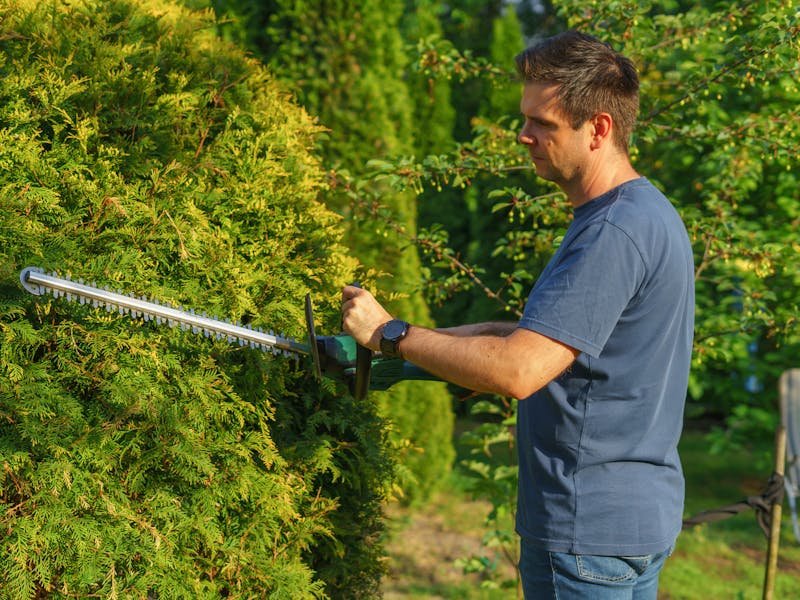
Professional Hedge Trimming Services in Huntsville, Alabama
Well-maintained hedges are one of the most impactful elements of any residential or commercial landscape. They define property boundaries, create privacy screens, frame walkways and garden beds, and add structure and formality to outdoor spaces. But hedges that are neglected, poorly shaped, or trimmed at the wrong time of year quickly go from an asset to an eyesore—becoming leggy, bare at the bottom, overgrown, or misshapen in ways that detract from your entire property's appearance.
At Huntsville Tree Pros, hedge trimming and shrub care is one of our core services. We bring the same level of professionalism, attention to detail, and horticultural knowledge to hedge maintenance that we apply to our tree trimming and tree pruning work. Whether you need a single boxwood hedge shaped, an entire property's shrubs maintained on a seasonal schedule, or a badly overgrown hedge row renovated back to health, we have the equipment, expertise, and crew to handle it.
We serve residential and commercial properties throughout Huntsville, Madison, Decatur, Athens, and all of Madison and Limestone Counties.
Hedge Trimming and Shaping Services
Regular hedge trimming is the foundation of attractive, healthy hedge maintenance. Our trimming service involves carefully shearing the outer growth of your hedges to maintain a uniform shape, encourage dense branching, and keep the hedge at your desired height and width. This is not a quick hack-and-slash with a pair of hedge clippers—proper hedge shaping requires understanding how each species grows, where to make cuts to promote density, and how to taper the sides correctly so the bottom of the hedge receives adequate sunlight.
One of the most common mistakes we see in Huntsville is hedges that have been trimmed with a flat top and perfectly vertical sides. While this looks neat initially, it causes the bottom of the hedge to thin out over time because the wider top shades the lower branches. Professional hedge trimming tapers the hedge slightly narrower at the top than the bottom, allowing sunlight to reach all parts of the plant and maintaining density from the ground up.
Our Hedge Shaping Process
- Assessment: We evaluate the species, current condition, growth pattern, and your desired shape before making any cuts
- Tool selection: We use professional-grade power hedge trimmers for long, straight runs and hand shears for detailed shaping work around corners, curves, and tight spots
- Shaping cuts: We trim the hedge to the desired profile, working from the bottom up and tapering slightly narrower toward the top for optimal light exposure
- Detail work: Corners, tops, and transitions between hedges and other landscape features are finished with hand shears for a clean, precise appearance
- Cleanup: All clippings are collected, raked, and either chipped for mulch or hauled away. The area is left clean and finished
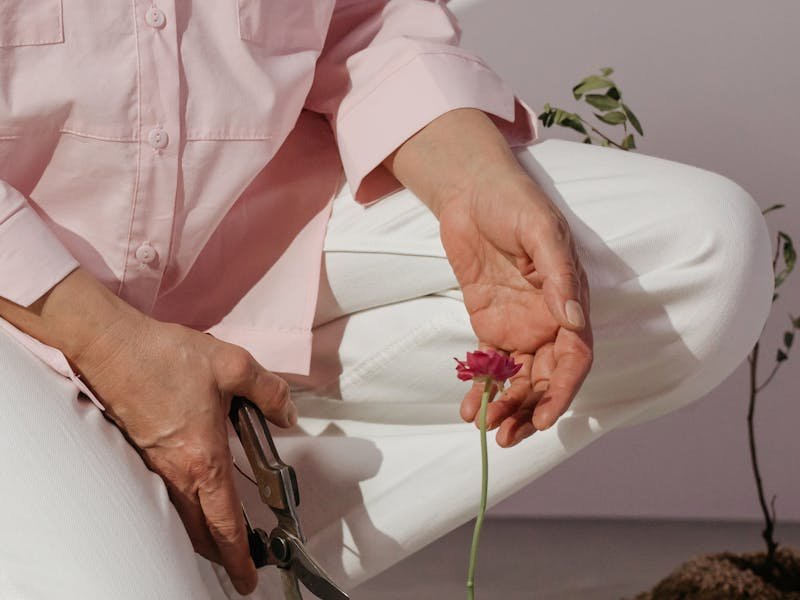
Renovation Pruning for Overgrown Hedges
If your hedges have been neglected for years, have grown well beyond their intended size, or have become bare and leggy at the base, renovation pruning can often restore them to a healthy, attractive condition without the expense of removing and replanting.
Renovation pruning involves cutting the hedge back significantly—sometimes to within 6 to 12 inches of the main trunk—to stimulate new growth from dormant buds deep within the plant. Not all species tolerate hard renovation equally, which is why this work should only be done by someone who understands the growth habits of each plant. In Huntsville, most of the common hedge species respond well to renovation:
- Boxwood: Tolerates hard pruning extremely well and will regrow from old wood. Renovation is best done in late winter or early spring before new growth begins
- Holly (Japanese, Chinese, Burford, Dwarf Yaupon): Responds well to renovation pruning. Can be cut back hard and will produce vigorous new growth from old stems
- Privet: One of the most resilient species for renovation. Can be cut nearly to the ground and will regrow quickly, often looking fully restored within one to two growing seasons
- Azalea: Can be renovated but requires a more gradual approach. We typically reduce azalea hedges by one-third per year over three seasons to avoid shocking the plant
- Ligustrum: Very tolerant of hard pruning. Responds with dense new growth and recovers quickly in Huntsville's growing climate
For hedges that are too far gone to renovate—completely dead on the interior, severely damaged by ice storms, or infected with disease—we can remove the old hedge, grind the stumps, and advise on replacement options that will perform well in your specific location.
Seasonal Hedge Maintenance Programs
The most effective way to keep your hedges looking their best year-round is through a scheduled maintenance program. Rather than waiting until hedges are overgrown and require heavy cutting, regular light trims maintain shape, density, and plant health with less stress on the hedge and less cost to you over time.
Recommended Trimming Schedule for Huntsville
Huntsville's climate (USDA Zone 7b/8a) supports a long growing season from late March through early November. Most hedges benefit from two to three trims during this period:
- Spring trim (May to June): After the first flush of spring growth has hardened off, this is the primary shaping trim. The hedge is brought back to its desired size and shape, removing the season's new growth to maintain clean lines
- Summer trim (July to August): A lighter maintenance trim to clean up the midsummer growth flush. This keeps formal hedges looking sharp through the second half of summer and into fall
- Fall touch-up (October, optional): A light trim to neaten the hedge before winter. This is not a heavy pruning—just enough to clean up any uneven growth so the hedge looks tidy through the dormant season
We offer seasonal maintenance contracts that include all scheduled trims at a discounted per-visit rate compared to individual service calls. This ensures your hedges are trimmed at the optimal time by a crew that knows your property and your preferences.
Popular Huntsville Hedge Species and Their Care
Understanding the specific needs of each hedge species is essential for proper maintenance. Here are the most common hedge plants we work with in the Huntsville area and what each one requires:
Boxwood (Buxus)
Boxwood is the quintessential formal hedge plant and is widely used throughout Huntsville's established neighborhoods including Twickenham, Blossomwood, and Five Points. Boxwood grows slowly (3 to 6 inches per year), holds its shape well, and tolerates shearing beautifully. It prefers partial shade to full sun in Huntsville's summer heat and needs well-drained soil. The biggest threats to boxwood in our area are boxwood blight (a fungal disease) and boxwood leafminer. We monitor for both during our maintenance visits.
Japanese Holly (Ilex crenata)
Japanese holly is an excellent boxwood alternative that handles Huntsville's heat and humidity better than some boxwood varieties. It has small, dense leaves that create a fine-textured appearance similar to boxwood when sheared. Varieties like 'Compacta', 'Helleri', and 'Soft Touch' are popular for foundation plantings and low hedge borders. Japanese holly responds well to regular trimming and can be maintained at heights from 2 to 6 feet.
Azalea (Rhododendron)
Azaleas are everywhere in Huntsville and are frequently used as informal to semi-formal hedges, particularly in shaded areas. The critical rule with azalea trimming is timing: azaleas set their flower buds in summer and fall for the following spring's bloom. If you trim after July, you will remove most of the flower buds and get little to no bloom the following spring. The window for azalea trimming is immediately after flowering ends in spring, typically late April through mid-June in Huntsville. For detailed azalea and crepe myrtle care guidance, see our blog.
Burford Holly and Dwarf Burford Holly
These large-leaved hollies are extremely common in Huntsville landscapes and make excellent privacy screens and tall hedges. Burford holly can grow to 15 feet or more if left unchecked, while the dwarf variety stays in the 4 to 6 foot range. Both tolerate heavy pruning well and produce attractive red berries in fall and winter. We recommend one to two trims per year for Burford hollies, timed for late spring and late summer.
Dwarf Yaupon Holly (Ilex vomitoria 'Nana')
Dwarf yaupon is one of the most durable, low-maintenance hedge plants available for Huntsville landscapes. It tolerates full sun, partial shade, drought, poor soil, and heavy pruning with equal ease. It is commonly used for low borders, foundation plantings, and formal edging. Dwarf yaupon grows slowly enough that one to two trims per year keeps it looking sharp.
Hedge Trimming Pricing in Huntsville
Hedge trimming costs depend on the number of shrubs, their size, accessibility, and the amount of shaping required. Here are typical price ranges for our Huntsville-area hedge trimming services:
- Small residential hedge row (under 50 linear feet): $75 – $200
- Medium residential property (50 to 150 linear feet): $200 – $500
- Large residential property (150+ linear feet or multiple hedge sections): $500 – $1,000
- Tall hedges requiring ladder work (over 6 feet): $300 – $800+
- Renovation pruning for overgrown hedges: $400 – $1,200+
- Commercial properties: Custom pricing based on scope
- Seasonal maintenance contracts (3 visits): 15% to 20% discount vs. individual service calls
All prices include complete cleanup and debris removal. We provide free on-site estimates, and our pricing is transparent with no hidden fees or surprise charges.
Commercial Hedge and Shrub Maintenance
First impressions matter for businesses, and well-maintained hedges and shrubs are a key part of professional commercial landscaping. We provide commercial hedge trimming and shrub maintenance for office parks, retail centers, apartment complexes, HOA common areas, churches, schools, and other commercial properties throughout the Huntsville metro area.
Our commercial hedge maintenance programs include:
- Regularly scheduled trimming visits (monthly, bi-monthly, or quarterly depending on growth rates and desired appearance)
- Consistent crew assignment so the same team maintains your property each visit
- Proactive identification of pest, disease, and health issues before they become visible problems
- Coordination with your existing landscape maintenance provider if applicable
- Detailed service reports after each visit
Why Proper Hedge Trimming Matters
Hedge trimming is not just about aesthetics, although curb appeal is certainly a major benefit. Proper trimming directly affects the health and longevity of your hedge plants:
- Density: Regular trimming stimulates branching behind the cut points, creating a denser, fuller hedge. Without trimming, hedges become leggy and open, defeating their purpose as screens or borders
- Light penetration: Correct tapering ensures sunlight reaches the lower portions of the hedge, preventing the bare-bottom syndrome that plagues neglected hedges
- Air circulation: Proper trimming maintains enough interior air circulation to reduce fungal disease pressure, which is significant in Huntsville's humid climate
- Pest detection: Regular trimming visits allow us to spot pest infestations, disease symptoms, and other health issues early when they are easiest and least expensive to address
- Structural integrity: Hedges that are allowed to grow too large become top-heavy and are vulnerable to splitting open during ice storms and heavy snow—events that happen in Huntsville every few years
Hedge Trimming vs. Tree Trimming
While we offer both tree trimming and hedge trimming services, the two require different techniques, tools, and expertise. Tree trimming involves selectively removing individual branches from within a tree's canopy for structural, health, or clearance purposes. Hedge trimming is a shearing process that shapes the outer surface of the plant to maintain a uniform appearance.
Some large shrubs, particularly those that have been allowed to grow into small trees, may need pruning rather than trimming. During our assessment, we will recommend the appropriate approach for each plant on your property.
Frequently Asked Questions About Hedge Trimming
How much does hedge trimming cost in Huntsville, AL?
Hedge trimming costs depend on the number of shrubs, their size, and the complexity of shaping required. Basic trimming for a small residential hedge row typically costs $75 to $200. Medium-sized properties with multiple hedge sections run $200 to $500. Large properties or overgrown hedges requiring renovation pruning can cost $500 to $1,200 or more. We provide free on-site estimates.
When is the best time to trim hedges in Huntsville?
For most evergreen hedges like boxwood, holly, and privet, late spring (May to June) after the first flush of new growth is ideal, with a second light trim in late summer. Flowering shrubs like azaleas should be trimmed immediately after they finish blooming in spring. Avoid heavy trimming in late fall or winter when new growth would be vulnerable to frost.
How often should hedges be trimmed?
Most formal hedges benefit from two to three trimmings per year. Fast-growing species like privet may need trimming every four to six weeks during the growing season. Slower-growing hedges like boxwood and holly can maintain their shape with just two trims per year. Informal hedges may only need one annual pruning.
Can you fix hedges that have become overgrown or bare at the bottom?
Yes, renovation pruning is one of our specialties. Overgrown hedges that have become leggy or bare at the base can often be restored through gradual rejuvenation over one to three seasons. Species like boxwood, holly, and privet respond exceptionally well to renovation pruning. In severe cases, we can remove and advise on replacement options.
Do you clean up all the trimmings after the job?
Absolutely. Complete cleanup is included with every hedge trimming job. We collect all clippings, rake the area beneath the hedges, and haul away or chip all debris before we leave. We can also spread chipped material as mulch around the base of your hedges if you prefer.
What is the difference between hedge trimming and tree pruning?
Hedge trimming involves shearing the outer growth of shrubs to maintain a uniform shape, size, and density. Tree pruning is a more selective process where individual branches are removed from inside the canopy for structural, health, or aesthetic purposes. Some large shrubs may need pruning rather than trimming, and we will recommend the appropriate approach during our assessment.