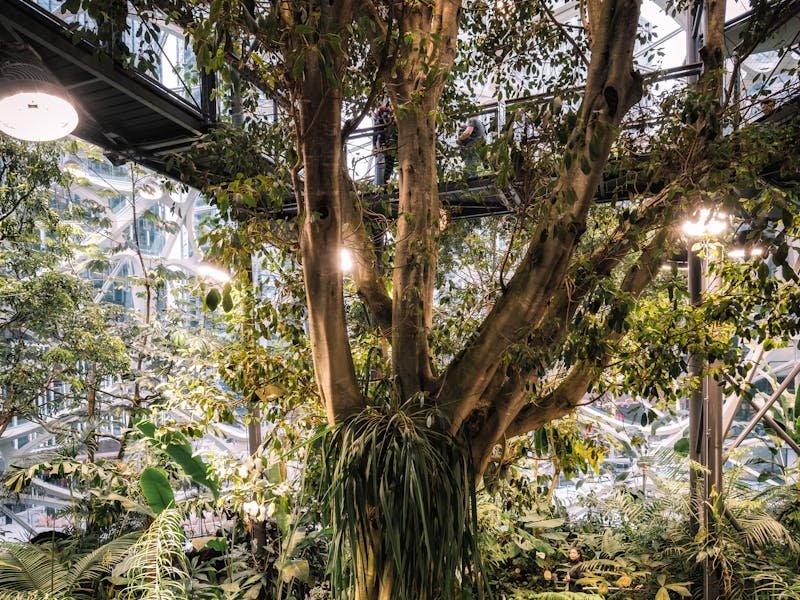
Professional Tree Fertilization in Huntsville, Alabama
Trees in urban and suburban landscapes face challenges that their forest counterparts never encounter. Compacted soil from construction and foot traffic, competition with turf grass for water and nutrients, removal of fallen leaves that would naturally recycle nutrients back into the soil, and root zone restrictions from driveways, sidewalks, and foundations all work against your trees. Over time, these stresses deplete the soil of essential nutrients and create conditions where even well-established trees begin to decline.
Professional tree fertilization restores the nutrient balance that your trees need to maintain vigorous growth, resist pests and diseases, and develop the strong structure that prevents costly failures during Huntsville's severe storm season. At Huntsville Tree Pros, we do not take a one-size-fits-all approach. Every fertilization program begins with understanding your specific trees, your soil conditions, and your property's unique challenges.
Whether you have mature oaks showing signs of decline, young trees that are struggling to establish, or a landscape full of valuable specimen trees you want to protect, our certified arborists will design a fertilization program tailored to your property's needs.
Why North Alabama Trees Need Fertilization
Huntsville's landscape sits at the intersection of several factors that make tree fertilization particularly important in our region:
Heavy Clay Soils
Much of the Huntsville metro area, particularly in the valley between Monte Sano and the western ridges, has dense red clay soil. While clay soils hold nutrients well, they also compact easily, restrict root growth, drain poorly, and can become severely depleted of certain micronutrients over time. Trees growing in compacted clay often show symptoms of nutrient deficiency even when soil tests reveal adequate total nutrient levels, because the compaction prevents roots from accessing those nutrients efficiently.
Limestone-Based Soils on the Ridges
Properties on Monte Sano, Chapman Mountain, Green Mountain, and other ridges around Huntsville typically have shallow, rocky soils with a high pH due to the underlying limestone bedrock. High pH soils lock up iron, manganese, and other micronutrients, making them unavailable to trees even when present in the soil. This is why trees on ridge properties frequently develop iron chlorosis, showing yellow leaves with green veins, a condition that responds well to targeted fertilization.
Urban Soil Disruption
New construction, home additions, driveway installations, and utility work all disturb the soil profile around existing trees. The topsoil and organic matter that trees depend on is often stripped away, buried, or compacted during construction. Trees that survived the construction process often begin declining three to five years later as their depleted root zone catches up with them. Deep root fertilization can help these trees recover by delivering nutrients directly to the remaining active root zone.
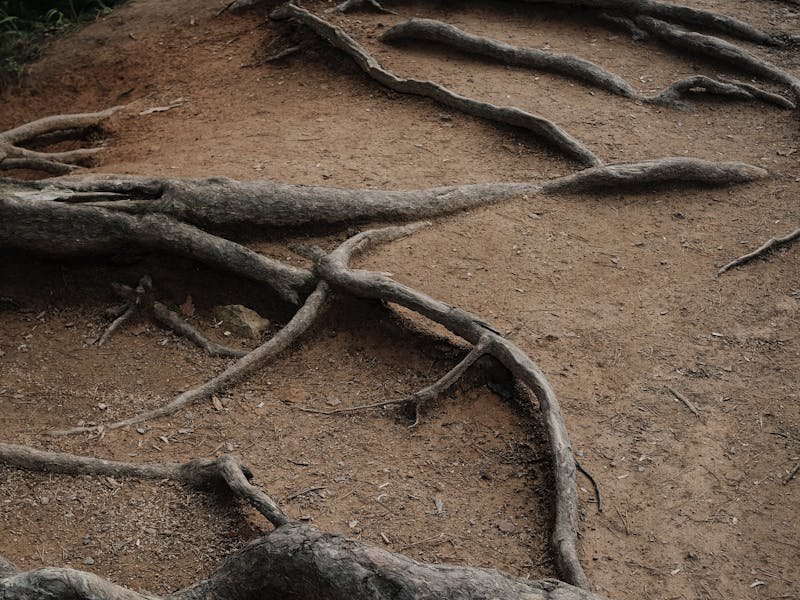
Natural Nutrient Cycling Is Disrupted
In a natural forest, fallen leaves, twigs, and other organic debris decompose on the forest floor, recycling nitrogen, phosphorus, potassium, and dozens of micronutrients back into the soil. In residential landscapes, we rake and bag those leaves, blow them to the curb, and haul them away. Every fall, we remove the very material that would naturally feed the trees the following year. Over decades, this constant removal depletes the soil and creates nutrient deficiencies that only worsen with time.
Deep Root Fertilization vs. Surface Fertilization
There are two primary methods for fertilizing trees, and understanding the difference is important for making the right choice for your property.
Deep Root Fertilization
Deep root fertilization, also called subsurface injection, is the most effective method for feeding established trees. Using specialized high-pressure equipment, we inject a liquid fertilizer solution 8 to 12 inches below the soil surface in a grid pattern throughout the tree's root zone. This method offers several significant advantages:
- Bypasses soil compaction — The injection process itself aerates compacted soil, creating small channels that improve water infiltration and gas exchange for years after treatment
- Delivers nutrients directly to roots — Nutrients are placed in the active root zone where feeder roots can absorb them immediately, rather than sitting on the surface waiting to percolate downward
- Avoids grass competition — Surface-applied fertilizer is largely captured by turf grass before it ever reaches tree roots. Deep injection puts nutrients below the grass root zone where only tree roots can access them
- More efficient — Less fertilizer is needed because virtually all of it reaches the target root zone. Surface application wastes a significant percentage to runoff, volatilization, and grass uptake
- No surface residue — Because the fertilizer is injected underground, there is nothing on the surface that could contact children, pets, or lawn surfaces
Deep root fertilization is our recommended method for most mature trees in the Huntsville area. It is particularly effective in our heavy clay soils where surface-applied nutrients may never reach the tree's feeder roots.
Surface (Granular) Fertilization
Surface fertilization involves spreading slow-release granular fertilizer on the soil surface beneath the tree's canopy. This method works best for young trees with shallow root systems, trees in mulched beds where granules can be worked into the mulch layer, and situations where deep root injection equipment cannot access the site. Surface application is less expensive per tree but also less effective, particularly for large, established trees in compacted soils.
Signs Your Trees Need Fertilization
Trees rarely die suddenly from nutrient deficiency. Instead, they decline gradually over years, and the signs can be subtle at first. Here are the indicators that your trees may benefit from professional fertilization:
- Smaller leaves than normal — If your tree's leaves are noticeably smaller than they were in previous years, nutrient deficiency is a common cause. Compare current leaf size to previous years' growth
- Pale or yellow foliage — Healthy tree leaves should be a deep, rich green during the growing season. Yellow or pale green leaves, especially with darker green veins (interveinal chlorosis), strongly suggest iron or manganese deficiency
- Reduced annual growth — Look at the length of new twig growth each year. Most healthy deciduous trees produce 4 to 12 inches of new growth annually. If that has declined significantly, the tree may be nutrient-stressed
- Premature fall color — Trees that change color weeks before they should are showing stress. While fall color is beautiful, early onset often indicates the tree is shutting down processes prematurely due to nutrient limitations
- Sparse canopy and dieback — A thinning canopy with dead branch tips is a classic sign of declining tree health. While many factors can cause this, nutrient deficiency is frequently part of the problem
- Increased pest and disease susceptibility — Well-nourished trees produce more defensive compounds and can better resist insect attacks and fungal infections. If your tree seems to catch every disease and attract every pest, its defenses may be weakened by nutritional stress
- Poor wound closure — If pruning cuts or storm damage wounds are slow to close over, the tree may lack the nutrients needed to produce new growth tissue
If you notice any of these signs, we recommend scheduling an arborist consultation to determine whether fertilization, another treatment, or a combination approach is the right solution.
Best Timing for Tree Fertilization in Huntsville
Timing matters significantly with tree fertilization. Applying nutrients at the wrong time can waste money, stress the tree, or even cause damage. Here is the optimal timing for Huntsville's USDA Zone 7b climate:
Late Fall (November to Early December) — Best Time
After leaves drop and the tree enters dormancy, root activity continues in our mild North Alabama winters. Fall-applied nutrients are absorbed by roots through the winter months and stored for the explosive spring growth flush. This timing gives you the biggest return on your fertilization investment. The tree has a full winter to absorb and store nutrients before the demands of leaf production, flowering, and fruiting begin in spring.
Early Spring (Late February to March) — Second Best
Fertilizing just before bud break allows nutrients to be available when the tree needs them most. Spring fertilization should be completed before leaves fully emerge, as later application can stimulate excessive, weak growth and interfere with the tree's natural growth patterns.
When NOT to Fertilize
- Midsummer (June through August) — Fertilizing during Huntsville's hot, often dry summers can burn roots and force growth during a period when the tree should be conserving energy. The exception is micronutrient treatments for specific deficiencies diagnosed by soil testing
- Late summer (September to early October) — Fertilization during this period can stimulate a flush of tender new growth that will not harden off before the first frost, potentially causing frost damage
- During drought stress — Never fertilize a tree that is already drought-stressed. The salts in fertilizer can worsen dehydration and cause root damage. Water the tree adequately first, then fertilize once it has recovered
Our Tree Fertilization Process
Every fertilization program at Huntsville Tree Pros follows a systematic process designed to deliver the right nutrients, in the right amounts, at the right time:
- Tree assessment — Our certified arborist evaluates the tree's species, age, size, health condition, and site factors. We identify symptoms, check for pests and diseases that might be causing similar symptoms, and determine whether fertilization is the appropriate treatment
- Soil testing — We collect soil samples from the tree's root zone and send them to the Auburn University Soil Testing Lab for analysis. The results tell us exactly which nutrients are deficient, which are adequate, and what the soil pH is. This prevents applying nutrients the tree does not need while ensuring we address actual deficiencies
- Custom formulation — Based on soil test results and the tree's specific needs, we select a fertilizer formulation that provides exactly what is lacking. We use professional-grade products with slow-release nitrogen, macro and micronutrients, and mycorrhizal inoculants that promote natural root-soil symbiosis
- Application — For deep root fertilization, we inject the liquid solution at 8 to 12 inch depth in a grid pattern throughout the root zone, starting about 3 feet from the trunk and extending to the drip line and slightly beyond. For surface applications, we spread granular fertilizer evenly under the canopy and water it in thoroughly
- Documentation and follow-up — We document what was applied, when, and in what quantities. We schedule a follow-up assessment at the appropriate time to evaluate the tree's response and determine whether additional treatments are needed
Tree Fertilization Pricing in Huntsville
- Deep root fertilization (per tree): $75 – $250
- Surface granular application (per tree): $50 – $100
- Soil testing (per sample): $30 – $75
- Micronutrient injection (iron, manganese): $100 – $200
- Annual fertilization program (3-6 trees): $200 – $600
- Mycorrhizal inoculation: $50 – $150 per tree
Pricing varies based on tree size, number of trees, product selection, and accessibility. We provide detailed written estimates before beginning any work. Multi-tree and annual program discounts are available.
Trees That Benefit Most from Fertilization in Huntsville
While all trees can benefit from proper nutrition, certain situations and species respond particularly well to professional fertilization in the Huntsville area:
- Mature oaks — Huntsville's many white, red, and willow oaks are valuable landscape assets that respond well to deep root feeding, especially when growing in compacted urban soils. Learn more in our oak tree care guide
- Post-construction trees — Trees that survived nearby construction often need nutritional support to recover from root damage, soil compaction, and grade changes. Read more about protecting trees during construction
- Trees showing decline — Gradual thinning, smaller leaves, and branch dieback often respond well to fertilization combined with proper pruning
- Trees in heavy clay — The deep root injection process aerates clay soils while delivering nutrients, addressing two problems simultaneously
- Trees with chlorosis — Yellow-leaved trees on Huntsville's limestone ridge properties frequently respond dramatically to iron and manganese supplementation
- Crepe myrtles and flowering trees — Proper fertilization enhances bloom production and color. See our crepe myrtle care guide for more details
Organic and Environmentally Responsible Options
We understand that many Huntsville homeowners are concerned about the environmental impact of chemical fertilizers, particularly those near waterways, wells, or organic gardens. We offer several organic and reduced-impact options:
- Organic-based fertilizers — Products derived from natural sources like composted biosolids, bone meal, feather meal, and kelp extracts. These release nutrients slowly and improve soil biology
- Mycorrhizal inoculants — Beneficial fungi that form a symbiotic relationship with tree roots, dramatically expanding the root system's ability to absorb water and nutrients from the soil naturally
- Compost tea applications — Liquid compost extracts that feed the soil microbial community, improving the soil's natural nutrient cycling capacity
- Humic acid treatments — Natural soil conditioners that improve nutrient availability, soil structure, and water retention in our clay soils
Our arborists can discuss the pros and cons of each approach during your consultation and recommend the option that best fits your goals and your property's needs.
Frequently Asked Questions About Tree Fertilization
When is the best time to fertilize trees in Huntsville, Alabama?
The best time to fertilize trees in Huntsville is late fall (November to early December) after leaves drop or early spring (late February to March) before new growth begins. Fall fertilization is preferred because nutrients are absorbed by roots through winter and are ready for the spring growth flush. Avoid fertilizing during summer heat stress or late summer, which can stimulate tender growth vulnerable to early frost.
What is the difference between deep root fertilization and surface fertilization?
Deep root fertilization uses specialized equipment to inject liquid fertilizer 8 to 12 inches below the soil surface directly into the root zone. This bypasses compacted topsoil and competing grass roots, delivering nutrients precisely where tree roots can absorb them. Surface fertilization involves spreading granular fertilizer on the soil surface. Deep root feeding is more effective for established trees, especially in Huntsville's heavy clay soils.
How much does tree fertilization cost in Huntsville?
Deep root fertilization typically costs $75 to $250 per tree depending on size. Surface application runs $50 to $100 per tree. Soil testing costs $30 to $75. Annual programs for properties with 3 to 6 mature trees typically cost $200 to $600. Multi-tree discounts are available.
How do I know if my trees need fertilization?
Signs include smaller than normal leaves, pale or yellow foliage, reduced growth, early fall color, sparse canopy, branch tip dieback, and increased susceptibility to pests or disease. A soil test is the most reliable way to determine whether nutrient deficiency is the issue and which specific nutrients are lacking.
Can you fertilize a newly planted tree?
Newly planted trees should not be fertilized during their first growing season. Fertilizer can burn tender new roots and stimulate top growth before the root system can support it. We recommend waiting until the second growing season to begin a fertilization program.
Is tree fertilization safe for my lawn, pets, and children?
Deep root fertilization is very safe because nutrients are injected below the soil surface with no surface contact. Surface-applied fertilizers should be watered in after application, and we recommend keeping pets and children off treated areas until absorbed. We use professional-grade, environmentally responsible products and offer organic options.