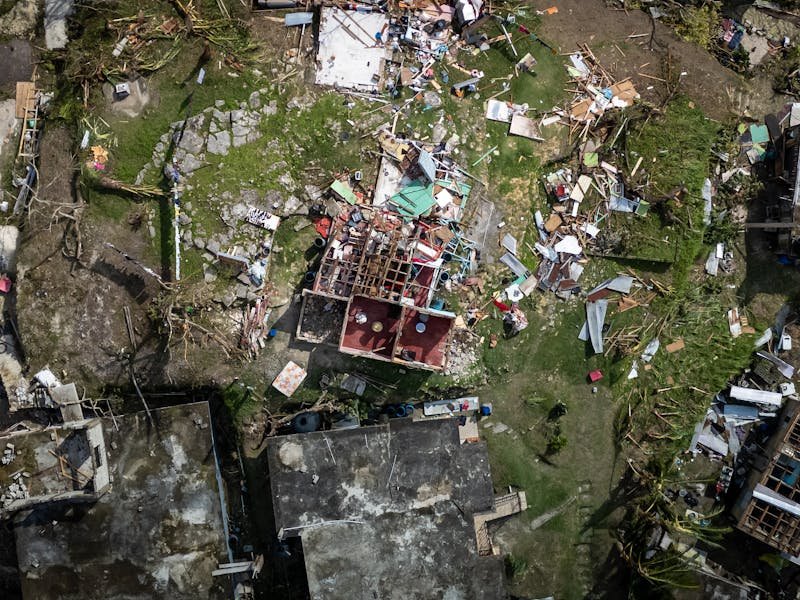
You wake up to that quiet hush after a bad storm. Power is out. Your phone is buzzing with emergency alerts you slept through. You walk to a window and there are limbs across the yard, maybe a tree against the house, maybe one across the driveway. Somewhere in the distance, a chainsaw fires up.
If that is your morning, take a breath. I have walked customers through this hundreds of times. North Alabama sits in Dixie Alley, and the spring tornado season from March through May puts trees on the ground every year in Madison County. Whatever happened, it is not the first time we have seen it. There is a calm way to handle the next 48 hours.
This guide is hour by hour. Read what applies and skip the rest. The most important thing in the first day is not speed. It is making good decisions in the right order so you do not get hurt, do not lose your insurance claim, and do not get scammed.
Hour 0 to 2: immediate safety
If the storm just passed and it is still dark, stay inside. The most dangerous time is the first hour when people go outside with flashlights to "check things out." That is when people walk into downed lines, step on nails, fall through compromised decks, and get hit by hanging branches.
Wait for daylight. You will assess things ten times more accurately when you can see.
When you go out, treat every downed line as live. It does not matter if the lights are off everywhere. Power can be restored at any moment and lines that look dead can carry enough current to kill you. Stay at least 35 feet away from any line on the ground or tangled in a tree. If a line is touching a fence, the fence is energized too.
Check on everyone, including pets. There may be small injuries from flying debris nobody noticed. Then check the structure room to room. Water stains, cracks that were not there yesterday, daylight where there should not be daylight. If a room is compromised, close the door.
Listen. Trees that did not fall during the storm sometimes fall in the calm right after. You are listening for creaking, cracking, and the slow groan of a trunk about to give.
Hour 2 to 6: survey and document
Once it is light and everyone is okay, survey and document. Rushing here can cost you thousands of dollars on the back end.
Walk the property line, but never alone. If you trip on a hidden limb or a branch falls on you, you want someone who can call for help. After a major storm, response times for non-emergency injuries get long fast.
Before anything moves, photograph and video everything. Imagine you are making a documentary for an adjuster who has never seen your property. Wide shots from multiple angles. Close-ups of every point where a tree contacts a structure. The root ball if it was uprooted. The break point if a trunk snapped, because the wood at the break tells you whether the tree was already failing.
Check that your camera settings have time and location data turned on. Photos with a time stamp from the morning after a confirmed storm carry far more weight than photos with no metadata.
Capture structural impact inside and outside. If a limb came through a window, photograph the broken glass, the wet drywall, the path the limb took. If part of the roof is missing, photograph it from the ground. Do not get on a roof to take pictures.
Document the property line. Trees that crossed it, branches in your neighbor's yard, their trees on your property. Our guide on what to do when a neighbor's tree falls on your property in Alabama covers that in detail.
If a tree fell on a vehicle, get every angle, including the license plate in the same frame as the tree. Vehicle damage runs through a different insurance process than your house. We have a separate post on what to do when a tree falls on a car in Huntsville.
Hour 6 to 12: triage
By mid-morning, you should have a clear picture of the damage. Now you triage. Trying to fix everything at once is how people make bad choices.
Priority 1 is any tree on a house. Even if it looks harmless across the roof, the weight is doing damage every minute it sits there and water is getting into places it should not. This needs emergency tree service the same day if possible.
Priority 2 is any tree on a vehicle. Cars under trees lose value every hour from continued weight, leaking sap, and weather exposure. Schedule the same day or first thing the next morning.
Priority 3 is anything blocking access. If you cannot get a vehicle out of the driveway or the path to your front door is impassable, that is same-day or next-day. Most policies cover removal of trees blocking essential access even when no structure was damaged.
Priority 4 is yard debris with no structural damage and no access issues. A tree lying in the back yard, branches on the lawn. This can wait. Trying to push a low-priority job ahead of someone with a tree on their house just costs you more and frustrates everyone.
The exception that overrides everything is a tree still standing but cracked, leaning hard, or hanging against another tree. They look intact, but they have lost structural integrity and they will come down. Anything in this category is an emergency call. A hanging trunk that drops without warning has killed people.
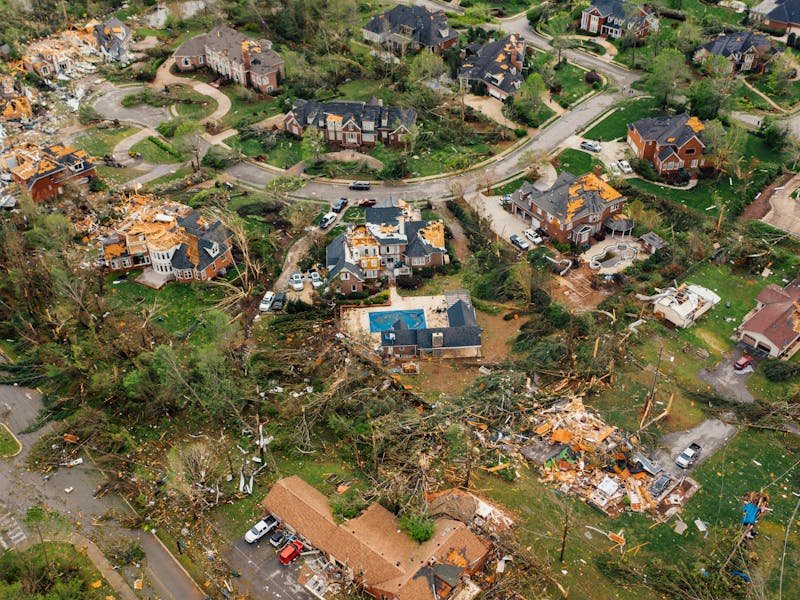
Hour 12 to 24: calls and claims
By afternoon of the first day, start making the calls that get recovery moving. The order matters.
First call: your homeowners insurance. Do this before you talk to a tree service. Get a claim number. Confirm what your policy covers. Ask about emergency mitigation, because most policies allow reasonable action to prevent further damage with reimbursement.
Have ready the date and time of the storm, a brief description of damage, whether lines are involved, whether the structure is safe to occupy, and any temporary action you already took. The adjuster does not need a novel. They need the basics to open the file.
Second call: a local tree service for a written estimate. You want at least one written estimate for the file, ideally two. The estimate should be itemized: crane work, sectional cutting, debris hauling, stump grinding if applicable. A one-line "tree removal $4,000" quote slows your claim down. We cover the full process of hiring a tree service after a Huntsville storm in a separate guide.
Third call, if it applies: police or sheriff non-emergency. Do this if a tree is blocking a public road or you need a report. If a tree is blocking a road, our post on what happens when a tree falls on a road in Huntsville walks through who handles what.
Fourth call: the utility company if any tree is touching a power line. For most of Huntsville, that is Huntsville Utilities at 256-535-4448. Do not let a tree service touch a tree in lines, and do not touch it yourself. The utility has to clear the line first, then the tree service does their work.
Hour 24 to 48: the cleanup decision
The second day is when people make their biggest mistakes. The shock has worn off, the adrenaline is gone, and now there is a yard full of debris. The temptation to grab a chainsaw is enormous. Sometimes that is fine. Sometimes it is dangerous.
Safe DIY cleanup
Small branches on the ground, no tension in the wood, no proximity to lines or structures, are generally safe for a homeowner with a chainsaw, basic gear (chaps, eye protection, ear protection, sturdy boots), and a partner watching. Bag what is small enough to bag. Stack larger pieces by the road for storm debris pickup, which Huntsville and surrounding municipalities run after a major event.
Even small branches under tension can release violently. A branch resting on the ground may be holding back a bigger limb pinned underneath. If you are not sure, do not cut. The first cut on storm-damaged wood is the one that gets most homeowners hurt.
When to wait for the pros
Anything off the ground waits. That includes branches caught in other trees, partial trunks still attached to standing trees, anything on a roof, and anything you need a ladder to reach. We use ropes, harnesses, and rigging gear for a reason. A homeowner on an extension ladder with a top-handle saw is a 911 call waiting to happen.
Anything thicker than your forearm waits, even on the ground. Large rounds are heavy, they roll, and the wood has internal stresses that cause unpredictable splitting. Anything within 35 feet of a power line waits. If you are not sure whether something is safe to cut, it is not safe to cut.
Storm chaser scams
Within 24 to 48 hours of any major Huntsville storm, out-of-state crews show up. Some are legitimate. Most are not. Watch for out-of-state plates at the curb, door-to-door pitches with high-pressure language ("we can do it today, but we need a deposit right now"), cash-only demands, no physical Alabama address, no proof of Alabama insurance, verbal estimates only, and pressure to sign immediately.
Real local services give written estimates without pressure. They have insurance certificates they can email within ten minutes, a verifiable address, a real phone line, and reviews going back years. They take checks and cards. They will tell you if a job has to wait a few days, because that is honest. The crew that promises to start in three hours and demands cash is the crew you report to your insurance company, not the crew you hire.
The Huntsville and Madison County storm response timeline
Knowing what to expect helps you plan. Here is the rough timeline.
Tree services: a 24 to 72 hour wait for non-emergency calls is normal after a widespread storm. Same-day response is reserved for true emergencies. If you call at 7 AM and a company says they can be there by 10 AM, ask where they are based.
Power restoration: one to seven days depending on damage. Huntsville Utilities and rural co-ops prioritize hospitals, water treatment, traffic infrastructure, and large neighborhoods first. Smaller streets with fewer customers wait longer. Plan for a multi-day outage if trees are on the lines.
Road clearing: priority routes first. Major arterials and evacuation routes get cleared in 12 to 24 hours. Side streets and cul-de-sacs can wait one to three days. If you can go around the block to bypass a tree, that road is cleared after the ones with no alternative.
What insurance covers, and what it does not
Insurance is not a blank check. The rules are specific.
Damage to your house, garage, shed, fence, or other covered structures is covered, and the tree removal cost gets rolled into the structural claim. Most policies cap tree removal at $500 to $1,000 per tree with an aggregate of $5,000 to $10,000, but structural repair is separate and follows your dwelling limits.
Trees on your yard with no structural damage are usually not covered. A 60-foot pine across your back yard might cost $2,500 to remove, but if it did not hit anything, you are paying out of pocket. Some policies have a small debris removal allowance, but the cap is low.
Vehicle damage is covered only if you carry comprehensive auto insurance, not by your homeowners policy. If you only carry liability, a tree falling on the car is your loss.
Reasonable emergency action is covered. Tarp the roof, pay for emergency removal of a hanging trunk over the bedroom, save the receipts. The insurance industry expects you to take reasonable steps to prevent further damage and will reimburse those steps. What is not covered: cosmetic landscape damage, replacement of the tree itself, and damage that happened because you waited too long to act.
The five most common spring storm tree damages in Huntsville
After enough storm seasons, you see the same failures. Here are the patterns we see most often in the Tennessee Valley.
Pine snap-offs. Loblolly and shortleaf pines have weaker wood than oaks, and under high straight-line wind they snap in the middle of the trunk rather than uprooting. The break point is usually 15 to 30 feet up, and the standing portion is often unstable.
Oak uprootings. Mature oaks are heavy, and saturated soil after days of spring rain loses its grip on root systems. The whole tree lays over with the root ball intact. Expensive to clean up because the root ball weighs thousands of pounds.
Sweetgum top breaks. Sweetgums lose the upper canopy in high wind. The top 20 to 30 feet comes off and lands wherever gravity takes it, often on roofs or fences. The remaining trunk is usually salvageable with professional shaping.
Bradford pear splits. Bradford pears form two or three main leaders from a single point, and that V-crotch splits down the middle in high wind. Half the tree falls one way and the other half hangs over whatever was below. Honestly one of the worst trees for storm resistance in this region.
Cedar wind-downs. Eastern red cedars hold their shape but have shallow roots. In wet ground with high wind, they tip over intact, often onto fences and outbuildings. Lighter to clean up than an oak but they take fence sections with them.
The "still standing but cracked" tree problem
This is the most underestimated hazard after a storm. A tree that is still upright but has visible cracks in the trunk, splits at major branch unions, or sections of bark torn loose has lost structural integrity and will fall, often days or weeks after the storm.
I have seen trees that looked fine come down on a still calm afternoon five days later. The wind that damaged them is long gone. They just finally let go.
If you have a tree like this within reach of your house, a vehicle, a power line, or anywhere a person walks, get it evaluated by a professional within the first 48 hours. The difference between proactive removal and reactive emergency removal can be tens of thousands of dollars.
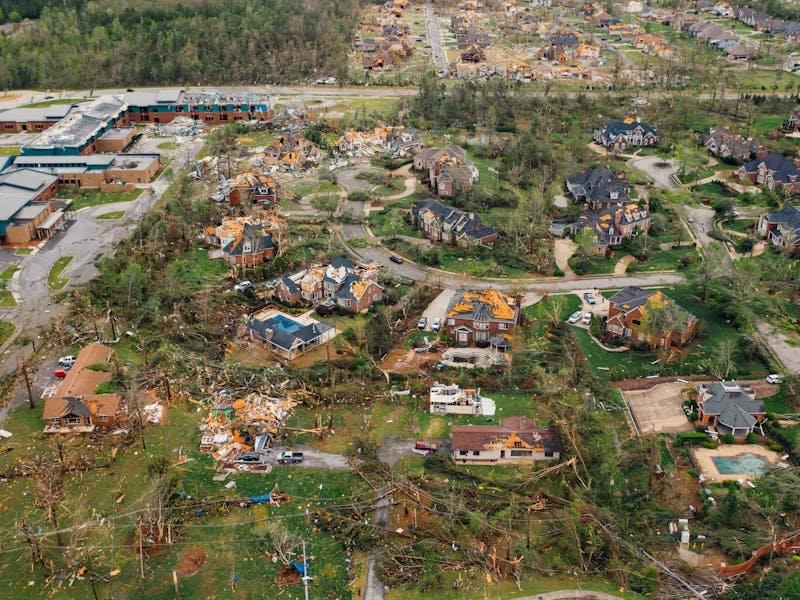
Photo and documentation checklist for insurance
Here is the checklist I give homeowners. Run through this in the first 6 hours if you can.
Wide shots of the property from each corner. Close-ups of every contact point between a fallen tree and a structure. Photos of root balls and break points. Interior photos of any damaged room. Time-stamped photos showing the date. Video walking the perimeter with narration. Photos of any affected vehicles with the license plate and damage. Photos of any lines down. Photos of damage to outbuildings, fences, and landscaping. Receipts for any emergency action.
Save it all in one folder labeled with the date. Email a copy to yourself or upload to cloud storage. Phones get lost. Do not let your only copy live on a single device.
When to call a certified arborist versus a tree service
Most storm cleanup is straight tree service work: removal, cutting, hauling. Any reputable Huntsville company can handle that.
An ISA Certified arborist adds real value in the gray areas. Trees still standing but possibly compromised. Trees you want to save but are not sure are safe. Insurance disputes where a documented professional opinion on tree health matters.
If you have a borderline tree, a certified arborist's written assessment is worth the consult fee. They can tell you whether it can be saved with cabling and pruning or needs to come down, and the document strengthens any future insurance conversation.
The bigger picture
The 48 hours after a storm feel chaotic, but they have a rhythm. Safety first. Documentation second. Triage third. Calls fourth. Cleanup last. Following that order keeps you out of the emergency room, out of insurance disputes, and out of the hands of the storm chasers who showed up to take advantage.
If you want to get ahead of next year's storm season, our guide on storm season tree preparation in Huntsville walks through what to do during the calm months. Our post on 24-hour emergency tree service in Huntsville covers what to expect at 3 AM.
If you are dealing with damage right now and need a real local crew on the way, give us a call. We answer the phone 24/7 during storm response and work directly with your insurance company.